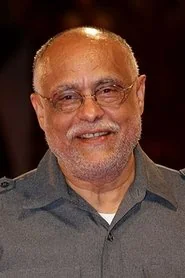
Youssef Chahine
Begin with Cairo Station: private obsession inside a crowded working world.
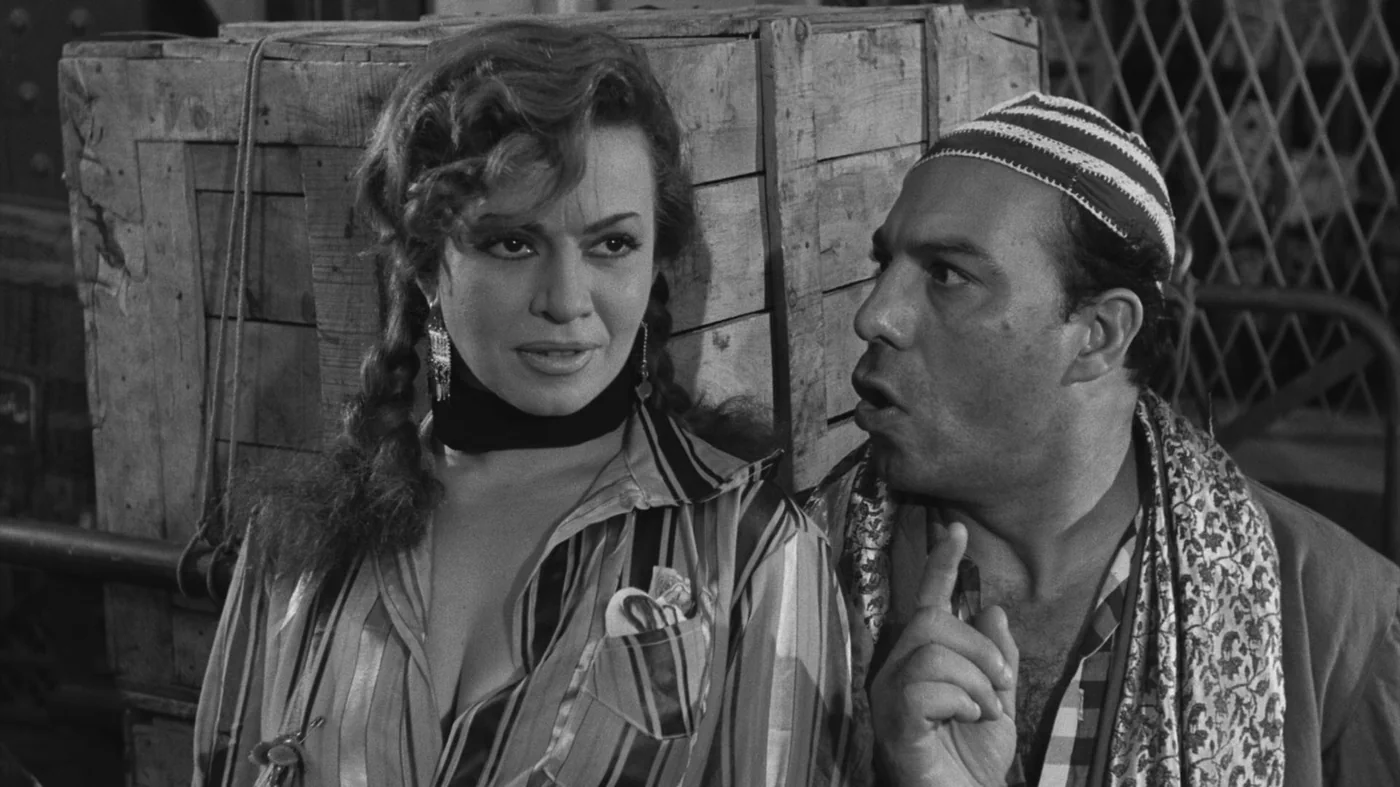
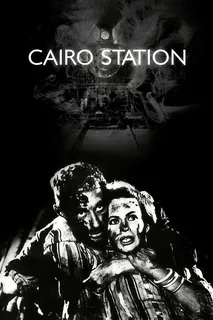
Pictured: Cairo Station (1958)
Begin with Cairo Station. Chahine plays Qinawi, a newspaper seller whose desire for a woman at the station becomes increasingly possessive. The setting keeps that private obsession inside a world of work: people carry things, sell things, organise and compete for room.
That density is the attraction. The station is more than a location surrounding the protagonist; other people's business continues to press against his interpretation of events. Chahine can make a public space exuberant and then make one person's gaze within it frightening.
Hanuma's work gives the obsession something to collide with. She has drinks to sell, exchanges to negotiate and a relationship that does not exist to answer Qinawi's need. Chahine's own performance can draw us towards the lonely man's longing, while the crowded staging keeps demonstrating that longing is not the whole event. The film is most unsettling when it lets the person looking become only one of several claims on the space. Sympathy has to survive the recognition that his desire can threaten someone else's freedom.
The film's treatment of disability and violence merits scrutiny, rather than acceptance as an inevitable psychological explanation. Its vitality remains a compelling route into a director whose work moves across melodrama, political argument and autobiography. Later, Alexandria… Why? offers a different way of thinking about belonging and memory. Chahine belongs to Egyptian, Arab and African film histories without any one of those descriptions exhausting his work.
Egypt · 1926–2008
Cairo Station 1958