
16 September 2026

Fourteen Asian screen composers worth listening to closely

A listening route through films and television, from large-scale action to music that makes an ordinary encounter feel unresolved.

14 entries

You can remember a piece of film music without knowing what it has done to the scene. A theme makes a walk feel ritualised. A pulse encourages you to anticipate movement before anything happens. A melody returns with the same notes and a different emotional meaning because the characters now know something they did not know before.

These fourteen composers offer different ways to listen for that work. The selection is concentrated in East Asian and Indian films, with a television entry in Kingdom. It is a set of starting points, rather than a survey of a continent or a claim that established names are obscure to their own audiences.

There is one practical complication worth establishing early. A soundtrack album may collect original score, existing songs and music by several people. A music director may supervise a team. The most recognisable cue is not necessarily the work of the person whose name appears most prominently on the album. The entries below distinguish those cases where they matter.

Begin with a scene, then listen outside the film. On its own, a cue can seem repetitive or oddly incomplete because it was built to share time with an image. Returning to the scene reveals why a phrase stops, why a rhythm persists, or why the music declines to provide the release you expected.

Some notes discuss late scenes and the emotional direction of a film. When listening for suspense, try the first viewing before the closer cue comparisons.

1

Taro Iwashiro

Start with Red Cliff, then hear how different Memories of Murder feels.

Pictured: Red Cliff (2008)

Start with Red Cliff, then turn to Memories of Murder. The broad brass and percussion in Red Cliff give its score an enormous public task: help make planning, scale and collective action emotionally legible. The second leaves a persistent unease around a landscape the investigators cannot properly read.

That contrast is more useful than a general compliment about range. In an epic, a theme can gather separate people into the feeling of a common undertaking. In a murder investigation, the return of an apparently calm musical idea can expose how little has actually been settled. Continuity can reassure or disturb according to the images around it.

The zither encounter in Red Cliff is a useful companion to the broad battle music. The men can test another person's intelligence through listening and response before a plan has become an explanation. Not every memorable sound in that scene should be absorbed into a claim about Iwashiro's orchestration: music performed within a film has its own players and credits. The sequence helps explain the score's larger task. A military alliance has to acquire a felt capacity to act together before scale alone can make its actions moving.

Listen to an action passage and a quieter passage from Red Cliff rather than stopping at the most triumphant track. A large score needs contrasts within its own world. Then notice how the quieter film resists offering the same kind of emotional destination. The pleasure lies in the difference between giving an event grandeur and giving an absence a shape.

Japan
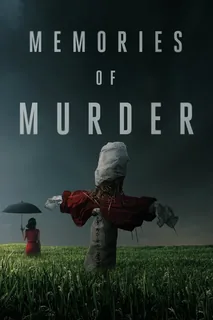
Where to start Red Cliff 2008 Memories of Murder 2003

Sources: Wikipedia
2

Mok Young-jin

Start with Kingdom's first season: music gives waiting a pulse.

Pictured: Kingdom (2019–2020)

Begin with the first season of Kingdom. Court ceremony and the movement of infected bodies create different kinds of pressure, and the music has to help them inhabit the same series without making every scene feel like the same emergency.

The preparations before an attack are especially revealing. Gates, waiting bodies and the effort to maintain order already supply a rhythm; the score can make those activities feel like an interval whose end is approaching. If every pulse simply said 'danger', it would erase the distinction between people trying to hold a position and bodies coming towards it. The useful listening question is where the cue begins making one movement anticipate the other. Footsteps and breathing continue to carry information the music should not cover.

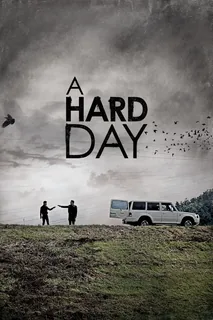
The season credit is important: Mok Young-jin is associated with the first season, while Dalpalan takes the second-season composer credit. The series link below identifies the programme, rather than attributing all its music to one person. For a film comparison, try A Hard Day, whose suspense repeatedly makes an immediate practical problem expand into a worse one. The listening question is how music helps keep pressure active between those reversals.

South Korea

Where to start Tunnel 2016 Kingdom 2019–2020 A Hard Day 2014

Sources: TMDB

3

Dalpalan

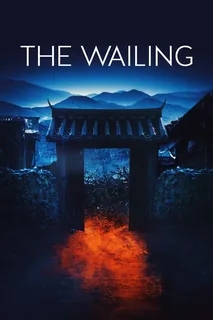
Start with The Wailing: sound complicates the search for certainty.

Pictured: The Wailing (2016)

Begin with The Wailing. The film places explanations in competition, and music is one of the things that can make a person or an event seem authoritative before you know whether that confidence is warranted. The production notes credit the score jointly to Dalpalan and Jang Young-gyu, rather than to one composer alone.

The ritual's drumming has a visible source: a person is doing something in order to make an event occur. The cutting then places that performed certainty beside other actions whose relationship to it remains difficult to establish. The force comes partly from synchronisation; sound makes the connections feel more conclusive than our knowledge warrants. It would be a mistake to credit every strike to the background score. The score, ritual performance, recording and edit have different jobs inside a scene that makes us want one reliable explanation.

Then try the second season of Kingdom. The change of scale and serial rhythm offers another context for building dread. Dalpalan's work is a route into suspense that does more than announce an approaching threat. Listen for moments in which the sound encourages certainty while the story is making certainty dangerous. The discomfort comes partly from how much you want an explanation to hold.

South Korea

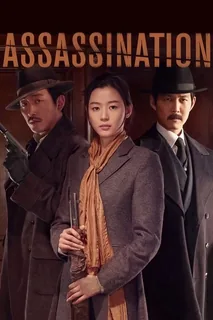
Where to start The Wailing 2016 Kingdom 2019–2020 Assassination 2015

Sources: MyDramaList

4

Nobin Paul

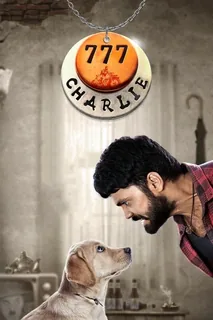
Start with 777 Charlie: routine acquires emotional weight.

Pictured: 777 Charlie (2022)

Begin with 777 Charlie, whose relationship between a withdrawn man and a dog gives music a large share of the emotional narration. Care takes time to become a habit; the score helps connect small domestic changes to the growing significance of the companionship.

This is also a good place to test your tolerance for emotional emphasis. A swelling cue can give a modest gesture the release you want. It can also arrive early enough to seem to tell you what the scene has yet to earn. Those responses need not be identical throughout a long film.

The change from tolerating Charlie to arranging a day around her gives a recurring musical idea something to remember. An early comic irritation and a later act of care need not receive entirely unrelated emotional languages. Continuity can let a modest routine carry the weight of the attachment that has formed through it. That is where the music earns its later emphasis. It is less convincing when the next encounter on the road arrives already enlarged into another proof that the relationship should move us.

Listen once with your attention on the music's entrance rather than the melody. What has changed immediately before it begins? Has the acting already made the moment clear, or is the cue supplying an interior state the character cannot express? The film includes serious animal illness and grief. Its music is most affecting when the accumulated routines give an emphatic passage something particular to recall.

India · Kannada cinema

Where to start 777 Charlie 2022

Sources: Wikipedia: 777 Charlie soundtrack

5

Jang Young-gyu

Start with Train to Busan, and listen between the attacks.

Pictured: Train to Busan (2016)

Start with Train to Busan. Speed alone cannot sustain a confined action film; the score and sound design have to distinguish waiting, movement, exhaustion and the brief recognition of another person's need.

The carriage doors make those changes practical. A brief separation can be a respite for one group and an urgent barrier for another; movement must keep changing between escape, waiting and an attempt to reach somebody. The score's shifts have to remain answerable to those different tasks. The late emotional passages are effective where the earlier alternation has given us a particular relationship to lose. They become more conventional when the music seems to ask the same response to every frightened face.

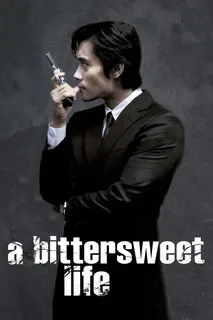
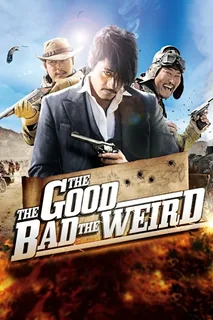
The linked A Bittersweet Life offers a different setting for stylised movement and wounded pride, with a music credit shared with Dalpalan. The Good, the Bad, the Weird is another collaborative credit. Its well-known use of an existing song should not be mistaken for Jang's original composition. Treat the filmography as a route into work and check the individual cue when you want to know who wrote a particular piece. Collaboration makes the work more interesting, rather than less worth identifying accurately.

South Korea

Where to start A Bittersweet Life 2005 Train to Busan 2016 The Good, the Bad, the Weird 2008

Sources: Wikipedia: Leenalchi

6

Jo Yeong-wook

Start with The Handmaiden, with shared credits in mind.

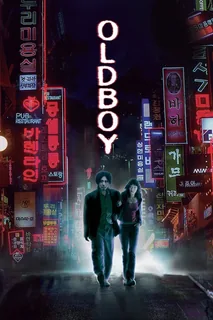
Pictured: Oldboy (2003)

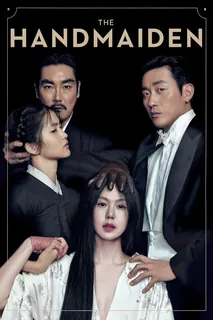
Begin with The Handmaiden, then compare the relation between elegance and disturbance in Oldboy. Park Chan-wook's films can make an image exquisitely controlled while the people within it possess incomplete or misleading accounts of what is happening. Music can intensify that discrepancy instead of resolving it.

The credits require care. Jo's role on Oldboy includes music direction and production within a collaborative score. “The Last Waltz” is credited to Shim Hyun-jeong; Apple's track listing names her. Recognising that contribution is more useful than attaching every memorable cue to a single familiar name.

The repeated encounters in The Handmaiden give musical beauty a problem: the audience's first access to a relationship is incomplete. A cue can invite tenderness before the next account makes us reconsider who was performing for whom. The music need not expose the deception in advance to remain truthful to the feeling. That is the distinction worth hearing. Being misled about an arrangement does not make every emotion within it false, and a score can preserve that complication more subtly than a warning attached to every look.

In The Handmaiden, listen for how music changes the emotional charge of an encounter as the film changes your access to it. A beautiful passage can express longing and still participate in a scene built on deception. The pleasure is in that unstable alignment between what an image invites you to feel and what you are entitled to believe.

South Korea

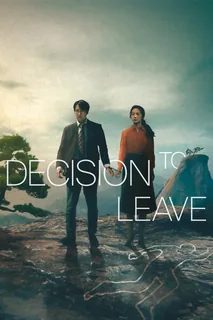
Where to start Oldboy 2003 The Handmaiden 2016 Decision to Leave 2022

Sources: Wikipedia

7

Mowg

Start with Burning: unease need not identify its source.

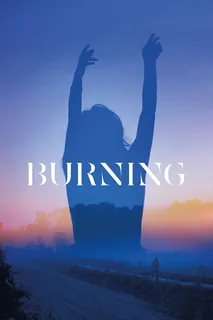
Pictured: Burning (2018)

Begin with Burning. This is a useful choice for hearing how little a film needs to settle in order to make you uneasy. A musical texture can imply a pressure without identifying its source, leaving the image open to several explanations.

The sunset dance makes attribution part of the criticism. Hae-mi's movement, the fading light and Jong-su's looking are accompanied by an existing Miles Davis recording, not a new trumpet cue by Mowg. That borrowed intimacy should not become a description of the original score's style. The film's own music has to inhabit a world in which an apparently revealing encounter can leave the observer less certain afterwards. Listen for how pressure persists when the film no longer offers the immediately inviting language of that remembered dance.

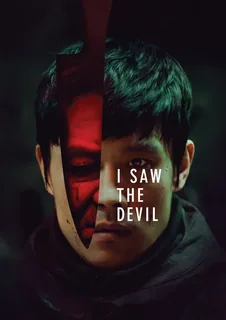
I Saw the Devil offers a much more forceful context, where pursuit and repetition create another kind of pressure. Comparing the two is more revealing than declaring a composer invariably subtle or restrained. A score serves a particular film. The interesting question is how its intensity relates to what the camera permits you to see, and whether it reinforces the apparent action or introduces a feeling that the action cannot explain.

South Korea

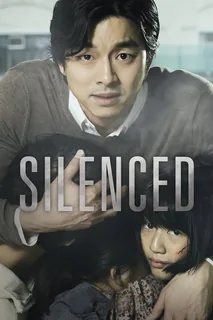
Where to start I Saw the Devil 2010 Burning 2018 Silenced 2011

Sources: Wikipedia
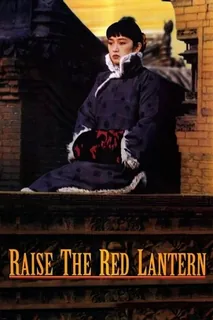
8

Shigeru Umebayashi

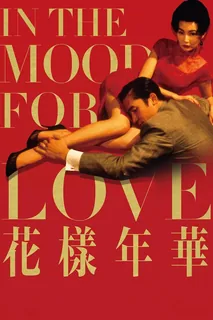
Start with Yumeji's Theme, reused in In the Mood for Love.

Pictured: In the Mood for Love (2000)

Begin with “Yumeji's Theme” in In the Mood for Love. The repeating figure gives an ordinary passage through shared space the feeling of an event being remembered and revisited. Repetition is doing dramatic work: another return does not necessarily bring the characters any closer to being able to act.

The cue was written for Seijun Suzuki's Yumeji and reused by Wong Kar-wai. In the Mood for Love also contains Michael Galasso's original music, existing songs and other recorded material. It would be inaccurate to credit the entire soundtrack to Umebayashi.

The narrow passages to buy food make recurrence bodily. Two people can occupy almost the same route on successive occasions without acquiring a correspondingly greater freedom to meet. The theme's return gives each passage the weight of recognition, while the slow movement refuses the ordinary usefulness of getting somewhere. The melancholy comes from that difference. A repeated musical form can make an opportunity feel preserved even while the story keeps showing the conditions under which it cannot become an ordinary shared life.

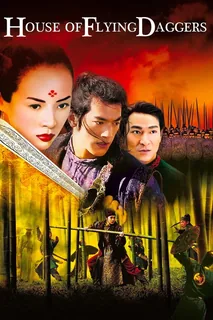
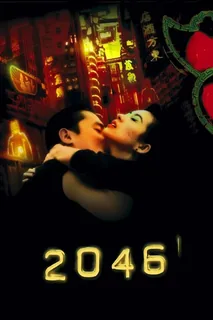
Then compare 2046 or House of Flying Daggers, where large emotions inhabit different narrative forms. Listen for the relationship between recurrence and change. A melody can stay recognisable while its meaning alters because a promise has become a memory. The effect depends on placement and performance as well as composition; the beautiful track alone cannot explain the scene's ache.

Japan

Where to start House of Flying Daggers 2004 2046 2004 In the Mood for Love 2000

Sources: Wikipedia
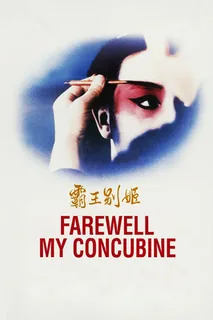
9

Kenji Kawai

Start with Ring: texture changes what silence can mean.

Pictured: Ip Man (2008)

Begin with Ring. The distinction between score and frightening sound can become hard to police, which is part of the film's effect. An intrusion into the soundtrack may seem to belong to the room, to the recording being watched, or to an atmosphere that exceeds either.

Kawai's work is a useful reminder that music need not offer a melody as its main means of recognition. Texture, space and recurrence can establish a world. Silence becomes less neutral once the film has taught you to listen for an interruption.

The videotape in Ring gives the comparison a concrete object. Sound attached to a recording can arrive inside an ordinary room yet make that room feel less secure after playback stops. The score and sound design exploit the uncertainty about whether a disturbance belongs to the object, its viewer or the world around them. Kawai's contribution is best heard within that uncertainty, not as a detachable promise that each alarming noise will introduce a visible threat. The absence of a clear boundary becomes part of the fear.

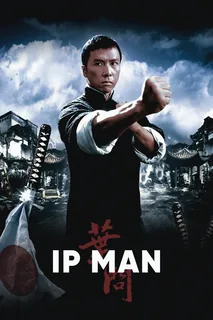
For contrast, try Ip Man, where martial action and a more openly stated emotional arc give music different responsibilities. Do not expect a single signature sound to explain both films. Listen instead to how each score establishes the conditions under which a body moves: threatened in one film, gathering resolve in another. The contrast helps make a composer's choices audible beyond genre labels.

Japan

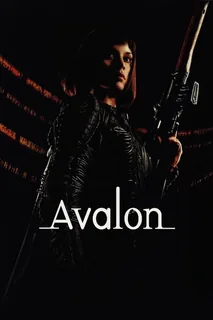
Where to start Avalon 2001 Ring 1998 Ip Man 2008

Sources: Wikipedia
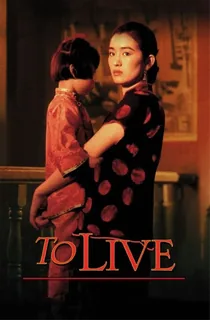
10

Zhao Jiping

Start with Raise the Red Lantern: ritual gives sound authority.

Pictured: Raise the Red Lantern (1991)

Begin with Raise the Red Lantern. Sound participates in a household's system of attention: who is selected, which gestures recur, and how a ritual makes unequal power feel orderly. The music belongs to that organisation of expectation as well as to the characters' private feeling.

The foot-massage sounds in Raise the Red Lantern are a particularly clear distinction to keep. They belong to the household's ritual and sound design; it would be careless to treat every repeated sound as a cue Zhao composed. They help establish the system in which his score operates. Selection, repetition and anticipation already have a bodily meaning before music adds another layer. In Farewell My Concubine, the performed opera creates a different overlap between a character's work and the film's musical language. In each case, the original score gains meaning from sounds it has not simply invented.

Avoid reducing the result to a vaguely traditional sound or treating an instrument's timbre as an explanation of a culture. Listen to placement, repetition and the relationship to voices. Zhao's contribution to these films is better appreciated through specific dramatic choices than through a claim that one composer introduced Chinese cinema to the world. The films and musical histories around him are much larger than that convenient story.

China

Where to start Raise the Red Lantern 1991 Farewell My Concubine 1993 To Live 1994

Sources: Hong Kong Chinese Orchestra

11

Peter Kam

Start with Isabella, then compare the scale of Detective Dee.

Pictured: Detective Dee and the Mystery of the Phantom Flame (2010)

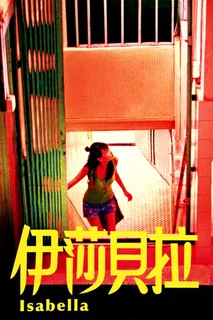
Begin with Isabella. A recurring musical idea can give people a relationship before their conversations have found a reliable language for it. Listen to the difference between a melody's apparent ease and the awkwardness of the people whose lives it accompanies.

Then turn to Detective Dee and the Mystery of the Phantom Flame. A mystery that keeps expanding its physical world asks for a different organisation of momentum and scale. The contrast is a practical way to hear how music connects intimate feeling in one film and elaborate movement in another.

The fado inflection in Isabella gives the Macau setting an ache that dialogue alone does not secure. The musical ease can seem to offer continuity to people whose claims on one another are much less settled. That gap is the reason to listen beyond the attractive surface. Kam's recurring ideas help an accidental domestic arrangement feel as though it might hold a history, while the performances keep asking whether that history can actually be trusted. The score can offer belonging before the people have worked out its terms.

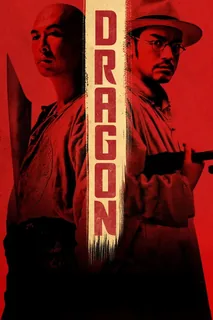
Kam also shares the score credit for Dragon with Chan Kwong-wing. It is worth following that connection because Hong Kong film music often involves teams and overlapping partnerships. A filmography identifies useful places to listen, but an album's individual credits remain necessary when attributing a cue. Start with the scene rather than assuming that the biggest name accounts for every sound you remember.

Hong Kong

Where to start Isabella 2006 Detective Dee and the Mystery of the Phantom Flame 2010

Sources: Wikipedia
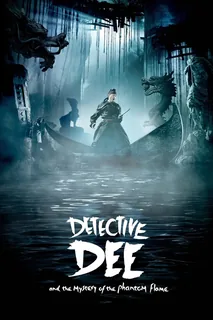
12

Chan Kwong-wing

Start with Infernal Affairs: feeling exceeds what can be admitted.

Pictured: Infernal Affairs (2002)

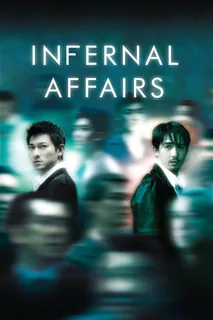
Begin with Infernal Affairs. The thriller depends on people keeping incompatible identities active at once. Music can give a meeting gravity while the performance has to remain guarded, making the emotional stakes audible without letting the characters confess them.

The hi-fi-shop meeting is worth separating from the score: the two men listen to Tsai Chin's recording of “The Forgotten Time”. The performance and song have credits of their own. Its warmth briefly gives the men a shared experience outside the identities the thriller will make them maintain. Chan's score works inside the larger tension that follows—feeling can be audible to us while remaining something the characters cannot safely acknowledge. The distinction between the borrowed song and the score makes that collaboration easier to hear.

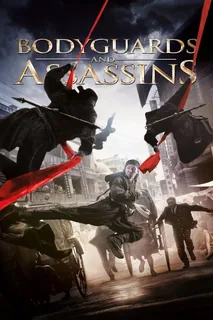
Bodyguards and Assassins offers a larger ensemble and more overt movement. Dragon is a further route through a shared score with Peter Kam. The credits are part of the recommendation: following the connections is more useful than inventing a lone-author account of an industry built through collaboration. These films reward listening for how music distributes importance among many people rather than following only the loudest action.

Hong Kong

Where to start Dragon 2011 Bodyguards and Assassins 2009 Infernal Affairs 2002

Sources: Wikipedia
13

Sushin Shyam

Start with Kumbalangi Nights: friction and tenderness share a home.

Pictured: Kumbalangi Nights (2019)

Begin with Kumbalangi Nights. The film's household can feel abrasive, funny and tender without changing into an entirely different world each time. Music helps those moods coexist, giving moments of ease room to develop without pretending that every relationship has been repaired.

Manjummel Boys supplies the sharpest test of attribution. The rescue draws on “Kanmani Anbodu Kadhalan”, Ilaiyaraaja's song from Gunaa, so the musical memory belongs to another film as well as this one. Sushin's original score has a different task: make waiting, exhaustion and the mechanics of trying to reach a friend accumulate before that borrowed history can release them. The familiar song is powerful partly because it arrives inside a situation the film has already made physically difficult. Treating it all as one composer's achievement would obscure both parts.

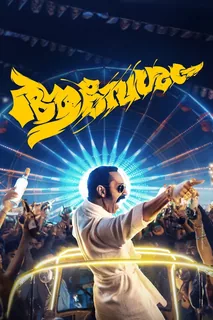
Aavesham offers another mode, with performance and swagger more openly exposed. Comparing the three is an enjoyable route through very different uses of anticipation and release. Listen for the point at which a cue turns a group into a shared feeling. Then return to the faces and ask whether each person belongs to that feeling in the same way.

India · Malayalam cinema

Where to start Aavesham 2024 Kumbalangi Nights 2019 Manjummel Boys 2024

Sources: Wikipedia
14

Govind Vasantha

Start with 96: memory and the present do not quite align.

Pictured: 96 (2018)

Begin with 96. A reunion gives music a difficult job: evoke the force of a past attachment without making the present encounter disappear beneath it. The pauses between two adults have to carry lives that continued after their adolescent story stopped.

The adults' pauses are the test of 96's musical fluency. A song can sustain a feeling across a phrase that Ram and Jaanu cannot sustain as an ordinary conversation. Govind's music makes the earlier attachment available without requiring the actors to become their adolescent selves again. The risk is that the soundtrack offers a continuity the present lives do not permit. The best passages keep that gap tender: we can feel the memory strongly while still seeing why feeling it does not settle what the people should do.

This is a good final stop because it makes the pleasure of a melody easy to acknowledge while keeping a critical question alive. Are you moved by the relationship as it exists now, by the memory of what it was, or by the soundtrack's invitation to merge them? More than one answer can be true. The film's best moments allow that uncertainty to remain tender rather than forcing it into a promise.

For a direct album starting point, try “Kaathalae Kaathalae”, performed by Govind Vasantha and Chinmayi Sripada. The voices make a useful companion to the film's hesitant conversations: the song can sustain an emotional phrase where a spoken exchange has to stop or turn aside.

India · Tamil and Malayalam cinema

Where to start 96 2018

Sources: Wikipedia
Where this comes from: Apple Music: Shim Hyun Jeong's The Last Waltz · Kingdom: season-specific composer credits · In the Mood for Love: original and reused music · Hong Kong Chinese Orchestra: Zhao Jiping · Apple Music: Kaathalae Kaathalae · Berklee research: Peter Kam’s fado writing for Isabella · Korean Film Council: Jang Young-gyu and Dalpalan · Cannes: Train to Busan production notes and music credit · Infernal Affairs: The Forgotten Time, writer and performer credits · Apple Music: Sushin Shyam’s original Manjummel Boys score · Cannes: The Wailing, shared music credit

A better way to find the piece you remember

Search the film's title and year, then check the track-level credit. Romanised names vary: Jo Yeong-wook may appear as Cho Young-wuk, for example. That is a search problem, rather than evidence that two different people wrote the music.

If the remembered passage contains a song, look for the performer and original songwriter as well as the score composer. If it comes from a series, check the season. And if the music sounds different on an album, return to the scene: editing, dialogue, room sound and the point at which a cue enters can account for much of what you loved.

The credits are useful because listening more accurately usually makes the collaboration more impressive. There are more people to discover, and more decisions to hear.

← All lists