8 October 2026

Batman movies ranked: the films behind the scores

Twelve theatrical films, from Adam West to Robert Pattinson, and the different claims they make for the mask.

12 entries

A man without superpowers is not necessarily the weakest person in a city when he has inherited wealth, specialised equipment and access to people who can help him use both. The interesting Batman question is what gives him the right to turn those resources and a private injury into authority over other people's lives.

The films answer differently. Adam West makes preparedness and a serious wish not to harm anybody the basis of farce. Michael Keaton makes the public man strange enough that the mask does not seem to explain everything. Christian Bale's trilogy tests a role's limits, while Robert Pattinson's version has to reconsider what his performance of vengeance has taught the city.

The order below comes from the qualifying MEANRANK scores held for these twelve films. My editorial preference would give Mask of the Phantasm an especially strong claim alongside The Dark Knight. A small numerical difference cannot decide which account of the character you will find most substantial.

The scope is twelve theatrical features from 1966 through The Batman in 2022. It includes Mask of the Phantasm, The Lego Batman Movie and the co-led Batman v Superman. It excludes the earlier serials, television, direct-to-video features, Justice League ensemble films and supporting appearances such as The Flash. “Every Batman film” would overstate that selection.

The source cards distinguish the combined score and the recorded critic/other averages. They are not polls of a single identical audience or, where different cuts circulate, necessarily one identical viewing.

Major spoilers follow, including the Nolan trilogy's ending and later revelations.

How this is judged

MEANRANK computed
The qualifying recorded source ratings, rescaled and averaged. This determines the numerical order.
Recorded critic / other averages computed
A comparison of the catalogue's qualifying critic measures with its other measures, whose scales and coverage can differ.

Computed scores come straight from the ratings, so you can check them. Editorial ones are our opinion, and every one comes with the reason for it.

12

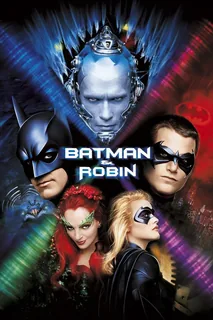
Batman & Robin 1997

The problem is not colour or comedy; it is how rarely one tone gives the next consequence.

Action, Adventure, Sci-Fi · 125 min

F 35

The film wants a busy, exuberant world in which a vehicle, suit or villain can announce another attraction almost immediately. That is not inherently an inferior way to make Batman. The 1966 film demonstrates how a confident comic style can sustain absurdity.

The difficulty is the relation between the attractions. Alfred's illness, Freeze's attachment to his wife, a quarrel inside the partnership and the next elaborate physical gag do not consistently seem to be developments in the same emotional situation.

Poison Ivy's influence gives the quarrel a mechanism but weakens its emotional ownership. Robin has reasons to resent Bruce's control; the film can turn that disagreement into a chemically encouraged contest for attention whenever it needs the next escalation. Clooney's ease and Chris O'Donnell's indignation do not consistently accumulate into a relationship changed by the argument. The later solution depends on trust, yet too much of the falling-out has been carried by an external device that can be overcome rather than an injury the pair must understand.

Arnold Schwarzenegger's Freeze contains a potentially useful contrast between a loudly performed villain identity and a private attachment that has become an obsession. The film repeatedly returns him to a comic signal before that contrast has much room to develop.

There are moments of enjoyable design and performance. Enjoying them does not require treating every shift as successful, just as disliking the whole does not establish that a serious Batman must wear a dark palette.

Its low position is better explained by weakly connected consequences than by a checklist of famous costume details. A family forming under pressure could have given the accumulation a centre. Too often the film asks the accumulation itself to stand in for the pressure.

MEANRANK computed
36/100

From 10 ratings.

Recorded critic / other averages computed
20 / 40

Critics average 20, everyone else 40. Everyone else rates it 20 points higher.
11

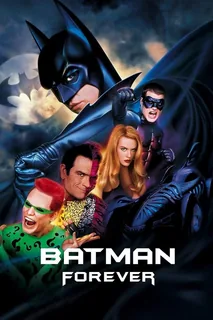
Batman Forever 1995

Kilmer's quieter Bruce has to compete with the film's appetite for another display.

Action, Crime, Fantasy · 121 min

D 51

Val Kilmer gives Bruce a reserve that does not automatically read as triumphant self-command. There is an awkwardness in being the public person others can approach while privately maintaining another task that controls the shape of a life.

Robin's arrival gives that task a useful mirror. Another person has suffered a loss and wants the response to become action. Bruce can recognise the appeal without possessing an easy authority to tell the younger man how grief should be lived.

The film is strongest when their positions differ. Protecting Dick can become another form of control; wanting to participate can become another way of refusing to experience the loss without a compensating role.

Edward Nygma begins by needing Bruce Wayne to recognise an invention. The refusal turns a professional disappointment into a claim on Bruce's attention, then the Riddler identity gives that claim a theatrical means of return. Carrey's exaggeration has a logic: the man who was not heard can now arrange the whole encounter. The difficulty is sharing the film with Two-Face, whose repeated performance of excess supplies less changing pressure. The villains compete for the frame more consistently than their different relationships to Bruce develop.

The design is not the weakness by itself. Neon and heightened surfaces can be a coherent Gotham. The problem is how often a quieter encounter seems to be interrupted rather than transformed by the next display.

I find more in Kilmer's contribution than the film's general reputation suggests, particularly the sense that a professional-looking identity has not made its owner socially at ease. The whole remains uneven because it cannot consistently decide how that uncertainty and the comic frenzy should affect one another. The competing styles need a relationship, not merely an opportunity to take turns.

MEANRANK computed
51/100

From 12 ratings.

Recorded critic / other averages computed
48 / 52

Critics average 48, everyone else 52. They agree.

10

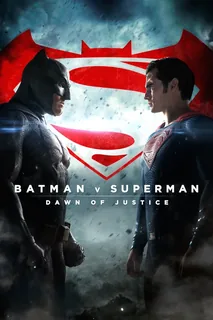
Batman v Superman: Dawn of Justice 2016

A damaged idea of protection makes Batman dangerous before the other hero arrives.

Action, Adventure, Fantasy · 152 min

C 60

Affleck's Batman is not simply the familiar guardian with the violence turned up. The branding and the preparations make protection look like an identity whose owner has become less capable of questioning what it permits.

Superman gives that habit a new object. Extraordinary power is interpreted through the future harm it might cause, and the possibility becomes a reason to act before the person has been understood. The film's strongest question is what happens when fear can obtain the resources to prepare its own answer.

The warehouse action gives this Batman considerable physical force. It is also part of the problem the film needs to examine. A violent display can be thrillingly constructed while making an abusive state of mind look like the most competent person in the room.

The shared maternal name is meant to interrupt Bruce's abstraction of Superman as a future threat. Lois supplies the relationship he has failed to imagine: the apparent weapon is a son trying to save his mother. Affleck makes the intrusion of Bruce's own childhood legible, so the scene has more purpose than the coincidence alone suggests. The weakness is what follows. Recognition arrives at a speed that the film has not earned as a sufficient answer to this Batman's established brutality. One recovered connection has to carry too much moral repair.

The film's large symbolic and narrative burdens compete for space. Lex's manoeuvres, the public response to Superman and the demands of introducing a wider world do not always give the central relationship time to become exact.

The longer Ultimate Edition changes the context available to a viewer, which is another reason a single film record cannot be a clean poll of one identical viewing. I value Affleck's physical and emotional weight more than the total construction. The film is most substantial when Batman's conviction is the danger, less convincing when that danger is resolved chiefly by another enlargement of the spectacle.

MEANRANK computed
61/100

From 11 ratings.

Recorded critic / other averages computed
36 / 66

Critics average 36, everyone else 66. Everyone else rates it 30 points higher.

9

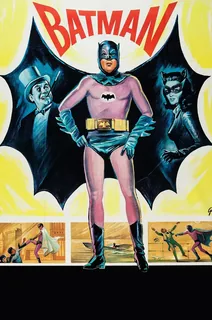
Batman 1966

The hero's seriousness is what makes the absurdity precise.

Action, Comedy, Crime · 105 min

C 65

Adam West does not need to step outside the situation and announce that it is ridiculous. The preparedness, the explanations and the physical commitment belong to a person for whom the fantastic is simply another problem requiring the appropriate response.

The shark repellent is funny because a highly specific need has an equally specific tool already available. The joke is about the fantasy of preparedness as much as the strange object itself.

The bomb sequence reverses that assurance. Having recognised the danger does not make disposal easy when every apparent solution would place another harmless body in its way. The delay keeps generating comedy through an unusually consistent obligation not to hurt somebody else.

That is an important difference from a film that merely accumulates bright props and jokes. The comic universe has rules, and the performance treats them as though another person is entitled to depend on them.

The villains' combined scheme gives the plot a deliberately excessive scale. Some of the broad characterisations and topical jokes have aged unevenly, but the appeal does not depend entirely on remembering the original television audience.

The film's version of international rescue has its own satirical edge. The threatened delegates are turned into fragile material that must be preserved and put back together. Preparedness now means caring for people who cannot act on their own behalf, even while the plot treats the machinery as absurd. The seriousness of the task is what lets West keep the jokes inside the hero's conduct rather than standing outside it to comment.

I would not call it an embarrassing stage Batman had to outgrow. It is a successful answer to a different dramatic question: how confidently can a hero inhabit an absurd world while continuing to treat the preservation of ordinary life as a serious task?

MEANRANK computed
66/100

From 7 ratings.

Recorded critic / other averages computed
76 / 62

Critics average 76, everyone else 62. Critics rate it 14 points higher.

8

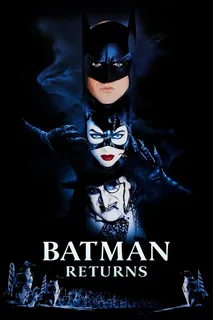
Batman Returns 1992

The apparently respectable man may be the city's clearest predator.

Action, Fantasy · 126 min

B 72

Gotham's exaggerated surfaces are not decoration around a relatively ordinary contest. They give the people inside it identities that can become both defences and traps. A body, a costume and a public story keep failing to fit one another comfortably.

Michelle Pfeiffer's Selina makes that instability the film's strongest presence. The apparent return from humiliation does not supply a healed person with a new uniform. The performance can be playful, furious and painfully aware of what the old social role required her to accept.

The masked ball gives Bruce and Selina their most revealing recognition while neither is wearing the costume. A familiar exchange lets them realise whom they have been meeting elsewhere, and the romantic possibility contracts as the knowledge arrives. Keaton's attention cannot make Pfeiffer's Selina accept the life he can offer. The scene is painful because recognition has done something more difficult than expose a secret: it has made the attraction understandable without making a shared future straightforward.

The Penguin's public use is equally important. The city can be invited to receive a person through a carefully arranged spectacle, while Max Shreck moves through the same system with a much more respectable surface. Ordinary commercial authority is not morally superior to the grotesque body it can help package.

Batman can seem peripheral beside those lives. I regard that as both a limitation and part of the film's interest. The protector's private drama is not automatically the most complete account of what the city has done to its people.

The darkness can become indulgent, and an image of injury can sometimes receive more attention than a developed choice. Yet the film's refusal to make romance or heroic recognition complete every damaged life gives it a bitterness unusual in a large franchise. It is more valuable as that uneasy work than as proof that adult superhero films must be grim.

MEANRANK computed
73/100

From 12 ratings.

Recorded critic / other averages computed
74 / 72

Critics average 74, everyone else 72. They agree.

7

Batman 1989

Keaton's strangeness gives the mask a person who does not look entirely at home without it.

Action, Crime, Fantasy · 126 min

B 74

Gotham feels designed around an accumulated pressure rather than an ordinary city to which a large villain has recently been added. Tim Burton's scale, surfaces and shadows give the conflict an atmosphere before its history is fully disclosed.

The dinner with Vicki makes the wealth awkward. The table's scale places the two people at a distance, and the domestic setting does not behave like a home Bruce knows how to offer comfortably. Keaton does not need to supply a hidden wound in every pause. The oddness is useful by itself: this public man has enormous resources and a tentative relation to ordinary company. Putting on the suit does not simply enlarge a confidence already visible at the dinner table.

Jack Nicholson's Joker offers the opposite appetite: an injury becomes a new public performance that wants the city as its audience. The film can be dominated by him because his wish to be seen is itself so energetically staged.

The link the film makes between the villain and Bruce's family loss gives the contest immediate personal force. It also narrows the larger civic problem towards an individual reckoning. Gotham's injuries cannot all be adequately explained by one man, even when a superhero plot wants one visible endpoint.

Danny Elfman's score helps the Batman identity acquire scale beyond Keaton's comparatively contained public presence. The theatricality is a coherent part of the pleasure, rather than evidence that the work must be judged as attempted realism.

The film is uneven in its distribution of attention, particularly when another person becomes chiefly a route between the hero and the spectacle. Its lasting strength is the sense that putting on the suit does not end the owner's strangeness. A fantasy figure can occupy the city convincingly while the man remains difficult to place at a dinner table.

MEANRANK computed
74/100

From 11 ratings.

Recorded critic / other averages computed
73 / 74

Critics average 73, everyone else 74. They agree.

6

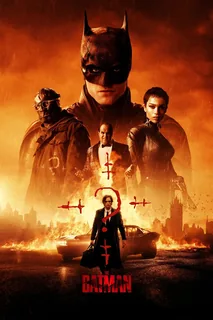
The Batman 2022

Solving the clue does not mean understanding what the persona has taught the city.

Crime, Mystery, Thriller · 176 min

B 77

Pattinson's Bruce looks more fluent inside the investigative role than inside the public life his resources make possible. The cowl has become a way to work and a way to remain unavailable.

The crime scenes give that work material tasks. An image, message or physical trace needs an interpretation, and another interpretation can alter the route. The detective emphasis matters because the audience can watch knowledge being acquired rather than merely receive a later announcement that Batman has already understood.

The film's larger question concerns what the work is for. The vow to become vengeance can be accurately recognised and used by somebody whose actions Bruce cannot endorse. The persona has an audience beyond the people he intended to frighten.

The Riddler's exposure of corruption does not make every later act a justified continuation of that exposure. Likewise, Bruce's ability to identify wrongdoing does not settle whether his preferred response has helped the people least able to endure another crisis.

The flare changes the image of the hero. Bruce enters the floodwater to lead people out, and the bright point they follow is something he holds for them rather than a signal intended to frighten an enemy. The later wounded woman who keeps hold of him makes the change reciprocal. Protection now includes letting a stranger depend on his continued presence. The passage is more persuasive than a declaration of hope alone because the film gives that new purpose a task, a route and a physical demand.

The length can make that change feel more heavily prepared than it needs to be, and the succession of discoveries does not always add a new emotional pressure. I still find the shift substantial. The film is strongest when Batman has to become useful in a way that his original account of himself did not fully imagine.

MEANRANK computed
77/100

From 12 ratings.

Recorded critic / other averages computed
78 / 77

Critics average 78, everyone else 77. They agree.

5

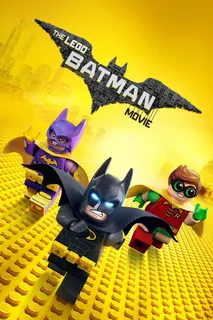
The Lego Batman Movie 2017

A joke about self-importance becomes a practical problem about needing others.

Action, Animation, Comedy · 104 min

B 77

This Batman has made being exceptional a complete social arrangement. He can be the most interesting person in every account because the accounts are largely his own. Will Arnett's voice makes the self-display funny without making the loneliness entirely external to the joke.

The Joker's demand for recognition is therefore more than a reference to an old rivalry. It exposes how much the hero depends on a relationship he refuses to name as one. Rejecting dependence does not stop another person from helping organise his identity.

Adopting Dick begins as a decision Bruce scarcely attends to. Robin's enthusiasm then makes the neglected consequence impossible to keep outside the house. Michael Cera's open delight is funny against Arnett's defensive self-display, but it also keeps the injury precise: somebody is offering attachment to a man who would prefer to enjoy the idea of family without changing how he lives. The film can let that refusal sting while continuing to find its Batman ridiculous.

The toy world is useful because an apparently permanent heroic setting can physically come apart and require shared work. The scale of the reconstruction makes collaboration more than an instruction delivered at the end.

There is a point where the mass of recognisable characters and references threatens to become its own reason for continuing. A viewer can miss a reference and still understand the emotional task; the film is less effective when recognition seems to be the whole task.

Its place is not based on a claim that every child will enjoy the same experience. The substantial achievement is to find a comic form for a problem many solemn Batman films also approach: the wish to protect people can coexist with the refusal to let them become necessary.

MEANRANK computed
77/100

From 12 ratings.

Recorded critic / other averages computed
82 / 76

Critics average 82, everyone else 76. Critics rate it 6 points higher.

4

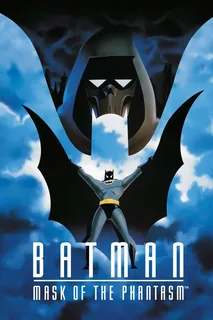
Batman: Mask of the Phantasm 1993

Bruce has to ask whether being happy would break a promise the dead cannot release him from.

Animation, Crime, Mystery · 76 min

B 79

The visit to the parents' grave is one of the character's most revealing scenes. Bruce is not merely restating the original loss. A possible life has become available, and he does not know whether accepting it would make him disloyal to the person he became through grief.

Kevin Conroy gives the graveside appeal a voice far less secure than Batman's. Later, Alfred's reaction to the first appearance in the cowl refuses the uncomplicated thrill of a completed origin. The image has power, but another person who knows Bruce can register its cost. Those two responses keep the transformation from becoming destiny retrospectively justified by an impressive silhouette. A person has chosen this, and somebody else has to see what the choice has made of him.

Andrea gives the possibility a history rather than arriving as a reward for heroic persistence. The relationship can change the task before the familiar costume has become an unquestioned answer.

The parallel paths through loss then make the mystery more than an efficient concealment of identity. Revenge, remembrance and the wish to complete an old obligation can resemble one another while producing different decisions. Recognising another person's injury does not guarantee that one can stop it becoming a governing purpose.

The animation permits a severe clarity of silhouette, movement and atmosphere without making the adult feeling dependent on visual realism. Its compactness is an advantage: the public plot and private history remain closely related.

I would put it near the top in an editorial order, whatever its current score position. The central question is not whether Bruce is brave enough to become Batman. It is whether he can imagine that preserving the love of the people he lost might eventually require something other than continuing to organise a life around their absence.

MEANRANK computed
80/100

From 12 ratings.

Recorded critic / other averages computed
74 / 81

Critics average 74, everyone else 81. Everyone else rates it 7 points higher.

3

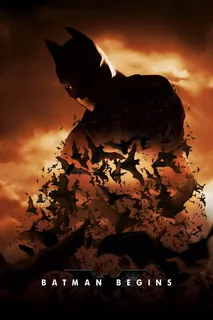
Batman Begins 2005

Fear becomes a tool, but using it does not automatically make its owner wise.

Action, Crime, Drama · 140 min

A 81

The origin is useful because it has to connect a childhood experience to a practical method without making the method seem inevitable. Bruce can be frightened, angry and capable of learning while still needing to decide what an institution offering him discipline is entitled to demand.

The League's demand that Bruce execute a prisoner turns the training into a question of allegiance. Refusal is necessary to the identity he wants, but the burning escape immediately complicates his command of consequences. The film does not begin with a man whose limits are already consistent. Its most useful tension is that rejecting an institution's authority can be clearer than controlling every effect of the force used to leave it.

He does not answer by abandoning fear as an instrument. He attempts to change its target and use, which leaves a productive tension inside the identity. The fact that he intends protection does not make every effect of the symbol self-evidently protective.

Alfred, Gordon and the equipment's other contributors prevent the figure from being plausibly self-made. Wealth permits access; other people supply knowledge, judgement, loyalty and work. Christian Bale can make the determination forceful without making those supports disappear.

The explanations of objects and tactics are satisfying when they make a later action readable. They are less valuable if mistaken for proof that everything could straightforwardly be constructed and used in ordinary reality. Plausibility of presentation is a filmmaking achievement, not an engineering certificate.

The film's strength is the relation between motive, training and a chosen limit. A damaged person is not merely discovering the one identity that will cure the damage. He is deciding which of several available responses he is willing to make into a public power.

MEANRANK computed
82/100

From 12 ratings.

Recorded critic / other averages computed
78 / 82

Critics average 78, everyone else 82. They agree.

2

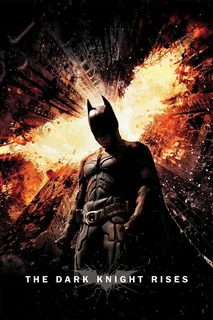
The Dark Knight Rises 2012

The conclusion asks whether the role can survive a life no longer devoted to it.

Action, Crime, Drama · 164 min

A 82

Bruce's withdrawal makes the return different from another routine call to action. The identity has not preserved an uncomplicated body or an ordinary future. Continuing requires an answer to costs the first films did not simply cancel by ending.

Bane gives the physical authority an immediate limit. The possibility that determination alone will be enough is confronted by another body and a plan that does not need to respect the hero's preferred image.

The rope turns the prison climb into a choice about fear. Bruce first treats the safety line as an advantage: it permits another attempt after failure. Removing it changes the bodily meaning of the jump, because survival is no longer something the arrangement can preserve for him. The scene's logic is symbolic rather than a general lesson that safeguards make people weak. What it makes legible is the difference between testing whether he can die and wanting a future enough to risk reaching it.

The wider city plot is much less consistently exact. The siege's political claims, logistical requirements and successive revelations do not always form a sufficiently clear account of how so many people can be made to behave. The scale can exceed the dramatic construction supporting it.

Anne Hathaway's Selina is valuable because she gives another relation to escape and reinvention. Wanting to leave an arrangement is not automatically cowardice, and Bruce's obligation need not determine the terms of everyone else's future.

The ending is the film's strongest defence. The role's continuation does not have to require the same person to remain permanently inside it. I find that permission more interesting than a claim that the film has closed every practical question. An imperfect conclusion can still make a substantial choice about what a superhero story is allowed to stop demanding.

MEANRANK computed
83/100

From 12 ratings.

Recorded critic / other averages computed
82 / 83

Critics average 82, everyone else 83. They agree.

1

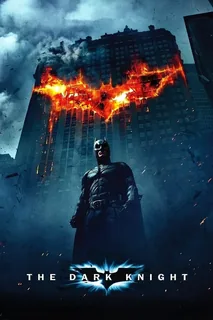
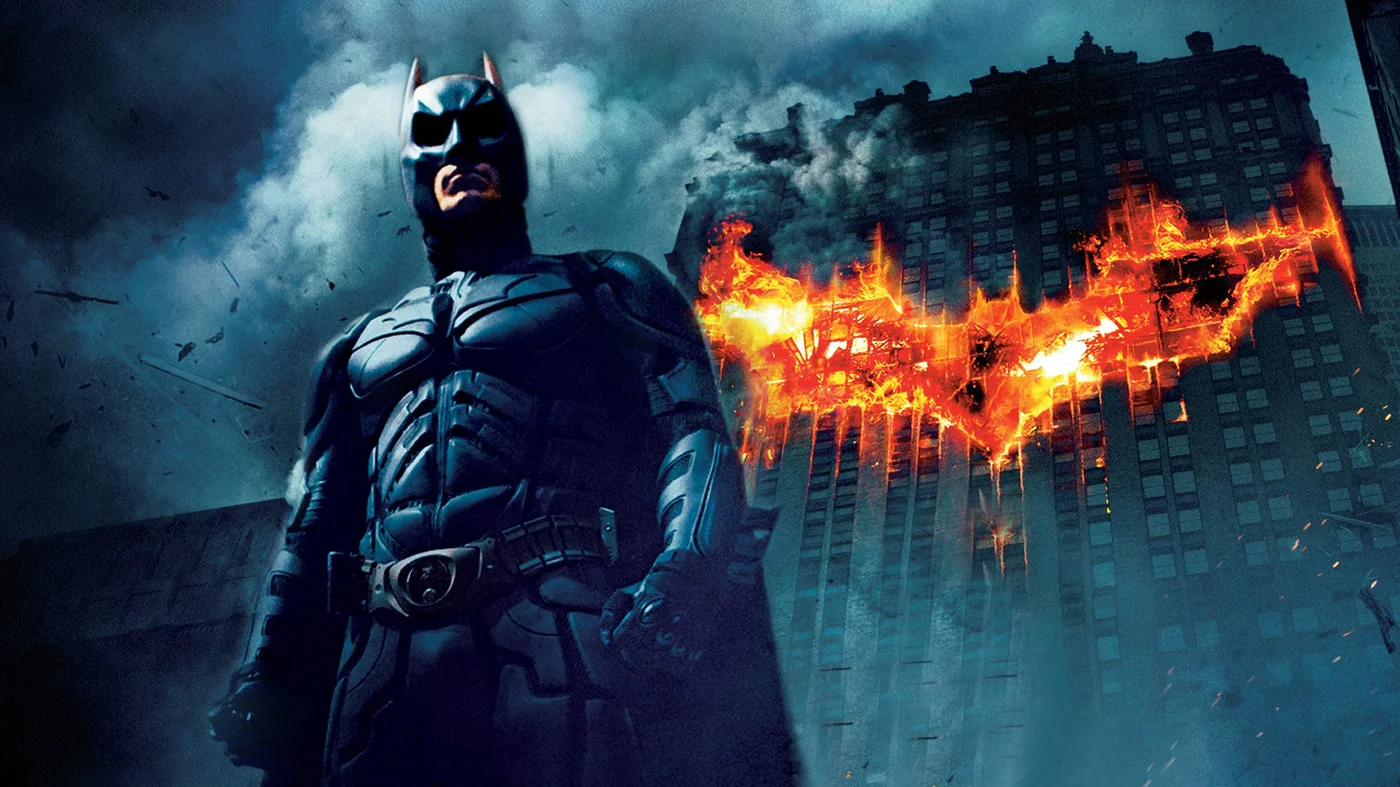
The Dark Knight 2008

The Joker plans carefully while trying to make other people believe only he understands their rules.

Action, Crime, Thriller · 152 min

A 89

The Joker's claim to be without a plan is part of his performance, not a reliable description of the film. Abduction, infiltration, staged choices and precisely timed threats require extensive arrangement. He wants other people to experience their own decisions inside conditions he has prepared.

That makes the interrogation more than a contest between order and chaos. Batman can dominate a body without obtaining the kind of control he needs. The words keep changing what the physical advantage appears to accomplish.

Harvey Dent gives the city another investment. Public confidence has been attached to a figure whose private experience will not remain separate from the role. Aaron Eckhart makes the initial appeal credible enough that the later break injures more than the plot's need for another opponent.

The ferries matter because the Joker fails to obtain the results he predicts. The civilian boat holds a vote but cannot turn the majority's decision into the required killing. On the prison boat, one man removes the detonator from the argument by throwing it away. Those are different refusals, not a single comforting picture of unanimous goodness. The film lets hesitation and an individual's intervention defeat an arrangement designed to make murder feel like the only rational action.

Batman nevertheless turns towards a much larger intrusion to obtain information. Fox's resistance makes the instrument's success insufficient as its own justification. A technology can work while leaving a question about who is entitled to possess it.

The final concealment around Dent keeps the problem alive. Preserving public hope through a false account is not identical to making the city capable of confronting what happened. The apparent self-sacrifice contains another exercise of authority over what others may know.

It leads the rating order here and has a strong editorial claim. Its achievement is not that it made superheroes finally respectable or that no later film could equal it. It gives several attractive responses to danger enough force that their limits have to be encountered rather than merely announced.

MEANRANK computed
90/100

From 12 ratings.

Recorded critic / other averages computed
90 / 90

Critics average 90, everyone else 90. They agree.

The best Batman film for a particular evening need not be the one whose version of the character seems most correct. The 1966 film can be precise comedy without anticipating Nolan. Batman Returns can let the people around the hero supply the city's most difficult injuries. The Lego Batman Movie can make a joke do emotional work that a solemn declaration would weaken.

For a more concentrated comparison, watch Mask of the Phantasm beside The Batman. One asks whether a private promise permits another life; the other asks whether a public persona has become useful in the way its owner imagined. Neither question can be answered simply by building a stronger vehicle.

The Dark Knight remains a formidable first-place argument because effective action repeatedly fails to settle its own legitimacy. Even the apparent solution leaves somebody controlling the story others are permitted to know.

That is more enduring than deciding which actor looked most like a preferred drawing. The mask has to make a life and a city newly intelligible, not merely make a familiar image appear again.

← All lists