9 October 2026

Animated sitcoms, ranked: sixteen ways to make the impossible feel familiar

From BoJack and Daria to Springfield and the Belchers: the comic machinery, the emotional limits and what the recorded ranking can actually tell us.

16 entries

A robot can be selfish in a recognisably ordinary way. A horse can use an apology to avoid changing. A family burger restaurant can feel more precarious than an alien invasion. Animation becomes especially useful to sitcoms when the impossible setting makes a familiar habit clearer.

This selection uses a broad definition: recurring characters and comic situations can qualify even when the series develops substantial dramatic arcs. That is why BoJack Horseman belongs here. Adventure animation whose principal structure is a continuing quest is outside this particular selection.

The tradition did not begin with The Simpsons. The Flintstones was already a prime-time animated situation comedy in 1960, as the Television Academy's history records. These sixteen titles are a modern catalogue selection, not a complete history or a verdict against the older programmes absent from it.

The order uses the stored MEANRANK combined scores, counting down to first place. The selected shows had at least 5,000 recorded ratings and reviews across the catalogue's sources when this edition was prepared. That total is not a count of unique people, and different sources may represent different parts of a long run.

Edition checked: 30 October 2026. This dates the selection, not a simultaneous fresh capture of every source score. A series-level number cannot establish which seasons caused its position. The notes make a separate argument about the comedy itself.

Several selections contain graphic, sexual or otherwise adult material. Animation is not an age recommendation. There are episode and character spoilers below.

How this is judged

MEANRANK computed
Available source ratings combined on one scale. Coverage varies; this is not a matched review of every season.

Computed scores come straight from the ratings, so you can check them. Editorial ones are our opinion, and every one comes with the reason for it.

16

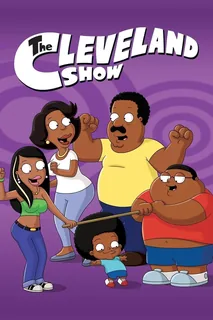
The Cleveland Show 2009–2013

A spin-off needs a different comic engine, not only another household around a familiar voice.

Adventure, Animation, Comedy · 22 min episodes

D 52

Moving Cleveland into a different household creates an opportunity to make his habits consequential in a new arrangement. A spin-off needs that kind of difference if familiarity is to become more than an invitation to sample the first episode.

Cleveland's move into Donna's household means that his wish to be an easygoing husband and father has to meet people with a prior family history. Rallo and Roberta are not simply new listeners for a familiar voice. The spin-off becomes more interesting where his preferred mildness proves inadequate to a decision, and less so where a generic father-versus-children argument supplies the whole episode.

I find the show less distinctive than several neighbours in this selection because the surrounding situations do not consistently reveal a new comic understanding of the central person.

The supporting cast needs desires that do more than generate a problem for Cleveland to solve. If Donna is principally the reasonable spouse and the children principally disruptions, a new household has reproduced an old template. A spin-off earns its space when the people who were introduced to support the lead can complicate his understanding of himself.

The useful spin-off test is whether the lead becomes more complicated outside the parent programme. Giving a supporting character more minutes and a new address does not automatically give the character a different dramatic job.

MEANRANK computed
52/100

From 6 ratings.

15

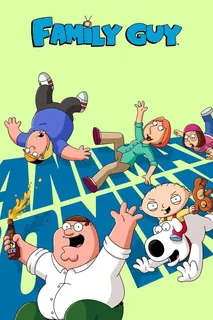
Family Guy 1999

A cutaway can enlarge a scene or relieve it of the need to develop.

Animation, Comedy · 22 min episodes

C 69

Cutaways permit an abrupt change of comic scale. A small phrase in a family scene can become a different place, genre or cultural memory before the original conversation resumes.

That freedom can be exhilarating. It can also release the scene from the work of developing its own people. Recognition or surprise may arrive where a consequence should have been.

“Brian & Stewie,” which confines the pair in a bank vault, is an interesting counterexample to the usual description. The narrowed setting asks how much of the relationship can carry an episode without the usual exits.

The narrowed episode also makes a limit visible. Brian and Stewie can reveal dependence when no new setting arrives to rescue the exchange. Elsewhere, the cutaway's refusal to stay can itself be funny. The distinction is whether departure changes the pressure of the scene or lets the writers abandon a relationship just as it becomes demanding.

I would judge a cutaway by what happens when the programme returns. Has the interruption changed how we see the exchange, or merely postponed the need to make the exchange funny?

MEANRANK computed
70/100

From 8 ratings.

14

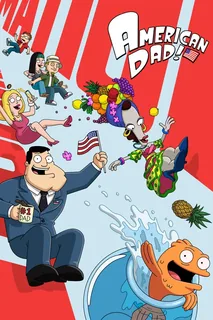
American Dad! 2005

A CIA agent, his family, and an alien in the attic.

Animation, Comedy · 22 min episodes

B 70

Stan's confidence begins from a preferred account of the household and the country. The people closest to him keep producing evidence that the account cannot comfortably absorb.

Roger expands the possibilities because a persona can become a whole new social arrangement. The family is not simply reacting to an alien's powers; it is reacting to the needs and histories he invents.

“Roy Rogers McFreely” makes a local struggle over authority large enough to expose Stan's own appetite for control. A modest setting can carry the same vanity as the national institutions behind his self-image.

The weakness is that freedom can become arbitrary escalation. If any new identity can supply any necessary turn, the current relationship risks losing weight.

Roger's range remains useful only if the people around him must answer a particular demand. A new persona can expose Stan's need to control the household, Steve's wish for status or Francine's appetite for a less dutiful life. When the disguise merely licences another arbitrary turn, freedom starts to remove the resistance comedy needs.

MEANRANK computed
70/100

From 8 ratings.

13

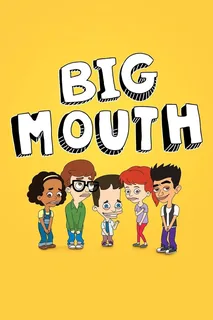
Big Mouth 2017–2025

Puberty, explained by monsters.

Animation, Comedy, Romance · 30 min episodes

B 74

Personifying impulses gives puberty an external cast. A private urge can interrupt a scene, argue with another feeling and expose how little control the supposedly rational person has over the conversation.

The Shame Wizard gives the device a useful social complication. Feeling ashamed is not simply an individual verdict delivered from inside a head; embarrassment can circulate through a school as people imagine how others see them. The invention works when one person's attempt to escape exposure makes somebody else's situation worse. It is thinner when the monster supplies a label where a relationship needs to change.

The crudeness is substantial. It can make embarrassment speakable, and it can also make an injury feel like material for another elaborate gag. A viewer can recognise the purpose and still dislike the balance.

The tolerance question is concrete. Does this particular grotesque image make an unfamiliar experience easier to speak about, or has a person become a delivery system for another outrageous image? The first can make room for empathy. The second can exhaust it. Recognising that the programme intends frankness does not require accepting every decision it makes in pursuit of it.

Judge the scenes instead: does the absurd embodiment clarify a specific fear, or has the fear become an excuse to increase the quantity of provocation? The series has examples of both.

MEANRANK computed
74/100

From 8 ratings.

12

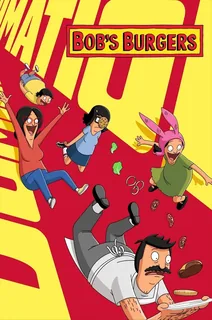
Bob's Burgers 2011

A shared material problem gives the family's affection something practical to do.

Animation, Comedy · 22 min episodes

B 74

The restaurant gives the family a shared material problem. Bob and Linda need to keep a business alive while the children's projects repeatedly require time, money and patience they do not comfortably possess.

Affection works because irritation remains available. A supportive parent can still be tired; a child can be loved without the current plan being sensible.

“The Equestranauts” makes Bob's effort for Tina comically excessive, but the underlying obligation is specific. Her embarrassment matters enough to him that he enters a world he does not understand.

The musical imagination helps the show represent feelings its characters cannot gracefully explain. A song can make an anxious or grandiose inner account briefly visible.

The limitation is that warmth can become predictable if every disruption is safely absorbed. The best episodes give the family's support a cost or a misunderstanding to work through. Kindness is more convincing as something people do than as a permanent label attached to them.

MEANRANK computed
74/100

From 7 ratings.

11

Solar Opposites 2020–2025

Aliens stranded in American suburbia, and a world inside a wall.

Adventure, Animation, Comedy · 22 min episodes

B 75

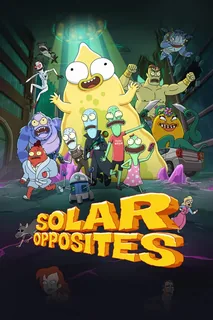
The aliens' household supplies one comedy, but the miniature human society in the Wall supplies another system of power and belief. The shift is useful because the small world can acquire consequences independent of the people treating it as an object.

The Wall makes food, routes and access to authority consequential at a scale the household can disregard. A human community has to make rules inside an environment whose owners do not need its consent. The miniature setting therefore changes more than the size of the props. It makes a familiar imbalance of power physically visible, then asks what the inhabitants do with power among themselves.

The different registers are part of the attraction; they are not proof that every viewer prefers the same strand.

The risk is disproportion. The side world may acquire so much dramatic momentum that a return to the main household feels like an interruption rather than a useful change of pressure.

I value the series where the two scales illuminate one another. Size does not make the human community innocent, and extraordinary technological power does not make the aliens capable of managing an ordinary relationship.

MEANRANK computed
75/100

From 7 ratings.

10

Beavis and Butt-Head 1993–2011

Two idiots on a sofa, watching music videos.

Animation, Comedy, Music · 15 min episodes

B 75

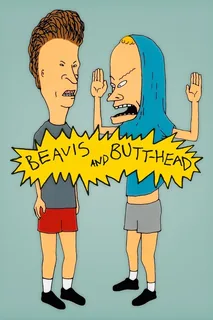
The two boys can watch an image without understanding the social performance within it. Their commentary then accidentally exposes something the polished image would prefer to conceal.

Watching music videos gives their stupidity a precise object: people selling confidence, desirability and rebellion through highly arranged images. The boys may fixate on the wrong detail and still puncture a performance's intended authority. The joke does not have to promote them into discerning critics. It can expose a gap between what an image asks us to feel and what two obstinate viewers choose to notice.

That is the important distinction. A useful observation need not redeem the person making it. The show can be smarter than its protagonists while still asking us to spend time with their limited appetites.

The repetition is both method and risk. A laugh at the wrong detail can be perfectly timed; another variation of the same failure can add very little.

I would not defend every provocation as satire simply because the show has a satirical reputation. The strongest jokes expose a specific relation between a manufactured image and the viewers who consume it.

MEANRANK computed
76/100

From 5 ratings.

9

King of the Hill 1997

Hank's wish to be decent remains vulnerable to his assumptions about other people.

Animation, Comedy, Drama · 30 min episodes

B 75

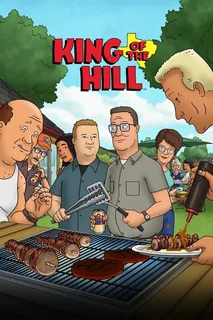
Hank's sense of decency includes a great many assumptions about what a son, neighbour or colleague ought to do. The show can respect his wish to be useful while exposing the narrowness of those assumptions.

Bobby is central because he has interests and a temperament that do not reliably confirm Hank's idea of continuity. “The Son Also Roses” makes a small activity carry that conflict without requiring a villain.

The humour often comes from precise language: a concern stated in a practical tone gradually reveals the private anxiety attached to it.

Calling the show kind should not mean it never mocks or injures its characters. Its strength is that embarrassment can coexist with a recognisable life outside the joke.

I find the comic restraint particularly valuable beside more expansive animated premises. A man can misunderstand someone he loves without an alternate universe or a spectacular punishment being necessary to reveal it.

MEANRANK computed
76/100

From 7 ratings.

8

Clone High 2002–2003

A high school full of clones of famous historical figures.

Animation, Comedy · 30 min episodes

B 78

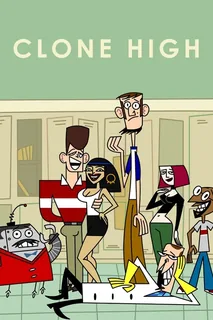
The historical names supply recognition; the actual comic structure comes from teenagers interpreting every exchange as a possible verdict on their desirability.

Abe's uncertainty, Joan's frustrated proximity and JFK's effortless self-regard turn a school setting into competing ideas about who ought to be noticed. The mismatch with the inherited historical identity adds another layer rather than replacing the teen drama.

“Raisin the Stakes” borrows the structure of an adolescent drug panic and attaches it to smoking raisins. The absurd object exposes how much authority the form obtains through music, reaction and a claim that behaviour has become a crisis. The historical names remain funny, but the episode needs the clones to want acceptance badly enough to inhabit the borrowed drama sincerely.

The limitation is that parody depends partly on the audience recognising the form being inflated. Without that recognition, a deliberately excessive turn may look merely arbitrary.

I value the concept when it gives the clones contradictory wants. A famous name is an opening joke. The series has to make the person carrying it useful after the opening has passed.

MEANRANK computed
79/100

From 3 ratings.

7

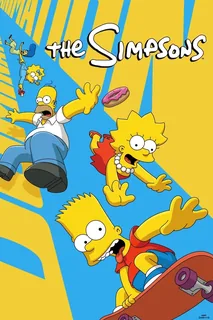
The Simpsons 1989

A town's worth of comic structures. The stored whole-title score cannot explain any particular season's reputation.

Animation, Comedy · 22 min episodes

A 80

Springfield gives the writers more than a family. A school, workplace, church, bar and local government can each organise an episode while the family brings the consequences home.

“Marge vs. the Monorail” turns a public sales pitch into collective self-flattery. The town wants the story being sold. The jokes arise from that desire as much as from the individual con.

“Mother Simpson” shows another resource. The ending can leave Homer alone beneath the night sky without requiring another line to certify the feeling. Comic familiarity makes the quietness legible.

The series also returns to parental failure, embarrassment and the wish to be valued without making every return a complete reset of affection.

The difficulty over a long run is keeping a familiar weakness available for discovery. Homer can be selfish in a way that gives Marge something particular to answer, or merely selfish because another episode needs its usual obstruction. Springfield works when the surrounding people retain interests that resist his centrality. A beloved character is more useful when the world can still tell him no.

MEANRANK computed
80/100

From 8 ratings.

6

South Park 1997

A stable town lets a sudden moral panic become everybody's immediate business.

Animation, Comedy · 22 min episodes

A 80

The town can adopt an explanation at extraordinary speed. Adults form a public certainty, children encounter its consequences, and a small initial dispute expands until everybody is performing a position.

That structure is more important than the claim that the show offends everyone. Offence alone does not establish that a joke has found its target.

Cartman's revenge in “Scott Tenorman Must Die” is a useful limit on treating the children as innocent truth-tellers surrounded by foolish adults. His resourcefulness can become horrifying. The programme lets the comic antagonist exceed the cosy boundaries of misbehaviour.

The rapid response to current events is one strength, but not every episode is made under identical conditions or succeeds because it is topical. Some references date; a precise account of vanity or collective panic can last longer.

I find the show strongest when it identifies a particular contradiction. It is weaker when declaring every available position ridiculous substitutes for deciding what the scene has actually demonstrated.

MEANRANK computed
81/100

From 9 ratings.

5

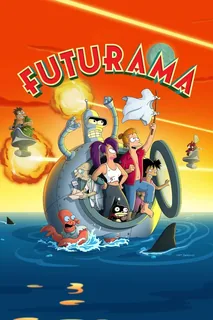
Futurama 1999–2026

A delivery boy frozen in 1999 wakes up in the year 3000.

Adventure, Animation, Comedy · 22 min episodes

A 82

The future lets the writers turn an ordinary feeling into an unreasonable physical problem. Fry's lateness, longing and inability to make the right moment arrive can become a story about enormous distances or changes in time.

“The Late Philip J. Fry” is a strong example: a missed appointment acquires a scale that should make the original disappointment absurd, yet the disappointment remains emotionally useful.

The ensemble matters as much as the premise. Leela's competence, Fry's appetite for belonging and Bender's theatrical selfishness create reactions that technology cannot simply improve.

Sentimental episodes can be forceful, but sadness is not automatically depth. A late revelation may make an audience feel more without necessarily giving the present relationship more life.

The best balance is comic invention that changes what an existing attachment means. Then the future is not decoration around a conventional lesson. It is the means by which the lesson becomes peculiar to these people.

MEANRANK computed
83/100

From 9 ratings.

4

Archer 2009–2023

Professional ability keeps colliding with the inability to hold a useful conversation.

Action, Adventure, Animation · 22 min episodes

A 83

A briefing can barely proceed because everyone remembers an insult, an affair or a grievance that supposedly belongs outside the job. That is the comic engine: professional danger has to compete with people who cannot stop making the room about themselves.

“Vision Quest” confines the colleagues in an elevator and removes the glamorous operation that normally gives their competence an outlet. Rank and expertise do not settle who is taking up space, withholding cooperation or making the wait worse. The setting tests the ensemble rather than simply pausing the spy story. These people can perform dangerous work together and still lack elementary habits of coexistence.

Archer's physical competence matters because he is not merely useless. He can perform the dangerous task while remaining profoundly difficult to work with. Talent and maturity have been separated.

The successive changes of setting also test how much of the comedy belongs to the relationships rather than to espionage. Sometimes the reset creates room; sometimes it makes an established dynamic feel mechanically transplanted.

I prefer the passages in which a joke alters the current balance between people. When repetition merely announces that we remember a line, speed can conceal a loss of movement.

MEANRANK computed
83/100

From 9 ratings.

3

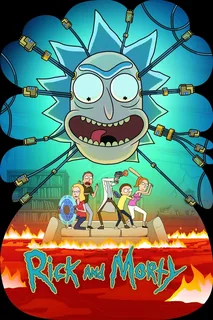
Rick and Morty 2013

Infinite possibilities do not remove the responsibility attached to a particular relationship.

Action, Adventure, Animation · 23 min episodes

A 85

The inventions matter when they expose the excuse Rick is using. Infinite possibilities can make responsibility look optional: another world, another version, another escape from a consequence.

The family prevents that explanation from becoming complete. Morty is not simply a witness to genius; his dependence and resentment give the adventures a continuing emotional cost.

“Pickle Rick” is a particularly clear collision between extravagant ingenuity and an ordinary demand to attend therapy. The scale of the evasion is the joke. Being able to solve an extraordinary physical problem does not settle the reason the character created it.

The weakness follows the same route. Spectacular invention can become an exemption that the show grants more readily than it examines.

I value the comedy most when cleverness creates a new difficulty rather than automatically authorising the person who possesses it. The series is stronger as an argument about destructive intelligence than as a source of flattering instructions for imitating Rick.

MEANRANK computed
86/100

From 9 ratings.

2

Daria 1997–2001

Sarcasm protects Daria; the show improves when it also asks what the protection costs.

Animation, Comedy, Drama · 30 min episodes

A 86

Daria's judgement is often accurate. That does not make the position of permanent observer emotionally free.

The conflict involving Tom exposes the limit sharply. Daria cannot preserve her position as the accurate observer while treating Jane's hurt as merely another faulty interpretation to correct. The friendship asks for participation, including the possibility of being wrong in a way a better line will not repair. The series is richer for letting the sarcastic heroine become someone else's difficult person.

The family and school supply repeated situations in which public enthusiasm conceals status, insecurity or self-interest. The dry delivery lets a conventional request for approval become strange.

I find the show richer when Daria's detachment is questioned without requiring her to become cheerfully conventional. Intelligence need not be punished, but it need not provide immunity from error either.

The risk is repetitive superiority: another foolish person arrives, and the expected response confirms what the audience already believes. The stronger episodes let someone resist the classification.

That distinction gives the show a longer life than a collection of dismissive quotations would have.

MEANRANK computed
86/100

From 4 ratings.

1

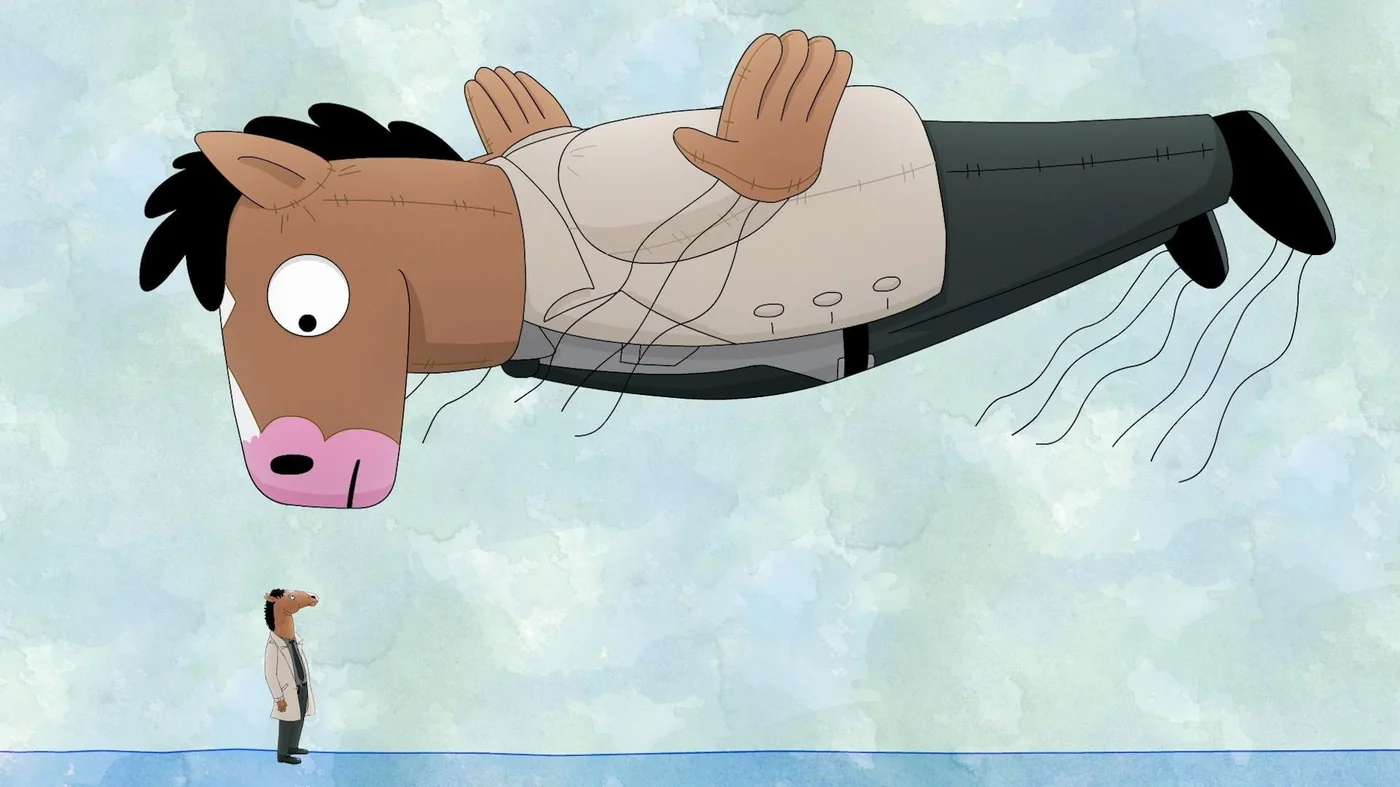
BoJack Horseman 2014–2020

The sitcom's promise of a clean emotional reset meets a life that keeps remembering.

Animation, Comedy, Drama · 25 min episodes

A 87

BoJack's old sitcom provides a useful false memory: a world where an injury can be acknowledged, a lesson stated and the household restored in time for the next episode. His adult life keeps refusing that closure.

The stolen letter from the Hollywood sign makes a romantic gesture an act of appropriation that the whole setting absurdly absorbs. BoJack can cause an enormous disruption and still understand it primarily as evidence of the scale of his feeling. The joke is funny before it becomes a useful description of his entitlement. Making the world accommodate him is easier than discovering what another person actually wants.

“Free Churro” narrows the field to a funeral address. A person apparently speaking about his mother keeps revealing how urgently he needs an account of himself. “Fish Out of Water” tests the opposite register through a nearly wordless environment.

The limitation is that eloquent self-knowledge can become another reward for behaviour the show condemns. The best passages remember that explaining an injury is different from repairing it.

It is both a sitcom and a drama in this selection because the recurring comic world keeps generating the conditions through which the damage becomes visible.

MEANRANK computed
88/100

From 9 ratings.

Where this comes from: Television Academy: The Flintstones and prime-time animation · Apple TV: Archer's Vision Quest episode

What the form makes possible

BoJack and Daria show how comic distance can become a form of self-protection. Futurama gives small disappointments the scale of time travel. King of the Hill and Bob's Burgers remind us that an animated sitcom does not require an escalating supply of impossible events.

The numerical order cannot choose among those pleasures for you. Nor can it isolate a celebrated early run from everything later attached to the title. A viewer looking for the best season or the best introduction needs a more specific question than this catalogue ranking can answer.

My own starting points would be Futurama for the conjunction of invention and feeling, Daria for the cost of being the clever observer, and Bob's Burgers for an ensemble whose support remains compatible with irritation.

The strongest shows here do not merely exploit the absence of physical limits. They discover a human limit that still applies inside the invented world.

← All lists