
8 October 2026

TV's best male friendships, ranked: affection, loyalty and their limits

Ten pairs whose relationships change the work, the jokes and the choices their shows make possible.

10 entries

A recurring friendship lets television show something an isolated declaration cannot: what affection costs on an ordinary day. Somebody waits, covers a shift, absorbs an embarrassment or notices that the familiar joke has stopped being funny. Repetition gives those gestures a history.

The best pairs here also have ways of making each other worse. House can use Wilson's loyalty to avoid a consequence. Shawn relies on Gus to make an irresponsible adventure workable. Harvey's protection can be both generous and part of the arrangement that keeps Mike dependent. Those difficulties make the relationships worth discussing rather than disqualifying them from affection.

The order is editorial. I have favoured relationships that organise a show's emotional life, give both men something particular to do and change as their circumstances change. The score alongside each entry belongs to the whole programme. It cannot isolate the quality of one friendship, and the True Detective figure covers an anthology whose later seasons follow different people.

The pairs have different emotional languages. Alan and Denny can say what House and Wilson often make legible through irritation. Troy and Abed build a world through play; Rust and Marty need years of conflict before recognition becomes possible. The comparison concerns what those forms of intimacy let both people do.

Major spoilers follow, including Boston Legal's finale, later Suits developments, House's fourth-season ending and the ending of True Detective's first season. The selections range from comedy to programmes involving severe violence and illness.

How this is judged

MEANRANK computed
Combined score from qualifying sources held for the whole programme. This figure does not rate the friendship.

Computed scores come straight from the ratings, so you can check them. Editorial ones are our opinion, and every one comes with the reason for it.

10

True Detective 2014

Recognition emerges without making two men the same.

Crime, Drama, Mystery · 60 min episodes

B 77

This entry concerns Rust and Marty in the first season. Their incompatible ways of talking about the world make partnership entertaining long before the programme gives it the shape of affection.

Marty's ordinary confidence is not evidence of superior self-knowledge. Rust's elaborate pessimism is not proof that he understands every person before him. The performances keep exposing conduct that neither man's preferred account can comfortably include.

Their familiarity is costly. Working beside someone can produce an intimacy that does not make him easy to live with, trust or forgive. The violence and treatment of women also deserve scrutiny beyond the interest of the male pair.

Outside the hospital, Rust's account of being close to death lets his daughter enter a conversation the elaborate pessimism had helped keep at a distance. McConaughey can no longer make the feeling sound like a theory he has already mastered. Harrelson gives Marty the quieter task of receiving it. Recognition does not require either man to inherit the other's worldview. For once, understanding can mean staying with a statement rather than winning the next reply.

Rust Cohle & Marty Hart

MEANRANK computed
78/100

From 9 ratings.

9

Person of Interest 2011–2016

Trust matters where information is held unequally.

Action, Adventure, Crime · 43 min episodes

A 83

Finch offers Reese work, but the offer is also an interpretation of a life Reese has begun to regard as finished. Reese's practical commitment then asks the secretive Finch to accept a form of dependence he cannot completely manage.

Finch's abduction at the end of the first season changes the purpose of Reese's relationship with the Machine. The system normally supplies someone else to save; now Reese has to ask it for access to the man who gave him the work. Caviezel's usual readiness to act is left waiting for a response he cannot command. Care becomes visible through the loss of the competence the partnership ordinarily supplies.

The relationship is not the only family or moral intelligence in the series. Carter, Root, Shaw and others change what the pair can understand, so a tribute that reduces the ensemble to two men saving each other would make the show smaller.

The strongest question is what trust permits when one person holds much more information. Finch's caution and Reese's readiness to act can protect each other, but they can also conceal disagreements that care alone will not resolve. The bond matters because those differences have consequences.

Harold Finch & John Reese

MEANRANK computed
83/100

From 9 ratings.

8

Suits 2011–2019

A mentor's protection can also maintain dependence.

Comedy, Drama · 45 min episodes

A 80

Harvey initially recognises a useful brilliance and makes a professionally reckless choice. The secret creates loyalty, but it also creates leverage. Mike owes his position to someone who can protect him and who has helped make his position unsafe.

The confident exchanges are entertaining because both men can challenge the other's performance. Harvey does not get to retain every advantage simply by having the better suit or the established reputation. Mike's intelligence gives the relationship a source of resistance.

Mike's acceptance of the plea gives the protection a different direction. He can decide to bear a cost to keep the threat from reaching the colleagues who have protected him. Netflix's recap identifies that choice. It is more reciprocal than a gifted recruit remaining grateful to the man who gave him a chance. The sacrifice still does not settle what the original deception has required of people outside their preferred circle.

That difficulty is the reason to watch the bond closely. A mentor can open a life and still expect too much authority over it. The friendship becomes more convincing when Mike's developing independence is allowed to matter as much as his willingness to remain grateful.

Harvey Specter & Mike Ross

MEANRANK computed
81/100

From 9 ratings.

7

Sherlock 2010–2017

A witness has a life beyond the exceptional man he describes.

Crime, Drama, Mystery · 90 min episodes

A 85

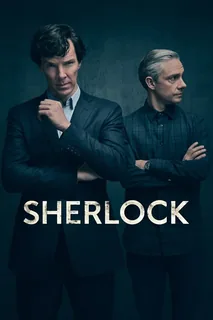
John supplies an audience, but he also gives Sherlock's conduct a person who can answer back. Martin Freeman's pauses make clear that fascination does not require endless admiration.

The blog is a useful part of the arrangement. John turns an encounter into a public story, which helps create the detective's reputation while giving John a role in how that reputation is understood. The friend is participating in the making of the extraordinary man.

The wedding speech in “The Sign of Three” is affecting because Sherlock has to recognise a bond in terms he does not completely control. Fluency in deduction does not automatically provide fluency in gratitude.

The return in “The Empty Hearse” lets John answer Sherlock's theatrical surprise with anger. The clever plan has succeeded on its own terms, while the friend has lived through real grief. Freeman prevents the reunion from becoming only a reward for the man who arranged it. Later reversals are less persuasive when another declaration is expected to repair a comparable injury without giving John's response the same space.

Sherlock Holmes & John Watson

MEANRANK computed
86/100

From 10 ratings.

6

Friends 1994–2004

Practical generosity must preserve the other person's dignity.

Comedy, Romance · 22 min episodes

A 83

The recliners turn companionship into a physical arrangement: two people can enjoy being together without needing an occasion. That ordinary ease is one of the relationship's chief pleasures.

Money makes the arrangement less equal than it first appears. Chandler can support a way of life Joey could not readily sustain alone, and financial help can create embarrassment alongside gratitude. Matthew Perry's defensive humour and Matt LeBlanc's openness give those exchanges different vulnerabilities.

Chandler's invented game of Cups makes the financial awkwardness a scene. He arranges for Joey to win money because accepting plain support would be harder for him. The kindness is practical, while the disguise shows that Chandler is also deciding how much truth Joey can receive without feeling diminished. It is a small, comic version of the question running through the pair: can help preserve dignity without quietly becoming management?

The comedy around masculinity has dated unevenly. The friendship remains appealing where care is allowed a practical form: remembering a preference, protecting someone from a humiliation or learning that generosity needs to preserve the other person's dignity as well as solve a problem.

Joey & Chandler

MEANRANK computed
83/100

From 10 ratings.

5

Psych 2006–2014

Support includes objection as well as another adventure.

Comedy, Crime, Drama · 44 min episodes

B 79

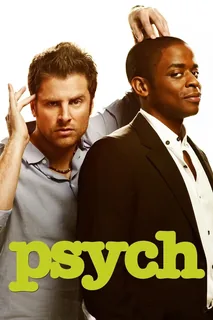
Shawn brings momentum; Gus makes momentum compatible with food, rent, another job and the physical limits of two people who can still be frightened. Dulé Hill's reactions give the comedy a practical resistance.

“Office Space” makes Gus the source of the disaster. Finding his boss dead, he panics and compromises the scene; Shawn's attempt to help only compounds it. USA Network's episode account identifies that opening. Hill drives the comedy instead of merely disapproving of Rodriguez's improvisation. Each man gets to be the one whose fear makes help necessary and the one willing to arrive when asked.

The childhood history gives a silly reference or an invented introduction an accumulated social meaning. A joke can be proof of familiarity and an irritation the familiar person has endured too many times.

The programme often restores the pair's routine quickly, which can soften the consequences of Shawn's behaviour. Its stronger episodes let support include objection. Choose it for a lighter, playful relationship whose warmth depends on both performers being allowed comic initiative. Affection is part of the show's craft, not evidence that it has no ambition beyond being liked.

Shawn & Gus

MEANRANK computed
80/100

From 8 ratings.

4

House 2004–2012

Attention and loyalty can coexist with enabling harm.

Drama · 45 min episodes

A 82

House can make a harmful demand entertaining. Wilson knows the pattern and still has reasons to remain. Hugh Laurie and Robert Sean Leonard give that knowledge texture through delays, irritated looks and the difference between what Wilson predicts and what he is prepared to prevent.

The friendship's appeal depends on the moments when House notices something nobody else has, including something about Wilson. Attention can feel like care even when the usual social performance of care is absent.

That should not make cruelty a romantic proof of depth. Wilson can enable conduct that damages him and others; the show is not always equally interested in those costs. Asking what each man receives from the arrangement is more useful than simply celebrating the one person who stays.

Amber's death in “Wilson's Heart” makes that limit more than a principle. House's effort to reconstruct the events and understand the illness cannot restore Wilson's relationship. Robert Sean Leonard gives the grief its own pace, which House cannot make reasonable by supplying a better explanation. Wilson's later withdrawal has to count as an action with weight, not a friend forgetting his duty to remain available to the genius.

Gregory House & James Wilson

MEANRANK computed
82/100

From 10 ratings.

3

Community 2009–2015

Shared play works only while both people can contribute.

Comedy · 22 min episodes

A 83

Troy and Abed make play a shared environment. A fake broadcast, an elaborate fort or a genre scenario becomes a place where both can contribute something that ordinary social roles had not offered them.

Donald Glover's willingness to be silly is important to the relationship. Troy is not simply the conventional friend generously tolerating Abed's interests. He discovers pleasures and capacities of his own through participating.

“Pillows and Blankets” turns their disagreement into a mock war documentary. The grand historical treatment is funny because the forts are ridiculous, but Troy's wish to have a contribution recognised is not. Abed can take refuge in a form whose rules he controls; Troy needs participation to mean more than fitting into that control. The genre game gives the ordinary quarrel a visible structure, including the unequal power it had been easy to call harmony.

The show sometimes turns emotional understanding into a speech more explicit than the scene needs. The pair work best when a game has practical consequences for trust. Their friendship makes imagination look social: another person's willingness to join is a gift, rather than an unlimited resource one can assume will remain available.

Troy & Abed

MEANRANK computed
84/100

From 9 ratings.

2

Scrubs 2001–2010

A secure bond has to make room for changed availability.

Comedy, Drama · 30 min episodes

A 81

J.D. and Turk have a language built from repetition: gestures, games, fantasies and an enthusiasm for one another that other people must sometimes interrupt. The comedy allows affection to be enjoyable before asking it to carry a serious event.

“Guy Love” in “My Musical” gives both men a voice in the declaration. Turk is not simply the object of J.D.'s fantasy of a perfect friend; Donald Faison returns the enthusiasm, and the performance lets their pleasure in each other occupy the scene. The comedy also keeps trying to define the bond through assurances about what it is not. The more durable achievement is that affection can be answered rather than merely tolerated.

Turk's marriage to Carla changes how much time is available for the old routines. The friendship is strongest when the show lets that adjustment become a responsibility for J.D., rather than treating Carla as the person who has spoiled an arrangement. Love for a friend does not give somebody a permanent first claim on his time.

The broader comedy can be juvenile, including jokes that rely on anxious distinctions about masculinity. The better scenes make the bond secure enough to survive a refusal. Closeness becomes more convincing when one person can ask the other to grow without making growth sound like abandonment.

J.D. & Turk

MEANRANK computed
81/100

From 9 ratings.

1

Boston Legal 2004–2008

A recurring conversation makes affection explicit and authority questionable.

Comedy, Crime, Drama · 44 min episodes

A 80

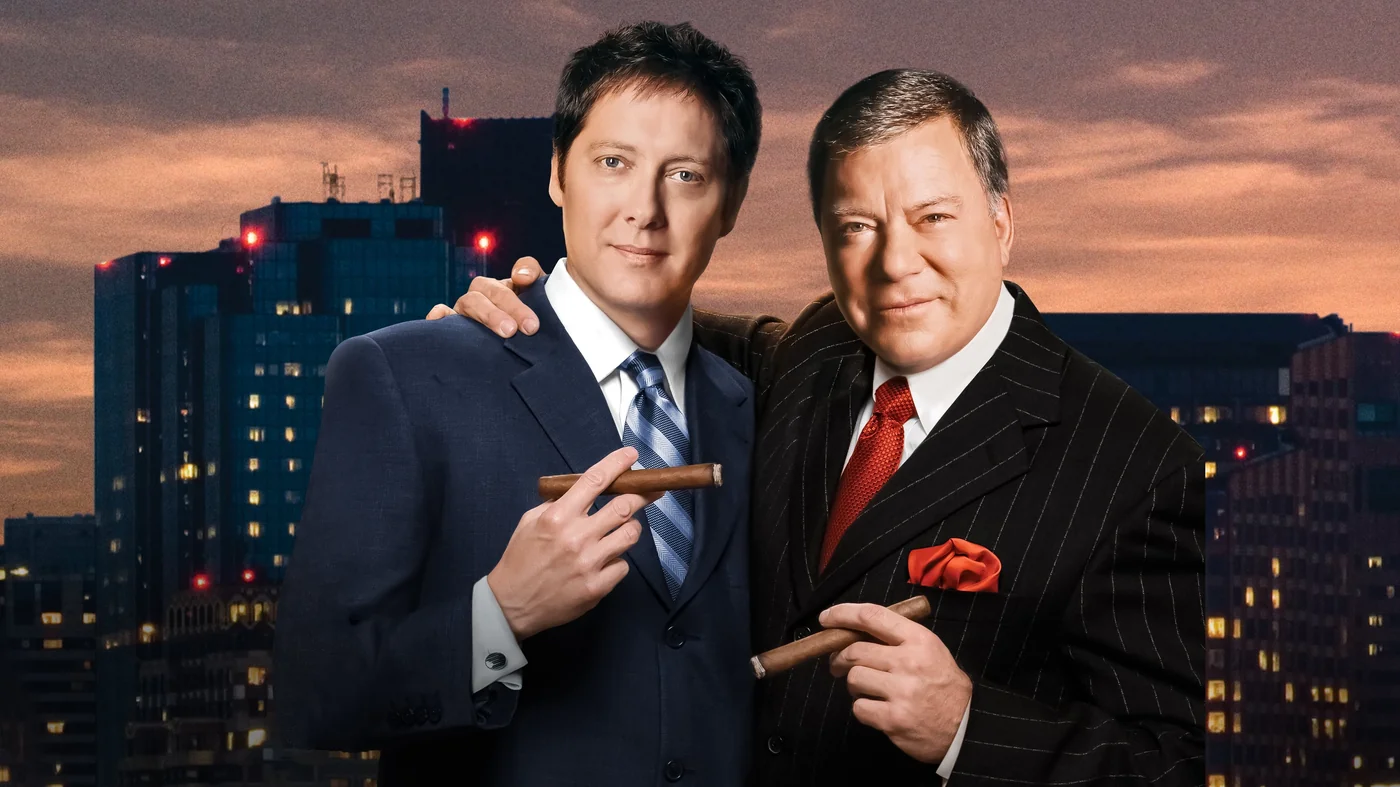
The balcony creates a second rhythm after the courtroom. Alan and Denny can stop performing a position and ask how much they believe it, or admit that the day's confident display has left something unresolved.

James Spader and William Shatner make the differences enjoyable without making them abstract debate partners. Denny's vanity needs an audience; Alan's fluency needs a person who can interrupt its self-importance. The attraction is not that they agree on a hidden moral doctrine. They have developed enough knowledge of each other to recognise when an argument is also a request for reassurance.

The fear around Denny's memory gives the routine another weight. Familiar jokes can preserve dignity, but they cannot permanently remove the difficulty. Their marriage in the finale makes the recurring declaration practical. The plot invokes legal and financial protection; the emotional force comes from Alan accepting a future in which cleverness will not be enough to keep Denny well. The balcony's promise to stay has become an arrangement they intend to live.

The show can be glib, and its treatment of women and workplace conduct has substantial limitations. The pair's tenderness should not excuse those choices. It does offer a rich example of male affection that can be explicit, comic and unsettled at once.

Alan Shore & Denny Crane

MEANRANK computed
80/100

From 8 ratings.

Where this comes from: USA Network: the opening of Psych's Office Space · Netflix: Mike's plea and its consequences in Suits

The strongest friendship is not always the easiest company

Alan and Denny remain my first choice because the familiar conversation keeps making room for a future neither can control. J.D. and Turk give mutual delight more exuberant form; Troy and Abed test what shared play requires of both participants. House and Wilson make the harder countercase: knowing someone exceptionally well can help care and enabling harm survive in the same relationship.

A useful test across all ten is to watch a refusal. Can one friend say no without the programme treating him as disloyal? Can a partner, colleague or different ambition matter without becoming an enemy of the pair? Those questions reveal more than counting declarations of love.

The show scores remain context. A friendship can be exceptional within an uneven programme, and a highly rated programme can distribute care very unequally. The scenes in which somebody must adjust are where the written argument becomes visible.

← All lists