
16 September 2026

The best Bond women, ranked by character and performance

Vesper, Tracy, Natalya and twelve more: what the films give them to want, decide and change.

15 entries

The most revealing moment in Casino Royale is not Vesper's entrance. It is Bond sitting beside her in the shower after violence has ceased to be an entertaining demonstration of his competence. She cannot make its effects disappear. For a moment, he has to do something other than impress her.

That scene gives the relationship a possibility a glamorous introduction cannot supply: each person has encountered a limit in the other. Vesper can read Bond sharply on the train and still be frightened by what his work requires. He can be dangerous and still recognise that danger is not the answer to every need.

This ranking puts her first for that combination of intelligence, vulnerability, concealed pressure and consequential choice. Tracy follows because Diana Rigg makes the possibility of a life with Bond feel like an encounter between people, not an award at the end of a mission. Natalya and Wai Lin come next for knowledge, competence and objectives the plot cannot simply transfer to its hero.

“Strong female character” is too imprecise a test. A woman can win a fight and still have no recognisable desire outside her function in the action. Another can need help and remain a substantial person. The question is what the screenplay and performance allow her to want, resist, misunderstand and decide.

The order combines character depth (40%), agency (35%) and dramatic impact (25%). These are editorial judgements with explanations. Agency includes decisions made under coercion; the score assesses the room the film gives a character to act, not whether a victim should have escaped a constraint. The separate rating of the film does not affect the order.

The headings use the actors' names, and each verdict identifies the role. The scope includes allies, lovers and adversaries. That lets May Day and Xenia stand beside the romantic leads, but it also makes the limits of the comparison visible: a brilliant short appearance is not the same achievement as sustaining the emotional argument of a whole film.

Major spoilers follow, including the endings of On Her Majesty's Secret Service, Casino Royale and No Time to Die.

How this is judged

Character depth editorial
How much the writing and performance establish beyond a function in Bond's mission. Out of 10. Counts for 40%.
Agency editorial
Consequential decisions, including under pressure or coercion. Out of 10. Counts for 35%.
Dramatic impact editorial
What her presence and choices change in the film or series. Out of 10. Counts for 25%.
Film rating (context) computed
MEANRANK score of the named film, or average of the two Madeleine Swann films. Not part of the ranking.

Computed scores come straight from the ratings, so you can check them. Editorial ones are our opinion, and every one comes with the reason for it.

15 Ana de Armas

Ana de Armas

Paloma — No Time to Die (2021).

Pictured: No Time to Die (2021)

Paloma's nervous preparation and sudden competence make a compact comic idea work. Ana de Armas allows the eagerness to remain visible during the action rather than revealing it as a complete disguise. The pleasure is that she can be new to this particular assignment and still be good at the job.

She also leaves after completing her part. Bond's attention does not have to turn the encounter into an affair. The low depth score is about the size of the role, not a failure of performance: the film gives us little history, conflict or change to assess. She finishes here because this ranking rewards sustained character work, while recognising a brief appearance that does almost everything it needs to do.

The preparation in the wine cellar sets up the joke precisely. Paloma starts helping Bond change for the assignment; his assumption that the encounter is becoming sexual runs ahead of what she is doing. De Armas keeps the task moving instead of making the correction a solemn rebuke. The same eagerness carries into the party and the fight. She can enjoy dressing for an operation, briefly lose the smooth professional manner and still deliver when it matters. Experience is not the only route to a readable, competent screen presence.

The departure is just as useful. She completes her part and is allowed to leave without the story making that independence a rebuke to Bond or a promise of inevitable romance. A small professional encounter can remain enjoyable without becoming a claim on the rest of either person's life.

That is why her low depth score should not be read as a recommendation to make the scene heavier. A tragic history or an explanatory speech would probably damage what works. The role is limited because the film asks it to occupy a small interval. Within that interval it is remarkably complete. A ranking of short appearances, rather than sustained characters, would move her a long way up.

Paloma in No Time to Die (2021)

Character depth editorial
4/10

The short appearance establishes an appealing manner but has little room for history or change.

Agency editorial
8/10

She contributes directly to the operation and leaves on her own terms.

Dramatic impact editorial
7/10

A small role makes a strong impression without carrying the film's main conflict.

Film rating (context) computed
71.0/100

No Time to Die 71

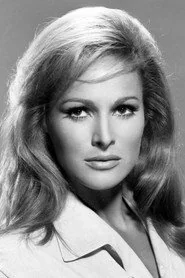
14 Ursula Andress

Ursula Andress

Honey Ryder — Dr. No (1962).

Pictured: Dr. No (1962)

The beach entrance has become so familiar that it can obscure Honey's survival knowledge and guardedness. She knows the island, is wary of intruders and has a history that makes the wariness intelligible. The film briefly allows her to be more at home there than Bond.

After that, the story steadily reduces her role. Captivity replaces the independence of the introduction, and Bond's mission supplies the resolution. Her influence on the series' imagery is enormous; the dramatic development is much smaller. Keeping those judgements separate is the reason she is low on this list despite the highest impact score. An enduring image is a real achievement, but it is not the same achievement as a fully sustained character.

Honey's knife makes the first exchange less comfortable than the famous image suggests. Bond is on an island where she has been gathering shells; his ability to approach her is not automatically a reason for her to welcome him. Knowledge of the place, suspicion and a means of defending herself all precede the mission's claim on her. The scene offers a person with habits and a living before it offers the series an image to repeat. The later films remembered the entrance more readily than that initial friction.

The film gradually withdraws that independence. The introduction's ability to suggest a life is not followed by equal curiosity about it. Once captivity becomes the main arrangement, her presence is increasingly a problem for Bond to solve rather than a source of decisions the story must accommodate.

Her image remains one of the series' most influential achievements, but influence is only one part of the ranking. The distinction is worth keeping even if it produces an apparently surprising position. An entrance can be perfectly designed, a performer can make it indelible, and the subsequent role can still fail to develop the person the entrance led us to expect. Honey is a particularly clear example of how a franchise can preserve an image more carefully than a character.

Honey Ryder in Dr. No (1962)

Character depth editorial
5/10

The island knowledge and guarded history are promising, but receive little development.

Agency editorial
5/10

She begins independently and then becomes largely captive to the main plot.

Dramatic impact editorial
10/10

The entrance established one of the series' most repeatedly revisited images.

Film rating (context) computed
74.7/100

Dr. No 75

13 Halle Berry

Halle Berry

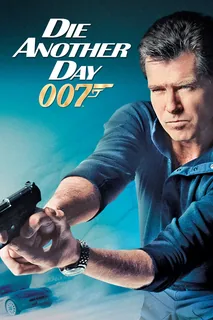
Jinx Johnson — Die Another Day (2002).

Pictured: Die Another Day (2002)

Jinx's entrance invites comparison with Honey Ryder, but the character is a fellow operative rather than a mysterious civilian. Halle Berry brings speed and confidence to the exchanges, and the early scenes promise a partnership that could carry a different kind of adventure.

The film does not consistently honour that promise. Jinx spends too much of the middle needing rescue, while the dialogue confuses innuendo with chemistry. Her fight with Miranda Frost finally restores an independent opponent and objective. She ranks above Honey on the amount she is allowed to do, but below the stronger professional allies because her competence is asserted more consistently than it is dramatised.

The introduction borrows a recognisable image from Dr. No, which creates an immediate risk: is Jinx being introduced through her own possibilities or through the series congratulating itself on a memory? Her profession promises the former. Berry's energy makes that promise credible for a while.

The melting ice palace is the sharpest example. Jinx can fight and investigate, but the sequence encloses her behind glass while the spectacle becomes a question of whether Bond will reach her. The final aircraft fight with Frost gives her a different arrangement: two women have their own antagonism and have to finish it while Bond is occupied elsewhere. Berry's physical commitment has more force when the film permits that separate line of action than when a declaration of her competence merely precedes another captivity.

The final fight gives Jinx something the middle often withholds: an opponent and a task whose resolution does not require Bond to arrive and complete her competence. That restores some force to the original idea. Her lower position reflects the distance between an advertised partnership and a sustained dramatic one, not a failure by Berry to look capable inside a film frequently more interested in its next embellishment.

Jinx in Die Another Day (2002)

Character depth editorial
6/10

Berry supplies confidence, but thin dialogue and limited background constrain the part.

Agency editorial
7/10

She has her own assignment and wins her final fight, despite repeated rescue situations.

Dramatic impact editorial
7/10

She has a substantial share of the climax without changing the larger Bond formula.

Film rating (context) computed
57.3/100

Die Another Day 57

12 Maud Adams

Maud Adams

Octopussy — Octopussy (1983).

Pictured: Octopussy (1983)

Octopussy has an organisation, a home and a business arrangement before Bond arrives. Maud Adams gives her the manner of someone accustomed to making decisions. The film's sillier interruptions can obscure how unusual it is for the central woman to control a whole setting rather than merely live in the villain's.

Her alliance with Kamal Khan also gives her something consequential to misunderstand. Once she knows the scheme's real purpose, she acts against it. The romance is conventional and the character remains less sharply defined than her position promises. She earns her place through authority that exists outside Bond's interest, and through a change of mind that affects the climax.

An organisation gives Octopussy something more demanding than an impressive address. Other people have relations to her authority, and the setting contains activity that does not exist only to help Bond reach the next encounter. Adams's ease makes that authority look accustomed rather than recently granted for the hero's benefit.

The circus is where the misunderstanding becomes impossible to preserve. Octopussy has understood the operation as smuggling; the concealed bomb means her own enterprise and people are being used as cover for mass killing. Bond has to get that fact heard inside a performance whose noise and disguises make him look absurd. Her response matters because she can recognise the difference between the illicit business she agreed to and the violence being carried out through it. The later attack on Khan's palace gives that recognition an organised force.

The film's tonal distractions sometimes make the character seem more stable than the story around her. The relationship with Bond can then become another convention the film fulfils rather than a fully particular attraction. I rank her for the independent position the screenplay establishes and the material consequence of her revised judgement. There is more of a person and a working world here than a quick memory of the film's broadest comedy might suggest.

Octopussy in Octopussy (1983)

Character depth editorial
7/10

Her authority and business interests create a life outside the romance, with limited personal detail.

Agency editorial
8/10

She leads her organisation and changes sides when she understands the deception.

Dramatic impact editorial
7/10

Her allies and decisions materially affect the final confrontation.

Film rating (context) computed
60.4/100

Octopussy 60

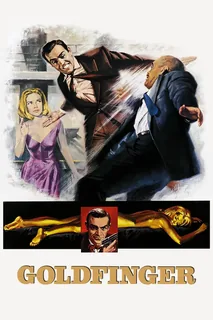
11 Honor Blackman

Honor Blackman

Pussy Galore — Goldfinger (1964).

Pictured: Goldfinger (1964)

Honor Blackman gives Pussy Galore the authority to regard Bond as an inconvenience. She runs a team, has professional competence and does not initially need his approval. That confidence is why the character survives in memory beyond a name designed as a joke.

The barn encounter is a serious problem for the film: Bond forces a kiss after a physical struggle, and the story moves towards her change of allegiance without taking the coercion seriously. Calling the scene uncomplicated seduction would make this a worse account of the character. Her high impact score recognises how strongly Blackman's performance defines the film; the lower agency score reflects a screenplay that makes her decisive change serve Bond's sexual power.

Her flying team is not just background glamour. Goldfinger's plan needs their access to the air and their ability to carry out a coordinated task. That makes her eventual warning and the replacement of the deadly gas consequential: the scheme cannot be defeated solely by Bond's skill in the vault. Blackman's briskness helps us believe she could organise that reversal. The screenplay's insistence on tracing it through Bond's sexual success is therefore especially frustrating. It has supplied the professional capacity for a decision, then made another, coercive explanation dominate.

That is why the barn cannot be brushed aside as an unfortunate detail unrelated to the character's achievement. The encounter changes the way the film claims her allegiance can be obtained. A physical struggle and forced intimacy are made to serve a story in which Bond's sexual authority becomes the explanation for a consequential political reversal.

The performance is more substantial than that explanation. Blackman can make the character's competence survive in the viewer's attention even when the screenplay tries to absorb it into the hero's effect on her. Her place recognises both facts. Repeating the older language of irresistible seduction would be a failure to describe what is on screen, while dismissing her only as the scene's victim would miss the authority she brought to the role.

Pussy Galore in Goldfinger (1964)

Character depth editorial
8/10

Blackman's authority gives the character a presence beyond the name and the costume.

Agency editorial
6/10

She commands her operation, but the screenplay undermines her autonomy in the barn sequence and its aftermath.

Dramatic impact editorial
9/10

Her change of allegiance is crucial to defeating Goldfinger's plan.

Film rating (context) computed
80.0/100

Goldfinger 80

10 Grace Jones

Grace Jones

May Day — A View to a Kill (1985).

Pictured: A View to a Kill (1985)

Grace Jones makes May Day's physical presence a fact the film must accommodate. She does not look like another disposable assistant to Zorin, and their relationship suggests a shared appetite for danger rather than obedient service.

The decisive scene comes when she discovers how expendable he considers her. Her response changes the outcome, turning the character's strength towards something other than his wishes. The screenplay has not supplied much private history, and the turn is compressed. Still, it is an actual decision with an actual cost. She places above some more developed allies because her final action revises the meaning of the role rather than merely confirming that she was formidable all along.

The mine gives that discovery an immediate cost. Zorin floods the workings with May Day still below, and she has to act in the space his plan is treating as disposable. Moving the bomb out on the cart turns her established strength into the practical means of stopping him. The sequence does not ask the viewer to forget what she has done for Zorin. It asks us to recognise that loyalty can end when the person demanding it reveals what he thinks the loyal person's life is worth.

Jones's presence makes that discovery consequential. The physical power established earlier has not vanished; its direction changes. She does not need the film to redesign her as delicate or harmless in order to make her final decision legible.

There is a familiar problem in giving a dangerous woman a last act that redeems her through death. The brief turn cannot supply every conflict or recognition the screenplay has omitted. Even so, the final action is genuinely hers in a way many large Bond climaxes are not. She understands a betrayal, chooses an opposition and determines what happens next. The film allows the character to revise the use of her own strength.

May Day in A View to a Kill (1985)

Character depth editorial
7/10

A forceful performance establishes a relationship with Zorin, though little life beyond it.

Agency editorial
8/10

After his betrayal, she chooses a course that directly opposes his plan.

Dramatic impact editorial
8/10

Her final action determines whether the attack succeeds.

Film rating (context) computed
56.5/100

A View to a Kill 57

9 Famke Janssen

Famke Janssen

Xenia Onatopp — GoldenEye (1995).

Pictured: GoldenEye (1995)

Xenia is a fantasy of dangerous appetite, and Famke Janssen commits to its absurdity without playing as if she is above the film. Her pleasure in violence makes the encounters uncomfortable as well as comic. She can seize the rhythm of a scene before Bond has worked out how seriously to take her.

The character has little interior life and works as a henchwoman rather than the architect of the plot. That is a limit on depth, not a reason to pretend she fails at the role she has. She ranks highly for a performance that gives the threat a recognisable personality. The narrowness keeps her below characters whose choices can surprise us beyond their introduction.

At Severnaya, Xenia's pleasure continues while people who treated the room as a workplace are being killed. Janssen makes the enjoyment conspicuous enough that it cannot be mistaken for a private motive the screenplay will eventually explain sympathetically. That is the character's most unsettling use: a professional operation contains someone for whom its violence is its own attraction. The later physical encounters with Bond turn the idea into a broad sexual joke, but the massacre has already given the joke a cost outside his body.

The sexual conceit is deliberately outrageous and can reduce the character to a joke that the film wants to keep escalating. The distinction is in the control of the performance. Xenia is not waiting passively for the hero's arrival to become interesting. She can make an encounter feel as if it is already following a rhythm she finds enjoyable.

That is enough for a memorable antagonist, but not enough to make the role deep. We know relatively little about what might interrupt her self-understanding or force a choice between desires. The ranking therefore separates success within a narrow design from the larger dramatic possibilities of the roles above. Janssen fulfils the film's strange promise with considerable precision; the promise itself remains limited.

Xenia Onatopp in GoldenEye (1995)

Character depth editorial
7/10

The performance is distinctive and controlled within a deliberately narrow conception.

Agency editorial
9/10

She initiates attacks and remains an active threat rather than waiting for instructions on screen.

Dramatic impact editorial
7/10

Her confrontations are memorable set pieces, with limited influence on the wider story.

Film rating (context) computed
73.5/100

GoldenEye 73

8 Léa Seydoux

Léa Seydoux

Madeleine Swann — Spectre (2015) and No Time to Die (2021).

Pictured: No Time to Die (2021)

Madeleine is stronger across the two films than her first introduction suggests. Spectre supplies the history and the romance, but asks the audience to accept their depth rather quickly. No Time to Die gives Léa Seydoux more useful material: withheld knowledge, a child to protect and a relationship in which Bond's distrust has already done damage.

She has unusually substantial emotional stakes, but the plots repeatedly arrange for men to pursue, conceal or rescue her. That limits the choices we see her make. The second film improves the character without making the earlier haste disappear. Her place reflects the size of the role and Seydoux's work within it, alongside the gap between being important to the story and being allowed to direct it.

Spectre's chief difficulty is speed. The film supplies an exceptional history and asks the audience to accept exceptional intimacy before the relationship has accumulated enough ordinary interaction to make that intimacy persuasive. Seydoux is often left performing the weight of an attachment the screenplay has asserted.

The opening of No Time to Die gives Bond a grievance he thinks he understands: the attack at Vesper's grave seems to confirm a betrayal by Madeleine. Seydoux has to play against the speed with which he decides. She protests, but he puts her on a train before the explanation can become a shared task. The later domestic scenes reverse that arrangement. She now has a home and a daughter whose life has continued outside his interpretation. He cannot restore the old relationship merely by deciding that he was wrong.

The ending still risks reorganising her future into a memorial to him. Yet she survives with responsibilities and a relationship that do not disappear when his story closes. That matters in a series so accustomed to turning a woman into the hero's wound. Her position reflects both the substantial later performance and the earlier screenplay's failure to build its emotional claims slowly enough.

Madeleine Swann in Spectre (2015) and No Time to Die (2021)

Character depth editorial
9/10

The second film gives her history and divided responsibilities time to register.

Agency editorial
6/10

She makes important protective choices, but captivity and other people's plans repeatedly constrain the role.

Dramatic impact editorial
8/10

The relationship and family stakes shape the resolution of Craig's Bond story.

Film rating (context) computed
67.6/100

No Time to Die 71, Spectre 64

7 Carole Bouquet

Carole Bouquet

Melina Havelock — For Your Eyes Only (1981).

Pictured: For Your Eyes Only (1981)

Melina's crossbow makes an immediate impression, but the stronger detail is her insistence that her parents' murder remains her business. Bond cannot make her abandon it simply by warning that revenge is dangerous. Carole Bouquet plays the resolve with a stillness that suits a character trying to keep grief under control.

Her knowledge of the sea also gives her a practical place in the investigation. The screenplay does not offer the range of Vesper or Tracy, and the eventual romance feels less necessary than the alliance. She belongs above more flamboyant figures because the objective and competence survive Bond's arrival. Her story asks whether he can help her finish it without deciding her life for her.

The film gives revenge a different emotional scale through Melina. Bond can approach the investigation as another assignment with a personal complication; she cannot leave her parents' murder at the edge of it. Advice about moving on therefore carries an imbalance even when it is kindly intended. He has the option of treating the task as finished in a way she may not.

The submerged wreck makes her knowledge practical. Melina belongs to a family whose work has put the sea inside ordinary life, while Bond has arrived because a piece of intelligence equipment must be recovered. Their shared dive briefly gives those histories equal usefulness. The later danger to their air makes the partnership bodily: knowing the objective is not enough if the people pursuing it cannot reach the surface. Bouquet's reserve works better here than in the romantic closure, because the scene gives her something definite to attend to.

Bouquet's stillness can be read as a limited emotional register, and the screenplay gives her fewer opportunities for surprise than the strongest roles above her. I find the resolve more persuasive than the late attempt to fit the relationship into the familiar romantic closure. Melina's best function is to make Bond share an investigation with someone for whom its stakes remain different from his own.

Melina Havelock in For Your Eyes Only (1981)

Character depth editorial
8/10

Grief and resolve support a coherent character, with limited room for lighter or more contradictory moods.

Agency editorial
9/10

She pursues the investigation and brings knowledge Bond needs.

Dramatic impact editorial
6/10

Her family loss supplies the film's personal stakes, although her development is relatively contained.

Film rating (context) computed
65.1/100

For Your Eyes Only 65

6 Olga Kurylenko

Olga Kurylenko

Camille Montes — Quantum of Solace (2008).

Pictured: Quantum of Solace (2008)

Camille's reason for pursuing Medrano belongs to her. Bond enters a revenge story already in progress, and their alliance does not require the film to turn it into a romance. Olga Kurylenko gives the character's composure an underlying strain that the final confrontation releases.

The parallel with Bond is useful: both are trying to make a violent act answer a loss, and neither can assume the act will supply a future. Camille has less room for wit or an ordinary life than the characters above her, and the film's frantic cutting sometimes diminishes the physical clarity of her part. She still leaves with her own story substantially addressed, rather than becoming a reward for the hero's recovery.

The absence of a required romance is more than a welcome omission. It allows the two characters' losses to remain related without making one the solution to the other. Bond can help Camille reach a confrontation, but he cannot perform the emotional work of it on her behalf.

The burning hotel tests that separation. Camille has reached Medrano, but killing him does not make the fire around her bearable. Kurylenko lets the immediate surroundings overwhelm the composure that carried her towards the confrontation. Bond can help her survive this room; he cannot make the completed revenge mean that her fear is over. The scene is more disturbing for allowing the victory and the collapse to arrive together. Her objective was real, but it could never contain the whole injury.

The limitation is the narrowness of the material outside revenge. The film gives us relatively little sense of a life Camille might choose when the objective no longer organises it. That incompleteness is not repaired by simply declaring revenge empty. It is a useful unresolved pressure in a story whose male lead is tempted to let the same pursuit stand in for recovery. Their parting is stronger because neither has to become the other's reward.

Camille Montes in Quantum of Solace (2008)

Character depth editorial
8/10

Her revenge has a history and an emotional cost, though the film gives her a narrow register.

Agency editorial
9/10

She pursues a goal of her own and confronts its central perpetrator.

Dramatic impact editorial
7/10

Her story gives Bond's revenge a human parallel without requiring a romance.

Film rating (context) computed
62.0/100

Quantum of Solace 62

5 Barbara Bach

Barbara Bach

Anya Amasova — The Spy Who Loved Me (1977).

Pictured: The Spy Who Loved Me (1977)

Anya's crucial complication is not that she can match Bond professionally. It is that she discovers he killed the man she loved. The assignment requires cooperation with someone she has a reason to hate, and Barbara Bach's reserve gives that bargain an edge.

The film lets Bond recognise her expertise, but it does not sustain the balance all the way through. The final stretch puts her in a familiar rescue position, and the romance resolves a conflict more easily than its premise warrants. Even so, the bereavement is not a decorative backstory: it changes what their partnership means. She earns a place above several stronger fighters because the relationship contains a real, specific obstacle.

The recognition scene begins with an object: the Austrian lighter that connects Bond to the place where Sergei died. A piece of equipment he can carry casually has preserved something Anya cannot regard as incidental. Bach's controlled response prevents the revelation becoming an immediate outburst Bond can simply wait out. She agrees to complete the mission and postpones her threat until afterwards. The resulting alliance has a deadline built into it: professional cooperation is continuing on terms that do not grant personal forgiveness.

That is unusually productive ground for the series. Its hero's past violence often arrives as evidence of skill or a source of danger to himself. Here, it belongs to somebody else's bereavement. The attraction is compromised by knowledge rather than simply delayed by a misunderstanding.

The screenplay retreats when the final action reduces Anya's practical importance and the romance finds a light way past the earlier threat. The film has not fully answered the conflict it introduced. I still rank her highly because the introduction is substantial enough to trouble the easy ending. Bach's reserve leaves room for an injury that the surrounding entertainment would prefer to have resolved.

Anya Amasova in The Spy Who Loved Me (1977)

Character depth editorial
9/10

Bereavement changes the meaning of the mission and her attraction to Bond.

Agency editorial
8/10

She operates as a rival agent, though the climax narrows her role to captivity.

Dramatic impact editorial
8/10

Her discovery forces Bond's romantic role into conflict with his work as a killer.

Film rating (context) computed
70.7/100

The Spy Who Loved Me 71
4 Michelle Yeoh

Michelle Yeoh

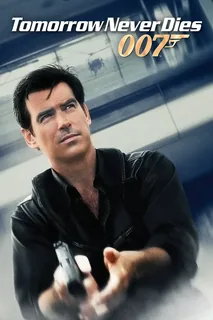
Wai Lin — Tomorrow Never Dies (1997).

Pictured: Tomorrow Never Dies (1997)

The handcuffed motorcycle chase is a good account of the partnership: Bond cannot simply do his usual job with Wai Lin attached. They have to coordinate. Michelle Yeoh gives her action a clarity and authority that make equal capability believable without an announcement.

Wai Lin has her own mission and equipment, and Bond's interest does not replace either. The limitation is personal detail. We learn more about how she operates than about what she wants outside the assignment, and the eventual romance is less persuasive than the working alliance. She ranks this high for changing the practical balance of a Bond adventure; Natalya edges her on the fuller account of a life disrupted by its events.

The handcuffs impose more than proximity. On the bike, one person's reach and weight restrict the other's; the chase has to keep finding ways for both to act within that inconvenience. Yeoh makes looking and repositioning part of the action, so cooperation feels like an activity rather than a complimentary description of the pair. Compare it with her later predicament underwater: the film can still make her a person to be rescued. The earlier sequence is stronger because the practical balance keeps changing, rather than being settled once by announcing that she is his equal.

That is a more convincing use of competence than a character performing a detached exhibition of skill. Bond must adapt to another professional whose methods are not his to command. Yeoh's clarity makes the adaptation pleasurable because we can see where a decision originates and what it requires from the other rider.

The weaker part is the move from that partnership to romance. The film gives less particularity to attraction than to cooperation, as though completing the assignment together naturally completes the older formula too. I would not want the remedy to be a compulsory tragic backstory. A few more scenes in which Wai Lin wants something the mission cannot neatly reward would have done more to turn an excellent operational equal into an equally complete dramatic person.

Wai Lin in Tomorrow Never Dies (1997)

Character depth editorial
8/10

A distinct professional manner is clear, although the film gives her little private life.

Agency editorial
10/10

She pursues her own mission and repeatedly acts as Bond's operational equal.

Dramatic impact editorial
8/10

The joint action sequences depend on cooperation rather than rescue alone.

Film rating (context) computed
63.0/100

Tomorrow Never Dies 63

3 Izabella Scorupco

Izabella Scorupco

Natalya Simonova — GoldenEye (1995).

Pictured: GoldenEye (1995)

Natalya survives the attack on Severnaya before she knows Bond exists. That gives her a story with its own danger, knowledge and decisions. Izabella Scorupco makes her alarm credible without making her helpless: she must work out which apparent authority can be trusted while carrying information people will kill for.

Her technical work is necessary to the climax, and her objection to Bond's violence is allowed to land. She is neither simply impressed by his competence nor recruited to explain the machinery. This is the strongest combination below the leading pair of a complete role, a capable performance and action that the plot actually needs. Start counting useful decisions rather than glamorous entrances and she rises quickly.

The destroyed station at Severnaya and the Cuban control room ask different things of Natalya. First she must escape the destruction of a workplace whose routines she knows; later she uses that professional knowledge against the weapon. Scorupco does not play the second passage as a new personality finally revealed beneath the frightened civilian. The alarm remains intelligible. The difference is that she now has a task she can perform, while Bond's task is to keep the room from being taken away from her.

The scenes in which she challenges Bond are useful because the disagreement is not flirtation in another costume. His competence does not make his emotional habits beyond criticism. She can depend on something he can do and still refuse the account he gives of what a life like his requires.

Her technical intervention is also allowed to remain technical. The plot cannot solve its problem merely by having Bond become briefly knowledgeable at the right console. The film needs her prior expertise. That combination is why I put her above several more immediately iconic figures: a threatened civilian's practical intelligence is not treated as the interval before the professional hero resumes the story.

Natalya Simonova in GoldenEye (1995)

Character depth editorial
9/10

The survivor's fear and the programmer's competence remain visible in the same performance.

Agency editorial
9/10

Her survival and technical intervention drive the story independently of Bond's attraction.

Dramatic impact editorial
8/10

She is essential to stopping the weapon and gives Bond's methods a direct challenge.

Film rating (context) computed
73.5/100

GoldenEye 73

2 Diana Rigg

Diana Rigg

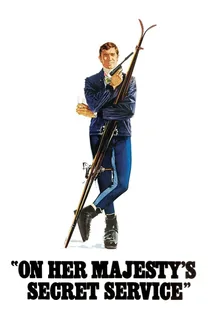
Tracy di Vicenzo — On Her Majesty’s Secret Service (1969).

Pictured: On Her Majesty's Secret Service (1969)

Tracy is introduced in distress, and Bond's attention does not instantly repair her. Diana Rigg lets pride, anger and vulnerability coexist. When the film moves into romance, there is someone for Bond to meet rather than simply someone for the camera to reveal.

She is useful in the escape as well as central to the love story, but driving ability is not what makes her substantial. She can resist her father's plans and challenge Bond's assumptions about what their relationship is. The ending is devastating because the possibility of a shared future has been made concrete. Vesper places slightly higher for the sustained conflict between affection and secrecy; Tracy has the more direct claim on Bond's abandoned ordinary life.

The father's involvement makes the romance more interesting and more troubling. Tracy is being discussed as somebody whose future another man might arrange. Her reaction keeps that arrangement from becoming an innocent account of paternal care. Rigg gives her the authority to recognise when affection is being used to manage her.

The escape gives the change a physical form. At the skating rink Bond is the pursued man, trying to remain unrecognised; Tracy's arrival provides a familiar face and a way out. In the car she is driving while he must depend on her decisions. Rigg's pleasure in the danger makes room for a Tracy who enjoys doing something well, rather than spending the whole film embodying distress. The romance becomes more persuasive because Bond has had to receive her help, not merely offer his.

The ending is open to the same criticism that applies to many Bond women: a woman's death supplies a durable feeling for the man who continues. What distinguishes Tracy is how much life the film has allowed her before the loss. The devastation is not just that Bond briefly possessed happiness. It is that someone with pride, history and a future has had the future taken away.

Tracy di Vicenzo in On Her Majesty's Secret Service (1969)

Character depth editorial
10/10

Her distress, pride, humour and changing trust form a character beyond the romance.

Agency editorial
9/10

She resists being managed by her father and takes an active part in the escape.

Dramatic impact editorial
9/10

The marriage gives the film a future to destroy, with consequences that exceed the mission.

Film rating (context) computed
67.3/100

On Her Majesty's Secret Service 67

1 Eva Green

Eva Green

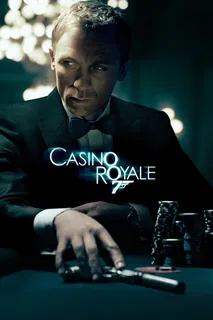
Vesper Lynd — Casino Royale (2006).

Pictured: Casino Royale (2006)

Vesper meets Bond by reading him, not admiring him. The train conversation lets Eva Green turn a familiar encounter into a contest between people who both use observation as armour. Later, in the shower, the film allows her fear to exist without a joke or a quick recovery.

The betrayal matters because the relationship has acquired a life before the explanation arrives. Blackmail limits her options, but she still makes consequential decisions; the film does not reduce her to a clue Bond failed to notice. She is first because wit, vulnerability, divided loyalty and lasting consequence belong to the same character. The final revelation changes how earlier scenes play.

The train scene turns class into a weapon both can use. Vesper reads the expensive suit as compensation for a past Bond would rather control; he tries to reconstruct her own background in return. Green enjoys landing the observation, then has to receive his. That exchange matters later because intimacy has begun as an ability to make another person feel exposed. The shower asks what either of them can do with exposure when there is no advantage to be gained from it.

The shower then revises the terms of that equality. Being his match does not mean processing violence as smoothly as he can. Green lets the earlier self-possession break without making the break a declaration that Vesper was never capable. The film is strongest when Bond does not try to turn this into another exercise in charm.

The ending makes those earlier scenes available to a second reading, but it should not convert all her behaviour into a coded message about the twist. Affection and coercion can coexist. The tragic force comes from a person attempting to preserve a relationship within an arrangement that has made honesty dangerous. Vesper earns first place because the revelation complicates a character we have already met; it does not belatedly manufacture one.

Vesper Lynd in Casino Royale (2006)

Character depth editorial
10/10

The train conversation, the shower scene and the concealed bargain give Vesper distinct public and private selves.

Agency editorial
9/10

Under coercion, she still makes decisions that change Bond's survival and understanding of the mission.

Dramatic impact editorial
10/10

Her choices alter both the immediate plot and Bond's approach to intimacy across later films.

Film rating (context) computed
81.2/100

Casino Royale 81

Where this comes from: Reader discussion: favourite Bond characters and why · Reader debate: capability, character and the Bond formula · James Bond 007: May Day’s role and final decision · James Bond 007: Anya Amasova’s mission and discovery

Vesper and Tracy remain the leading pair because the films let a relationship alter more than Bond's mood. The women can judge him, resist being explained by him and make a possible future feel particular before the plot takes it away.

Natalya and Wai Lin make a different case. The mission needs the person already present, not simply someone brave enough to accompany the hero. Camille's unfinished future and May Day's final change of allegiance show why the decisive action is not always the biggest fight.

The lower positions also mean different things. Honey has enormous visual influence and limited sustained development. Paloma has a small role whose brevity is part of its success. Jinx has a larger role whose stated promise the screenplay does not consistently keep. Collapsing those judgements into “good” and “bad Bond girl” would lose the useful argument.

There are strong omissions: Kara Milovy, Pam Bouvier, Elektra King and others could sustain a different selection. The standard remains the same. Look past the entrance and ask what happens when a woman wants something the film cannot give her simply by making Bond desire her.

← All lists