27 September 2026

Christopher Nolan films ranked: all thirteen features

From Following to The Odyssey, with a close look at the bargains each film asks its audience to accept.

13 entries

A Nolan film often begins by making an unusual rule feel practical. Memory has to be stored in photographs and tattoos. A dream has levels. An object moves against the expected direction of time. Understanding the rule provides one pleasure; discovering what a person wants the rule to excuse provides another.

The films are strongest when those two questions remain connected. Memento needs its structure because the protagonist's account of himself is unstable. The Prestige makes method and obsession difficult to separate. In the weaker passages of the filmography, explanation can become work a viewer is doing on behalf of a character who has not acquired an equally compelling emotional life.

The thirteen features below are ordered by their saved MEANRANK scores. The figure combines the rating sources held for each title, with differing coverage. It does not make every audience identical, and a narrow numerical lead is not a detailed argument about a film's achievement. The notes provide that separate argument.

The selection includes The Odyssey, whose July 2026 theatrical release is confirmed by Universal. It is the newest entry and has a shorter reception history than the others. Its place records the sources held here; an unusual rating on one platform does not identify the motives of the people who voted.

Major spoilers follow for the established films, including endings. The newest film's note distinguishes published criticism from production evidence. For starting points, see the routes through the filmography at the end.

How this is judged

MEANRANK computed
Combined score from the rating sources held for this film. The order reflects saved records, not a live poll or a separate critical judgement.

Computed scores come straight from the ratings, so you can check them. Editorial ones are our opinion, and every one comes with the reason for it.

13

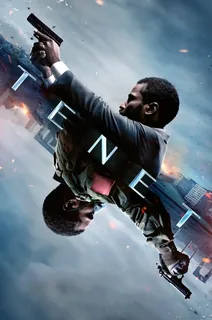
Tenet 2020

A brilliant perceptual device has to earn emotional involvement.

Action, Sci-Fi, Thriller · 150 min

B 71

The strongest idea is perceptual. An action you have already seen can acquire another physical meaning when approached from a different direction. The motorway sequence and the repeated encounter in the freeport turn understanding space into part of the spectacle.

The difficulty is the relationship between that invention and the people carrying it. Instructions arrive quickly, and the sound mix can make dialogue hard to catch. A viewer may be working to identify the immediate task before having much reason to care about the person assigned to it.

Neil's farewell gives the friendship the emotional asymmetry the mechanism needs. One man has a history the other has not yet lived. Robert Pattinson lets the knowledge register as affection rather than another demand to explain a rule. The film briefly makes reversed chronology a difference between two people's experience of the same bond. More of that feeling earlier might have made the technical labour less detached.

A second viewing can reward attention; that does not erase a first viewing's frustration. The fair question is whether increased comprehension also increases involvement. The film is most exciting when an image lets you grasp the rule through movement, and least persuasive when explanation has to insist that complexity itself supplies the stakes.

MEANRANK computed
71/100

From 12 ratings.

12

Following 1998

The observer cannot control what has been arranged for him.

Drama, Thriller · 69 min

B 74

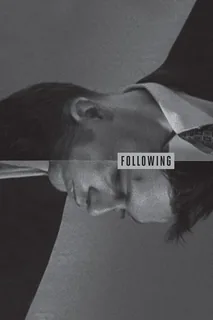
The writer begins by treating other people's lives as available material. Following a stranger appears to give him access without imposing a reciprocal obligation. The burglar's invitation then changes the arrangement: looking becomes participation.

The out-of-order structure is already doing more than concealing information. A person who seems competent in one passage becomes easier to manipulate in another. The viewer keeps revising an account of how the protagonist acquired the position in which we find him.

The limitations are visible in some performances and in a production that cannot always make its social world as convincing as its construction. It would be too easy to forgive every weakness because the later career makes the debut historically interesting.

What earns a viewing is the compact relation between appetite and interpretation. The writer believes he is observing people; the film asks how much of what he observes has been arranged for his benefit. It is a short, abrasive introduction to a recurring Nolan concern.

MEANRANK computed
75/100

From 9 ratings.

11

Insomnia 2002

Professional authority survives while private judgement deteriorates.

Crime, Drama, Thriller · 118 min

B 75

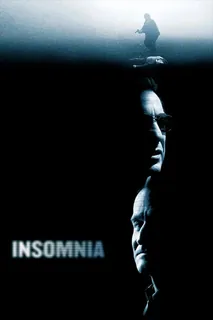
The daylight removes an ordinary means of escape. A room can be made dark, but sleep does not arrive merely because the detective has decided he needs it. Pacino lets fatigue alter judgement before the character can acknowledge how much judgement has changed.

Robin Williams supplies a different kind of pressure: someone has recognised the gap between the detective's public authority and what he needs concealed. Their exchanges make complicity sound like an invitation to be understood.

The concealed shooting in the fog makes daylight a particular punishment. Dormer wants a version of events that will let him remain a dependable professional. The room's light and his failed attempts to sleep keep returning him to a body that will not cooperate with that account. Williams's killer can then offer apparent understanding as a route to complicity. The relatively direct chronology leaves the lies with nowhere to hide in a puzzle.

The weakness is the tendency of the thriller machinery to make moral recognition converge too conveniently with a final confrontation. The earlier material is stronger. A professional identity can remain intact in public while the person sustaining it is privately losing the capacity to tell necessity from excuse.

MEANRANK computed
75/100

From 9 ratings.

10

Dunkirk 2017

Rescue becomes a succession of provisional spaces.

Action, Drama, War · 106 min

B 79

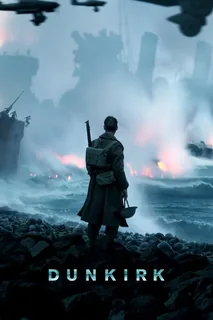
A week on the beach, a day at sea and an hour in the air are made to share the pressure of the present. The structure gives different forms of waiting comparable urgency without pretending they occupy the same duration.

The sound and cutting repeatedly turn a visible space into an incomplete account of its danger. A ship offers rescue, then becomes another environment from which bodies may need to escape. Safety is provisional, and the film makes the practical effort of reaching it exhausting.

The objection is that restricted character detail can keep emotional attachment at a distance. The film wants collective predicament to do work a conventional war drama assigns to biography. That is a choice, not a guarantee that every viewer will find it sufficient.

The men sheltering in the stranded boat give that choice a face. Alex makes the apparently foreign member of the group into a candidate for exclusion when they need the boat to float. Shared danger has not made solidarity automatic; it has made an accusation useful. The film's scale matters because this small, ugly negotiation remains inside it. Rescue is a collective need that people can still try to secure at somebody else's expense.

MEANRANK computed
80/100

From 12 ratings.

9

Batman Begins 2005

Fear becomes a physical practice and a public image.

Action, Crime, Drama · 140 min

A 81

The training gives fear a physical practice. Bruce has to learn what his body can do before the film lets an image of him become a public instrument. The suit, the movement and the routes through a city are all part of manufacturing that image.

The first half is persuasive because development takes time. A familiar hero is not treated as a ready-made answer to every practical problem. Michael Caine and Gary Oldman also give Bruce relationships in which competence comes with correction.

The final train confrontation also complicates the principles Bruce has been explaining. Distinguishing between killing Ra's and declining to save him leaves a moral gap the line's confidence cannot close. That unresolved distinction is more revealing than another statement of a rule. The city-threatening machinery is comparatively blunt, but the film has given Bruce a belief whose application can be questioned inside his own decisive action.

Its importance within superhero filmmaking should not become a claim that the genre had never been serious before. The more particular achievement is a convincing connection between preparation, theatrical appearance and the uses of fear.

MEANRANK computed
82/100

From 12 ratings.

8

The Dark Knight Rises 2012

A personal conclusion exceeds the coherence of the city-wide argument.

Action, Crime, Drama · 164 min

A 82

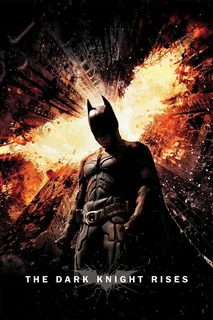
Bruce's return depends on a body that cannot simply repeat an earlier performance of strength. The film gives exhaustion and isolation a visible place before asking for another extraordinary effort.

Bane's voice and physical confidence make authority feel public in a different way from the Joker's disruptive intimacy. The city-wide scale is ambitious, but it also creates the film's largest weaknesses: political claims and institutional behaviour can become shorthand required to move people into position for the next set piece.

The pit makes the difference between intention and capacity visible. Bruce can know where the difficult leap lies and still fail to make it. Removing the rope gives the attempt a changed relation to fear, rather than supplying another exercise in strength. The scene is dramatically clear even if the recovery asks a considerable physical bargain. It concentrates a film that is less convincing when an entire city's politics must move with the same simplicity.

The finale has emotional force for a viewer invested in the trilogy. That force need not make every logistical leap or account of collective politics convincing. The film is strongest as a completion of Bruce's relationship with a role he has made larger than a life, and less secure when that personal completion is asked to explain a whole city's recovery.

MEANRANK computed
83/100

From 12 ratings.

7

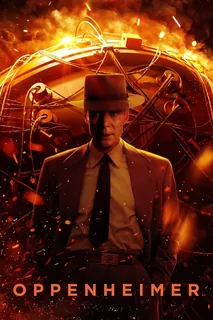
Oppenheimer 2023

Public recognition cannot secure a settled account of responsibility.

Drama, History · 180 min

A 83

The Trinity sequence makes waiting an event. Preparations, bodies, machinery and the eventual relation between image and sound turn a known historical outcome into an immediate sensory uncertainty.

The later public celebration is more disturbing because perception breaks away from the meaning the room wants to impose. Cillian Murphy's stillness gives the discrepancy a human centre: being congratulated is not the same thing as possessing a settled account of what has been done.

The two hearings do different work. Oppenheimer's security proceeding turns a private life into an accusation; Strauss's confirmation hearing tests the public account through which he has justified his role in that accusation. The cutting makes a remembered slight compete with the vocabulary of national duty. It also creates the film's burden: understanding the network of names and decisions can take more attention than some of the people inside it have been given.

There is also a consequential limit in keeping the Japanese victims outside equivalent dramatic attention. The film studies one man's relation to catastrophe more fully than the lives subjected to it. Its formal power makes that restricted viewpoint worth examining carefully, alongside admiration for what it achieves within the restriction.

MEANRANK computed
83/100

From 12 ratings.

6

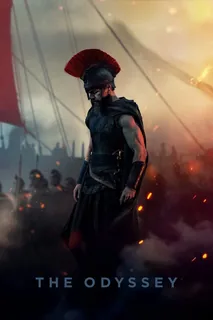
The Odyssey 2026

The homecoming includes an argument over the returning hero's story.

Action, Adventure, Fantasy · 172 min

A 83

Matt Zoller Seitz's review describes an opening storyteller recounting Odysseus's part in the Trojan War. That framing offers a useful critical question: is homecoming the completion of a heroic story, or an encounter with what the hero's own story cannot justify? This reading starts from the published account of the film's structure, rather than treating a production achievement as a verdict.

The physical scale is grounded in a production using IMAX cameras throughout. In the BFI cast interview, Damon describes the demands of locations and weather, while Nolan explains the mixture of practical and digital methods used for the fantastic elements. Those methods establish an ambition; they do not, by themselves, establish artistic success.

Kaiya Shunyata's essay on the film's horror gives the moral question another angle by placing the monsters beside the voyagers' own violence. The contrast asks whether the adventure enlarges our recognition of danger or merely reserves it for the central men. The saved sixth place reports the rating records here; it does not settle that argument or establish a durable consensus around the newest film.

MEANRANK computed
83/100

From 11 ratings.

5

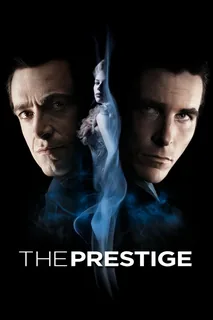
The Prestige 2006

A technical secret conceals a question about obligation.

Drama, Mystery, Sci-Fi · 130 min

A 83

The trick is labour before it is revelation. Repetition, concealment and the practical management of an audience give the rivalry a material basis. Two men are not simply asking who has the cleverer idea; they are deciding what they will make other people bear in order to sustain it.

The structure encourages the viewer to share an appetite for the secret. That makes the final understanding uncomfortable. Wanting to know how something works can distract from asking why the result matters so much, and who has been made expendable.

Sarah's response to Borden's professions of love makes the cost immediate. She can feel a difference between one day's assurance and another's, while he cannot give her a usable account of it. What the rivalry treats as a problem of method becomes, inside the home, a demand that someone live with an explanation she is not permitted to have. The women are given less room than the competitors, but their distress also exposes what the men's accounts of commitment leave out.

Avoid explanations beforehand. The best reason to revisit is not merely to verify that clues were present. It is to see how often an apparently technical problem was already a problem of character and obligation.

MEANRANK computed
83/100

From 12 ratings.

4

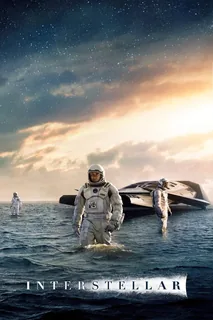
Interstellar 2014

A journey's duration is also a life somebody else must live.

Adventure, Drama, Sci-Fi · 169 min

A 85

The largest distances become meaningful through time somebody else must live. Messages accumulate while a parent is absent; a child develops an account of being left. The film's strongest emotional idea is that duration cannot be distributed fairly merely because a journey has a valuable purpose.

Returning from the water planet to Romilly makes the unequal time bodily visible. For the people who went down, a desperate task has taken part of a day; the man waiting on the ship has lived through decades. David Gyasi's changed presence supplies a cost that the earlier explanation could only ask us to imagine. The messages from home then turn the same asymmetry into a parent's experience of being unable to answer a life as it happens.

The weakness is explanatory insistence. Dialogue sometimes tells us how to understand an emotion or a concept after the image and performance have already made it available. The final movement asks for a particularly large emotional and speculative bargain.

A viewer can accept the bargain and find the film overwhelming; another can admire the scale while resisting the explanation. The recorded score cannot settle that response. What makes the film more than a display of distance is the continued pressure of a small question: what did the journey require somebody at home to endure?

MEANRANK computed
85/100

From 12 ratings.

3

Memento 2000

Recorded information cannot guarantee an honest account of the self.

Mystery, Thriller · 113 min

A 85

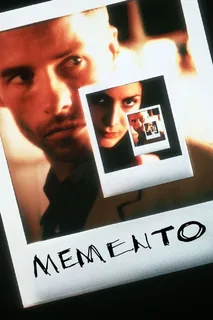
Leonard's practical aids look dependable because they are material. A photograph can be held; a note can survive the moment in which it was written. The film then asks what those objects can establish if the person organising them has interests of his own.

The colour sequences move backward while the black-and-white strand moves forward. Their meeting makes an apparent explanation more troubling than a final answer. Leonard can deliberately prepare material that his later self will receive as evidence. A tattoo's permanence cannot secure the honesty of the decision that put it there. The structure has made us depend on the same practical aids before showing how dependence can be exploited from within.

Guy Pearce gives the mechanism a social life. Leonard needs other people and also needs ways to believe he can judge them. A confident explanation can serve either care or manipulation.

The film can be enjoyed as a rigorously constructed puzzle, but the more lasting question concerns the uses of a story about oneself. Information is not automatically corrective if the person receiving it is also deciding which account can make continued action bearable. The form belongs to that moral problem.

MEANRANK computed
85/100

From 12 ratings.

2

Inception 2010

The rules work best when a body makes them visible.

Action, Adventure, Crime · 148 min

A 86

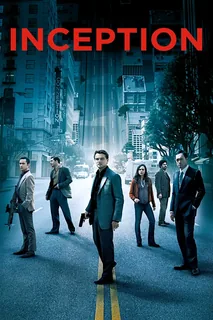
The heist framework gives a difficult premise practical tasks: assemble a team, enter a space, manage time and arrange an exit. The audience is taught enough to anticipate failure, which makes the explanation useful rather than merely decorative.

The rotating corridor is a clear example of the method at its best. A rule becomes visible through a body trying to move. Elsewhere, several levels of action are coordinated through different temporal pressures, allowing editing to make an abstract relationship exciting.

Mal presents a harder question than whether the female character has been given enough exposition. Most of what we encounter is Cobb's projection, so her inability to develop beyond his needs is also evidence against his attempt to keep her. The limitation becomes artistic when the film makes that captivity visible. It becomes less persuasive when the projection has to deliver another familiar interruption instead of revealing something new about the attachment.

The ending has encouraged a great deal of mechanical adjudication. The more interesting question is what Cobb is prepared to stop testing, and why. A dream puzzle becomes substantial when the need for a particular answer has acquired a life outside the puzzle.

MEANRANK computed
86/100

From 12 ratings.

1

The Dark Knight 2008

Force cannot secure control over the terms of a conflict.

Action, Crime, Thriller · 152 min

A 89

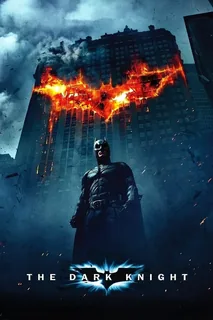
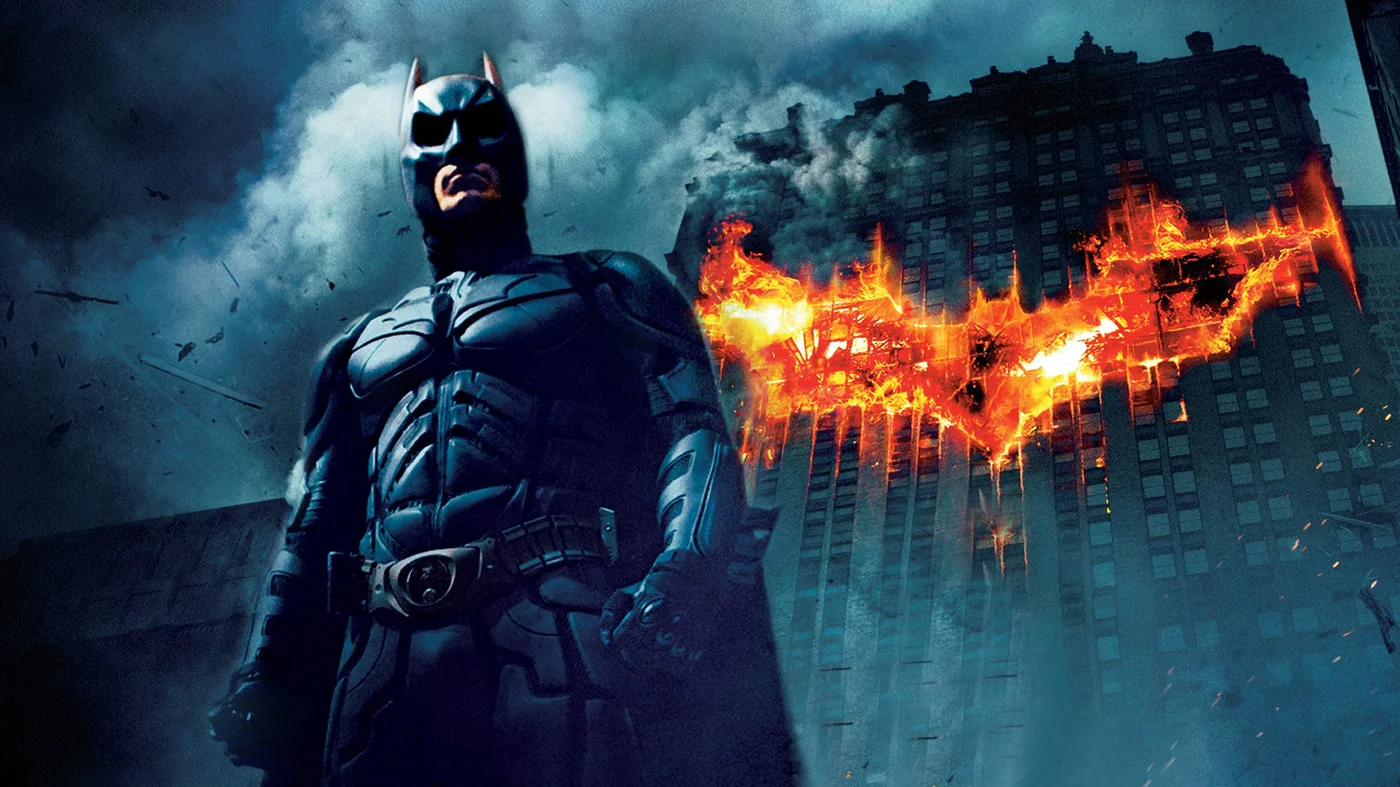
The interrogation scene changes who possesses power without changing the furniture. Batman can inflict force, yet the Joker controls information and the timetable on which it becomes available. The hero's usual practical advantage becomes inadequate.

Heath Ledger makes provocation responsive: a reaction supplies the next opening. Christian Bale's control and Aaron Eckhart's public assurance then give the city competing images of what dependable authority should look like.

The ferries supply the necessary resistance to the Joker's authority. A prisoner throws away the means to kill the other boat's passengers; the people on the other ferry also fail to carry out the action their vote has authorised. Batman has not personally produced either refusal. The city contains moral agency beyond the hero and villain, which is why the Joker's confidently engineered tests do not amount to a complete account of human behaviour.

What gives the film its strength is the repeated separation of power from the ability to produce a good outcome. A person can act decisively and still be working inside terms somebody else has set. The superhero spectacle remains exciting while making its central competence increasingly difficult to trust.

MEANRANK computed
90/100

From 12 ratings.

Where this comes from: Universal: The Odyssey release and production · Matt Zoller Seitz: review of The Odyssey · BFI: The Odyssey cast and director interview · Kaiya Shunyata: The Odyssey's horror elements

Choose a route through the filmography

For a comparatively direct thriller, start with Insomnia. For structure that places you inside a character's difficulty, choose Memento. The Prestige is the best next step if the relation between obsession and method interests you.

For the large-scale films, decide what sort of involvement you want. Dunkirk gives collective predicament priority over detailed biography. Interstellar asks the cosmic journey to carry a family wound. Oppenheimer concentrates on reputation, responsibility and the instability of public recognition. Their differences are more useful than a claim that one kind of viewer necessarily understands Nolan better.

The scores remain saved records, and newer releases have less reception history. Revisit a number when useful, but revisit a scene when making an argument. That is where the distinction between a complex construction and a compelling film becomes possible to assess.

← All lists