
27 September 2026

David Fincher films ranked: the argument behind the scores

Twelve released features, from Alien³ to The Killer, and why the rating order leaves plenty to dispute.

12 entries

The basement in Zodiac is frightening without offering the release that normally follows a thriller's most frightening discovery. A person has followed information into a room, and the information may have made him less capable of judging the danger. Fincher keeps the space clear while making the knowledge inside it unstable.

That is my strongest case for putting Zodiac first in an editorial ranking. The order below comes from the site's recorded MEANRANK scores, so it is a different sort of list. The disagreement is useful: a film that denies the satisfaction of a solved case may do something more enduring than a film that supplies one brilliantly.

Fincher's work repeatedly approaches that distinction between control and understanding. A detective can organise evidence without obtaining certainty. A businessman can win an argument while misunderstanding the person he needs. An assassin can recite a professional code that his own behaviour keeps undermining.

The pleasure is not simply that everything looks precise. Precision gives us a place from which to recognise what a character's precision cannot manage.

This selection covers the twelve released features from Alien³ in 1992 through The Killer in 2023. Checked on 30 October 2026, Netflix schedules The Further Mis-Adventures of Cliff Booth for IMAX cinemas from 25 November and Netflix from 23 December 2026. It is outside this released-film ranking. Television, music videos and advertisements are also outside the scope.

The rating cards use the qualifying source records held by MEANRANK. The critic/other averages are summaries of different recorded measures, not a test of which group has understood the work. A larger platform count does not make its average the truth.

Major spoilers follow, including the endings of Se7en, Fight Club, The Game and Gone Girl.

How this is judged

MEANRANK computed
The qualifying source ratings on one scale. This determines the numerical order.
Recorded critic / other averages computed
The catalogue's qualifying critic measures compared with its other measures. Different sources, scales and coverage remain relevant.

Computed scores come straight from the ratings, so you can check them. Editorial ones are our opinion, and every one comes with the reason for it.

12

Alien³ 1992

A damaged, severe film about refusing another claim on the body.

Action, Horror, Sci-Fi · 114 min

C 61

The opening makes an aggressive decision about the comfort inherited from Aliens. The family formed in that film does not survive as the next adventure's secure foundation. Ripley arrives bereaved, physically exposed and surrounded by men whose community is already organised around guilt and confinement.

That decision explains some of the film's enduring difficulty. It is possible to admire the refusal of franchise reassurance and still find the disposal of the earlier relationships emotionally cheap. A bleak outcome is not automatically a brave or fully earned one.

Ripley's insistence on examining Newt's body makes the loss more than an announcement at the start. She has to demand an act that can look merciless because she knows what an unexamined body might conceal. Weaver lets practical judgement and grief occupy the same request. The prison then gives her little assurance that her own vulnerability will be met with care. The creature enters a community already organised around guilt, fear and confinement.

The corridors and industrial spaces sometimes make pursuit more confusing than productive. There are stretches in which the force of the setting exceeds the clarity of the immediate action. That unevenness matters; the film cannot be defended entirely by reference to production difficulties outside the frame.

The ending nevertheless gives Ripley a decision with substantial meaning. The company wants possession of what is inside her. Her response makes the body that has repeatedly been treated as a site of unwanted occupation the final place where that claim is refused.

I would put it low in Fincher's work, but I would not say every ranking must put it last. Its damaged coherence and its emotional severity invite different judgements. The severity is more interesting when we examine its cost than when we use it as proof that the franchise should never have offered comfort at all.

MEANRANK computed
62/100

From 11 ratings.

Recorded critic / other averages computed
51 / 64

Critics average 51, everyone else 64. Everyone else rates it 13 points higher.

11

The Killer 2023

The image keeps testing the professional code the voice wants to preserve.

Crime, Thriller · 118 min

C 67

The voice-over supplies a neat account of competence: patience, discipline, a refusal to be distracted by feeling. The image keeps providing awkward evidence against the account. A man can repeat the correct instructions to himself and still miss.

Michael Fassbender's restraint is funny because the character would prefer not to be regarded as funny. A small practical inconvenience has the power to expose the difference between the professional identity and the person maintaining it. The more insistently the rules are recited, the more useful it becomes to watch for the exception.

The retail services, disposable objects and routine transactions make the work less mythic. The assassin is not living beyond ordinary infrastructure. He depends on systems that make a purchase, a journey or an anonymous stay possible, and the film lets some of the glamour drain into that dependence.

The violence is uneven in a productive way. Planning does not guarantee a clean application of force. An encounter can become ugly, lengthy and physically exhausting. The code has not made the body exempt from a difficult room.

A viewer can reasonably find the distance limiting. The film withholds many of the attachments that would ordinarily give a pursuit urgency, and the satirical discrepancy does not develop with equal force in every section. But saying a platform's larger vote count proves that boredom is the true response would be a misuse of the number.

The wealthy client's apparent distance from the harm makes the final visit especially revealing. The killer can track a chain of responsibility with enormous precision, then accept a boundary at which carrying the logic through would threaten the ordinary life he wants back. That can look like practical judgement or like a professional code being rewritten to suit its owner. Fassbender makes the accommodation funny because the voice has spent so long insisting there would be no exceptions.

MEANRANK computed
68/100

From 11 ratings.

Recorded critic / other averages computed
79 / 65

Critics average 79, everyone else 65. Critics rate it 14 points higher.

10

Mank 2020

Recognising power does not make a writer independent of its invitations.

Drama, History · 132 min

C 68

A great deal in Mank is already a performance: wit at a table, an anecdote told to secure an audience, a public story about the value of the people who finance entertainment. Herman Mankiewicz can identify manipulation and still enjoy the invitations that bring him near it.

The film becomes more interesting when that contradiction is allowed to remain than when it is approached as an examination on Hollywood names. The essential relation is intelligible without recognising every historical figure: a writer profits from proximity to power while accumulating reasons to despise what the proximity requires.

The late drunken speech at Hearst's gathering puts wit up against the permission that makes it possible. Mank can supply a devastating reading of the host's world, but Hearst still decides how the evening and the departure will be managed. Oldman's verbal force cannot cancel the difference between entertaining a room and owning it. The scene gives the writer's complicity a more immediate form than another explanation of Hollywood politics would.

Marion Davies is important because a familiar public account threatens to reduce her before the film gives her space. Amanda Seyfried allows warmth and intelligence to coexist with the position in which other people's stories have placed her. The scenes with her are among the places where the argument becomes a relationship rather than a recital of cultural grievance.

The period construction is meticulous, but its fidelity of appearance can sometimes become the thing we are being asked to appreciate. The film also offers a dramatised account of Citizen Kane's authorship and its surrounding politics; it should not be treated as a final historical judgement.

I would defend its subject more strongly than every stretch of its telling. The tension between complicity and the wish to make an honest work belongs comfortably within Fincher's interests. The film is weakest when the density of reference substitutes for giving that tension a new consequence in the present scene.

MEANRANK computed
69/100

From 12 ratings.

Recorded critic / other averages computed
81 / 66

Critics average 81, everyone else 66. Critics rate it 15 points higher.

9

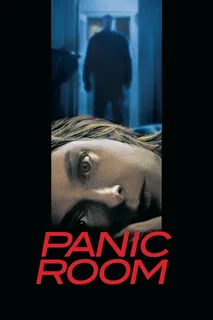
Panic Room 2002

The room offers protection while keeping the conflict inside it.

Crime, Drama, Thriller · 111 min

C 68

The safe room is a good thriller idea because its protection is conditional. Meg and Sarah can withdraw behind a door, but the thing the intruders want is on their side of it. A place designed to end a confrontation becomes the arrangement that prolongs one.

Fincher makes the house available to our attention before every part becomes dangerous. The camera can move through spaces the bodies cannot cross as easily. That apparent freedom does not remove suspense. It lets us understand the restrictions the people will have to negotiate.

Jodie Foster's work is especially useful because Meg's decisions are practical rather than charismatic. She has to notice, assess and revise. The film does not need her to become an implausibly fluent action hero in order to make her resourcefulness satisfying.

The intruders complicate the geometry by disagreeing. They do not function as one threat with one reliable intention. Forest Whitaker gives Burnham a capacity for restraint that remains compromised by his participation. His concern can matter without cancelling what he has helped make possible.

Sarah's need for medical help makes the safe room's promise fail from within. The door can hold intruders out while keeping the child away from what she needs. Meg's problem is no longer simply to maintain a barrier; she has to decide how and when to break the protection she has secured. That is a precise use of the mother–daughter relationship. Some renewals of the predicament are engineered, but this one makes safety a genuinely changing condition.

I find it undervalued when straightforward entertainment is treated as something Fincher ought to have outgrown. The camera's ingenuity is enjoyable because it keeps answering a readable problem. The limitation is less that the film lacks a grand idea than that its emotional development sometimes remains smaller than its beautifully managed mechanism.

MEANRANK computed
69/100

From 12 ratings.

Recorded critic / other averages computed
70 / 68

Critics average 70, everyone else 68. They agree.

8

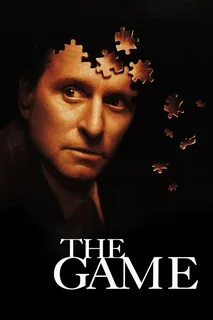
The Game 1997

A man who controls the encounter can no longer trust its rules.

Drama, Mystery, Thriller · 129 min

B 76

Nicholas Van Orton has the resources to make daily life predictable and the habits to turn that predictability into isolation. Michael Douglas makes the control disagreeable without making it unintelligible. The film has to give him something to lose besides money if its campaign of disruption is to matter.

The arrangement supplied by the game company attacks that control by making interpretation unreliable. A useful object becomes part of an apparent threat. A person offering help may belong to the same structure that produced the need for help. Ordinary recovery—find the responsible authority, explain the misunderstanding—cannot work when the authority itself may be another performance.

Fincher is especially good at the moments when a secure social role stops being recognised. The film does not need the protagonist to acquire a completely new personality immediately. His accustomed way of handling a problem continues to be applied after the conditions that made it effective have disappeared.

The leap through the glass makes the ending's bargain explicit. For Nicholas, it can be an irreversible surrender of the control that has organised his life. For the company, it must somehow be an anticipated action with a prepared landing. The emotional logic is stronger than the logistics. Accepting the first does not require finding the second plausible; the division explains why the same release can feel generous to one viewer and manipulative to another.

I enjoy the uncertainty more than I trust the final explanation. That is not the same as saying the ending must be a mistake for everyone. It identifies the bargain the film asks us to make.

The strongest stretch is the one in which the character's habits remain visible while no longer protecting him. Being rich has not merely bought possessions. It has bought a way of assuming that the world will answer. The game becomes frightening when the answer arrives in a language he cannot use.

MEANRANK computed
76/100

From 12 ratings.

Recorded critic / other averages computed
70 / 78

Critics average 70, everyone else 78. Everyone else rates it 8 points higher.

7

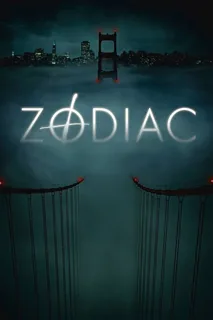
Zodiac 2007

The available facts stay clear while the answer fails to become secure.

Crime, Mystery, Thriller · 157 min

B 77

A clue usually promises movement towards an answer. Zodiac repeatedly lets the clue enlarge the work instead. Something might fit, and then another detail prevents the fit from becoming secure. The men pursuing the case cannot safely distinguish a useful new lead from another reason to keep going.

That changes the value of Fincher's precision. The dates, rooms, documents and conversations remain unusually clear while the central knowledge does not resolve. The film does not imitate confusion by becoming careless. It gives us the frustrating experience of having the available facts organised and still being unable to complete the arrangement.

The performances make different forms of investment visible. The journalist's deteriorating relation to the story, the detective's procedural work and the outsider's growing obsession are not interchangeable ways of being fascinated by a killer. Each has a different permission to continue and a different life being displaced by continuing.

The basement sequence concentrates the whole method. A practical visit becomes threatening through conversation, physical position and a possibility the visitor cannot confidently test. There is no need for an attack to make the body understand the danger. The desire for an answer has brought him into a situation in which more information may make leaving harder.

The film's treatment of a real case also deserves scrutiny. Its dramatic emphasis can make one suspicion feel more settled than the story's acknowledged uncertainty warrants. Feeling a persuasive scene is not the same as establishing a historical conclusion.

Even with that reservation, it is my first choice among these twelve. The ending does not merely decline to solve a puzzle. It shows how the need for a solution can persist after the practical possibility of obtaining one has damaged the people pursuing it.

The hardware-store encounter makes the difference between emotional conviction and proof unusually bare. Graysmith looks at the man he has come to suspect; the held gaze can feel like the completion the investigation has withheld. But looking into someone's face cannot make the missing legal conclusion arrive. The film lets the appetite for recognition have its moment without turning that moment into a solved historical case.

MEANRANK computed
78/100

From 12 ratings.

Recorded critic / other averages computed
84 / 77

Critics average 84, everyone else 77. Critics rate it 7 points higher.

6

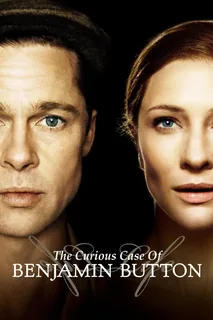
The Curious Case of Benjamin Button 2008

Two people can share a feeling without keeping the same time.

Drama, Fantasy, Romance · 166 min

B 78

The reversed ageing makes time visible, but the strongest question is less abstract: when can two people actually share a life? A feeling can remain while bodies, responsibilities and capacities cease to meet in a form that permits the same relationship.

Brad Pitt's comparative stillness can make Benjamin seem like a passenger in his own story. That is a legitimate objection, especially across a film that wants a considerable duration from the viewer. Events accumulate, and the character does not always appear to have an equally particular account of what they require from him.

Cate Blanchett's Daisy gives the relationship another trajectory: dancing, injury, parenthood and later care have practical demands. Benjamin's decision to leave Daisy and their daughter is therefore more arguable than a fable about incompatible clocks. He anticipates becoming a dependent child. Leaving also makes Daisy bear the present work of raising their daughter without him. The film is strongest when the extraordinary premise creates a decision whose costs cannot be distributed fairly.

The visual construction can make the premise seem natural enough that attention moves from the effect to the care required by its consequences. Later dependence is not romantic merely because a person was once a romantic partner. Someone has to remain, recognise a changing capacity and perform the work of being present.

There are stretches in which the narration and music make the feeling too complete before the scene has supplied its own resistance. Fincher's control does not automatically cure the screenplay's tendency to turn experience into a polished statement.

I find the film uneven rather than an inexplicable departure from his interests. The effort to preserve a relationship against an arrangement nobody can control is another version of his recurring problem. Its gentleness changes the means. It does not remove the question of what control would actually achieve if it were available.

MEANRANK computed
79/100

From 10 ratings.

Recorded critic / other averages computed
71 / 81

Critics average 71, everyone else 81. Everyone else rates it 10 points higher.

5

The Girl with the Dragon Tattoo 2011

Being useful, being trusted and being loved remain different things.

Crime, Mystery, Thriller · 158 min

A 80

The investigation has a visible craft: images are compared, records followed and old arrangements made newly legible. Information is not useful merely because it has been collected. Someone has to notice a relation, test it and decide what the relation does not yet prove.

Rooney Mara's Lisbeth makes that work inseparable from a guarded approach to people. Competence does not arrive as a cheerful social credential. It coexists with anger, damage and an ability to recognise when somebody is trying to acquire authority over her.

Daniel Craig's Blomkvist supplies a different mode of access. He can enter conversations and institutions through a professional identity Lisbeth has little reason to trust. The partnership works when the film permits those abilities to remain different instead of presenting one as the other's cure.

The treatment of sexual violence is difficult. The film gives the protagonist power to answer an abuser, but the intensity of the depicted harm can still raise a question about how much spectatorship the story demands before allowing her retaliation. A well-made scene does not exempt itself from asking whose experience has been made available for a viewer's attention.

The extended movement after the investigation matters because solving the case has not secured the relationship Lisbeth imagines. The leather jacket she buys as a gift lets a private intention become an object. Seeing Blomkvist with Erika changes what she can bear that object to mean, and she discards it. Mara lets the reversal remain abrupt. The film's most exposed feeling arrives after the efficient partnership has already done its work.

Calling it a familiar story made beautifully is therefore insufficient. The procedures are satisfying, but the more lasting subject is the gap between being useful, being known and believing that somebody's attention amounts to a promise.

MEANRANK computed
81/100

From 11 ratings.

Recorded critic / other averages computed
78 / 81

Critics average 78, everyone else 81. They agree.

4

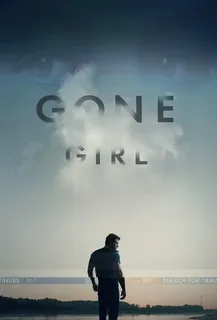
Gone Girl 2014

A private relationship discovers how much power an audience can supply.

Drama, Mystery, Thriller · 149 min

A 81

The disappearance begins as an invitation to evaluate a husband. His conduct, speech and public awkwardness seem available as evidence of what kind of man he is. Fincher and Gillian Flynn make that invitation pleasurable enough that the later reversal does more than supply a concealed fact: it changes our relation to the judgement we were enjoying.

Rosamund Pike's Amy is a virtuoso of how an account will be received. A diary, a room, a visible injury or an apparently spontaneous expression can be organised around the audience it needs. The film turns narration into a practical exercise of power.

Ben Affleck's Nick is not made innocent of every moral failure merely because a particular accusation has been arranged. His passivity and appetite for a simpler account of himself keep the marriage from becoming a contest between an utterly ordinary good man and an inexplicable monster.

Nick's brief smile beside the missing-person poster shows how little material a public role requires. The expression is available as an image without the pressure or awkwardness that produced it. Later coaching teaches him to manage that gap. The media do not invent the marriage's problem, but they reward whoever can supply a version that looks complete. Amy understands the transaction much earlier than he does.

The objection that Amy can feed a misogynistic fantasy deserves more than a claim that satire automatically protects a work from its possible uses. The character's extraordinary construction gives one particular form of female manipulation enormous dramatic force. The film does not become an innocent social fact merely by making that force intelligent.

Its strongest defence is the broader attention to mutually maintained performances. The final marriage is frightening because the people understand more, not less. Knowledge has not freed them from the arrangement. It has made each person's account of survival more deliberately dependent on the other's audience.

MEANRANK computed
82/100

From 12 ratings.

Recorded critic / other averages computed
84 / 81

Critics average 84, everyone else 81. They agree.

3

The Social Network 2010

Winning an exchange is not the same as understanding the person inside it.

Drama · 120 min

A 81

The opening conversation does not fail because too little information is exchanged. Words are plentiful. The problem is that Mark keeps treating the encounter as a hierarchy he can identify and negotiate, while Erica is trying to decide whether she wants to remain in it.

Jesse Eisenberg makes intelligence audible without making it sufficient. A quick answer can protect him from a pause in which another person's meaning might become inconvenient. Fincher's cutting lets an apparently small shift in emphasis become a change in who controls the conversation.

The depositions then give competing accounts a structure. A remembered event does not arrive as an untouched window onto the past. It has become part of a claim, and the present speaker needs it to establish something about ownership, loyalty or injury.

Andrew Garfield's Eduardo supplies the film's clearest emotional cost. Friendship and a business arrangement do not have the same safeguards. Believing that the first will preserve the meaning of the second leaves him vulnerable to people who can distinguish them more efficiently.

The score by Trent Reznor and Atticus Ross is important because the film's speed is not simply triumphant. There is unease inside the momentum. Building something that grows does not establish that the growth answers the need that set the person moving.

The film is a dramatisation, not an authoritative biography of the people named. Its force comes from the relations it constructs on screen. A man can become exceptionally effective at creating connection as a service while using effectiveness to avoid a particular encounter he cannot win.

That is more exact than a general announcement that technology makes everyone lonely. The tools amplify a set of ambitions and evasions already visible in a conversation before the company exists.

MEANRANK computed
82/100

From 12 ratings.

Recorded critic / other averages computed
96 / 79

Critics average 96, everyone else 79. Critics rate it 17 points higher.

2

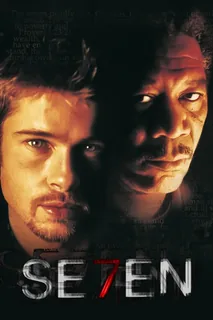
Se7en 1995

The wish to make the pattern legible becomes part of the killer's arrangement.

Crime, Mystery, Thriller · 127 min

A 84

The investigation moves through a city that seems to have made injury ordinary. Somerset's exhaustion is not merely the familiar trait of an older detective near retirement. Morgan Freeman lets it look like the cost of continuing to notice what a working institution has learned to process.

Brad Pitt's Mills wants that attention to lead somewhere more decisive. His energy can be generous, impatient and vain within the same scene. The partnership therefore contains an argument about what it means to keep working when success is unlikely to repair the surrounding world.

The crime scenes turn interpretation into a dangerous pleasure. A designed atrocity promises a meaning that professional competence may uncover. The detectives and the viewer have reasons to want the pattern made legible, and the film gradually makes that desire part of the killer's arrangement.

The final location changes the atmosphere without supplying relief. Daylight and an open landscape remove the earlier visual shelter while making the people inside the plan seem more exposed. The detective's wish to obtain the missing answer has delivered him to a situation in which knowing is itself part of the injury.

The ending works through the relation between a performed identity and a bodily limit. Mills cannot simply reason himself out of grief because somebody else has named the role grief would make him play. That is more disturbing than a clever villain winning an abstract game.

There is a risk of granting the killer's scheme too much explanatory grandeur. The victims can become material in somebody else's philosophical demonstration, and the film sometimes encourages us to admire how completely the demonstration has been constructed.

Its force remains in the performances that resist that abstraction. The people are not untouched by the argument. They have to remain in the world after receiving it, and the final act of continued attention is smaller and less certain than the villain's desire for a definitive statement.

MEANRANK computed
85/100

From 12 ratings.

Recorded critic / other averages computed
74 / 87

Critics average 74, everyone else 87. Everyone else rates it 13 points higher.

1

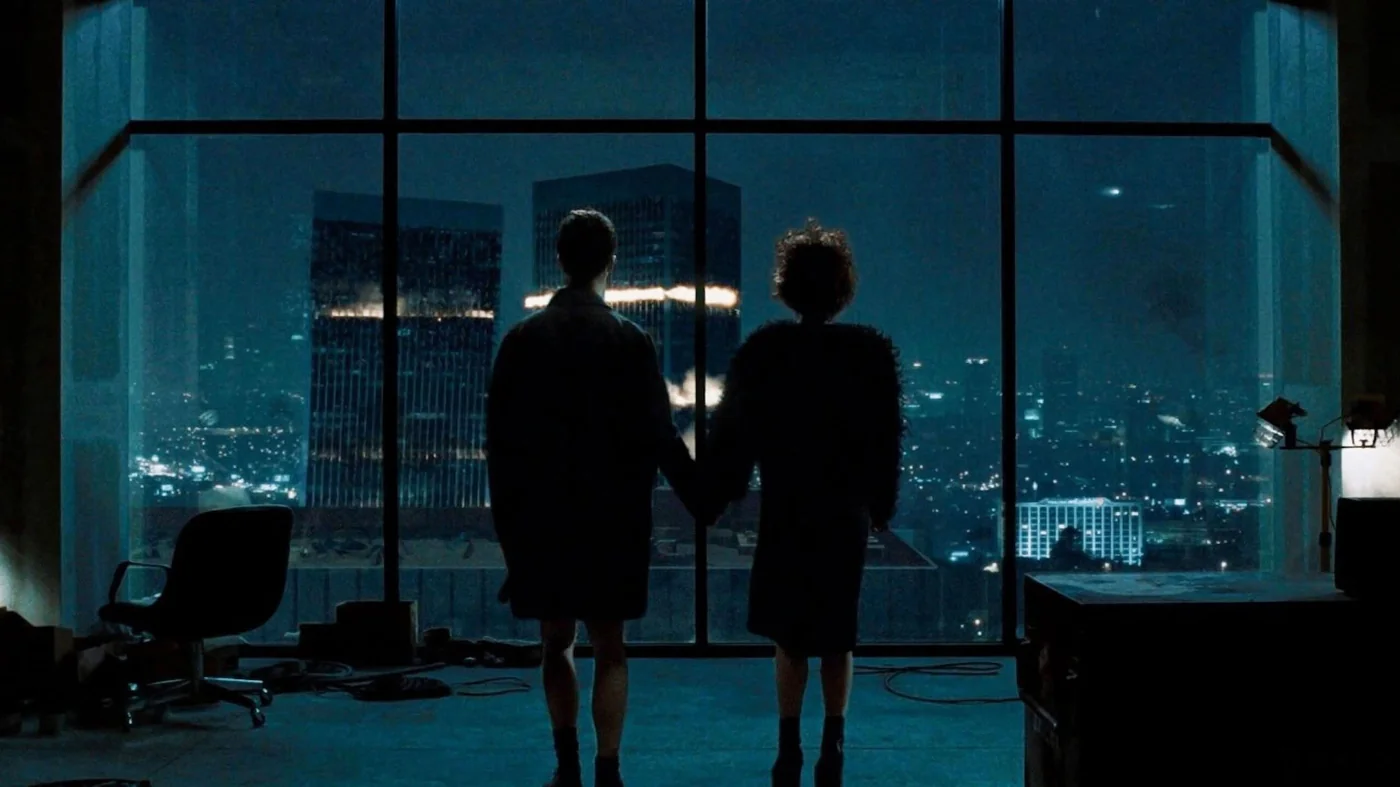
Fight Club 1999

The promised escape from a manufactured identity begins manufacturing another.

Drama, Thriller · 139 min

A 85

The narrator begins by trying to furnish a self. Objects offer recognisable signs of taste, routine supplies an explanation of a life, and neither arrangement produces the feeling of being securely present inside it.

Tyler's attraction is that he supplies another vocabulary and a body apparently capable of living by it. Brad Pitt's ease matters. A dull, visibly fraudulent leader would make the film's central temptation too easy to resist.

The fighting gives the alternative a physical proof. Pain seems to promise an encounter that cannot be reduced to the previous life's signs and purchases. The difficulty is that an experience of intensity does not automatically produce a freer relation to anybody else.

Project Mayhem makes that exchange visible. The men lose their names, accept humiliating tests and let a leader assign their tasks. When Bob dies, their repetition of his name can look like a recovery of individuality; it also turns his death into another collective ritual. The narrator has helped create a system able to absorb even an objection into its own language. The promised freedom has acquired an exceptionally efficient means of preventing dissent.

The late revelation is not a substitute for that development. It reorganises the relation between the narrator and the charismatic explanation, but the political danger has already become intelligible through what the group is willing to do.

There is a serious question about how much of the attraction the film can control. A brilliantly styled invitation may survive in memory more easily than the critique that follows. Declaring that every viewer who admires Tyler simply missed the point would give the film an impossible exemption from examining its own pleasures.

I value it most when the joke and the threat occupy the same arrangement. Consumer goods were not supplying a life, but a leader who makes another person feel intensely alive has not therefore acquired the right to decide what that life is for.

MEANRANK computed
86/100

From 12 ratings.

Recorded critic / other averages computed
74 / 88

Critics average 74, everyone else 88. Everyone else rates it 14 points higher.

Where this comes from: Netflix: upcoming Cliff Booth film and release context · Viewer discussion: arguments for different Fincher films

The score order is useful precisely because it does not finish the discussion. Se7en's devastating construction, Fight Club's seductive instability and The Social Network's conversational precision are substantial achievements. Zodiac remains my editorial choice because it makes the wish for a satisfying construction part of what consumes a life.

For an introduction, Se7en and The Social Network show how differently Fincher can organise pressure. Panic Room is the clearer choice when the immediate pleasure is a sustained practical predicament. Gone Girl makes the act of judging somebody unusually difficult to keep at a safe distance.

Then there are the films worth arguing for from lower down. Alien³ has more to say than a universal-last-place claim allows. The Killer can be understood as a comedy of self-description rather than a failed promise of constant action. Benjamin Button asks what a relationship requires when bodies will not keep the same time.

Those differences are more valuable than an account in which critics understand one set of films and audiences understand another. The source breakdowns show recorded responses. The scenes supply the reasons we might give for changing the order.

← All lists