29 September 2026

Denis Villeneuve films ranked: nine films from Polytechnique to Dune

What the scale, silence and withheld information accomplish, and where they can keep a viewer at a distance.

9 entries

Villeneuve is good at making entry into a place feel like an incomplete understanding of it. A convoy crosses a border, a linguist approaches a spacecraft, a policeman enters a room. The space is visible before the terms governing it become clear.

That is a source of suspense, but it can also become a style of withholding. At his best, the uncertainty belongs to a person whose need to understand gives the film emotional pressure. At other times, the monumental image or prolonged pause can seem to insist on significance before giving us enough reason to feel it.

These nine films run from Polytechnique in 2009 through Dune: Part Two in 2024. The selection leaves out the earlier August 32nd on Earth and Maelström, so it should not be mistaken for the complete feature filmography. It is a route through the period in which the director moved from concentrated Quebec dramas into large-scale English-language production.

The order comes from saved MEANRANK scores, combining the rating sources held for each film. A small numerical lead does not explain what makes one film more accomplished. The notes consider the actual work, including reasons a highly rated title may not be the best starting point for you.

As of this edition on 30 October 2026, Dune: Part Three remains outside the ranking. Its official site schedules the North American release for 18 December 2026. An anticipated film should not receive an invented review.

Major spoilers follow, including developments in Arrival, Sicario, Blade Runner 2049 and Enemy. Several films also involve extreme violence, sexual violence or child endangerment.

How this is judged

MEANRANK computed
Combined score from the rating sources held for each title. These saved figures determine the order; the criticism is a separate judgement.

Computed scores come straight from the ratings, so you can check them. Editorial ones are our opinion, and every one comes with the reason for it.

9

Enemy 2013

A separate life offers a way to avoid understanding conduct.

Mystery, Thriller · 91 min

C 66

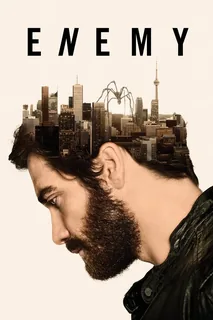
A lecturer encounters an apparent double, and an ordinary curiosity becomes increasingly difficult to separate from fear and desire. Jake Gyllenhaal gives the two men's bearing enough distinction that an interaction can feel unstable even before the plot has supplied a reason.

The yellowed city and oppressive sound make daily routines seem contaminated. The atmosphere is doing substantial work: a hallway or an apartment can feel less like neutral space than an arrangement in which repetition has become a trap.

The final spider image is revealing partly because it recoils. The scale is monstrous, but its movement can register fear rather than attack; Gyllenhaal's weary response makes recurrence seem as important as shock. Read that way, the ending brings us back to a man accustomed to converting intimacy into an image of entrapment. The limitation remains that the woman's experience is largely encountered through his symbolic system. Decoding the spider does not supply the independent life the system withholds.

Go in without an ending essay. On a first viewing, follow the differences in how the men address other people. The most productive question is how much a person needs the idea of a separate life in order to avoid understanding his own conduct.

MEANRANK computed
66/100

From 11 ratings.

8

Polytechnique 2009

Survival remains a condition to be lived, not a resolution.

Crime, Drama, Thriller · 77 min

C 69

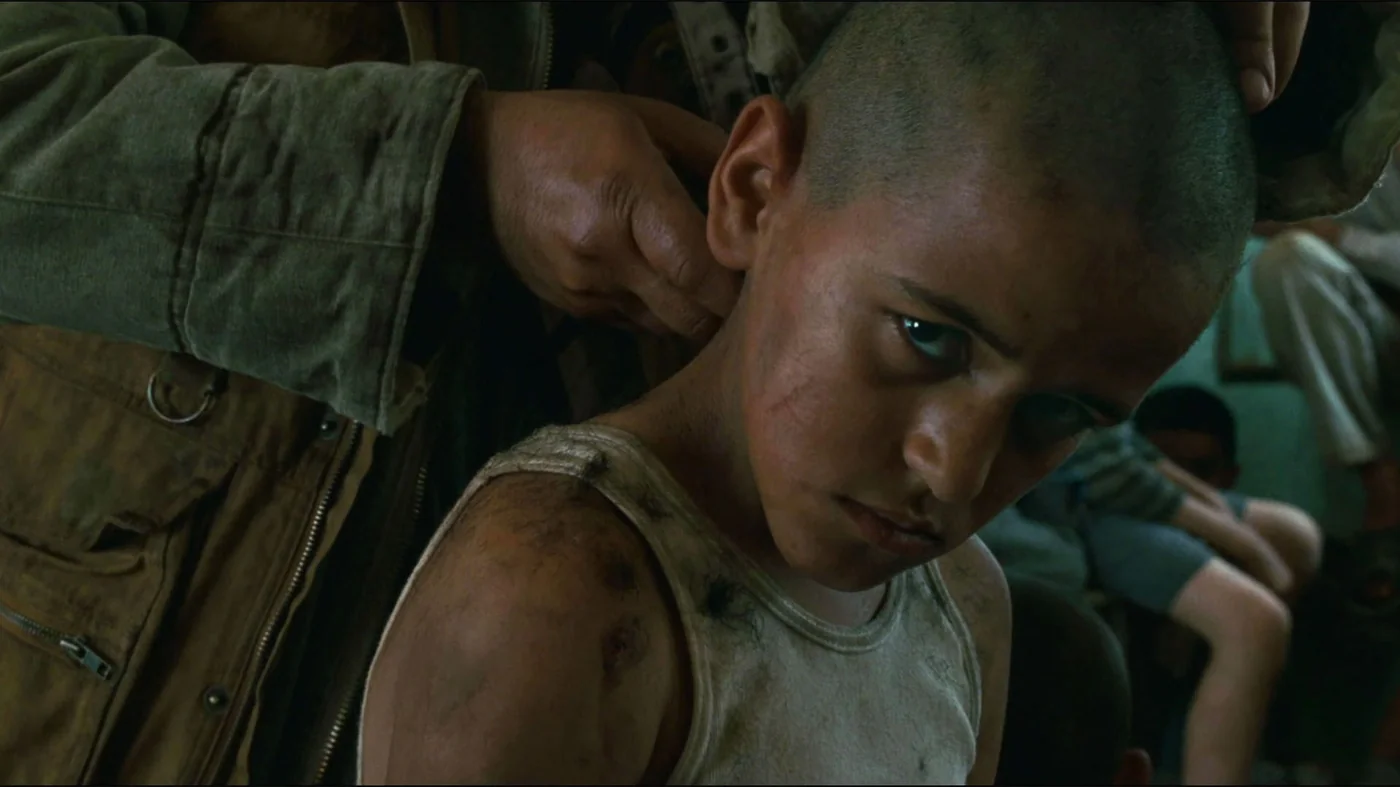
The film approaches the 1989 Montreal massacre through a restricted group of experiences rather than a biography of the killer. The targeting of women is central, not incidental: the Canadian government's account records fourteen women killed in an act directed against women. Treating the film only as an account of undifferentiated violence would miss what it is asking us to face.

The separation of men and women turns an ordinary shared classroom into a place where sex determines immediate danger. The men's departure cannot simply end their relation to what happens next; the film gives the aftermath its own burden of guilt and survival. The women also have ambitions and an ordinary working day before the attack. That attention matters because the killer's attempt to reduce them to a category must not become the film's only way of seeing them.

There is an ethical tension in giving real violence a carefully composed form. Restraint is a choice to examine, rather than an automatic certificate of respect. The film is strongest where a pause lets the aftermath resist a clean explanatory statement.

Choose it for a concentrated, very difficult drama, not because a lower score makes it an overlooked pleasure. Its value cannot be measured by how warmly someone felt about the experience. The question is what attention the film makes possible without claiming to resolve the event.

MEANRANK computed
69/100

From 9 ratings.

7

Dune 2021

Inherited power is larger than the person expected to use it.

Adventure, Science Fiction, Sci-Fi · 155 min

B 78

The first film makes power feel inherited through environments. Ships, halls, uniforms and ceremonial encounters place Paul inside arrangements that precede him. His developing capacities are important, but the film also makes clear how much has been prepared for the kind of person he might become.

The harvester rescue gives the grandeur a practical limit. A huge machine becomes unable to leave, its workers must be recovered, and the worm's approach changes how much time the apparently commanding visitors have. Leto's decision establishes a humane difference in how power is used without making his house cease to be an outside power. Paul encounters a world whose material conditions will not simply obey inherited status.

The limitation is incompleteness. As a separate film, it spends much of its time establishing the conditions for a conflict whose major developments lie ahead. Some characters acquire visual force before receiving comparable dramatic room.

Watch it as the first movement of the two-part adaptation, then judge what it accomplishes within that task. Its best passages make grandeur unsettling: belonging to a great house is not the same thing as being able to control the systems that have given the house its place.

MEANRANK computed
79/100

From 12 ratings.

6

Sicario 2015

A professional role can exist without meaningful power.

Action, Crime, Thriller · 121 min

B 79

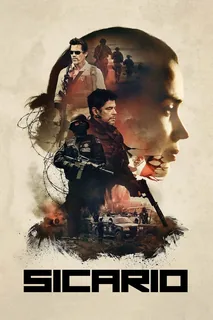
The border convoy gives suspense a geography. Cars, lanes and waiting bodies become information Kate must interpret without knowing the whole operation. The viewer shares that restricted access while being given enough spatial clarity to anticipate a threat.

The final demand for Kate's signature explains what her role has been worth to the operation. Her professional legitimacy is useful even when her judgement is unwelcome. Under threat, she is required to make an account look lawful after being denied control of what happened. Blunt's apparent lack of power has a precise dramatic function there: the violence does not end when the shooting stops, because somebody still needs her name on the paper.

That is also a limit of the storytelling. The later shift in attention can make her marginalisation feel less like a problem being examined than a route toward a different character's violent spectacle. The film's depiction of Mexico deserves similar scrutiny: a landscape of threat is not a complete social world.

The strongest passages make authority practical and opaque. People issue instructions with the ease of those who expect compliance, while the person asked to comply is still trying to identify what kind of action she has joined.

MEANRANK computed
79/100

From 12 ratings.

5

Arrival 2016

Understanding changes a life without removing its pain.

Drama, Mystery, Sci-Fi · 116 min

A 81

Communication begins before there is a shared account of what counts as a question. Louise has to identify assumptions, establish a method and remain attentive to how quickly institutions may mistake uncertainty for threat.

Amy Adams makes that work patient without making it inert. A small correction in an encounter can matter because it changes what may be understood next. The circular written forms are a visual pleasure connected to the film's larger organisation of time.

The reveal changes the apparently remembered images into a decision about a future. That makes Louise's acceptance of loss moving, but also leaves a difficult question about Ian. She has access to knowledge he does not share when their life together begins. Her willingness to bear the pain is not identical to his consent to it. Adams lets love and foreknowledge coexist without settling whether the choice is fair to everybody it involves.

There are objections to the explanatory machinery and to the speed with which a geopolitical crisis becomes concentrated in one decisive exchange. The performance keeps the film grounded where the mechanism risks becoming too convenient. Its strongest idea is that understanding can alter what a person is prepared to accept without making the consequences less painful.

MEANRANK computed
81/100

From 12 ratings.

4

Blade Runner 2049 2017

The wish to be exceptional meets the possibility of another value.

Drama, Sci-Fi · 164 min

A 81

K's work gives him an identity and a reminder that the identity is assigned. Ryan Gosling makes the desire to be exceptional emerge from someone trained to remain useful, controlled and replaceable.

Joi's advertisement makes the apartment's intimacy painful to reconsider. The immense commercial figure uses the name K has received as a private mark of affection. What felt singular is also available as part of a product's address to a customer. Gosling's response does not prove that the earlier relationship meant nothing. It shows that a feeling can be real to the person experiencing it while the terms under which it was offered remain commercially designed.

The scale is magnificent, but the film's treatment of women often makes their bodies and care serve the men's search for significance. Its self-awareness about manufactured desire does not settle every example of the problem.

The pace can feel immersive or overextended. The strongest reason to stay is K's changing relation to importance: what if having a life worth acting for does not require the special explanation he has begun to want? The question gives the monumental images a human vulnerability they cannot supply on their own.

MEANRANK computed
81/100

From 12 ratings.

3

Prisoners 2013

Love cannot make certainty infallible.

Crime, Drama, Thriller · 153 min

A 81

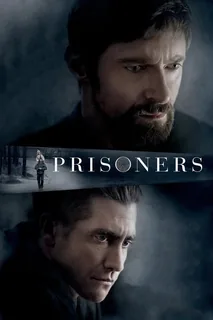
The father's certainty has a material expression. He has prepared for threats, and his habits of preparation make acting decisively seem more tolerable than remaining unable to protect his child. Hugh Jackman lets that conviction acquire a frightening momentum.

Gyllenhaal's detective has a different obligation: the need for an answer must pass through evidence. The film places those two forms of pressure beside each other without making the distinction emotionally easy.

The torture is prolonged and distressing. Keller interprets Alex's difficulty answering as a reason to apply more pressure, while the screenplay keeps fragments of apparently incriminating knowledge available to us. That is the film's uncomfortable bargain: it condemns Keller's certainty while using our hope that he may learn something to prolong the ordeal. Recognising that he is wrong is only part of the criticism. We also have to ask how much suspense has been bought from wanting the coercion to work.

Its strongest question is about the wish to make love certify an action. An urgent motive does not make a person infallible, and decisiveness can become a way to avoid recognising how little one knows. The mystery works because that moral difficulty remains active inside the practical search.

MEANRANK computed
81/100

From 12 ratings.

2

Dune: Part Two 2024

Magnificent images make the attraction of power a serious question.

Adventure, Sci-Fi · 166 min

A 84

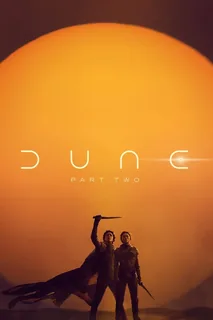
The second film converts preparation into action. Paul has to learn a physical world, acquire standing within a community and recognise how readily a political need can attach itself to an apparently promised figure.

The first worm ride is powerful because scale has been made practical. A body has a task to perform on something enormous. The sequence lets competence emerge through exposure rather than through another declaration of destiny.

Stilgar's response to Paul's reluctance shows why the prophecy is such an effective political instrument: denial can be received as further evidence of the promised figure's humility. Refusing the role is not enough to escape a story prepared to absorb refusal. Chani's resistance matters because she will not accept every response as confirmation. Zendaya keeps a competing judgement inside images that otherwise make Paul's elevation exhilarating.

That balance is also difficult. An audience may experience the elevation more strongly than the warning, especially when the film gives power such commanding images. The criticism belongs within the admiration. The spectacle is accomplished enough that the question of what it encourages us to want becomes more consequential.

MEANRANK computed
85/100

From 11 ratings.

1

Incendies 2010

An investigation reaches the limits of what a history can explain.

Drama, Mystery, War · 131 min

A 84

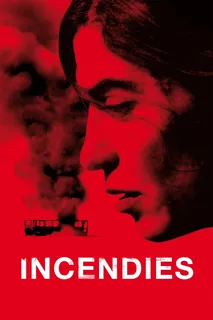
The letters establish a practical task, but the investigation gradually changes what the children are able to understand about the person who gave them the task. A mother's life has not been available to them in the form they assumed.

The bus sequence makes the mother's past impossible to receive as a series of clues conveniently waiting for her children. Survival depends on how identities are read by armed men; an attempt to protect someone can fail without ceasing to matter. Azabal has to carry calculation, terror and a decision to act in the same passage. The later search inherits a life already full of choices, rather than giving that life its first meaning through a revelation.

The film contains severe violence and sexual violence. Its climactic construction also deserves a question: does a revelation illuminate the people whose lives it reorganises, or does it risk turning suffering into the machinery of a devastating surprise? The performance and attention to the mother's experience give the stronger answer, though the risk remains.

Avoid a full synopsis. The film leads the saved ranking, but that does not establish universal agreement or obscurity. The reason to seek it out is the relation between an investigation and the limits of what another person's history can be made to explain.

MEANRANK computed
85/100

From 12 ratings.

Where this comes from: Sony Pictures Classics: Incendies · Warner Bros. and Legendary: Dune Part Three release information · Women and Gender Equality Canada: the fourteen women killed at Polytechnique Montréal

The best starting point depends on what you want

For a large-scale first encounter, choose Arrival if language and emotional uncertainty interest you, or the two Dune films if you want physical scale and political myth. Sicario is a more abrasive route through suspense and institutional power.

Incendies and Polytechnique ask for a willingness to face very distressing material. Their seriousness should not be converted into a test of the viewer's taste. Enemy asks for a different kind of tolerance: ambiguity that may remain disturbing after an explanation has become possible.

A useful way to compare the films is to watch an entrance. What is visible? What does the character believe the space permits? Who already understands the rules? Villeneuve's strongest suspense often begins in the gap between those three answers.

← All lists