
29 September 2026
Do critics and audiences actually disagree?
The size of the gaps, the films behind them and why a disagreement is more useful than choosing a side.
The argument usually begins with an insult. Critics are out of touch. Audiences do not understand difficult films. Someone has been paid, somebody else has been manipulated, and a large difference between two percentages becomes evidence for an account of the world nobody has actually tested.
Ad Astra is a better place to begin. A restrained performance, a lonely journey and a reflective voice-over can feel to one viewer like a sustained experience of emotional distance. To another, they can feel like a film describing a feeling it has not made convincing. Those viewers may have noticed the same choices. The disagreement is about what the choices accomplish.
The figures show that differences of that size are substantial without being universal. Across 6,347 eligible films in MEANRANK, 29.9% have Rotten Tomatoes critic and audience approval percentages within five points. Another 26.6% are at least twenty points apart.
The median signed difference, calculated as audience minus critic approval, is 0 points. That locates the middle of the signed values; it does not tell us the typical distance between the groups. Once direction is removed, the median absolute gap is 11 percentage points. A small signed result and a substantial typical gap can coexist.
The interesting question is not which side should be dismissed. It is what sort of difference we are looking at—and whether the reasons behind it help us choose a film.
The distribution is more revealing than an average argument
For this comparison, both columns come from Rotten Tomatoes. The Tomatometer describes the proportion of included critic reviews classified as positive. The audience percentage describes approval among the ratings included in that audience measure. They concern different groups but a more comparable type of outcome than an approval percentage set against an IMDb average.
Each film needed at least 40 recorded critic reviews and 1,000 recorded audience ratings, alongside the catalogue's normal eligibility rules. We calculated the comparison from the local records on 30 October 2026. That is the analysis date, not a simultaneous collection from Rotten Tomatoes; older and newer entries can have different collection histories.
| Absolute gap | Films | Share of sample |
|---|---|---|
| 0–5 percentage points | 1,899 | 29.9% |
| 6–19 percentage points | 2,758 | 43.5% |
| 20+ percentage points | 1,690 | 26.6% |
The middle group matters. A twelve-point gap is neither a near tie nor the dramatic split usually selected for a headline. These counts give each eligible film one place in the distribution; they do not weight a blockbuster's gap by its larger audience tally. The question is how common a pattern is among these film records, not how many people across the world disagreed. Reducing the whole table to “critics and audiences agree” or “critics and audiences disagree” would discard the most useful part: the scale of the difference changes considerably from film to film.
Direction is another question. Audience approval is higher for 3,084 films, critic approval for 2,830, and 433 have equal recorded percentages. There is no basis here for treating one side as invariably kinder or more severe.
A compact example shows why direction alone is inadequate. One film could have 80% critic approval and 60% audience approval, another 60% and 80%. Their mean signed gap is zero, while each absolute gap is twenty percentage points. That example concerns an average, not the median above; both summaries need the scale of the individual gaps alongside them.
A twenty-point gap is also not a claim that one group thought the film twenty per cent worse. It compares shares crossing an approval threshold. The marks and arguments within the positive and negative groups remain separate information.
A few large gaps, without pretending they explain themselves
| Film | Critics positive | Audience positive | Gap |
|---|---|---|---|
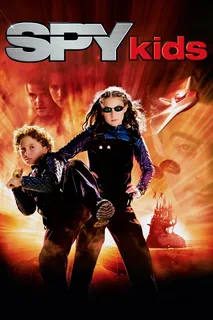
| Spy Kids | 92% | 47% | 45 points |
| Ad Astra | 83% | 40% | 43 points |
| Mr. Turner | 96% | 56% | 40 points |
| Grandma's Boy | 15% | 85% | 70 points |
| Where the Crawdads Sing | 34% | 96% | 62 points |
| Step Up | 21% | 83% | 62 points |
These are examples from the paired records, not a claim to identify the greatest disagreements in film history. Older records and newer ones may also represent different audience-voting conditions. The table is a reason to investigate, not a set of demographic biographies.
Spy Kids is a useful warning against an easy explanation. It is a film aimed substantially at children, but an online rating does not identify the voter's age, whether they saw it on release or whether they are judging a childhood memory. Declaring that disappointed adults caused the gap would be inventing the evidence needed to make an attractive story work.
The more productive approach is to examine a film's demands. What does the favourable response value, and what does the unfavourable response experience as a cost?
Ad Astra: is the distance the subject, or the problem?
Brad Pitt's Roy can describe his own state with a professional calm that seems designed to satisfy an institution's test. The same calm makes intimacy difficult. A journey across enormous distances is organised around a relation he has not been able to resolve much closer to home.
That is an intelligible artistic project. It does not guarantee a successful experience. The voice-over can make interior life available while also leaving the viewer feeling that the film has supplied a report where it needed an encounter. A restrained performance can make repression visible or become another barrier to involvement. The distinction cannot be settled by observing that restraint was intended.
The last encounter with Roy's father is the more exact test for me. Roy has made recognition the destination, and Tommy Lee Jones gives him an answer that cannot fulfil the imagined return. Pitt's stillness has a clear object there: receive what the man says without being able to make it the answer the journey was built around. The surrounding voice-over can deepen that recognition or narrow it by explaining too completely what we have already watched him endure.
The Reddit discussions linked below contain disagreement inside the supposed audience side: some viewers defend the loneliness and reflective pace, while others object to the scientific details, abrupt episodes or failure of emotional connection. That is more informative than the assumption that every unhappy viewer wanted a faster blockbuster.
My view is that the film's distance is a legitimate source of interest, but its explanation can compete with its atmosphere. A viewer does not need to misunderstand the intention to find that competition frustrating. Equally, a viewer who finds the stillness moving does not need to deny every awkward passage to defend it.
Neither judgement can be read directly from 83% and 40%.
Mr. Turner: admiration need not mean affection
A biographical film can offer a gifted person as somebody the audience would like to know. Mr. Turner often makes a different offer. Timothy Spall's physicality, the awkward social conduct and the concentration on work can make attention to the man coexist with resistance to him.
That distinction matters to the use of a review. A critic may admire a performance for refusing the polished accessibility expected from a prestige biography. A viewer may recognise the refusal and still find the time spent in its company unrewarding.
The painter at work and the man receiving another person's need can seem to have different capacities for attention. Spall's grunts and physical awkwardness refuse the usual reassurance that an artistic gift makes its owner approachable. The substantial objection is therefore more exact than disliking a difficult protagonist: has Leigh made that contradiction develop, or only accumulated evidence that it exists? A defence needs to identify the changing relationship, not simply announce that the film refuses a conventional biography.
A positive review that explains those choices offers a way into the film. A negative response that describes the failure to connect offers a real cost to consider. The percentage gap cannot tell us which cost an individual viewer will be willing to pay.
Step Up: the familiar plot and the performed pleasure
A dance film can be narratively familiar and still give a viewer something that a plot synopsis barely records: bodies learning to move together, a change in confidence, a routine whose success becomes visible through rehearsal.
That does not make predictable writing irrelevant. If the relationship never acquires a particular life, the performance may be doing emotional work the scenes around it have not earned. A favourable audience response does not require a reviewer to ignore that weakness.
The change in a rehearsed lift gives the positive case a practical object. Trust can become visible through timing, weight and a partner being where the other body needs them. An adequate review has to discuss that achievement as well as the familiar romantic outline. Equally, a successful routine cannot automatically grant the conversations around it the same particularity. The disagreement can concern whether the physical work has carried the relationship far enough, not whether a viewer noticed the plot was predictable.
This is a useful model of a disagreement about weighting. One person may place more value on the immediate performed pleasure; another may find the dramatic mechanism too thin to sustain it. Both need reasons. Neither acquires the right to dismiss the other merely by belonging to a larger group.
Older films look closer in this sample. That is not a history of declining taste.
Breaking the same paired records into release periods reveals a marked pattern.
| Release period | Films | Median absolute gap | With a gap of 20+ points |
|---|---|---|---|
| Before 1970 | 240 | 5 | 3.3% |
| 1970s | 124 | 5 | 3.2% |
| 1980s | 276 | 7 | 13.0% |
| 1990s | 810 | 9 | 18.1% |
| 2000s | 2,071 | 12 | 30.7% |
| 2010s | 2,210 | 12 | 28.3% |
| 2020s | 616 | 14 | 38.0% |
The older groups tend to show smaller gaps in these surviving, sufficiently rated records. It would be tempting to turn that into a claim that critics and audiences once shared standards and have since drifted apart.
The table has not tested that story. The older films included here are the ones that remain available, noticed and rated enough to meet the thresholds. The forgotten routine release from the same year may be absent. A new decade's group has had much less time to undergo that selection.
The database also stores one audience percentage for each record in this comparison; it does not give this article a complete history of which audience mode was captured at every earlier collection. We should therefore not describe the whole sample as a uniform verified-audience study.
The voting systems have changed too. Rotten Tomatoes introduced verified audience ratings in May 2019 and continues to distinguish verified and all-audience information. A modern theatrical title and an older film's accumulated user record need not be products of the same conditions.
The comparison also does not observe the same people at two points in time. A film's release year is not the year in which every current user rated it. That simple distinction prevents a great deal of confident but unsupported history.
The pattern is worth investigating. It is not an explanation of itself.
Why “critics versus audiences” is an incomplete description
A professional critic is also a viewer. An audience site can contain critics, filmmakers, habitual reviewers, fans and people who rarely write about a film. The two labels describe how the records have been assembled; they do not create two separate kinds of mind.
The categories can still matter. A commissioned review is produced under different constraints from a voluntary audience rating. A reviewer may need to discuss a film they did not choose. A fan may have actively sought it out. The review may be aimed at describing an achievement rather than predicting whether a reader will have an uncomplicated good time.
Those are potential differences in task, not a hierarchy of intelligence. They also vary within each group. A caustic one-line user verdict and a carefully argued audience review do not become identical because the site stores both as user activity.
The most useful disagreement often crosses the categories. A particular critic and a particular viewer may share the same objection to the ending while disagreeing with many others on their own side.
What MEANRANK should let you see
Imagine critic and audience approval at 80 and 80 for one film, and 100 and 60 for another. The simple two-score means match. The decisions do not.
The second film invites a question the first profile may not: what prevented a substantial part of one group from approving? The answer could be exactly the feature you value. It could also be a warning that applies strongly to you.
MEANRANK's wider score uses more than these two Rotten Tomatoes measures, so it is not the same calculation as this article's sample. The value of the title page is that it keeps the underlying sources visible. A reader can inspect a split instead of letting the mean quietly erase it.
The useful next move is to read a thoughtful defence and a thoughtful objection. Find the actual point of disagreement: the pace, the ending, the performance, the politics, the humour or a promise the film seemed to make.
Then ask which argument describes the experience you are seeking. The size of a crowd cannot answer that question for you. A precise reason often can.
The films in this piece





Where this comes from: Rotten Tomatoes: critic and audience approval measures · Rotten Tomatoes: frequently asked questions · Rotten Tomatoes: introduction of verified audience ratings in 2019 · Viewer discussion: Ad Astra and the approval gap · Viewer discussion: a defence of Ad Astra and the objections