
16 September 2026

Fourteen acclaimed films to discover beyond the usual watchlist

Comedies, thrillers and stranger pleasures, arranged from an easy first watch to films that reward a different kind of attention.

14 entries

Being told that a film is important can make watching it feel like homework. It is much more useful to know what kind of evening it offers. Does it make you laugh? Can you follow it without a guide? Is its reputation hiding a very straightforward pleasure?

These fourteen films span screwball comedy, crime, horror and family drama. Several have circulated for decades as classics, but a familiar title can still conceal an unfamiliar experience. PlayTime, for instance, is easier to approach as an invitation to look around than as an intimidating summit of modern cinema. The scores below help identify a critical reputation; an online tally cannot tell you how many people have watched an older film in cinemas, on television or on disc.

The order is a route through different viewing habits. We begin with people trying to keep their jobs and hide their feelings, move through heists and political danger, then reach films that ask you to look beyond the person speaking. Pick a premise that interests you; the notes explain both the attraction and the possible obstacle.

The critical scores provide context. They do not decide this order, and a high score cannot tell you whether tonight is the night for a three-hour historical drama.

The notes discuss significant scenes, including violence and some late developments, while leaving the central revelation of Don’t Look Now unspoiled.

How this is judged

Metascore computed
Metacritic's critical score where recorded. The viewing order is editorial.

Computed scores come straight from the ratings, so you can check them. Editorial ones are our opinion, and every one comes with the reason for it.

1

The Shop Around the Corner 1940

Anonymous letters offer an escape from the shop's daily negotiations.

Comedy, Drama, Romance · 99 min

A 85

The shop is the reason the romance works. Employees worry about money, read the boss's mood and perform friendliness for customers. Alfred and Klara's anonymous letters offer a space outside that daily bargaining, even while their actual encounters keep going wrong. Their problem is wonderfully ordinary: each can imagine a sympathetic stranger more readily than recognise a sympathetic person across the counter.

James Stewart's hesitations and Margaret Sullavan's defensive sharpness stop the premise from becoming a mechanical misunderstanding. A remark can be funny to the room and hurtful to the person it targets. Ernst Lubitsch lets both things happen at once. The supporting employees also have lives that continue when the lovers leave the frame.

The café meeting tests how much that sweetness costs. Alfred discovers the identity of his correspondent before Klara knows his, so their quarrel now contains information he can withhold. Stewart lets his teasing retain a trace of the hurtful colleague, even as he tries to find out whether the affection in the letters might survive acquaintance. Lubitsch does not instantly replace the difficult people with the ideal selves they have written. The ending has something to resolve because the film has allowed fantasy to be kinder than conduct.

Choose this for warmth with some financial anxiety underneath it. Its Christmas setting is an added pleasure, but the sharper subject is the amount of dignity people spend trying to keep a small job. The romance earns its sweetness because the film has noticed that cost.

Metascore computed
96/100

From 15 critic reviews.

2

His Girl Friday 1940

Speed and charm make a coercive newsroom difficult to leave.

Comedy, Crime, Romance · 92 min

A 82

Walter Burns wants his best reporter back. She is also his former wife. That combination makes almost every professional compliment suspect: is he recognising Hildy's talent, recruiting her labour, or finding a persuasive way to keep control of her? Cary Grant makes those motives difficult to separate.

Rosalind Russell gives Hildy a speed and authority that the newsroom can match without comfortably containing. Listen to the overlapping speech as competing claims on attention. People interrupt because they assume their business matters more; Hildy cuts through because she knows the business better. The pace is exhilarating, but the story beneath it concerns a vulnerable man whom journalists can turn into material.

Mollie supplies the limit of the newsroom's charm. She enters a room whose occupants can make a joke out of the prisoner she is trying to defend, and the flow of talk barely gives her distress a place to land. The scene makes the speed suddenly ugly. Russell's Hildy can recognise the injury and still feel the pull of the work, which is more troubling than a simple opposition between a humane woman and cynical men. Walter is selling her a place where her gifts flourish alongside habits she ought to resist.

Metascore computed
94/100

From 20 critic reviews.

3

The Lady Vanishes 1938

A missing passenger exposes the convenience of looking away.

Mystery, Thriller · 96 min

A 82

A train is a good place for a mystery because strangers must share space without sharing loyalties. When an elderly passenger disappears, Iris's difficulty is not merely finding her. It is persuading people to inconvenience themselves by admitting what they saw.

Hitchcock makes those refusals funny before making them alarming. A cricket score, a private affair or a desire to avoid trouble can matter more to a passenger than a stranger's safety. The social comedy therefore supplies the machinery of the suspense. Nobody needs to announce themselves as wicked to help conceal a disappearance.

The passengers' denials have particular stakes. An illicit couple cannot acknowledge a shared encounter without admitting why they were together; the cricket enthusiasts calculate the nuisance of delay. Hitchcock lets a question of fact become a negotiation over other people's convenience. That is why the story retains bite beyond its conspiracy: Iris is not merely collecting clues. She is trying to make the truth matter enough to people who already possess part of it.

Some national caricatures and the romantic sparring show their age. The film remains easy to enter because the central question is immediate: how do you defend your own memory when everyone around you has a reason to deny it? Choose it for a brisk mystery whose observation of ordinary evasiveness is more unsettling than its exotic conspiracy.

Metascore computed
98/100

From 17 critic reviews.

4

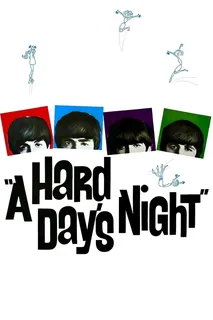
A Hard Day's Night 1964

Four famous men keep trying to escape the maintenance of fame.

Comedy, Music · 87 min

A 81

The Beatles spend much of this film trying to escape the arrangements that make the Beatles possible. There are trains, interviews, rehearsals and adults whose job is to get four young men into the right place at the right time. Richard Lester turns the friction between their public image and those small confinements into the film's comic rhythm.

The running, cutting and offhand jokes give it the looseness of an afternoon stolen from work. That looseness is carefully built. When the band breaks free of an interior, the physical relief matters as much as the song. Ringo's wandering gives the film another pace: fame becomes less interesting than the things he can notice when nobody is directing his day.

The press conference makes the arrangement audible. Questions approach the band as a set of marketable types, and the answers keep slipping away into jokes. The charm comes from refusing the interview's claim to define them while still giving the machinery something usable. Ringo's walk is a different escape. Without the shared performance, small encounters have room to be awkward or disappointing. The film needs both kinds of freedom: the pleasure of answering back and the quieter possibility of briefly not being the Beatles.

You do not have to share the original audience's excitement to enjoy it. A fondness for the songs helps, naturally. The more lasting attraction is a film about celebrity that understands how dull the maintenance of celebrity can be, and how much pleasure comes from briefly getting away.

Metascore computed
96/100

From 24 critic reviews.

5

Rififi 1955

A disciplined heist cannot make its participants dependable.

Crime, Drama, Thriller · 118 min

A 84

The famous heist is quiet enough to make a small sound feel expensive. Hands test surfaces, tools meet resistance, and each man's task depends on the others doing theirs correctly. Jules Dassin makes suspense out of labour: you understand enough of the work to recognise what could go wrong.

That sequence can overshadow the rest of the film, which would be a mistake. Planning and execution allow the men to imagine that discipline can control their world. The aftermath brings back the relationships, resentments and vulnerabilities that a technically successful operation cannot secure. A perfect procedure cannot make an unreliable person reliable.

The umbrella under the ceiling is a useful measure of the film's method. Its purpose is modest: catch debris before it falls where it might expose the work. Dassin makes preparation visible enough that you can admire the solution without needing a character to announce its ingenuity. Later, the same patience cannot prevent a conspicuous personal gesture from connecting the job to the men who did it. The operation succeeds at controlling matter; the people keep leaving meanings behind.

The masculine codes are harsh, and the treatment of women is often ugly. The film does not become admirable simply because its criminals value competence. Choose it if you like a thriller that shows you the work rather than hiding it behind frantic cutting. Stay for the consequences: the machinery of the job is easier to manage than the people.

Metascore computed
97/100

From 13 critic reviews.

6

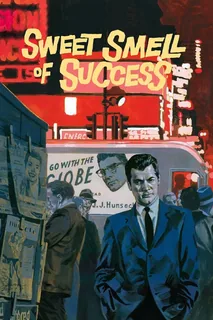
Sweet Smell of Success 1957

Influence is a labour market with very little room to breathe.

Drama · 96 min

A 83

Sidney Falco needs a columnist to print his clients' names. J. J. Hunsecker needs a man willing to do things he would prefer to command from a distance. The film's New York nightlife looks crowded and glamorous, but the relationship at its centre is a small, suffocating labour market.

Tony Curtis makes Sidney's eagerness painful. A smile arrives before he knows whether he has been insulted; a concession becomes preparation for the next request. Burt Lancaster barely needs to hurry. His stillness tells you that other people will rearrange themselves around him. Their dialogue is polished enough to enjoy and poisonous enough to make that enjoyment uncomfortable.

Hunsecker's control over his sister gives the professional arrangement its most intimate purpose. Sidney is not simply buying column space through unpleasant favours; he is helping a brother turn possessiveness into pressure on a relationship. Lancaster can make concern sound so settled that somebody else must first prove the right to object. The film's poisonous wit has an object beyond general cynicism: polished language lets a man make domination appear to be an obligation he has reluctantly accepted.

Choose this if you want a film about influence rather than a conventional crime plot. Its cruelty is concentrated; there is little relief from people calculating one another's usefulness. One man keeps moving because he might lose his place, while the other makes power look like the ability to remain seated.

Metascore computed
100/100

From 5 critic reviews.

7

Don't Look Now 1973

Grief changes what a glimpse of an ordinary place can mean.

Drama, Horror, Thriller · 110 min

B 75

A grieving couple go to Venice, where the husband's work offers practical problems he can identify and repair. Grief is less cooperative. Nicolas Roeg cuts between gestures, places and moments so that recognition often arrives before you understand what you have recognised.

The red coat is memorable, but watch the way ordinary sensory details acquire emotional force. A glimpse is not just information; it can be a desire to see someone again. Donald Sutherland and Julie Christie make the marriage intimate enough that the supernatural unease has something to disturb. The film is frightening because affection does not protect people from misreading one another.

The film's best warning is already in John's work: he restores what is damaged, reads surfaces and trusts his eye to make a practical problem manageable. His wife's response to the two sisters asks him to accept a form of knowledge that will not submit to that method. Sutherland and Christie let the disagreement remain marital as well as supernatural. A familiar effort to protect someone from further pain can become a refusal to hear what she is trying to say about the pain.

Avoid explanations of the ending before watching. You also need to be comfortable with explicit sex and a story rooted in the death of a child. This is slower and sadder than a chase through a haunted city. Choose it for horror in which the editing makes the viewer share a troubled act of perception.

Metascore computed
95/100

From 27 critic reviews.

8

Army of Shadows 1969

Commitment narrows choices instead of making them simple.

Drama, History, Thriller · 145 min

A 85

Resistance is often filmed as the point at which private doubts give way to collective purpose. Jean-Pierre Melville is interested in what happens afterward, when a person must carry out a necessary action without the reassurance of an audience.

Rooms, corridors and pauses matter as much as operations. Someone has to decide whether a stranger can be trusted; someone has to live with what follows if they are wrong. The restraint can initially look cold. It becomes powerful when you realise how much feeling is being held out of speech because speech itself may be dangerous.

The execution of a suspected informer makes the narrowing brutal. The men have an objective, then have to reckon with the noise a gunshot would make in the chosen room. What follows is not a clean demonstration of professional competence. An operation becomes an appalling practical difficulty, and the absence of an audience grants nobody relief from doing it. Melville's restraint is effective because it leaves the duration of the act in the way of any reassuring summary about necessary sacrifice.

The film does not offer a comprehensive history of the French Resistance, and its solemnity will not suit every viewer. Its particular achievement is to deny espionage its usual promise of freedom. These people have chosen a cause, yet their choices become narrower. Watch it when you can give sustained attention to faces waiting for decisions they would rather never have had to make.

Metascore computed
99/100

From 24 critic reviews.

9

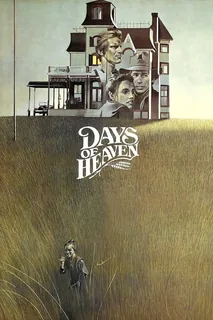
Days of Heaven 1978

A luminous landscape remains a place where people work.

Drama, Romance · 94 min

A 81

The landscape is beautiful enough to distract you from the work being done inside it. Terrence Malick keeps both in view: fields can be luminous, and harvesting them can still be exhausting labour performed for someone else's profit.

A love triangle gives the film its outline, but Linda's narration changes its scale. She notices things without arranging them into the adult explanations we expect. Her voice can sound beside the drama rather than above it. That distance lets the images hold several meanings: a house is shelter, wealth, aspiration and a place from which people can be excluded.

The locusts and the fire change the meaning of the fields without making them suddenly less beautiful. A place that could be offered as a luminous promise becomes something people struggle to preserve and escape. Linda's voice does not provide a tidy moral account of the reversal. That looseness matters: the film can show desire, labour and destruction occupying the same land without pretending that a single adult explanation has made the losses fully intelligible.

If you need characters to state their motives clearly, the film may feel elusive. Its beauty also invites a fair objection: does looking so lovingly at hardship soften its violence? The best passages make that tension productive. Desire attaches itself to a way of living that seems almost reachable, while the people doing the reaching remain economically disposable.

Metascore computed
94/100

From 20 critic reviews.

10

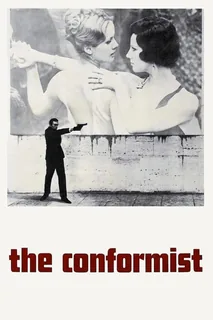
The Conformist 1970

A private wish to belong becomes useful to a violent state.

Drama · 113 min

A 82

Marcello wants to disappear into the approved shape of a man. He pursues marriage, respectability and political obedience as if they could settle whatever he finds intolerable in himself. The danger lies in how easily that private wish can become service to a violent state.

Bernardo Bertolucci and cinematographer Vittorio Storaro make conformity visually seductive. Architecture arranges bodies; light divides rooms; elegant surfaces offer the fantasy that disorder can be mastered. You should notice that pleasure without mistaking it for the film's endorsement of Marcello's choices.

The attack in the woods is the test of Marcello's wish to let the approved role decide for him. The violence is close enough to demand a response, but he remains a watcher from the car. Bertolucci makes passivity an action with consequences. The earlier architectural elegance has prepared a man who wants an arrangement he can fit into; this scene shows what fitting in permits him to leave to others.

The sexual psychology can feel schematic, especially where the film connects repression and fascism. Its sharper insight is behavioural: a person need not be a grand ideologue to become useful to an ideology. Cowardice, ambition and the hunger to belong can do considerable work. Choose this for a political thriller whose most unsettling scenes concern watching, waiting and allowing somebody else to act.

Metascore computed
100/100

From 11 critic reviews.

11

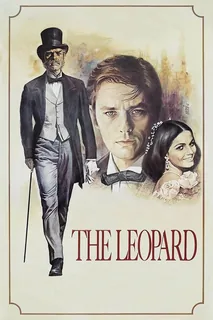
The Leopard 1963

A class can survive change by learning how to accommodate it.

Drama · 186 min

A 83

The ball is the centre of gravity, but it works because the film has first taught you how a class inhabits its world. Rooms, servants, marriages and political allegiances belong to the same arrangement. Change threatens that arrangement while also giving its more adaptable members a way to survive.

Burt Lancaster's Prince understands more than he is willing or able to prevent. His intelligence makes him moving without making the social order innocent. Luchino Visconti allows the aristocracy its beauty, then asks you to see the labour, calculation and exclusion through which that beauty is maintained.

The Prince's dance with Angelica briefly makes the transition gracious. Lancaster can give her attention a warmth that exceeds the bargain being made through marriage, while the surrounding room remains a market in names, money and acceptable futures. Visconti lets that warmth exist without using it to acquit the system. The scene is moving because a man can act generously within an order whose survival depends on calculations his generosity does not undo.

This is a long historical drama, and the early politics can be disorienting if you expect a single hero's adventure. Follow the practical questions: who will marry whom, who has money, who can accommodate the new rulers? By the ball, small shifts in attention become enormous. A man can remain the most imposing figure in the room while recognising that the future has already begun to look elsewhere.

Metascore computed
100/100

From 12 critic reviews.

12

Yi Yi 2000

A family shares a life without possessing the whole picture.

Drama · 173 min

A 85

A family wedding and a relative's illness open a network of lives that cannot be reduced to one crisis. A father revisits an old possibility; a daughter tries to understand responsibility; a boy photographs the backs of people's heads because they cannot see those parts themselves.

That last idea is a useful way into Edward Yang's film. Everyone possesses a portion of the picture, and affection does not automatically give them the missing portions. Reflections and frames within frames make daily life look both shared and inaccessible. The camera often leaves enough room around a person for you to sense the existence of a life beyond the conversation.

The grandmother's unresponsiveness gives the family a deceptively simple task: speak to her. The difficulty is finding something to say when daily activity no longer arrives with a listener able to answer. Yang turns that silence into a measure of how people account for their lives, and how much they hope another person can absorb. The family portrait becomes deep through these attempts at contact, not through a revelation that explains everyone from above.

The running time is substantial, but the emotional demands are modest in the best sense: look closely, remember what someone said earlier, allow an ordinary disappointment to matter. Choose it when you want a family film that respects the difference between caring about people and understanding them. Its generosity comes from taking that difference seriously.

Metascore computed
94/100

From 25 critic reviews.

13

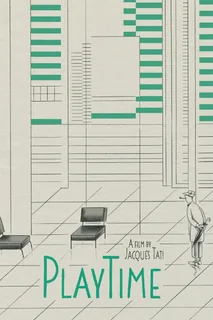
PlayTime 1967

People improvise a social world inside an inflexible design.

Comedy · 155 min

A 81

You may spend the first stretch waiting for the main action to declare itself. Then a reflection, a chair or somebody in the background becomes funnier than the apparent centre of the shot. Jacques Tati gives you the unusual pleasure of choosing where a joke happens.

Glass buildings and standardised interiors promise clarity while making navigation absurd. People mistake a reflection for an entrance, follow instructions into confusion and slowly find uses for spaces their designers did not anticipate. The sound is as precise as the image: an object can make a tiny noise that changes your entire understanding of it.

The restaurant is the reward for learning to look this way. Its ambition to manage the evening through immaculate design runs into bodies, broken fittings and improvised service. Tati does not treat every failure as proof that modern life is hopeless. As the arrangement becomes less perfect, people begin making an occasion together. The sequence earns its warmth by showing the little repairs through which a designed environment becomes a place people can actually use.

A phone screen works against the film because so much of the comedy lives in spatial relationships. Use the largest comfortable picture available and let your eyes roam. Its reward is a growing sense that strangers can make a rigid environment hospitable through improvisation, mishaps and shared attention.

Metascore computed
99/100

From 19 critic reviews.

14

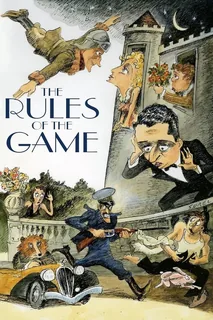
The Rules of the Game 1939

Politeness protects some mistakes more generously than others.

Comedy, Drama, Romance · 110 min

A 82

The country-house gathering appears to have rules everyone understands: whom to desire, what to conceal and which embarrassments can be laughed away. Jean Renoir gradually exposes how differently those rules protect people according to their position.

Servants and guests have parallel entanglements, but proximity does not give them equal security. The hunting sequence makes the violence beneath the entertainment difficult to ignore. Elsewhere, a room can contain several stories at once. Watch a person listening in the background; the scene may already be changing before the speaker notices.

The hunt interrupts the social comedy with bodies that cannot recover from the afternoon's entertainment. That interruption changes the value of the later bustle through rooms and doorways: the household can make a deadly mistake look like another disturbance to be managed. Renoir's wide attention is therefore more than a virtuoso way to fit many performers into one shot. It lets us see a social order manufacturing its acceptable account while the inconvenient life is still close by.

The early bustle can be confusing. Rather than memorising every romantic attachment, follow who is allowed to recover from a mistake. The film's darkness comes from a social world flexible enough to absorb almost anything except an inconveniently sincere demand. It belongs last on this route because its comedy asks for divided attention. Once you begin seeing the whole room, the politeness becomes frightening.

Metascore computed
99/100

From 21 critic reviews.

Choose your first film by the pleasure you want

For romance, begin with The Shop Around the Corner. For talk and momentum, choose His Girl Friday. For suspense with a clear task, Rififi is the most direct entry. For something that will change the way you look at an ordinary room, try Yi Yi or PlayTime.

Finding an older film can require checking the exact year, original title and available edition. Availability varies by country, so treat a film's catalogue page as a place to identify it rather than a promise that a particular subscription carries it. A restored edition can make an enormous difference to image and sound.

You are also allowed to dislike a classic. The useful question is more precise than whether it deserves its reputation: what did its admirers notice, and did the film give you enough reason to notice it too?

← All lists