29 September 2026

The greatest film composers, ranked

Ten composers whose music changes how a scene moves, what it withholds and whose feelings we inhabit.

10 entries

The shark in Jaws is often somewhere we cannot see. Williams's music gives that absence a direction. Two notes repeat, the interval becomes a warning, and the space beneath an ordinary surface acquires intent. The score has done something more useful than announcing that the film is frightening. It has changed what we look for.

That is the basis of this ranking. A film composer can give a person a memorable theme, but the more demanding achievement is to change what an image allows us to feel or understand. Music can turn waiting into pressure, a landscape into a loss, a romantic encounter into an obsession. It can also tell us too much, too early, and leave no room to arrive at a response ourselves.

Williams is first here for the range of those dramatic decisions. Zimmer follows for making texture and duration as persuasive to a large audience as a recurring melody. Goldsmith takes third for scores that seem to discover the particular sound a film needs instead of carrying a successful previous film into the next assignment. Morricone has an equally serious claim on that third place; the notes explain the close call.

The order is editorial. The assessments of music and influence support the written cases; the average ratings of selected films are context, not marks for the scores. A composer's achievement can exceed the film carrying it.

The small r/soundtracks community poll linked below supplied a useful check on the selection, not authority over it. It placed Williams, Zimmer and Goldsmith in its first three positions. Its discussion also exposes the problem with any list built from familiar favourites: listeners can only nominate the traditions they have encountered. This selection has that limitation too.

The strongest way to read the list is with the scenes available. A recording can reveal the writing; the image reveals what the writing has chosen to change.

How this is judged

The music editorial
An editorial assessment out of 10 of musical craft and dramatic function, explained below.
Influence editorial
An editorial assessment out of 10 of the example the work offers other filmmakers and composers.
Selected film ratings computed
Average MEANRANK score of the named selection. Context only; it does not determine this ranking.

Computed scores come straight from the ratings, so you can check them. Editorial ones are our opinion, and every one comes with the reason for it.

10

A.R. Rahman

Songs can be part of the dramatic structure, not an interval outside it.

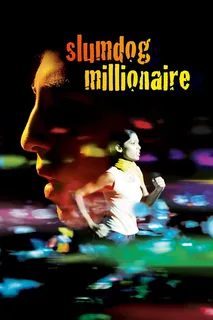
Pictured: Slumdog Millionaire (2008)

Dil Se.. is a useful challenge to a ranking built only around the Western orchestral score. Rhythm, voices and changes of musical setting can make desire public, restless and physically staged. The songs belong to how the film presents feeling; treating them as detachable extras would miss a large part of the work.

Roja and Bombay offer other entry points into Rahman's combinations of melody, electronic texture and acoustic instruments. The background score matters alongside the songs. Slumdog Millionaire is a familiar route for some international listeners, but it should not stand in for the whole career.

He completes this selection rather than an imagined global top ten settled by a poll.

The train sequence built around “Chaiyya Chaiyya” makes the principle concrete: a driving pulse, answering voices and a recurring melodic rise give the bodies a shared movement larger than an ordinary conversation. A song sequence can change the space in which a feeling is permitted to exist. In Dil Se.., desire need not remain a private statement delivered in a realistic room. Rhythm, the arrangement of voices and the physical staging can give it another kind of scale. That is an interaction between music and cinema, not evidence that the film has temporarily stopped doing its real work.

It also means the composer is working inside a collaboration that includes singers, lyricists, choreography, performance and editing. Praising the musical invention does not require assigning the whole sequence to one name. The better question is what possibilities the composition gives those other elements and what they make of them.

The instrumental “Bombay Theme” is a useful second stop after the songs. Its exposed melodic line and expanding texture can hold longing without the immediate aid of lyrics or a singer's phrasing. In the film, that sound belongs beside bodies, divided communities and the pressure on a family; as a recording, its openness may feel less specific. Hearing it both ways helps locate the collaboration. Rahman supplies a musical capacity for continuity, while placement makes that continuity bear the particular conflict. His inclusion rests on this movement between song and score, not solely on expanding the list's geography.

Begin with Dil Se.. and Bombay in their films, then return to the recordings to hear what the staging has made you notice.

The music editorial
9/10

Dil Se.., Roja and Bombay combine melodic writing, vocal performance and varied textures in films where songs carry dramatic work.

Influence editorial
9/10

His film work makes a case for a definition of screen music that includes songs as structural events, alongside the background score.

Selected film ratings computed
78.7/100

Lagaan: Once Upon a Time in India 83, Slumdog Millionaire 82, Roja 81, Bombay 79…
9

Nino Rota

The tune can welcome you into a world that should frighten you.

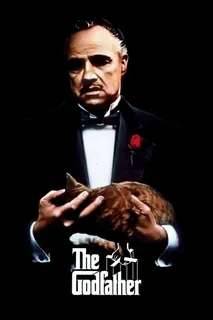
Pictured: The Godfather (1972)

The Godfather's trumpet is intimate and ceremonious at once. It makes the family's world feel old, furnished and already governed by obligations before the plot explains them. A returning melody can carry affection without making the power behind that affection innocent.

With Fellini, Rota can let parade, dance and circus sounds become comic or desolate as the setting changes. The effect is not simply nostalgia: the pleasure of the tune may expose how much a character needs the spectacle to continue. His music often works through this unstable hospitality.

Rota's recurring tunes have an unusual capacity to make a group feel as if it has always had a soundtrack for itself. A ceremony or gathering acquires continuity before we have learned every person's role. That is useful to a film interested in the power of belonging: the music lets an arrangement sound older than the decision to join it.

The unease follows from the same quality. In The Godfather, affection and obligation are difficult to separate because the tune can seem to affirm both. The family does not have to stop feeling like a family when we understand the violence protecting it. The score preserves an attraction the plot has made costly.

The closing circle of 8½ makes the tune's hospitality explicit. People who have been desired, avoided, invented or made difficult to accommodate can briefly participate in one performance. Rota's music lets the arrangement feel joyful without proving that the director's life has been repaired. That is why the finale can move beyond a decorative circus reference. The gathering is a form the film can offer for a moment; its emotional truth does not require us to believe the people have ceased to be troublesome outside it.

Listen to The Godfather's opening, then the closing movement of 8½ with the image present. In both, a tune can gather people into an arrangement whose comfort is uncertain.

The music editorial
10/10

The Godfather and 8½ make apparently welcoming music carry obligation, performance and loss.

Influence editorial
9/10

His recurring melodies show how popular and ceremonial sounds can organise a film's social world without settling its morality.

Selected film ratings computed
84.2/100

The Godfather 92, The Godfather Part II 91, 8½ 85, La Strada 84…

8

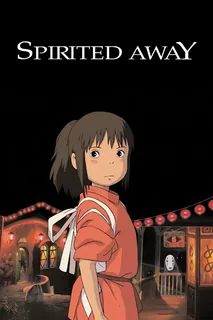
Joe Hisaishi

He gives a scene room to breathe without leaving it empty.

Pictured: Spirited Away (2001)

“One Summer's Day” in Spirited Away gives a journey an unsettled tenderness before the fantastic world has arrived. The waltz of Howl's Moving Castle can carry charm, instability and the pleasure of movement without needing to announce a separate theme for every feeling.

Hisaishi's restraint is easy to misdescribe as simplicity. A clear melodic line and a repeated accompaniment can change a scene's pace without taking command of every reaction. His work with Takeshi Kitano also offers an essential counterweight to the idea that his music belongs only to magical childhood.

The clarity of Hisaishi's writing can make its effect seem more easily explained than it is. A repeated accompaniment establishes a place to return to; a melodic line can move over it without making every change sound like a new instruction. The listener has room to remain with a feeling rather than keep identifying the next one.

“The Sixth Station” in Spirited Away gives the train journey a feeling that Chihiro need not explain. Figures enter and leave, the landscape passes, and the music allows the interval to carry a sadness larger than the immediate errand. The scene is not empty time between more important tasks. Hisaishi makes moving through an unfamiliar world feel like an experience the child will have lived, including things she may not yet have words for. The melodic clarity helps hold that openness instead of reducing each image to a separate instruction.

The Kitano work tests that capacity against more abrupt violence and a less consoling account of ordinary life. A lyrical passage can hold tenderness next to something it cannot repair. That is why I would resist turning Hisaishi into a supplier of comforting background for memories of childhood. The comfort is real, but its best uses include the recognition that time, damage and another person's silence will not simply yield to it.

Begin with Spirited Away, then hear the spaces and repetitions of Hana-bi. The sadness does not have to become larger or louder to become harder to shake.

The music editorial
10/10

Spirited Away, Howl's Moving Castle and Hana-bi make clarity and repetition serve different kinds of emotional suspension.

Influence editorial
9/10

His melody-led writing offers a model of emotional directness that leaves space for image, silence and duration.

Selected film ratings computed
85.1/100

Spirited Away 90, My Neighbor Totoro 87, Princess Mononoke 87, Nausicaä of the Valley of the Wind 86…

7

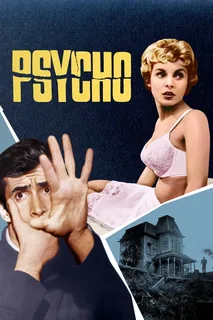
Bernard Herrmann

The score can reveal the obsession the character cannot explain.

Pictured: Psycho (1960)

Psycho's strings make an attack physically abrasive, but the restless music around the journey matters too: anxiety has already taken hold before the shower. Vertigo circles and strains towards resolutions that cannot make its fixation healthy. Taxi Driver allows the saxophone's apparent intimacy to coexist with a city heard as menace.

On the question of music expressing an unstable mind, Herrmann has a strong case for first place. His scores can make us inhabit a feeling without asking us to approve of it.

The hotel-room transformation in Vertigo makes the romantic return almost unbearable. Scottie's desired image appears, the camera turns around the embrace, and the music supplies an intensity the spectator can feel before deciding what it has cost Judy. Herrmann does not merely put quotation marks around a false romance. He lets its completion sound magnificent. That is the disturbing precision: a score can make the wish emotionally credible while the film gives us every reason to question the man's entitlement to have it fulfilled.

Psycho is not exhausted by the famous stabbing figure. The restless movement before the attack has already made motion feel like attempted escape from a thought that travels with the person. By the time violence arrives, the film has taught us to hear instability as something more pervasive than an isolated threat.

Taxi Driver's more apparently inviting sound then makes loneliness capable of mistaking a private fantasy for contact with the world. What I value most is Herrmann's refusal to make subjectivity a guarantee of warmth. Music can bring us close to a mind and make the proximity disturbing. That is a distinct dramatic function, and a list concerned above all with psychological point of view could plausibly put him at the top.

Start with Vertigo's opening and the later return of its romantic material. Ask whether the music is endorsing a love story or making its compulsion impossible to ignore. The answer is not comfortably one or the other.

The music editorial
10/10

Psycho, Vertigo and Taxi Driver make contrasting musical materials express anxiety, fixation and isolation.

Influence editorial
10/10

His scores provide enduring models for subjective film music: sound that tells us how a mind experiences events.

Selected film ratings computed
84.1/100

Psycho 88, Vertigo 86, Citizen Kane 86, North by Northwest 86…

6

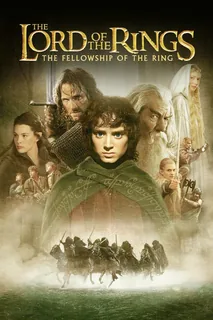
Howard Shore

A returning theme can tell us that home has changed.

Pictured: The Lord of the Rings: The Fellowship of the Ring (2001)

The Lord of the Rings gives places and peoples musical identities, then lets those identities meet, fracture and return altered. The Shire music matters because home is more than the safe location left behind. By the end, its return can make an absence audible.

That achievement is large enough to justify this place, but it should not swallow the rest of Shore's work. His scores for David Cronenberg inhabit a less consoling world, where unease can be intimate rather than monumental. The contrast makes the warmth in the Tolkien films look like a choice rather than a default.

He follows Horner by a small margin because this selection gives some weight to the variety of his most immediately compelling entry points.

At the end of The Return of the King, reaching the Shire does not restore Frodo to the person for whom home once seemed sufficient. The familiar musical world has survived, and that survival makes his altered relation to it more painful. Shore can let recognition carry a wound without requiring the theme itself to become unrecognisable. The trilogy's scale pays off through that smaller difference: a place can be preserved while the person who helped preserve it can no longer inhabit it in the same way.

The large architecture works because the films also give small musical changes room to matter. If every return were a grand restatement, the themes would become announcements. The more restrained reminders allow a character to carry an allegiance without stopping the scene to display it.

The Cronenberg work, including The Fly and Dead Ringers, is important because it denies the idea that Shore's particular gift is simply monumental fantasy. Unease can require a closer, less reassuring musical relation to the body or the image. The contrast makes the trilogy's warmth deliberate rather than automatic. I would rank him even higher if the list tested the sustained development of musical identity across one extended narrative. The position here also considers variety across separate film worlds.

Listen to the Shire material across the trilogy, not just as a detached pleasant tune.

The music editorial
10/10

The Lord of the Rings develops an interlocking musical narrative across three films; his Cronenberg work offers a strikingly different emotional climate.

Influence editorial
9/10

The trilogy is a substantial example of themes developing across a long screen narrative rather than simply labelling a character's entrance.

Selected film ratings computed
85.8/100

The Lord of the Rings: The Return of the King 90, The Lord of the Rings: The Fellowship of the Ring 89, The Lord of the Rings: The Two Towers 89, The Silence of the Lambs 87…

5

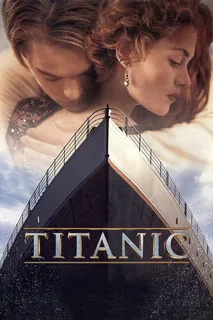
James Horner

The music gives a large event a personal emotional line.

Pictured: Titanic (1997)

Apollo 13 has an enormous technical problem to explain, but Horner's music keeps the human distance audible: people are waiting, listening and hoping across a space they cannot cross. Glory uses choir and orchestra to give collective experience a scale beyond an individual protagonist. Titanic finds a melodic continuity between private romance and public catastrophe.

Horner's recurring gestures can become conspicuous across films. That familiarity is a fair criticism when a cue seems to arrive carrying feelings borrowed from earlier work. At his best, the melodic argument is so clear that it gives a complicated sequence a centre without reducing every moment to the same emotion.

He sits above Shore here for range across these different kinds of film.

The loss of contact during the expected radio blackout in Apollo 13 gives waiting a threshold. The people on the ground cannot act inside the returning capsule; they can only remain available for an answer. Horner's cue sustains an emotional direction while the duration exceeds reassurance. When contact returns, the release belongs to a particular interval we have been made to endure. That is a more exact achievement than making space travel sound heroic: the music has given helpless attention an arc without pretending it was another technical intervention.

Glory presents a different challenge. An individual feeling must remain part of a collective history rather than becoming the whole history's explanation. Voice and orchestra can offer that larger scale, though the very elevation of the sound also invites a question: is the film making the men's situation present, or granting us a more comfortable position from which to mourn it?

Horner's directness is strongest when that question remains attached to the scene. It is weakest when a familiar gesture appears to guarantee the seriousness of a feeling before the particular story has established it. I place him here because the strongest passages can hold action, waiting and grief inside an intelligible musical movement. Their accessibility is an achievement; it is not immunity from asking exactly what is being made easy to feel.

Start with Apollo 13, then Glory; the case does not depend on the Titanic song.

The music editorial
9/10

Apollo 13 and Glory make large collective situations emotionally legible through melody, orchestration and voice.

Influence editorial
9/10

His accessible orchestral language makes a useful model of how to connect spectacle with a sustained personal feeling.

Selected film ratings computed
80.8/100

Aliens 85, A Beautiful Mind 81, Braveheart 80, Titanic 80…

4

Ennio Morricone

A voice, a whistle or a rough sound can carry the weight of an orchestra.

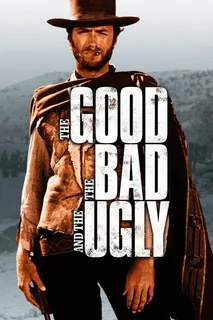
Pictured: The Good, the Bad and the Ugly (1966)

“The Ecstasy of Gold” does not merely accompany a man running through a cemetery. The circling search, the growing musical insistence and the vocal line make the search feel larger than its practical purpose. In Once Upon a Time in the West, a character can seem to bring a whole past into the scene with a sound.

Morricone's position is a narrow call with Goldsmith, not a demotion for writing music that travels well outside its films. His range extends far beyond westerns: The Mission places the oboe's intimacy against choral and orchestral scale. The risk in listening only to compilations is missing how long a film sometimes waits before granting a theme its full force.

The opening of Once Upon a Time in the West makes the harmonica's later claim stronger by withholding the comfort of a full score. Wind, machinery and small irritations occupy the station before the encounter becomes a musical identity. It matters to distinguish the scene's sound design from Morricone's composition. His achievement is also in the film's eventual permission for the sound to carry history: the identifying disturbance can become painful knowledge. Hearing the theme detached from that delay loses part of what Leone and the composer make it do.

In the cemetery, the relationship runs the other way. The visual search becomes almost ecstatic because the music lets a practical pursuit swell into an appetite. The viewer is not being calmly informed that treasure matters. We are given a duration in which wanting it begins to occupy everything.

That is the distinction I would use against the complaint that his western sounds are only eccentric effects. Whistle, breath, voice and electric colour can organise anticipation as rigorously as a conventional orchestral theme. The Mission then demonstrates that an exposed lyrical line and a large choral argument also belong to his range. His great strength is the confidence to make a scene answer the full character of its sound, rather than treating the score as respectful background.

Begin with the cemetery sequence in The Good, the Bad and the Ugly, then “Gabriel's Oboe”.

The music editorial
10/10

The cemetery sequence and The Mission turn distinctive timbres into large dramatic structures, rather than treating them as novelties.

Influence editorial
10/10

His use of voices, electric sounds and sharply marked musical identities expanded what a popular film score could sound like.

Selected film ratings computed
83.1/100

The Good, the Bad and the Ugly 91, Once Upon a Time in the West 88, Cinema Paradiso 87, Once Upon a Time in America 85…

3

Jerry Goldsmith

The instrument choice is already part of the drama.

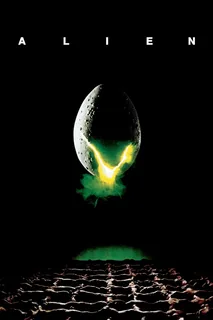
Pictured: Alien (1979)

Planet of the Apes sounds estranged before its world is explained. Percussion and unusual attacks refuse the comfort of a familiar adventure score. Chinatown goes the other way: a lonely trumpet can seem to promise romance while the film steadily withdraws any hope of rescue. Star Trek: The Motion Picture permits a more expansive, searching sound.

Goldsmith places just above Morricone here for the range of dramatic environments he can make distinct without losing precision inside a scene. That is a close editorial choice, not a verdict from the ratings. His ability to improve uneven films is also a reason not to use their average scores as a measure of his music.

The sound of Planet of the Apes makes knowledge unreliable. A conventional adventure melody could tell us how to settle into the expedition; the irregular attacks and unfamiliar colours instead make the environment difficult to classify. The score participates in the discovery rather than standing above it with an established emotional map.

Chinatown demonstrates why calling Goldsmith merely inventive with instruments is too small. The trumpet's exposure matters because the film's relationships offer so little safety. The apparent promise of a private feeling remains audible while the plot reveals how extensively private life has been governed by power. A relatively spare idea can therefore acquire more force than an additional layer of explanation.

Star Trek: The Motion Picture gives the case another dimension. The film's extended approach to the Enterprise lets a musical idea make looking feel like reunion; the machinery is being received through attachment, not merely displayed as hardware. The later encounters with V'ger ask for a stranger scale of response. Goldsmith can make discovery expansive while preserving a difference between the familiar ship and the intelligence the crew cannot yet classify. That flexibility is why I narrowly favour him over Morricone here: he repeatedly makes a change of dramatic world audible before the listener needs a new account of his method.

Listen to “The Hunt” from Planet of the Apes beside Chinatown's main title. Neither sounds like a composer reaching for the same solution twice.

The music editorial
10/10

Planet of the Apes, Chinatown and Star Trek demand sharply different sound worlds; each has a clear dramatic purpose.

Influence editorial
9/10

His orchestration and integration of unusual sounds show how a score can define an unfamiliar world without relying on generic grandeur.

Selected film ratings computed
77.1/100

Alien 86, L.A. Confidential 85, Chinatown 85, Patton 81…

2

Hans Zimmer

He changes how long a scene seems to last.

Pictured: Interstellar (2014)

In Inception, repetition and accumulating layers make time feel pressurised. Interstellar's organ can suggest both the immensity of a setting and a very human insistence on being heard. The Dark Knight often approaches the Joker through an abrasive sustained sound rather than a reassuringly shaped melody.

Zimmer is second for the force of that dramatic method and the breadth of its application. The weakness is equally audible: a constant rise can leave a film nowhere to go, and imitators often retain the volume while losing the timing. His work also belongs to a collaborative production culture; a prominent name on the cover should not erase other credited composers and musicians.

The docking sequence in Interstellar is a better test than an isolated loud passage. Movement has a practical target, and the repeated pulse makes each attempt feel as though it consumes part of a finite opportunity. The organ's enlargement does not give Cooper control; it makes the effort to obtain control feel enormous. The cue works through the difference between a pattern the listener can anticipate and an action whose successful completion remains uncertain. Remove that uncertainty and the same rise can become only an impressive build.

The same strength can become a habit. When everything is already consequential, the quieter human event has to compete with a score apparently announcing the fate of a universe. I find the work most persuasive when the sustained sound exposes a person's limited time or uncertain control, rather than simply lending prestige to the scale of the production.

Authorship needs care here. The Dark Knight is co-composed with James Newton Howard, and its album credits identify other musical contributors. That is not a footnote designed to subtract from Zimmer. It is part of understanding the way this sort of film music is made. The ranking concerns a substantial creative contribution, not the fantasy that every sound in a large score came from one person alone.

Try the opening of Interstellar's “Cornfield Chase”, then the harder pressure of The Dark Knight. The contrast is more revealing than the claim that he only writes loud music.

The music editorial
9/10

Interstellar's organ and Inception's accumulating patterns give scenes different experiences of scale and duration.

Influence editorial
10/10

Layered textures, repeating patterns and sustained builds provide an influential alternative to a theme-led orchestral approach.

Selected film ratings computed
83.9/100

The Dark Knight 90, Inception 86, The Lion King 86, Interstellar 85…

1

John Williams

The themes are memorable because they know what the scene needs.

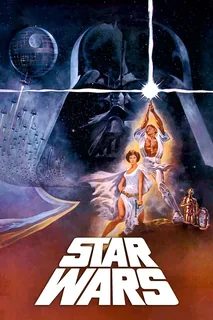
Pictured: Star Wars: Episode IV - A New Hope (1977)

The two-note figure in Jaws gives an unseen threat direction and proximity. E.T. needs something different: when the bicycles rise, the music makes a physical impossibility feel like an emotional release. Schindler's List asks the solo violin to carry grief without the heroic scale that Williams could so easily supply.

That range puts him first. A recognisable tune is useful, but his great themes change function as a character, place or idea returns. The objection is that the music can resolve our feelings before a scene has earned them. Even allowing for that, the combination of dramatic judgement, orchestral detail and memorable material is exceptional.

The sunset in the original Star Wars makes the distinction audible. Luke has not acquired the knowledge or power that will later gather around the Force theme. The melody gives his looking a reach beyond the farm without requiring the scene to explain where he will go. Later returns can carry purpose, loss or recognition. The musical continuity has not simply labelled a person; it has allowed an uncertain longing to become part of a larger dramatic history.

Williams also understands that an economical idea and an elaborate orchestral passage need not compete for the same job. Jaws would be weaker if every warning arrived as a fully flowering concert piece. E.T. would lose something essential if its release remained trapped inside a minimal signal. The scale of the musical statement follows the kind of experience the scene is ready to permit.

The criticism of his emotional certainty deserves to remain. A score can make us feel that the correct response has already been appointed. What keeps his best work above that objection is specificity: the music is not merely large where the image is large. It can know when the story needs dread, a child's exhilaration or the exposed sound of an individual instrument.

Listen to the Jaws opening, “Flying” from E.T. and the main theme from Schindler's List together. The distance between them is the strongest case for him.

The music editorial
10/10

Jaws makes a tiny figure threatening; E.T. releases tension through melody; Schindler's List works through a comparatively exposed solo line.

Influence editorial
10/10

His orchestral themes offer a durable model for giving characters and ideas identities that can develop across a film.

Selected film ratings computed
83.2/100

Schindler's List 92, Saving Private Ryan 88, Star Wars: Episode IV - A New Hope 87, Raiders of the Lost Ark 85…

Where this comes from: r/soundtracks: results and discussion of a community top-five poll · The Dark Knight soundtrack: co-composer and album credits · Apple Music Classical: Spirited Away soundtrack and composer credits

A listener who prizes psychological disturbance can make a strong case for Herrmann over almost everyone here. Someone who values the development of musical identities across a long narrative may choose Shore. Goldsmith and Morricone make the third-place comparison difficult for good reasons: one repeatedly finds a different sound world; the other can make a single sound hold a whole scene in suspense.

The omissions expose another limit. Steiner, Korngold, Newman, Delerue, Takemitsu and Ilaiyaraaja are not lesser names simply because this particular selection has no room for them. A history of film music would have to give their work and their traditions much more than a closing acknowledgement.

What this ranking can defend is a set of substantial listening claims. Follow the theme when it returns. Notice when an accompaniment changes the experience of time. Ask whether the music is carrying the character's feeling, the film's judgement or a pleasure the image is making dangerous.

The strongest score may be the one you remember immediately. It may also be the one whose absence would reveal how much of a scene you had been hearing.

← All lists