
29 September 2026

Meryl Streep's best performances: fourteen reasons to look again

Authority, embarrassment, desire and doubt: a ranking of the acting, rather than the films around it.

14 entries

Miranda Priestly does not have to hurry. Everybody around her has already begun anticipating what she may want. Joanna Kramer cannot assume that kind of cooperation: she has to give an account of herself to a room that may prefer a simpler explanation. Streep makes the difference audible before either woman has finished a sentence.

That is a more useful beginning than the familiar discussion of accents. A voice is part of a person's position in a scene. It can command, conceal, negotiate or fail. The imitation becomes interesting when it gives an actor something specific to do with another person.

These fourteen performances are arranged by my judgement of the acting. The film scores alongside them measure responses to the whole work. They cannot establish that Streep was good in an otherwise weak film, and a gap between a score and this ranking is not independent proof of her talent. The written case has to do that work.

The strongest choices here do not always make the woman easier to like. Sister Aloysius can be severe and perceptive without every conviction being justified. Francesca can desire another life while remaining responsible for the one she has. Lindy Chamberlain can resist the public performance of grief others expect her to supply.

A tribute should allow those difficulties to remain. Calling every role effortless, every silence devastating and every film inferior to its star would make the praise less convincing. The notes identify the choices that matter and where the material places limits on them. The discussion includes major plot developments and endings, as well as bereavement, abuse and the Holocaust.

How this is judged

The film computed
The combined score from rating sources held for the film. The performance ranking is editorial.

Computed scores come straight from the ratings, so you can check them. Editorial ones are our opinion, and every one comes with the reason for it.

14

Out of Africa 1985

A persuasive memory remains a restricted view of a world.

Drama, History, Romance · 161 min

B 72

Karen's narration gives experience the shape of memory. Streep's controlled manner helps make that memory persuasive: a loss has already been arranged into a story the speaker knows how to tell.

Within the scenes, pride and vulnerability have less stable relations. A practical request can carry a claim to possession, while romance invites a kind of dependence the character cannot comfortably command. The performance gives those negotiations continuity across a very expansive film.

The setting also places a limit on the tribute. Karen receives psychological detail that many African characters do not. Her changing understanding of possession does not, by itself, make the film a sufficient examination of colonial life.

The acting is worth watching alongside that objection. Streep makes this woman's account coherent and moving. The critical task is to recognise the achievement without allowing the attractiveness of one person's memory to define the whole world around it.

The film computed
73/100

From 11 ratings.

13

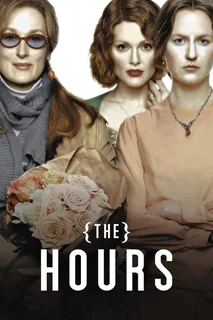
The Hours 2002

Keeping a day organised is also a form of self-protection.

Drama · 110 min

B 77

Clarissa keeps organising a day. Tasks give her relationships a practical form and offer a way to keep difficult feelings moving. Streep makes that busyness both generous and protective.

Louis's visit, while she is preparing Richard's party, breaks the rhythm of that work. Here is somebody who shares a past with Richard and has made a different life out of leaving it. Streep lets the conversation disrupt more than her concentration: Clarissa's useful, sustaining role no longer protects her from considering what her days have become. The kitchen breakdown grows out of that interruption. It is painful partly because the party still has things that need doing.

The film's parallel lives and recurring motifs can make the women seem overburdened with symbolic correspondence. Streep's smaller reactions help keep Clarissa particular: a remembered intimacy, a slight delay, the discomfort of hearing another person describe a life she has been using different words to understand.

The performance is less conspicuous than some of the others in the film, which is part of its value. Care is not an inexhaustible identity. It consists of actions performed by someone whose own need for recognition has not stopped because she is useful to others.

The film computed
77/100

From 12 ratings.

12

Julie & Julia 2009

Pleasure becomes a way of working.

Drama, Romance · 123 min

B 70

The onion practice is the performance in miniature. Julia is slower than the men in her cooking class, so she goes home and keeps chopping; the pile of onions makes the labour comic before her voice has to. Streep gives the determination an appetite. Julia wants the skill badly enough to repeat an unglamorous task, and the pleasure comes from getting better at it. That is a much more durable source of comedy than simply reproducing a famous voice.

The scenes with Stanley Tucci are especially valuable. A supportive marriage becomes interesting through attention: one person enjoys the other's capacity without needing to possess its achievement. Streep lets warmth include appetite, frustration and the wish to be taken seriously.

The dual narrative creates an imbalance for viewers who find the Paris passages more involving than the modern project. That judgement is fair to argue, but it is not universal agreement established by the film's score.

The performance makes a strong case for joy as craft. A comic voice could have become an impersonation sustained beyond its usefulness. Instead, Julia's changing response to a task gives the manner somewhere to go. She is funny because she wants to do something well and remains open to how much the doing may surprise her.

The film computed
71/100

From 12 ratings.

11

The Iron Lady 2011

An intricate performance cannot settle a film's political omissions.

Drama, History · 105 min

D 58

Impersonation is only the beginning of the task. The film moves between Margaret Thatcher's public authority and an older woman's unstable access to the past. Streep has to connect the force of a performed public identity with moments in which that identity no longer secures the room.

Listen to the change between a voice intended to carry an argument and a voice trying to orient itself in a private exchange. The transformation is more interesting than recognising a familiar cadence.

The film's political limits remain serious. Concentrating on decline can invite sympathy while leaving the consequences of power insufficiently examined. An accomplished performance does not decide how much historical understanding that choice provides.

That is why the role belongs in a tribute with an objection attached. Streep gives the central figure substantial emotional and physical detail; the film does not always grant a comparable specificity to the people affected by her decisions. Admiring the acting should sharpen attention to the imbalance rather than excuse it.

The film computed
58/100

From 11 ratings.

10

The Deer Hunter 1978

A small role gives waiting and attachment practical weight.

Drama, War · 183 min

A 84

Linda has less room than the men whose departures and returns organise the film. That limitation is real. Streep's task is to give her needs weight without the narrative supplying a comparable amount of time to explain them.

The domestic scenes matter because Linda is seeking a place within relationships already under pressure. Listening, waiting and accepting an incomplete answer become actions. She is not simply preserving an untouched home to which the men can return.

It is tempting to read the performance through Streep's private life during production. That can overwhelm what is actually on screen and make personal suffering sound like the source of artistic legitimacy. The visible work is more precise: Linda adjusts to people whose ability to offer reassurance is deteriorating.

The film's representation of Vietnam and its distribution of sympathy deserve scrutiny beyond the acting. Within its restricted space, Streep makes the wish for an ordinary, safe attachment feel substantial rather than merely supportive of somebody else's ordeal.

The film computed
84/100

From 11 ratings.

9

Adaptation. 2002

A writer becomes material for another writer's appetite.

Comedy, Crime, Drama · 115 min

B 77

The early Susan Orlean is articulate about other people's passion and less able to locate an equivalent force in her own life. Streep gives her observation a quiet hunger. The capacity to describe something does not mean she can participate in it.

The film later changes what kind of person its story needs her to become. Streep commits to the alteration without pretending that every register belongs to a single sober biographical account. This is a fictionalised Orlean inside a film concerned with the act of fictionalising.

That distinction lets the performance become funny, melancholy and outrageous without making the tonal changes merely random. The screenwriter's appetite for a more exciting story has consequences for the woman being turned into material.

The final movement will frustrate viewers who prefer the earlier form. Streep's consistency lies in giving desire an immediate object in each version. She makes the construction enjoyable while allowing us to notice that a film can manufacture the behaviour it then presents as revelation.

The film computed
77/100

From 12 ratings.

8

The French Lieutenant's Woman 1981

Two performances alter the balance between mystery and access.

Drama, History, Romance · 124 min

B 70

Streep plays Sarah inside a Victorian story and Anna among the contemporary actors filming it. The contrast concerns more than costume and accent. The two women occupy different relationships to mystery, desire and the expectation that a romantic story should explain them.

Sarah's stillness invites interpretation. Another person wants to discover what she means, and the film makes that appetite part of the encounter. Anna's more casual behaviour does not necessarily make her more accessible; a relaxed manner can conceal a refusal to grant the relationship the importance her partner wants.

Streep gives each world a distinct rhythm without insisting that one is the authentic woman behind the other. That is crucial to a structure concerned with performance.

The parallel narratives can feel schematic. The acting keeps them from becoming only a formal demonstration because the women want different things from the men trying to read them. A change in register alters the distribution of power, not simply the surface of the role.

The film computed
70/100

From 8 ratings.

7

Evil Angels 1988

A mother refuses the emotional performance strangers expect.

Drama · 120 min

B 72

Also released as A Cry in the Dark, the film examines Lindy Chamberlain through the public interpretations surrounding her. Streep does not solve the problem by giving the audience an immediately agreeable woman.

A blunt response or an expression that fails to match somebody else's expectation can become material for judgement. The performance makes that process visible. The viewer has to distinguish learning about a person from deciding whether she has supplied the emotional display we would prefer.

The accent is part of the construction, but the more important choice is refusing a constant appeal for sympathy. Grief does not arrive in a single socially recognisable form. A camera can record a face without granting the observer access to what the face must mean.

The film is forceful and at times didactic in its criticism of public certainty. Streep gives that argument a difficult centre: a mother whose right to be heard should not depend on the ability to make strangers comfortable with her manner.

The film computed
73/100

From 7 ratings.

6

The Devil Wears Prada 2006

Quiet instructions make other people do the work.

Comedy, Drama · 109 min

B 72

Miranda's economy is a redistribution of effort. She can leave a request incomplete because somebody else must work out the rest. Streep makes the soft voice intimidating through the room's response to it, including the speed with which assistants begin rearranging themselves.

Andy smiles at the fuss over two belts, and Miranda turns the sweater Andy is wearing into evidence against her assumed independence from fashion. Streep barely raises the temperature of her delivery. Andy must stand there while a private joke becomes a public demonstration of what she does not know. The scene's account of how fashion reaches a shop is the film's argument; the acting gives it the force of an employer who can also decide when the lesson is over. Miranda can expose Andy's condescension without thereby earning the right to every unreasonable demand she makes.

The private hotel-room passage adds vulnerability without erasing the hierarchy. The woman has losses; other people still perform much of the practical labour required to keep her world functioning. Streep does not need to make her secretly nice for that sadness to matter.

The pleasure of quoting Miranda can obscure the work in her listening. Watch a face waiting to see whether another person has understood enough to remain useful. The performance is funniest and most uncomfortable when a minor social delay threatens to become somebody else's professional emergency.

The film computed
73/100

From 12 ratings.

5

Doubt 2008

Conviction can notice a danger and overstate its own knowledge.

Drama · 104 min

B 75

Sister Aloysius is often funny because she has such a specific account of how people ought to behave. Streep's dry corrections establish a daily practice of authority before the film places that authority inside a crisis.

In the office confrontations, she uses certainty as leverage. A fixed gaze and a sentence delivered without invitation make the priest respond on ground she has chosen. Philip Seymour Hoffman refuses to remain on that ground, which gives the exchanges their changing balance.

The encounter with Mrs Miller is even more revealing. Aloysius expects a parent to join her intervention; she hears instead why this mother fears the consequences of it. Streep's pauses have a different purpose here from the silences she uses to intimidate the priest. She has to find her next objection while taking in a practical account of the boy's vulnerability that her certainty has not covered. Viola Davis makes the resistance specific enough that Aloysius cannot remain the scene's sole moral interpreter.

The film's visual emphasis can press the argument more heavily than the acting needs. At her best here, Streep keeps conviction both useful and dangerous. A person can notice what others avoid and still mistake the force of her conclusion for the completeness of her knowledge.

The film computed
75/100

From 12 ratings.

4

Silkwood 1983

An ordinary worker begins to question the trust a job requires.

Drama · 131 min

B 72

Karen is permitted to be irritating, funny, careless and attached to people before the narrative asks her to stand for a public cause. Streep's performance gives work a social texture: the jokes, frictions and routines through which a shift becomes a life.

That groundwork makes the decontamination sequence frightening in a specific way. A workplace has procedures for handling the threatened body, but procedure does not make the experience feel like care. Streep's loss of control comes into conflict with an institution acting as though it knows what it is doing.

The performance does not require Karen to become an exemplary person as her questions become more consequential. That refusal is important. Protection from danger should not depend on whether a worker can be made inspirational.

The film dramatises a real and contested history, so its suspense cannot settle every factual question surrounding it. The acting's strength is immediate: a person gradually recognises that the arrangement she has depended on may demand trust it has not earned.

The film computed
72/100

From 9 ratings.

3

The Bridges of Madison County 1995

A familiar room becomes the possibility of another life.

Drama, Romance · 135 min

A 80

Francesca's kitchen is familiar territory until a visitor changes what she can notice about inhabiting it. Streep lets the adjustment happen through posture, conversational rhythm and small decisions about how much of herself to disclose.

The romance depends on time feeling both ordinary and scarce. These are not four days suspended outside material life. The household and the family remain present through routines, objects and responsibilities, even when their members are absent.

The famous traffic-light scene concentrates the conflict into a hand and a door handle. It works because the performance has already made wanting and restraint equally legible. We do not need another speech describing the choice.

The film can be criticised for the idealisation that makes the encounter so persuasive. Streep's achievement is to keep Francesca from becoming merely the woman who recognises a perfect visitor. There is an existing life with pleasures and limits, and a person discovering that her dissatisfaction is both deeper and less easily resolved than she had allowed herself to say.

The film computed
81/100

From 12 ratings.

2

Kramer vs. Kramer 1979

An account of motherhood challenges the room already judging it.

Drama · 105 min

A 81

The film gives Ted the daily work through which the audience learns to care about him. Joanna returns to a story whose emotional loyalties have already been formed. Streep has to make her more than an interruption in the father's progress.

Her testimony works through precision rather than a demand for instant absolution. A woman can have failed someone she loves and still need the life she left to be understood. Streep lets conviction and regret occupy the same statement, without treating one as a cancellation of the other.

The exchanges with Hoffman also carry a private history that the court cannot fully admit as evidence. A phrase can sound reasonable in public while having another weight between the two people who lived the marriage.

Her final decision makes the conflict harder. Having won custody, Joanna decides Billy should stay with Ted. Streep lets the legal victory give way to an understanding of the child's existing life; she does not play the decision as though Joanna has discovered that her own needs were always illegitimate. The film still gives Ted far more room to earn our allegiance. What Streep supplies is a mother capable of changing a decision without becoming the simple villain the early scenes have encouraged us to expect.

The film computed
82/100

From 12 ratings.

1

Sophie's Choice 1982

A socially alive woman exceeds the stories told about her.

Drama, Romance, War · 150 min

B 75

The performance has to accommodate the person Sophie can be in company and the history that makes company difficult. Streep gives the warmth, flirtation and humour their own life. They are not simply a decorative mask whose only purpose is to be removed.

That matters to the film's gradual disclosures. Each revised account has a listener and an immediate emotional need behind it. Sophie is not reciting a complete history for the audience's benefit; she is deciding what can be said to this person, at this moment, and how to bear saying it.

The famous sequence named by the title is intensely distressing. The acting is powerful because a demand arrives that cannot be made workable through understanding it more clearly. Streep lets recognition and refusal coexist without turning the moment into an eloquent explanation of suffering.

The framing through a young writer and the film's emphatic tragic design deserve criticism. My reason for placing the performance first is more particular: Sophie remains a socially alive woman whose experiences cannot be adequately contained by the story others are trying to tell about her.

The film computed
76/100

From 9 ratings.

Start with a contrast, rather than the most intimidating title

The Devil Wears Prada and Kramer vs. Kramer make a useful pair. One woman can expect other people to adapt to her; the other has to persuade a room to reconsider its account. Listen to the differences in pace and in what a silence can safely do.

For another route, compare the enjoyment of work in Julie & Julia with the gradual loss of trust in the workplace in Silkwood. Both depend on people doing practical things, but the institutions around them give effort very different meanings.

Sophie's Choice requires a different kind of preparation for distressing material. Save it for a time when you want that experience. A performance does not become better because watching it has to prove your seriousness.

← All lists