
8 October 2026
Why Person of Interest belongs among TV’s great dramas
The cases, Carter, the Machine and the difficult argument beneath an apparently familiar crime show.
A number appears. John Reese finds the person it belongs to. For a while, neither he nor we know whether this is someone about to be killed or someone preparing to kill. A familiar crime-show device produces an unusually good moral habit: look at the person before deciding what category they belong in.
That is the reason I take Person of Interest seriously. The gunfights are not its strongest claim, nor is the idea that it somehow predicted every development in artificial intelligence. Its achievement is to spend a long television run resisting the administrative convenience in its own title. A person can be entered into a system as a useful fact, a threat, an acceptable loss. The drama keeps asking what disappears in that entry.
The starting arrangement is already compromised. Harold Finch built a surveillance system to identify violent threats. The government wants the cases relevant to national security and discards the ordinary murders. Finch recruits Reese to deal with the discarded numbers. They save lives using a power whose legitimacy they cannot convincingly explain to the people being watched.
A weaker series would make that contradiction somebody else's fault. This one eventually puts it at the centre of the story. Its heroes do good things. That is not a complete answer to the question of who authorised them.
Spoilers: the discussion includes Carter's story, the rival artificial intelligences and the ending.
The procedural is where the show earns its politics
Fans often describe the early cases as something to get through before the larger plot starts. I think that advice undersells the series. It suggests that the ordinary people were holding up the important business, which is precisely the distinction Finch refuses to accept.
The number can belong to someone embarrassing, frightened, dishonest or difficult to like. The immediate task is not to establish that this person deserves the audience's sympathy. It is to prevent a violent outcome while finding out what the warning actually means. A life does not become worth saving only after the person has supplied an attractive biography.
That is a substantial idea for a weekly thriller to repeat. Each case converts information into an encounter. A camera can reveal where someone went. It cannot, on its own, explain the obligation that made them go there or the shame that makes them lie about it. Reese has to listen; Finch has to revise a hypothesis. Surveillance supplies a lead rather than a final understanding.
The early episode Cura Te Ipsum exposes the danger in that arrangement. The person associated with the warning has an intelligible grievance, and the man at its centre is not someone the viewer is encouraged to like. Reese's involvement raises a harder question than whether he can stop the immediate act: what should a highly capable man do when the law seems unable to supply the justice he wants? The episode's unease comes from leaving us too close to his power.
Not every case achieves that complexity. There are convenient reversals, obvious villains and guest characters whose difficulties fit an hour too neatly. The cumulative effect still matters. When a later antagonist speaks about managing society, the audience has spent years meeting the people who would be managed.
Finch and Reese are useful to each other for uncomfortable reasons
Finch can describe responsibility with extraordinary care while arranging a life that keeps him at a distance from its consequences. Screens suit him. So do precautions, aliases and the apparent modesty of calling his work a small attempt to repair a mistake. Michael Emerson makes the restraint attractive, but also defensive. A pause can be consideration or concealment; Finch often needs it to be both.
Reese supplies the physical intervention Finch cannot make. He also gives Finch a way to turn guilt into a daily task. Find this person. Prevent this death. Do something that has a visible end. That is more manageable than answering for a machine that can watch a population.
For Reese, the arrangement reverses the problem. He can act, but he has lost a convincing reason to continue acting. Finch gives his competence a purpose other than following another remote authority's orders. The rescue work is a form of recovery, though the show is sometimes too comfortable using a newly saved life to confirm that recovery.
Jim Caviezel's stillness works best when another character's response makes us question it. Reese can appear reassuring to the person he protects and terrifying to someone who has no idea who appointed him. The series loses something whenever it mistakes his ability to win another fight for sufficient evidence that his decision was right.
Their friendship is therefore more than a pairing of brains and muscle. Each makes the other's preferred escape harder. Reese pulls Finch towards an actual person; Finch asks Reese to consider a future beyond the next violent task. Neither can finish the other's work for him.
The disadvantage is that the weekly form can make the repair too dependable. Reese's competence is rarely exhausted for long, and Finch's resources can absorb problems another person would have no means to escape. The best episodes interrupt that reassurance. A saved stranger can give the men another reason to work without retrospectively making every means of saving them right.
Carter gives the law a voice the heroes cannot dismiss
Joss Carter is essential because she does not enter the story owing Finch an explanation or Reese gratitude. She begins with a public job and standards that do not come from the two men's private arrangement. Taraji P. Henson gives her directness a particular weight: she can recognise that someone has been helped and still ask who is carrying a gun around the city.
It would be easy to make her an obstacle whose eventual enlightenment consists of accepting the heroes' methods. Her struggle with police corruption prevents that simple route. The institution that ought to make her authority accountable is itself capable of protecting people who abuse it. Believing in the law does not permit her to pretend its present custodians are reliable.
That gives her changing relationship with Reese substance. Trust becomes a judgement she has to make under pressure, rather than a reward the script owes him. Her campaign against HR also grounds the show in ordinary structures of fear, employment, favour and retaliation. The threat does not need a superintelligent computer to understand how people can be controlled.
Her death is costly for that reason. The series loses a distinct source of resistance inside its central argument. It can use the loss powerfully and still be open to the objection that another woman has become part of a male hero's grief. The later science-fiction story does not make that objection disappear.
In the viewer discussion linked here, some prefer the HR story to the war between machines. That is a serious preference, not a failure to appreciate the show's ambition. A corrupt officer can be frightened, bought or confronted. The larger the enemy becomes, the more care the drama must take to keep its conflicts human.
Fusco, Root and Shaw make different demands on the idea of redemption
Lionel Fusco is an especially useful corrective to the comforting idea that a decent person was simply waiting to emerge. He has done wrong. Being useful to Reese cannot erase that record. Kevin Chapman lets the awkwardness remain: competence arrives unevenly, courage can be resentful, and a better act still has to be chosen when nobody is offering a clean identity in exchange.
“The Devil's Share” gives that change a test. Fusco reaches Simmons with every personal reason to want revenge, then chooses arrest. Carter's influence has become an action she is no longer there to demand from him. Chapman does not need to make the choice serene for it to count. The episode also complicates its satisfaction: Elias subsequently arranges Simmons's death. Fusco's refusal remains meaningful, but the series still obtains a punishment its more accountable character has declined to administer. That is a productive unease in the show, and sometimes a convenience: an ally can preserve the revenge pleasure while the central group preserves a boundary.
Root approaches the Machine through devotion. Her faith in its larger understanding can be funny, moving and deeply alarming. She exposes the temptation to treat superior information as superior moral authority: perhaps obedience would be easier than judgement. Amy Acker keeps the charm inseparable from the threat. Root can understand a principle very well and still be frighteningly prepared to use a person.
The Machine's later use of Root's voice gives that devotion an intimate consequence. Finch can hear someone he has lost while knowing that the speaker is a system. The comfort is real; it does not establish that Root has survived as the person who could answer him. Emerson's grief makes the distinction difficult without making it dispensable. A show concerned with being remembered has to ask whether a persuasive continuation is also a loss being made easier to bear.
Shaw tests another comforting assumption—that care must announce itself in a familiar emotional language. Sarah Shahi's bluntness makes action carry information the character will not wrap in a speech. Loyalty is visible in what Shaw returns to do and what she refuses to abandon.
The treatment of her captivity and simulated experiences also makes the technology's violence intimate. A system does not need to injure a body in the obvious way to occupy a life. The relationship with Root matters within that pressure, but affection should not make the coercion around it look like an elaborate romantic obstacle.
These characters do not add up to a tidy catalogue of approved virtues. They keep different weaknesses alive inside the team. That is why the group becomes more interesting than a collection of people who happen to share Finch's position.
If-Then-Else makes calculation the form of the episode
The fourth-season episode If-Then-Else is often recommended as a demonstration of how clever the show became. The cleverness earns its place because the structure lets us feel a conflict that ordinary dialogue could merely explain.
The Machine explores possible responses to a crisis. We see actions play out, fail and begin again under altered conditions. Repetition changes our attention. Once the situation is familiar, a small delay or a decision to return for someone becomes conspicuous. The route through the space may be a calculation; refusing to leave a friend is a value being applied to it.
The compressed conversation is the episode's sharpest joke. As processing speeds up, the people briefly become a computer's shorthand for themselves. Affection, flirtation and disagreement are reduced to their apparent functions. We recognise the characters in the reduction, which makes it funny. We also recognise how inadequate that summary would be as an account of their lives.
Finch's remembered chess lesson gives the formal experiment a moral basis. Chess makes sacrifice useful because different pieces have different assigned values and the aim is to win. A system governing lives can become monstrous before making a single arithmetic error if it accepts that model too readily.
The episode therefore does something more demanding than making a computer lovable. It asks whether the definition of a successful outcome is already deciding whose loss can be dismissed. The Machine's education consists partly of learning to question the game.
Shaw's return for the others puts a limit on the simulations' apparent authority. A person can make a commitment that the safest route would have excluded. The episode needs that decision as more than proof that friendship defeats arithmetic. It changes the problem the Machine is trying to solve: a solution that preserves the team by requiring it to stop behaving like this team may not preserve what the outcome was meant to value.
Samaritan offers an attractive escape from responsibility
The rival system, Samaritan, does not become interesting merely by being more ruthless. Its strongest claim is the promise that somebody, or something, could make society less chaotic. Prevent enough violence, anticipate enough crises, remove enough obstacles, and the moral objections might begin to sound expensive.
Finch cannot answer by announcing that surveillance is inherently unacceptable. He has used it, repeatedly, to save people. Nor can he rely on the claim that his intentions are kinder. A population cannot build an accountable institution around the hope that its unobserved guardian remains a good man.
“Death Benefit” brings the difference into the team's own conduct. Killing Congressman McCourt appears to offer a means of preventing Samaritan's rise. Finch refuses to treat that possible future as an entitlement to kill the person in front of him. The decision is substantial because the show does not make the threatened consequences disappear. A moral limit has to remain a limit when keeping it may leave the people who keep it less safe. The original episode discussion records viewers debating that price, rather than simply agreeing on a triumphant refusal.
The real distinction has to concern the freedom left to people who disagree with the system's preferred outcome. Can they refuse? Can they know why they have been classified? Can they contest an intervention before it rearranges or ends their lives? A peaceful society in which those questions are unaskable has solved one problem by making people instruments of its solution.
The show occasionally evades this difficulty by giving Samaritan especially sinister servants. Evil behaviour is easier to oppose than a competent authority whose trade-offs look reasonable. Its better scenes return the discomfort to Finch. He also keeps secrets, withholds choices and sometimes decides that another person's ignorance is necessary.
That tension is the reason the technology still interests me as drama. The question is not whether a fictional machine resembles the latest commercial model. It is what people are prepared to surrender when a powerful system offers to relieve them of the burden of deciding.
The ending does not need to win the argument about television
Person of Interest has routine episodes, implausibly recoverable injuries and action that sometimes makes one room of armed men indistinguishable from the next. Its organisations can proliferate until another hidden structure begins to feel like a substitute for a more difficult motive. Acknowledging those weaknesses is part of taking the work seriously.
The Wire examines institutions with a density and patience this series rarely matches. Breaking Bad makes its central character's choices accumulate with fewer comforting escapes. There is no useful critical method by which affection for Finch obliges us to pretend otherwise.
What Person of Interest does unusually well is make an accessible long-running thriller return to the same ethical problem at changing scales. A stranger's danger, a compromised officer, a friend's sacrifice and a system's idea of an acceptable loss belong to one argument.
The final rooftop exchange gives that question to Reese and Finch without letting both men solve it by remaining available for another case. Reese uses the old promise of purpose to justify a choice Finch cannot make safe for him. Caviezel's restraint is effective because the relationship has already supplied the feeling the scene could otherwise have had to announce. The sacrifice does not prove that every private intervention was legitimate. It completes the narrower story of a man who has found somebody he is unwilling to leave alone with the cost.
By the ending, the question is not just whether a person survives. It is whether anything of a life remains in another person's attention: a changed action, a remembered obligation, a decision not to abandon someone else. The huge machinery of the plot comes back to a small and recognisable kind of consequence.
Start at the beginning. There is no need to insist that every early case is secretly perfect. They establish the habit the later story needs: this apparently irrelevant person will occupy our attention for an hour. That is a modest promise for an episode and a substantial principle for a series.
The films and shows in this piece
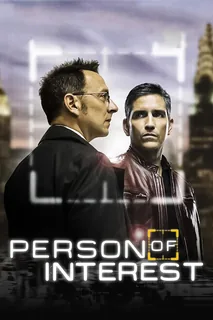
Where this comes from: Viewer discussion: the appeal and limitations of Person of Interest · Viewer discussion of If-Then-Else · Viewer disagreement about Carter, HR and the later science-fiction story · Original viewer discussion: Death Benefit and the cost of Finch’s refusal