
29 October 2026

Six great screen couples, ranked for what happens between the actors

From Before Sunset to The Lunchbox: chemistry built through listening, rivalry, restraint and sometimes not sharing a scene at all.

6 entries

Screen chemistry is often described as something two actors either have or do not. That makes it sound like private compatibility accidentally photographed. The more interesting evidence is on screen: a response arrives late, a joke changes the balance of a conversation, a hand almost reaches another person and stops.

The actors create the behaviour; writing, direction, framing, editing and sound determine how we encounter it. A withheld response may become the most important action in the scene. In The Lunchbox, a reply can arrive in another room on another day and still alter both performances.

I am ranking six pairs for reciprocity and tension: does each performance alter what the other seems to be doing, and does the connection reveal something about both people? The order favours relationships with competing desires over an uncomplicated display of attraction.

My first choice is Ethan Hawke and Julie Delpy in Before Sunset, followed by Tony Leung and Maggie Cheung in In the Mood for Love. The others offer different tests: Casablanca's competing loyalties, athletic rivalry, a musical fantasy tested by work, and intimacy conducted through letters.

There are major spoilers, including endings. “Couple” here means the relationship dramatised by the film. It does not require that the characters finish together, have a healthy partnership or share a real-life history.

1

Ethan Hawke and Julie Delpy

First: the richest conversation between what people say, what they remember and what their bodies reveal.

Pictured: Before Sunset (2004)

Nine years can sit inside a pause

The pleasure of Before Sunset is that the reunion begins with a shared story whose meaning the two people have not kept identical. Jesse has made a book from the earlier encounter. Céline has had to live with it in another form.

The conversation is therefore not merely a charming catch-up. Each person is finding out what the other has remembered, omitted or turned into a tolerable account. A joke can test whether intimacy is still available without risking an explicit request.

Hawke often lets Jesse's confidence run slightly ahead of his security. Delpy can make Céline's fluent speech conceal a hesitation rather than eliminate it. Neither has to perform shyness for the exchange to feel exposed.

The car scene condenses the method. Céline's near-touch, unseen by Jesse in the moment, lets the audience encounter a possibility that the conversation cannot yet safely carry. The gesture is small because the shared past has made it large.

Their chemistry also survives disagreement. They can be impatient with an account that sounds too easy. A strong romantic scene does not need both people to be equally pleasant; it needs the response to feel particular to the person giving it.

In Céline's apartment, the Nina Simone recording lets her perform a playful version of confidence while Jesse remains seated. The flight is now a deadline they can both see approaching. Hawke does not need to leap into a declaration; his willingness to keep watching becomes a choice. Delpy's teasing leaves enough room for him to make it. The ending keeps their ability to change the moment in both actors' hands.

There are limits to the film's sympathy. The life Jesse would interrupt is not present with equal force, and the pair's sense of exceptional connection can invite us to minimise obligations elsewhere. That is a reason to question the romance, not a reason to deny its persuasive construction.

They rank first because attention keeps changing the encounter. The premise's short reunion window creates urgency, but the actors make even a minor delay feel chosen. By the end, listening has become a way of deciding whether another life remains possible.

Jesse and Céline in Before Sunset (2004)

Where to start Before Sunset 2004
2

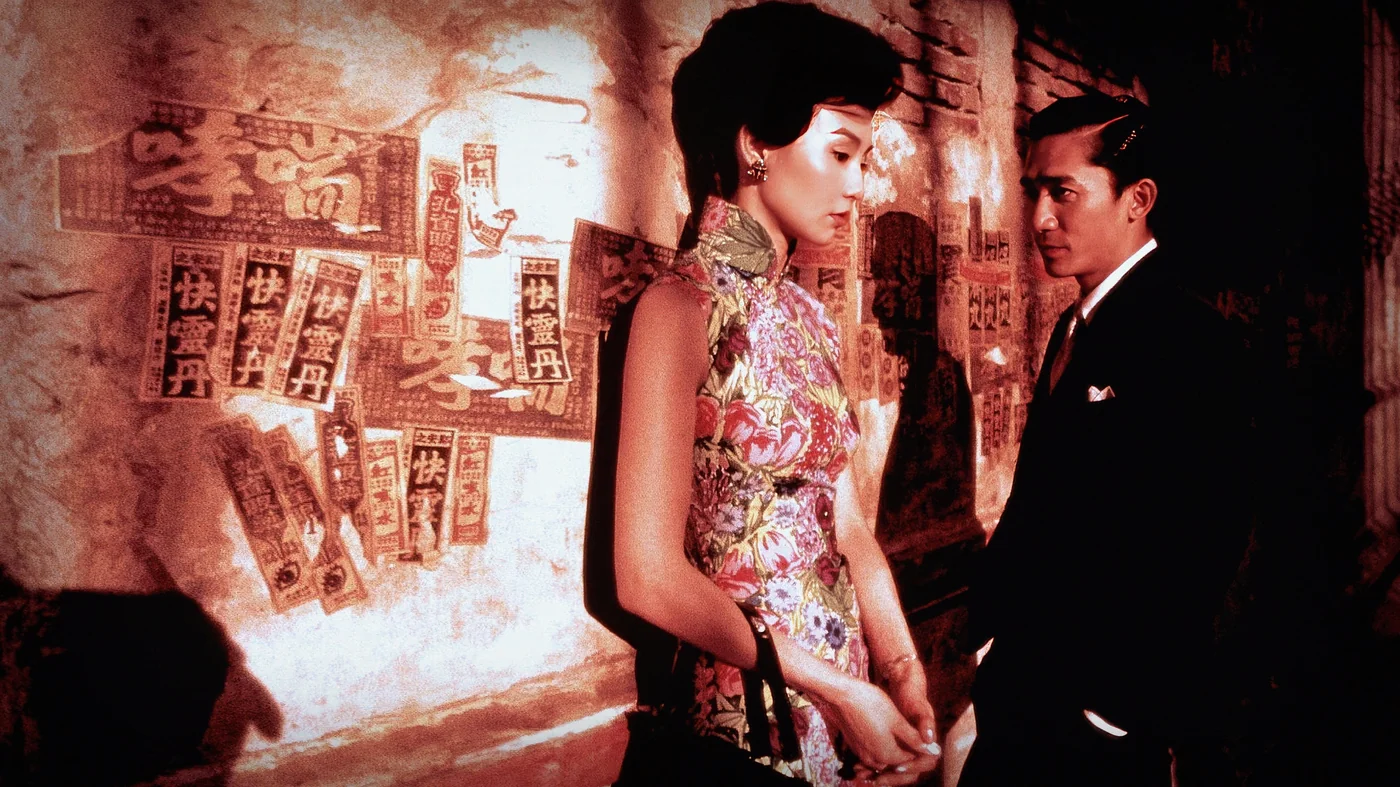
Tony Leung and Maggie Cheung

Second: desire made visible through rehearsal, social caution and the difficulty of saying which feeling belongs to whom.

Pictured: In the Mood for Love (2000)

Pretending becomes a dangerous permission

The discovery of their spouses' affair gives Chow and Su a practical reason to meet. Trying to understand the betrayal then permits them to rehearse conversations and imagine behaviour they would not openly claim for themselves.

Leung and Cheung make that permission unstable. A line can begin as an imitation of someone else and end sounding painfully personal. The audience has to reconsider what it has just heard without being allowed a simple declaration that the performance has stopped.

Their stillness is active. A glance, a turn towards a doorway or a refusal to prolong an encounter can contain both desire and an effort to preserve a self-image. They do not want merely to be together; they want not to become the people who hurt them.

Wong Kar-wai's framing helps create the constraint. Corridors, partial views and nearby rooms make privacy feel temporary. Clothing and repeated movement acquire significance because the available space for an unguarded exchange is so small.

It would be unfair to credit the actors alone for an effect so dependent on form. It would be equally wrong to treat them as attractive objects inside beautiful compositions. Their timing makes the difference between a controlled image and a person trying to remain controlled.

The restraint can frustrate a viewer who wants the relationship to become more explicit. I find the frustration productive because each deferral changes what the next opportunity costs. Still, slowness and suppression are not automatic marks of superior feeling; here they work because they belong to the social and personal problem.

The pair places second because I prefer the breadth of response in Before Sunset: irritation, play, self-justification and a change of mind can share an uninterrupted encounter. Leung and Cheung make a more concentrated range of permissions feel momentous. Their restraint is not less intimate; it makes the cost of each permitted exchange the centre of the relationship.

That is a different and extraordinary achievement. The connection feels substantial precisely because so much of it must survive in borrowed words and gestures that cannot safely be completed.

Chow Mo-wan and Su Li-zhen in In the Mood for Love (2000)

Where to start In the Mood for Love 2000
3

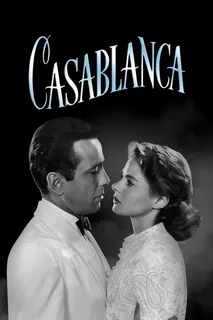
Humphrey Bogart and Ingrid Bergman

Third: attraction made consequential by a shared history that cannot erase the people and commitments outside it.

Pictured: Casablanca (1942)

Rick's indifference is a performance Ilsa can interrupt

Bogart's Rick is convincing because detachment has the shape of work. The clipped answers and refusal to become involved help him control a public room. Ilsa's arrival exposes the private history that the room has allowed him to avoid.

Bergman does not simply receive his bitterness. Ilsa possesses information Rick lacks and loyalties that cannot be reduced to what he feels about her. The performance needs warmth and guardedness at once.

Their scenes gain tension from that unequal knowledge. Rick believes he understands the past as a personal abandonment. Ilsa has to decide what explaining it would do to the present. A familiar romantic encounter becomes an argument about which account of the same event can be lived with.

The Paris material supplies emotional evidence, but the film does not let it exist without the war. Time and circumstance have changed what the lovers can legitimately ask from one another. Their chemistry has to compete with a world that does not regard private happiness as its only claim.

The ending is effective because Bogart makes the relinquishment sound like a decision he can perform even while it costs him. Bergman's attention keeps the response from becoming a man's noble speech delivered over an emotionally absent woman.

There is room to object that Rick receives the final authority to explain what should happen. Ilsa's choices are narrowed by the structure that gives him the culminating act. The actors make the feeling persuasive without making the allocation of agency beyond criticism.

I rank them third because the relationship keeps other obligations in view. Desire is neither mocked nor allowed to become a universal excuse. The pair has enough force to make the sacrifice matter, and the film has enough surrounding life to make the sacrifice intelligible.

The chemistry is not proved by whether they leave together. It is proved by how much of the ending would collapse if the connection had not been made credible.

Rick Blaine and Ilsa Lund in Casablanca (1942)

Where to start Casablanca 1942
4

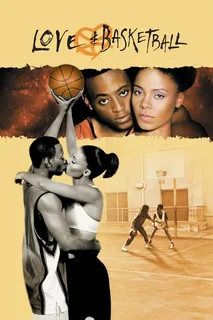
Sanaa Lathan and Omar Epps

Fourth: the best combination of rivalry and desire, with each person's ambition allowed to complicate the romance.

Pictured: Love & Basketball (2000)

They meet through something neither wants to lose

Monica and Quincy do not begin as people waiting for a romance to give their lives direction. They want to play basketball. That shared language creates attraction and conflict before either can control what the other means to them.

Lathan makes Monica's competitive intensity essential rather than an eccentricity to be softened. Epps gives Quincy a confidence whose security is more fragile than its public appearance. They can recognise ability in one another and resent what the recognition requires.

The unequal opportunities around them prevent the competition from being purely personal. Quincy is offered a clearer route into the future. Monica has to defend the seriousness of her ambition as well as pursue it. Their shared sport does not give them identical conditions.

That difference improves the chemistry. Attraction includes the wish to be understood by someone who knows the game, while understanding does not guarantee that the other person will support a choice that costs the relationship.

The one-on-one game near the end brings the film's two languages together. Monica makes an emotional offer through the skill by which Quincy has always known her. Lathan keeps the competitive effort real, which prevents the declaration from becoming a speech performed beside an incidental basketball. Epps has to register both the contest and what it is asking him to recognise. The scene is contrived as a way to settle a life, but its form has a history inside this particular relationship.

What I value most is that the ending does not require Monica to abandon the identity through which the relationship became interesting. The final picture of her professional life changes what romantic support looks like.

The film is not equally subtle in every turn, and the division into quarters can make the design conspicuous. The pair still feels more specific than a generic childhood-friends romance. Their bodies have a shared history of contest, injury, attraction and recognition.

They place fourth because the love story has two futures to negotiate. Chemistry becomes something more demanding than liking each other when another person's success requires you to change your position.

Monica Wright and Quincy McCall in Love & Basketball (2000)

Where to start Love & Basketball 2000
5

Ryan Gosling and Emma Stone

Fifth: comic timing and musical play give the romance lift; the ordinary arguments are the harder and more revealing test.

Pictured: La La Land (2016)

The fantasy has to return to the room

Gosling and Stone are especially good at making attraction arrive through irritation. Their early exchanges permit self-consciousness and teasing before the musical form gives feeling a more expansive body.

The dancing is enjoyable partly because it is not presented as effortless perfection detached from character. A gesture can be competitive, playful or slightly awkward. The pair seems to be negotiating the scene rather than simply demonstrating a routine.

That makes the dinner argument important. The romance has acquired work schedules, compromises and disappointed assumptions. Mia and Sebastian no longer have the freedom to recognise ambition in the abstract. They have to respond to the particular choices the other is making.

Mia's disappointment is not simply the complaint of a partner who dislikes the hours. She believes Sebastian has accepted a version of success he does not want; he hears her objection as a refusal to accept the compromise that pays. Stone lets concern turn into an accusation, while Gosling makes the defensive answer hurt partly because it knows where to aim. Neither can resolve the argument by claiming to be the only person who supports the other's dream.

The final imagined passage gives the film a deliberately impossible form of coherence. Earlier moments are revised into a route through which love and success appear to fit together without the same losses. Its beauty depends on the audience recognising that the revision is not the life the characters actually lived.

The last exchange of looks then has to carry acknowledgement without restarting the story. Gosling and Stone make recognition possible without pretending it erases the ending.

My reservation is that the musical fantasy sometimes makes the relationship feel more distinctive than the conversations alone establish. The stars' ease and the film's design do a great deal of work.

That work is real. I place them fifth because the gap between the glorious imagined version and the ordinary negotiation is also the limit of the pairing. Their best scene may be the one that lets both versions remain visible without insisting they could have been made identical.

Sebastian and Mia in La La Land (2016)

Where to start La La Land 2016
6

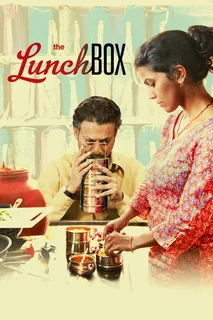
Irrfan Khan and Nimrat Kaur

Sixth, with a special distinction: a convincing connection built chiefly through receiving, imagining and answering someone who is elsewhere.

Pictured: The Lunchbox (2013)

Chemistry can be constructed across an absence

The mistaken delivery at the centre of The Lunchbox connects Ila's cooking to Saajan rather than to the husband for whom she prepared it. Food becomes evidence that someone has attended to another person's needs, even before the intended recipient is corrected.

The letters then create a relationship through response. What matters is not only what each writes, but how receiving a reply changes the space around the reader.

Irrfan makes Saajan's reserve feel habitual. A small opening towards another person is therefore visible. Nimrat Kaur gives Ila a life of expectation and frustration in which being answered can acquire disproportionate importance without seeming foolish.

The film's editing is a collaborator in the pairing. We do not need a conventional shared close-up to experience an exchange. A letter, a meal and the next day's alteration can supply the rhythm of listening.

Saajan's hesitation about a meeting gives the imagined relationship a limit. He can feel more available through correspondence than he is prepared to be as a body with an age and a past. Ila has her own reason to want possibility to become action rather than remain another arrangement that asks her to wait.

That is why I would resist describing the film as a simple fantasy of two lonely people completing each other. The correspondence enlarges their lives, but it also permits projection. Receiving the right words does not eliminate uncertainty about the person who sent them.

The ending preserves that uncertainty instead of proving the bond through a conventional reunion. Some viewers will want a firmer resolution. I find the openness consistent with a connection whose power has depended on both attention and absence.

Sixth place is not a penalty for keeping them apart. The letters, food and separated performances are the form of their chemistry. I place the other five higher because they give both people more opportunities to confront an unwelcome version of the person they desire. Here correspondence permits a particularly large space for projection, and the ending leaves much of that projection untested. That is a deliberate source of the film's poignancy, but I give more weight to a relationship that must survive an answer its participants did not want.

Saajan and Ila in The Lunchbox (2013)

Where to start The Lunchbox 2013

Where this comes from: Criterion: Before Sunset · Criterion: In the Mood for Love · Sony Pictures: The Lunchbox

The response is where the chemistry lives

Hawke and Delpy lead because the encounter keeps changing as each person listens. Leung and Cheung create a connection through the responses their characters cannot openly own. Bogart and Bergman make a history strong enough to be relinquished rather than merely resumed.

Lathan and Epps give desire a competitive language. Gosling and Stone move between fantasy and the work of remaining together. Irrfan and Kaur show how much an exchange can accomplish without conventional physical proximity.

For a useful viewing test, watch the person who is not speaking. Does the response change the meaning of the line? Is something being understood, resisted, concealed or offered? A pairing becomes memorable when both people appear capable of altering the scene, including by refusing to give the response the other wants.

← All lists