
Skyler White
Her wrongdoing deserves scrutiny. It does not make Walt's account of their marriage true.
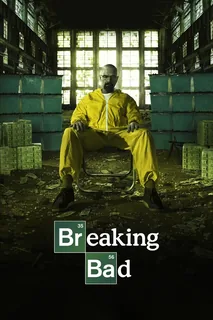
Pictured: Breaking Bad (2008–2013)
First, stop giving Skyler the information the audience has
We meet Walt inside his humiliation. We see the car-wash job, the diagnosis, the classroom and the terrible reckoning with the life he expected to have. By the time Skyler starts asking questions, we have already accompanied him into an adventure. We know the reason for each absence before she does.
She gets the second phone, the implausible explanations and the husband who treats basic questions as invasions. Her suspicion can feel tedious because the programme has given us answers and withheld them from her. That feeling is part of the show's construction. It is not evidence that her questions are unreasonable.
Imagine the same events without the desert, the laboratory ingenuity or the pleasure of seeing Walt outwit someone. A pregnant woman discovers that her seriously ill husband repeatedly disappears, lies about where he has been and responds to concern with further evasions. The domestic story is frightening before anyone mentions methamphetamine.
The treatment intervention gives the objection to early Skyler a real scene. She wants the family to speak openly, then reacts badly when Marie supports Walt's right to choose differently. Care can contain an expectation that the other person reach the answer already chosen for him. That is a legitimate failing to notice. It does not make Skyler responsible for the criminal alternative Walt later chooses, and it does not put a controlling family conversation on the same scale as his developing secret life.
Walt has an alternative, and he rejects what it would mean
The offer from Elliott and Gretchen matters because it complicates the family-provider defence. Walt is not presented with only two imaginable options: leave his family destitute or cook meth. He is offered help through people whose success touches his deepest resentment.
Accepting it would require him to endure dependence, wounded pride and a version of his history he cannot control. He chooses another path. That choice does not erase the American healthcare problem at the beginning of the series, but it changes the explanation for the choices that follow.
Skyler initially approaches the situation as something a family can solve with work, help and difficult conversations. Walt increasingly approaches it as a question of who gets to decide what kind of man he is. When those projects conflict, the family becomes the justification for decisions made over the family's objections.
His final admission to Skyler in “Felina” matters because it abandons the excuse he has required her to live inside. He acknowledges his own desire and satisfaction. The scene does not reveal a motive that existed unchanged in every detail from episode one; it does confirm how inadequate his repeated family defence has become.
The Ted defence is Skyler's weakest ground
A serious defence of Skyler should spend time with Ted Beneke. She recognises his fraudulent accounting and participates in concealing it. Walt has not forced her into that particular decision. Her willingness to accommodate Ted's explanation shows that she can excuse wrongdoing when she finds the person sympathetic and the immediate practical need persuasive.
Later, giving Ted money from Walt's criminal earnings has a protective rationale. An investigation into Ted's finances could reach her and expose the larger arrangement. The problem is not simply that she spends money without Walt's permission. She tries to use one concealed offence to contain another, then needs Ted to behave as her solution requires. Her fear of exposure is intelligible; it does not erase the fraud or make coercion harmless.
The visit by Huell and Kuby ends with Ted severely injured when he tries to flee. Skyler did not plan that injury. She nevertheless helped set coercion in motion. His frightened compliance afterwards is an ugly reflection of the control she is trying to achieve elsewhere in her life.
This is where an overly tidy rehabilitation of Skyler becomes unconvincing. She is capable of telling herself that a manageable financial fix can contain a moral problem. Walt does that on a much larger and more violent scale. Recognising the resemblance is useful; treating their conduct as equivalent is not.
The car wash is an active choice
Skyler does more than reluctantly tolerate a bag of cash. She thinks about the business that could make the income look plausible. The gambling story is prepared, practised and deployed. She understands that a believable operation needs ordinary details, accounting and a spouse who can keep the story straight.
The purchase in “Open House” also gives her a means of coercion she helps devise. Kuby's false environmental inspection makes Bogdan's refusal to sell much harder to sustain. The ruse is comic and effective; it is also a manufactured threat used against a person whose property she wants. Her independence in solving that problem is evidence of agency, not a reason to describe every part of the laundering as passive compliance.
Her reasons are mixed. There is fear for the children, concern about exposure, attachment to the family's survival and a belief that she can manage what Walt has started. There are moments when competence itself becomes seductive: she can solve something he has handled carelessly.
The tragedy is that effective management does not create control over the underlying violence. She can make the accounts more coherent; she cannot make Walt's partners safe, regulate his ambition or guarantee that the next crisis will stay outside the house. The storage unit full of cash makes that failure visible. The money has exceeded any ordinary household purpose. It is now something to hide and count, rather than an answer to a family's needs.
Why “just leave” is an incomplete criticism
The show gives Skyler opportunities to seek help, and her refusal to fully use them deserves examination. Her lawyer's advice punctures the fantasy that quietly managing the situation will protect her. Skyler still hesitates. She does not want to destroy her son's view of his father, and she wants to preserve a recognisable family.
Those wishes become part of the trap. They also involve decisions. Fear does not mean that every alternative is literally unavailable at every moment.
But describing the alternative as simply walking out ignores what changes as the story progresses. Walt returns to the house against her wishes. He controls information she needs to judge the danger. His claim to be the dangerous person, delivered in “Cornered,” turns what she understands as a threat to him into a threat living beside her.
There is a difference between asking whether she should have sought protection earlier and assuming that a frightened person can announce a boundary and have a controlling partner honour it. The programme repeatedly shows the second assumption failing.
Her move into the swimming pool in “Fifty-One” combines distress with a result she wants: the children can leave with Hank and Marie. Gunn's stillness makes the scene more alarming than a commanding speech. Reading the act as a tactic does not mean Skyler has regained secure control; she has to make her own body the emergency other people will acknowledge. The scene can register agency and the collapse of ordinary bargaining at once.
Her worst later choice should remain in the argument
The conversation in “Rabid Dog,” where Skyler urges Walt towards a permanent solution to the Jesse problem, prevents a clean division between a violent husband and a wife who only handles receipts.
She is thinking about danger to the family. She is also entertaining the elimination of another person as an answer. Fear helps explain the movement of her thinking; it cannot make that movement morally empty.
This is one reason I resist the claim that she is merely the show's voice of reason. Sometimes she sees Walt more clearly than anyone else. Sometimes she has absorbed the logic of the world he has made. The same woman who wants an end to the threat can begin to imagine another person's death as a route out.
A character can be victimised and still owe others more than she gives them. That tension is precisely what makes her later scenes worth watching.
“Ozymandias” changes the terms of the household
When Walt returns and demands that the family leave with him, Skyler lacks the desert scene we have watched. She has not seen his attempt to bargain for Hank's life. She sees Hank absent and Walt unable to give her the answer she needs. That difference matters to an honest account of her reaction. It does not make Walt's demand reassuring: his plan still requires the family to follow him into a danger he will not explain.
Skyler takes up the knife first. Leaving that out would make the defence too convenient. The struggle that follows is chaotic, with Walter Jr. intervening and calling the police. Walt's response then creates a new act with its own responsibility: he takes Holly while Skyler pursues him into the street. Her earlier use of the knife does not make the removal of the baby a protective decision, and his abduction does not require us to pretend she never reached for a weapon.
The subsequent phone call is more complicated than either a confession of pure cruelty or a secret act that redeems him. Walt performs the role of a controlling husband while the authorities listen, helping distance Skyler from responsibility. The performance draws its force from conduct and attitudes we have already seen. He can assist her position in that moment and still be the person who made it necessary.
The cutting gives us Walt's tears while the people beside Skyler receive his voice. We have access to the cost of the performance that the authorities cannot see. Gunn's changing response lets the protective purpose become legible without making the abusive language harmless. The call can help her position precisely because his conduct has made the performance believable.
What the backlash establishes—and what it doesn't
Anna Gunn publicly described hostility directed at her as well as at Skyler in her 2013 New York Times essay, also reported by TheWrap. That is evidence that some responses crossed from criticism into personal abuse. It does not tell us what every dissatisfied viewer thought.
A discussion on r/breakingbad about Skyler's culpability is more useful as an example of the unresolved question: how should we understand complicity when coercion and opportunities to act change over time? It is one conversation, not a poll of the audience.
There are defensible reasons to dislike a choice Skyler makes, a scene's writing or the amount of early attention given to her inner life. None requires pretending that harassment is literary criticism. Equally, identifying misogyny in part of the backlash does not settle every argument about Ted, the laundering or Jesse.
The criticism becomes more revealing when it gives Walt the benefit of motive and judges Skyler only by inconvenience. If his violence is complicated but her anger is simply unbearable, the standard has shifted halfway through the comparison.
Anna Gunn in Breaking Bad
Breaking Bad 2008–2013