7 October 2026
Why do films and TV shows keep taking God’s name in vain?
A Christian viewer’s objection, the Marvel language notes and the difference between portraying doubt and treating a name as disposable.
“People talk like that” is not a complete answer to a Christian who is tired of hearing Jesus' name used as a curse. It explains why an expression is recognisable. It does not explain why this character needs it here, why a writer selected it or why the viewer should experience it as neutral.
The name has a use outside the film. It is spoken in worship, prayer, gratitude and distress. If it is then used casually as an expression of contempt or irritation, the objection can be personal and still be reasoned. A person can cope with difficult subjects and still dislike hearing something they hold sacred treated as verbal rubbish.
That objection deserves a better discussion than either a dismissive shrug or a claim that every writer using the expression must be pursuing an anti-Christian campaign. The first ignores the viewer. The second assigns an intention that the line alone cannot establish.
The stronger argument begins with a particular scene. What is the language doing? What sort of attention does the film ask us to give it? Is faith itself the subject, or has a sacred name become the default noise between two actions?
The Marvel notes below establish a limited factual starting point. They also disprove one convenient version of the complaint: this was not simply absent from the early films and then introduced in the later ones.
Why it keeps appearing
The simplest explanation is linguistic habit. Cambridge records the name's use as an exclamation, while noting that it can offend. A speaker can reach for an expression of surprise or anger without intending a statement about the person named. A screenwriter can use the same familiarity to make a reaction immediately legible.
That explains an available convention. It does not prove why any particular line survived a film's production, and it does not settle whether the convention deserves repeating. My objection is precisely that a name with a definite object can become an apparently objectless noise. The person saying it may mean almost nothing religious; the Christian hearing it has not therefore ceased to hear Christ.
Familiarity also offers a shortcut in writing. An automatic exclamation supplies emphasis before a character has disclosed what frightens or angers them. That can fit a scene. When several different characters reach for it in the same way, it can also conceal a lack of individual reaction. Calling the choice normal answers a question about recognition, while leaving the questions of craft and consideration open.
Why the name matters differently from an ordinary swear word
Within the Christian framework, this is not merely a preference for polite conversation. Exodus 20:7 prohibits taking God's name in vain. In the Lord's Prayer, the request that God's name be held holy comes before the requests about ordinary need. A believer can therefore hear a casual use against an obligation they recognise as more substantial than etiquette.
The obligation is wider than a clean vocabulary. The Catholic Catechism's discussion of false oaths, for example, treats calling God as witness to a lie as a misuse of the name. Matthew 7:21 also distinguishes addressing Jesus as Lord from doing the Father's will. Reverent-sounding words can coexist with conduct that contradicts them. A Christian criticism should be capable of noticing that, especially when the speaker claims to represent Christianity.
That wider obligation does not make the casual curse unimportant. It prevents an easy substitute: avoiding a prohibited expression while treating people, promises and truth as expendable. The concern here is one part of reverence, rather than the whole of it.
That does not make every utterance of the name in a difficult scene the same act. Prayer, an oath, a plea, a joke, a curse and a dramatic argument can use overlapping words while asking the listener to understand very different things.
The distinction matters to criticism. If all are reduced to a counter that increments whenever the sound occurs, a scene examining faith can become indistinguishable from a line inserted as a routine exclamation. If all are excused as realistic dialogue, the difference disappears in the other direction.
I find the second habit especially unconvincing when a film is otherwise highly selective about speech. Dialogue has been arranged, shortened, rehearsed, performed and edited. A writer does not surrender responsibility for a choice by pointing out that somebody somewhere might say it.
What the Marvel reviews actually report
Our working notes cover the language sections in Plugged In's reviews of the 23 Infinity Saga films, from Iron Man to Spider-Man: Far From Home. Plugged In is published by Focus on the Family and assesses content from a Christian perspective. That standpoint is part of how the expressions have been classified.
The notes were originally compiled by 7 October 2026 and checked against the review text available in this review on 30 October. They retain approximate descriptions rather than turning a handful or roughly a dozen into a falsely precise transcript audit.
| Film | God: review wording | Jesus: mentions reported |
|---|---|---|
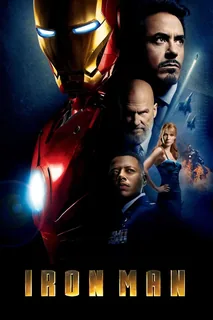
| Iron Man (2008) | at least a half-dozen times | 1 |
| The Incredible Hulk (2008) | nearly a dozen times | Not reported |
| Iron Man 2 (2010) | approximately 10 | 1 |
| Thor (2011) | a half-dozen times | Not reported |
| Captain America: The First Avenger (2011) | a handful of times | 1 |
| The Avengers (2012) | a couple of times ("oh my god") | Not reported |
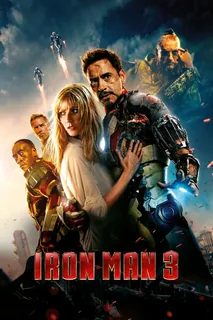
| Iron Man 3 (2013) | more than a dozen | Not reported |
| Thor: The Dark World (2013) | three or four | Not reported |
| Captain America: The Winter Soldier (2014) | once or twice | Not reported |
| Guardians of the Galaxy (2014) | a half-dozen times | Not reported |
| Avengers: Age of Ultron (2015) | once or twice | Not reported |
| Ant-Man (2015) | three or four times | Not reported |
| Captain America: Civil War (2016) | at least 10 times | 1 |
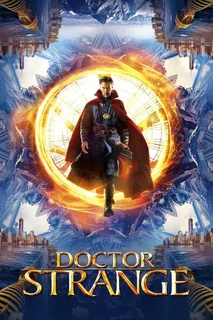
| Doctor Strange (2016) | none mentioned | Not reported |
| Guardians of the Galaxy Vol. 2 (2017) | four times | Not reported |
| Spider-Man: Homecoming (2017) | a dozen or so times | Not reported |
| Thor: Ragnarok (2017) | twice ("oh my god") | Not reported |
| Black Panther (2018) | two | Not reported |
| Avengers: Infinity War (2018) | about ten times | Not reported |
| Ant-Man and the Wasp (2018) | about a dozen times | 2 |
| Captain Marvel (2019) | two | Not reported |
| Avengers: Endgame (2019) | about eight times | 1 |
| Spider-Man: Far From Home (2019) | about seven times | Not reported |
“Not reported” is not a transcript-based guarantee of zero. The wording describes the English-language version discussed by the review; a dub or edit can differ. The table is a guide to reported content, not a count we independently established by transcribing all 23 films.
The first Iron Man review already reports uses of both God's and Jesus' names. The early-clean, later-corrupted timeline therefore does not hold. Several films report roughly a dozen uses of God's name, while the Doctor Strange note mentions none of these expressions.
The variation is useful, but it does not identify an individual responsible for it. Screenplay drafts, performance, improvisation and editing can all contribute to what finally appears. The table can show what a guide reported without telling us which person proposed each line.
A count can identify a habit; it cannot finish the criticism
Frequency changes the viewing experience. One line may be something a viewer can put aside. Repetition can make the same expression feel like a condition of remaining with the film. A content note that treats both situations as simply “some language” has omitted something a family may need to know.
Yet a high count is not, on its own, a complete artistic criticism. A character can have a repetitive verbal habit for a reason. A film may portray a setting in which an expression has become ordinary without expecting the audience to approve of every ordinary practice.
The argument becomes stronger when it identifies what repetition has replaced. Do several supposedly different people all reach for the same reaction? Is a line being used to provide instant intensity where the scene has not developed a particular response? Does the name add anything beyond a familiar signal that something surprising happened?
Those are questions about writing as well as conscience. They allow a Christian objection to take the film seriously rather than treating the film as only a container of items to count.
The defence from realism has limits
A recognisable expression can make a line sound unforced. It may fit an established character and a performance's rhythm. Removing it mechanically can produce dialogue that sounds evasive, especially if the story concerns people who would not share the viewer's convictions.
That is a real consideration. It is not an unlimited one.
Fiction constantly selects among realistic possibilities. Characters do not repeat every ordinary hesitation, every unnecessary explanation or every inconsequential exchange from a plausible day. A line survives because someone thinks it belongs to the scene. It can be asked to justify that position.
A writer has more options than a prohibited expression and an obviously sanitised substitute. Consider an invented scene in which an engineer discovers that the backup has failed. One reaction can merely announce shock. Another can ask who last tested the system, notice the people now trapped, or admit that the engineer concealed an earlier warning. Each directs attention toward a different fear and a different person. The alternative is not necessarily a polite euphemism; it may be a more informative piece of drama.
Silence can do similar work. Someone who normally explains everything may find no sentence available. Someone who has been afraid for hours may act before anyone else understands the danger. None of these choices is automatically better. They show how much expressive territory remains available before a sacred name is treated as necessary punctuation.
I would not claim that every replacement leaves a scene unchanged. That would pretend the exact choice of words never matters while making an argument that depends on words mattering. The claim is more demanding: a writer should know what this choice earns and what it asks another person to tolerate.
Two Cathedrals is a different kind of difficulty
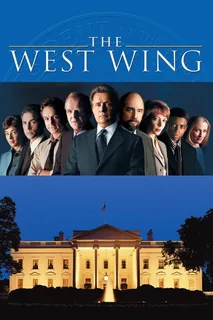
The West Wing's Two Cathedrals places President Bartlet in a cathedral after a death and lets his anger address God directly. His faith is not background decoration that the screenplay has casually invoked. The scene is about his relation to God, his grief, his resentment and the account he has tried to give of his own service.
His conduct includes putting out a cigarette on the cathedral floor. The scene's religious address is deliberate and confrontational; describing it as grief should not make that act disappear from the criticism. A Christian may find the defiance intolerable while still recognising what the drama is doing.
A Christian can reject what he says. Another can recognise the frightening familiarity of continuing to address someone while feeling abandoned by them. The scene does not become harmless because it is accomplished, and disagreement about it does not establish that one viewer failed to understand the drama.
Its language nevertheless has a different function from an exclamation inserted into a routine surprise. Remove the religious address and the subject changes. The scene is making a contested act available for attention, rather than merely borrowing a sacred name as an interchangeable noise.
Scripture itself gives room to lament. Psalm 13 begins by asking how long God will seem absent, then moves towards trust. That does not make every accusation in a television scene equivalent to biblical lament. It does show why portraying distress within faith cannot be assessed only by asking whether a believer sounds calm and respectful at every moment.
The distinction leaves the objection intact. We can ask whether a particular scene treats faith honestly, whether its anger has a dramatic purpose and whether its attitude is one we can remain with. We do not have to pretend that a casual curse and an extended argument with God are the same piece of writing.
Absence of the expression is not the same as a Christian recommendation
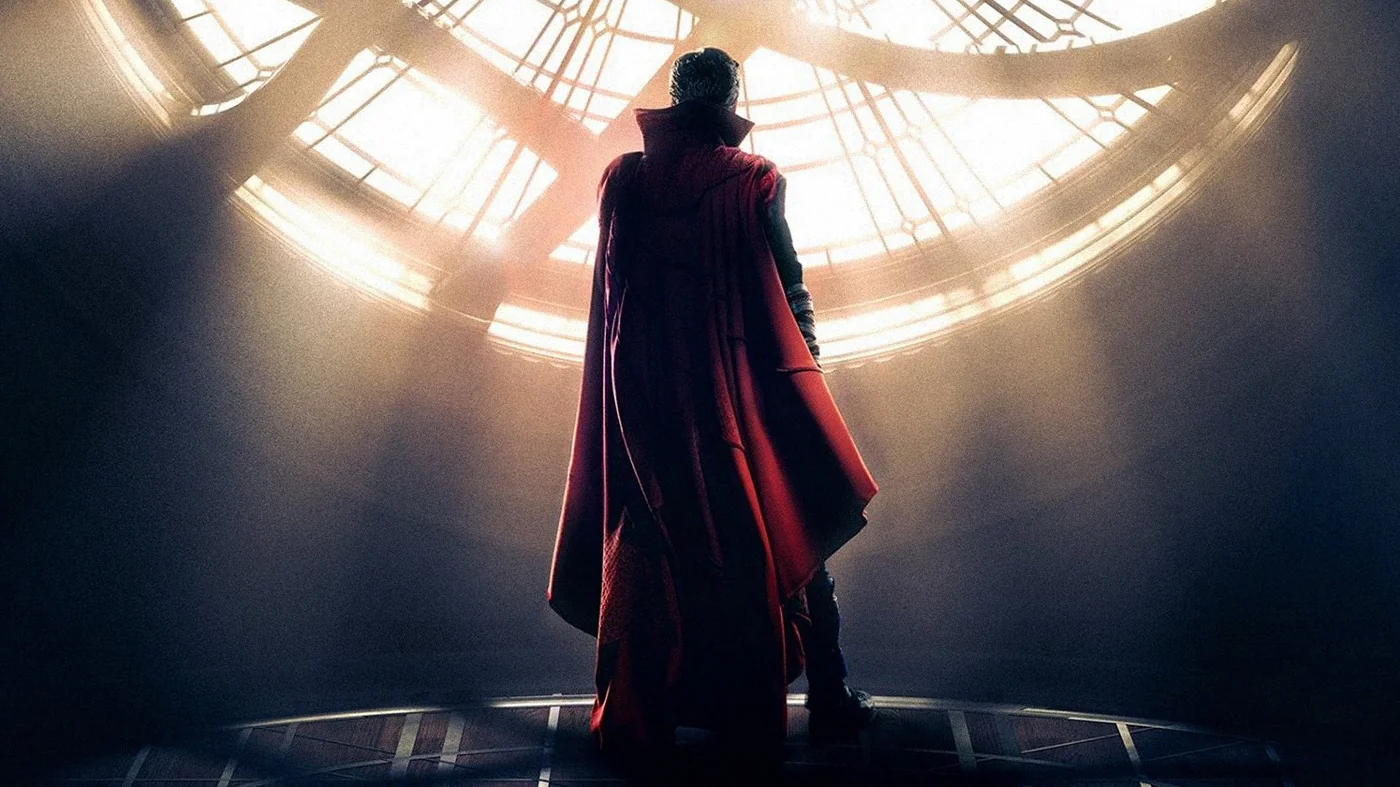
Doctor Strange's language note is useful for the particular concern recorded in the table. It does not answer every other question a Christian viewer might bring to a film about magic, power and spiritual realities.
That is an important limit on a count-based approach. A film can avoid a particular word while making assumptions a family does not want to accept. Another can contain a troubling line while also giving a serious account of guilt, mercy or responsibility. Neither observation requires a family to change its boundary.
The better content guide supplies enough detail to let the actual concern be identified. It should not make a favourable judgement about one category stand in for a complete judgement about the work.
The same applies to an aggregate film rating. Broad admiration for construction, performance or visual invention is not evidence that every viewer will find the film suitable for the same purpose.
Television makes the evidence harder to summarise
A programme's reputation is not an episode-level content record. A parental guide may review the pilot, several selected episodes or a later season. The language can vary with a writer, a character's situation and the circumstances of the story.
For All Mankind is a practical example. Plugged In's note for “First Light,” season five, episode one, dated 27 March 2026, reports thirteen misuses of God's name and five of Jesus' name. Those are the guide's reported counts for that episode. Its editorial note expressly warns that it rarely reviews every episode of a series. A specific, substantial warning has therefore been established without inventing a series-wide total or an average frequency for every season.
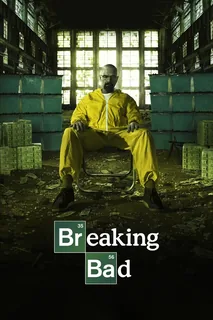
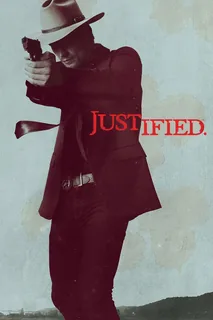
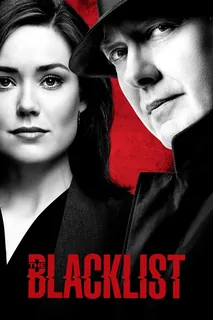
The same care applies to Breaking Bad, Justified, The Blacklist and broadcast dramas recommended as supposedly safe alternatives. A recommendation based on a general memory can be well intended and still fail the viewer whose concern is specific.
Check whether a note names the episode and version. If it does not, treat it as an incomplete guide rather than a promise. That is a more useful service than giving a whole series a reassuring label the evidence cannot sustain.
A performer's public faith does not explain every line
It is tempting to attach the question to a recognisably Christian actor. If the performer believes what the viewer believes, why is the expression in the film?
The question may be sincere, but the conclusion often arrives before the necessary facts. A public statement of faith does not identify who wrote a line, whether alternatives were proposed, what was improvised or who controlled the final edit. It also does not give us access to a person's private deliberation.
An actor may have meaningful influence over a choice. The point is not that performers have no responsibility. It is that responsibility should be discussed through evidence of the decision rather than inferred from a public identity.
The same standard protects the criticism itself. A concern about habitual language does not become stronger when it is turned into a confident account of someone's hypocrisy without the facts needed to support it.
An age certificate is answering another question
The American PG-13 category is not a guarantee that religious exclamations will be absent. The MPA's language guidance concerns strength and context; the familiar internet rule that exactly one use of the F-word is always permitted is itself too simple.
A viewer whose principal concern is the casual use of God's name needs detail beyond the certificate. Plugged In, Kids-In-Mind and other content guides can provide descriptions at a level that a general review usually does not.
Their descriptions and recommendations should still be distinguished. A family may find a guide's language information useful while disagreeing with its conclusion about whether the film is worth watching. The factual description has a different job from the final approval.
What consideration from filmmakers would look like
The request need not be that every fictional person share a Christian conviction or that a film avoid doubt, hostility and irreverence as subjects. That would prevent some of the very conflicts through which a serious drama can examine faith.
The request can be more exact. Do not treat a name as disposable simply because a familiar audience has learned not to hear its significance. Ask whether the line belongs to the person and the scene. If it is meant to wound, know whom it wounds and why. If it is meant to express nothing particular, consider whether a more particular response would improve the writing.
A viewer also has a decision to make. Recognising a film's craft does not oblige anyone to accept a viewing experience that repeatedly violates a serious conviction. Declining it is not necessarily a claim that everybody else must see it the same way.
The Marvel notes cannot prove a hidden agenda or prescribe the right response to every scene. They can correct an inaccurate timeline, make repetition visible and give the discussion a factual starting point.
The deeper question remains one of attention. Something can be a habit to the person saying it and sacred to the person hearing it. A film that wants to be exact about human feeling should be capable of noticing both.
The films and shows in this piece






Where this comes from: Plugged In: film reviews used in the Infinity Saga notes · Plugged In: Doctor Strange · Plugged In: For All Mankind and episode-sampling note · Common Sense Media: For All Mankind language guidance · MPA: language guidance by rating · Kids-In-Mind: detailed content guides · Exodus 20:7: the commandment concerning the name · Matthew 6:9: the opening of the Lord's Prayer · Psalm 13: lament and trust · Cambridge Dictionary: the name used as an exclamation · Catechism of the Catholic Church: false oaths and the divine name · Matthew 7:21: address and obedience · Plugged In: Iron Man's original language note