27 September 2026

Quentin Tarantino films ranked: ten features, and the case for each

The saved MEANRANK scores decide the order. The criticism explains what the numbers leave unresolved.

10 entries

Tarantino's most reliable source of suspense is a conversation in which one person understands more than another. A farmer answers an SS officer. A flight attendant explains a plan. A criminal tries to decide whether the wounded man beside him can be trusted. The talk is entertaining, but entertainment is often the means by which power enters the room.

These ten features are ranked by their saved MEANRANK scores. The order combines the rating sources held for each film; it is not a fresh poll, a complete record of every review or proof that the higher film is better at every task. Different sources measure different things, and their coverage varies.

The main disagreement I have with the score order is Jackie Brown in eighth place. Jackie's employment and Max's cautious response to another chance make the suspense matter after the money has changed hands. I would put it near the top. Django Unchained, second in the saved figures, offers a far more extravagant release but gives some of the people it asks us to care about less room to act. The notes explain those differences rather than pretending the numbers are my personal ballot.

The count treats the original Kill Bill volumes as separate entries. Four Rooms is outside the scope because Tarantino directed one segment; alternate and combined versions are discussed separately rather than given additional places. Death Proof appears as its own feature, although it began as part of the Grindhouse double bill.

Major scene and ending spoilers follow. The films include severe violence, sexual violence and racial language. The discussion examines the style's pleasures alongside the people those pleasures can push out of view.

How this is judged

MEANRANK computed
Combined score from the rating sources held for this film. Source coverage varies; the notes offer a separate critical judgement.

Computed scores come straight from the ratings, so you can check them. Editorial ones are our opinion, and every one comes with the reason for it.

10

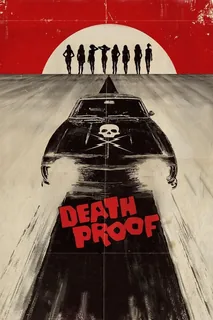
Death Proof 2007

The reversal is exhilarating; the waiting is uneven.

Action, Thriller · 113 min

C 69

The first problem is what the film asks you to do with its waiting. Long conversations establish groups of women with interests that do not revolve around the man watching them. That is a legitimate and potentially interesting choice. Some of the exchanges, however, repeat a register after the relationships are already clear, and the film's rhythm can slacken.

Kurt Russell's Stuntman Mike then makes spectatorship predatory. The camera's interest in bodies and the character's interest in them are uncomfortably close. The film later changes the distribution of physical power, but that change does not make the early enjoyment of vulnerability disappear.

The final chase makes the difference between confidence and protection visible. Zoe Bell is outside the car, holding on, while the others can accelerate, steer and make decisions she has to survive. The danger comes from a readable separation between the body's exposure and the driver's control. When the women turn the pursuit around, Russell's change from predator to frightened target gives the reversal a comic force that the action alone could not supply.

The divided structure is the film's weakness and its argument. You can find the reversal exhilarating while thinking the preparation takes too long. It deserves more attention than a declaration that nobody loves or hates it: an average cannot establish such unanimity.

MEANRANK computed
69/100

From 10 ratings.

9

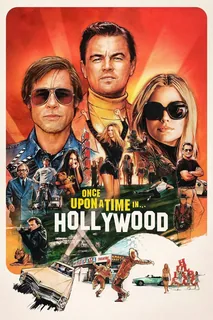
Once Upon a Time... in Hollywood 2019

Work and nostalgia determine who receives the fullest attention.

Comedy, Drama, Thriller · 161 min

B 75

Rick Dalton has a practical problem: the skill that gave him a place in an industry may no longer secure that place. DiCaprio's acting-within-acting scenes are the strongest expression of the anxiety. A mistake can feel like evidence of an entire career becoming disposable.

Cliff drives, repairs and makes Rick's working life possible, then returns to a much less comfortable home. Their affection is convincing partly because it coexists with that unequal arrangement. Pitt's apparent freedom can make dependency look like an easy temperament, while DiCaprio lets a temporary professional failure feel like the end of a whole identity. The friendship does not erase the difference between being the star and being paid to keep the star functional.

The drifting structure gives Los Angeles time to become an object of attachment. Sharon Tate's cinema visit is especially revealing: the pleasure of watching other people enjoy a performance is allowed to exist without immediate plot utility.

The objection is substantial. Nostalgia distributes attention generously to some figures while making others elements in a fantasy of the world the film wants to preserve. Its depiction of Bruce Lee is one place to question whose dignity that fantasy can spend. The slowness is often valuable; it is not automatically a defence of every choice made within it.

MEANRANK computed
76/100

From 11 ratings.

8

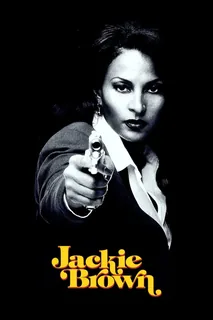
Jackie Brown 1997

Another chance matters because the supply is limited.

Crime, Drama, Thriller · 154 min

B 76

Jackie has a job whose loss would have a different meaning at her age than it might have earlier. Pam Grier makes that fact present in the way she listens. She is calculating danger, but also calculating how much of a future remains available on the existing terms.

The plot's repeated view of the money exchange is a formal pleasure with a human purpose. Knowledge is distributed unevenly, and Jackie needs to control who knows what without possessing the institutional power of the people bargaining over her.

Max's purchase of the Delfonics recording makes his attraction visible without requiring a declaration. He takes part of Jackie's private taste back into his own routine. Forster keeps the interest warm and cautious; Grier lets Jackie's invitation remain real without suspending the calculation her situation requires. The question is whether two people who understand risk can still choose a risk that has no tidy professional explanation.

This is the Tarantino film I would move furthest upward. It can seem less dazzling because the style gives people room instead of repeatedly announcing itself. Its melancholy is specific: another chance matters precisely because there may not be an unlimited supply.

MEANRANK computed
76/100

From 12 ratings.

7

The Hateful Eight 2015

A temporary alliance offers no dependable moral ground.

Drama, Mystery, Western · 168 min

B 77

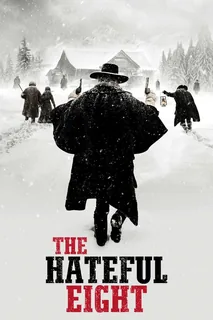
The confined room promises a familiar mystery: identify the lie and the concealed allegiance. Tarantino complicates that promise by making almost every act of interpretation part of a struggle over who may speak, command or be believed.

The coffee pot makes the room's geography consequential. Once the film gives us knowledge that some of the people drinking lack, conversation can continue while the practical danger has already changed. We start watching a movement toward a cup as closely as a hand near a gun. Widescreen staging distributes that attention across speakers, listeners and apparently incidental objects. The suspense briefly belongs to ordinary hospitality made unsafe.

The difficulty is that cruelty becomes a repeated attraction. The treatment of Daisy invites particular scrutiny: exposing a violent world does not, by itself, explain how often a film wants the audience to enjoy watching a woman being hit.

The bleakness can feel rigorous or merely exhausting. What makes the stronger passages work is the instability of temporary cooperation. A shared enemy does not create a shared moral ground, and a person's fluent account of injustice does not guarantee what he will do with power over someone else.

MEANRANK computed
78/100

From 12 ratings.

6

Kill Bill: Vol. 1 2003

Physical agency returns through a changing world of styles.

Action, Crime · 111 min

A 80

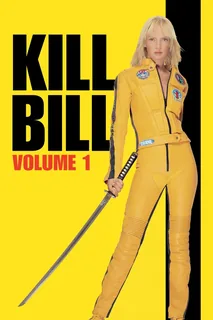
The Bride's return is built through abrupt changes of scale and style. A confined fight can give way to animation, a colour field or the organisation of many bodies in a large room. The shifts are part of the pleasure; the film expects a viewer to enjoy the act of recombining cinematic memories.

At the House of Blue Leaves, the fight keeps changing the kind of attention it requires. A mass of opponents gives way to particular weapons, routes and distances; the later move into O-Ren's snow-covered garden makes a pause and a measured advance matter again. The contrast is why the sequence can remain exciting after the abundance ought to have exhausted it. The film does not ask one rhythm to carry every form of danger.

The vulnerability established at the beginning is severe, including sexual violence. Later command of the action does not make that material a neutral device for creating motivation. The treatment deserves judgement alongside admiration for Thurman's physical performance.

As a separate film, the volume withholds much of the relationship history that will complicate revenge. That can make it feel emotionally incomplete. It also gives the first part a concentrated formal identity: a person rebuilding the capacity to act, in a world whose styles keep changing around her.

MEANRANK computed
80/100

From 12 ratings.

5

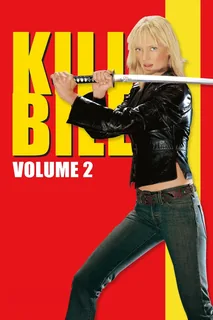
Kill Bill: Vol. 2 2004

A revenge plot acquires a difficult domestic history.

Action, Crime, Thriller · 137 min

A 82

The second volume changes the scale of the conflict. Conversation, training and remembered dependence make the people on the Bride's list more than obstacles with different fighting styles.

The burial reduces the revenge epic to the distance between a fist and a plank. The remembered training gives a repetitive exercise a new purpose: what looked humiliating has become the practical means of escape. Darkness, breath and the effort of hitting at close range do the work that the first volume often gives to a spectacular image. The change of scale makes the Bride's body seem vulnerable and capable at once.

The encounter with Bill then makes explanation itself a contest. His fluency is attractive, but having an interesting theory about a person does not grant him ownership of her. Thurman's listening keeps a domestic history active beneath the theatrical speech.

Some viewers will prefer the velocity of the first volume, and the second's talk can feel indulgent. My preference is for the change in pressure: the revenge plot acquires a relationship that the protagonist must understand without being persuaded to surrender her own account of it. The smaller final scale is a choice about that relationship, not merely a failure to stage another enormous fight.

MEANRANK computed
83/100

From 11 ratings.

4

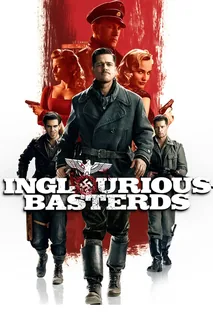
Inglourious Basterds 2009

Language and gesture distribute power before violence begins.

Drama, Thriller, War · 153 min

A 82

The opening makes language a distribution of power. Hans Landa can change the terms of the conversation while the farmer has to judge what admitting or concealing knowledge may cost. Christoph Waltz makes courtesy an instrument rather than a relief from threat.

In the tavern, Hicox can explain an unusual accent through a story, but cannot explain away the way he orders three glasses once another man has understood it. The concealed weapons and crowded table make recognition consequential before anybody fires. Tarantino gives us time to understand that fluent performance has failed. The scene's suspense comes from the shrinking interval between being detected and having to act.

The film's historical fantasy then grants cinema an extravagant power over events. That is exhilarating, but the moral appeal of a reversal does not automatically settle the way violence is presented. The revenge fantasy and its satisfactions remain choices to examine.

It is one of the strongest demonstrations of the director's ability to stage people interpreting one another. The spectacle is memorable; the more durable skill is making an apparently ordinary exchange contain several incompatible accounts of what is happening.

MEANRANK computed
83/100

From 12 ratings.

3

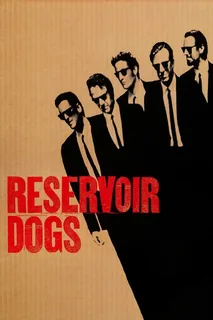
Reservoir Dogs 1992

The wish to trust becomes a source of danger.

Crime, Thriller · 99 min

A 83

The robbery is absent. What remains is the labour of interpreting people after a plan has failed. A wounded man requires care, another man requires information, and each claim competes with the fear that trust has already been misplaced.

The warehouse concentrates the method. The rule against sharing names is supposed to keep a job from becoming a relationship. Mr White's care for the bleeding Mr Orange breaks that distance before he can know whether the intimacy is safe. Keitel makes loyalty feel like a decent impulse inside a profession that exploits it. When Tim Roth lets Orange inhabit pain and concealment together, the question becomes harder than identifying the informant: what does care oblige a man to believe?

The music and torture sequence deliberately complicate the pleasure of watching a controlled performance. A jaunty rhythm can make cruelty stylish; recognising the provocation does not decide whether the film has earned it.

The economy is impressive, though some speeches announce the author's delight in his own method more loudly than the situation requires. The film's lasting strength is how an ordinary wish to believe somebody can become the thing that puts a person most at risk.

MEANRANK computed
84/100

From 12 ratings.

2

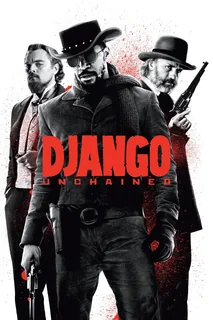
Django Unchained 2012

Heroic satisfaction carries costs the spectacle cannot settle.

Drama, Western · 165 min

A 85

Django has to move through spaces in which another person's account of who he is can determine his safety. The western's pleasure in an increasingly commanding hero therefore has immediate social stakes, not only an abstract wish for revenge.

Jamie Foxx gives that developing authority a useful restraint. At Candyland, Django has to let people read him as a man willing to trade in the suffering of others. Disgust cannot be openly expressed without threatening the rescue. Foxx's stillness becomes active work, especially beside the more conspicuous performances of DiCaprio and Jackson. Stephen's attention is dangerous because he is watching the part Django is playing, rather than simply accepting its apparent authority.

The objections concern the route to the satisfaction. Enslaved people can become a spectacle of suffering through which the film establishes how much violent release the audience should want. Broomhilda's limited opportunity to organise her own story is another cost of concentrating agency in the rescuer.

The film is most persuasive when it makes the hero's calculation visible inside the genre display. It is less persuasive when an extended flourish seems to repeat a victory already made clear. A strong recorded rating cannot choose the balance for you.

MEANRANK computed
86/100

From 12 ratings.

1

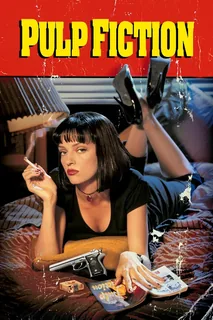
Pulp Fiction 1994

Conversation and chronology make another action possible.

Comedy, Crime, Thriller · 154 min

A 88

The opening conversations let people be funny before requiring you to judge what they do. That allocation of time is a large part of the film's appeal. Taste, petty annoyance and professional routine give criminals a social existence beyond the immediate act of violence.

The chronology changes what an ending can mean. We see Vincent die, then encounter him alive again before the film is over. Jules's decision to let the diner robbers leave belongs earlier in the calendar but later in our experience. It can therefore become the final moral possibility instead of another episode on the way to a death we have already watched. The order makes room for a choice without claiming that the choice repairs the surrounding world.

There are serious objections to the racial language, sexual violence and the pleasure of spending time with entertaining cruelty. The film's wit does not remove them. Its finest scenes allow another possibility to enter the room, including the possibility that a familiar role need not dictate the next action.

It remains the strongest starting point for understanding the director's influence. The individual imitations it prompted are less interesting than the original film's capacity to make talk, waiting and an abrupt change of course feel like parts of the same event.

MEANRANK computed
89/100

From 12 ratings.

Where this comes from: Peacock: The Whole Bloody Affair release and combined version

Where to begin, and how to count Kill Bill

Start with Pulp Fiction for the director's most influential combination of conversation, structure and violence. Follow it with Jackie Brown to see how the method changes when age and the scarcity of another chance become central. Choose Kill Bill if your main interest is movement, choreography and the pleasure of shifting cinematic styles.

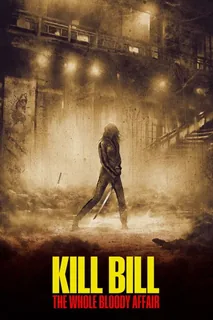
The Whole Bloody Affair combines the two Kill Bill volumes. Peacock's release guide records its December 2025 theatrical release. It is a different presentation of the same central material, so it is not given a third place here. A combined version's score would also come from a different set of recorded responses; it cannot simply settle which original volume is better.

The useful ranking is the one that makes a preference discussable. A reader who values the patience of Jackie Brown over the scale of Django has a coherent case. The scores identify a recorded order; the scenes give you something worth arguing about.

← All lists