Keke Palmer
The clearest argument against treating a long-working performer as perpetually about to arrive.
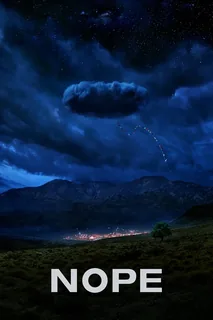
Pictured: Nope (2022)
Command can be comic without becoming disposable
Emerald Haywood's early pitch on the set in Nope is an excellent introduction to a performer controlling a room. Palmer makes the speech fast, socially alert and slightly improvised in feeling. Emerald is selling a family business while also asserting a place within an industry that can overlook it.
The contrast with Daniel Kaluuya's OJ matters. His reserve does not make her energy empty; her energy does not make his quietness insufficient. The siblings have different ways of negotiating attention, and the film needs both.
The climax gives that command a consequence. Emerald has to stop being only the person who can sell the family's story and become the person who can secure its image. Her use of the amusement park's camera makes improvisation practical: attention, timing and a decision to act belong to her. The early speech has prepared a lead who wants recognition; the later action lets the desire organise a sequence instead of remain a personality trait.
Her role with SZA in One of Them Days supplies another concrete example of co-leading a film. Sony identifies their characters, Dreux and Alyssa, as best friends and roommates facing an urgent practical problem. That is a different vehicle from supporting somebody else's romance or providing occasional jokes around a male lead.
The question is therefore not whether Palmer has enough presence. It is whether she receives varied opportunities to use it: comedy, suspense, romance, work and relationships in which verbal command has a different cost.
A sustained career should not require every release to be described as a breakthrough. Nor should one successful kind of performance become the only part she is permitted to play. Her range of usefulness is already visible in the movement from a scene's pleasure to its stakes.
Anchor: Nope (2022); also a lead in One of Them Days (2025)
Nope 2022