
16 September 2026

12 films with much higher audience than critic approval

Dancing, grief, fantasy and familiar pleasures, examined without pretending a positive score answers every objection.

12 entries

Step Up's plot is recognisable long before the final performance. That does not make the dance work imaginary. A body has to learn another person's timing, and the viewer can see a relationship become more dependable through the adjustment.

A film can therefore offer a real pleasure while leaving real objections. Grandma's Boy can provide enjoyable company and thin jokes. The Shack can make a grieving person's question approachable while offering an account of belief another Christian cannot accept. The 355 can have an appealing working group and a routine mechanism that does not develop it enough.

The twelve films here have substantially higher stored Rotten Tomatoes audience approval than critic approval. In the local catalogue checked on 30 October 2026, each had at least 40 recorded critic reviews and 1,000 audience ratings. The date identifies our check, not a simultaneous collection from the source site. The order follows the size of the gap.

These are approval percentages among included records, not average marks or representative surveys of everybody who watched. The comparison essay explains the different voting conditions and the limits of putting the groups side by side.

The notes ask what a viewer might reasonably enjoy or resist in the actual film. They do not claim that a percentage tells us whether voters were readers of the book, children, churchgoers or loyal fans of a star.

Spoilers are discussed, including late revelations and outcomes.

How this is judged

Approval gap computed
The absolute difference between the two stored percentages. These selected films have higher audience approval; the largest gap ranks first.
RT critic approval computed
The share of included critic reviews classified as positive.
Recorded RT audience approval computed
The share counted positive in the recorded audience measure. This is not a poll of all viewers.

Computed scores come straight from the ratings, so you can check them. Editorial ones are our opinion, and every one comes with the reason for it.

12

Rambo: Last Blood 2019

The vengeance is efficiently prepared; the world around it is much thinner.

Action, Drama, Thriller · 89 min

D 58

The ranch initially gives Rambo something other than another mission: work, familiarity and a younger person whose life he has helped sustain. The later injury matters only if that ordinary arrangement has been allowed to mean more than a pretext.

The final tunnels turn the capacity to prepare violence into the chief source of action pleasure. A route, a trap and a delayed arrival can be read with the anticipation of a mechanism reaching its intended use.

That is a real constructional pleasure. It does not settle the film's treatment of the people the mechanism is avenging or destroying. The young woman's suffering can become disproportionately useful as a way of returning the familiar violent body to work.

The depiction of Mexico creates another problem. A setting can be given so much of the function of threat that people within it have little room to exist outside their usefulness to the danger. A sympathetic exception does not necessarily make the wider construction adequate.

Stallone can make age and exhausted attachment physically present. I find that work more interesting than the film's increasingly narrow idea of what the character's history permits him to do next.

The tunnels make the ordinary work of the ranch available for another purpose. A place that seemed to contain a life after the earlier wars becomes an environment prepared for killing. Stallone's body can give that return a weary force, but the film increasingly treats preparation as the answer to an injury it has made especially brutal. The final mechanisms may be legible and satisfying as action while the larger movement remains impoverished: the story has found another way to make care useful mainly by destroying what was cared for.

Approval gap computed
55 points

Critics 26%, audiences 81%.

RT critic approval computed
26/100

From 173 reviews.

Recorded RT audience approval computed
81/100

From 5,000+ audience ratings.

11

P.S. I Love You 2007

The letters keep a relationship present while a life must become less directed by it.

Drama, Romance · 126 min

C 60

A letter from someone who has died is both an object of continuing care and an instruction that cannot be answered in an ordinary conversation. The film's premise turns that imbalance into a sequence of practical tasks for Holly.

Hilary Swank has to make receiving the next instruction more than a repeated opportunity to cry. The useful moments are the ones in which the response is not immediate gratitude: another demand can be kind and still arrive on a day when following it is difficult.

The romantic arrangement has an obvious attraction. A loved person appears able to continue accompanying the survivor through a life neither had time to plan. The difficulty is how much agency the surviving person receives while the dead partner remains responsible for the next stage of the plot.

A story about learning to continue can become too dependent on a carefully organised series of messages telling the person how to continue. The movement is stronger when friendship, irritation or a new encounter disturbs that arrangement.

The letters give the dead man a changing presence without requiring him to change. Holly can respond differently as grief alters the day, while Gerry's next message still arrives from the time in which it was prepared. Swank is most persuasive when affection does not make compliance automatic. A familiar voice can be welcome and inconvenient at once. The film's emotional directness works where that asymmetry remains visible, less so when the next task seems to arrive precisely on schedule to produce the required stage of recovery.

The film's directness will work for some viewers and feel over-managed to others. That is a genuine disagreement about the work. The high audience percentage cannot establish how many came from the novel or whether a tear meant endorsing every part of the emotional machinery.

Approval gap computed
55 points

Critics 25%, audiences 80%.

RT critic approval computed
25/100

From 104 reviews.

Recorded RT audience approval computed
80/100

From 250,000+ audience ratings.

10

The Shack 2017

The conversation offers a way to imagine grief, not a neutral account of Christian belief.

Drama, Family · 132 min

D 57

The invitation asks a devastated father to return to the place associated with his daughter's murder. That is an emotionally severe premise before the film supplies its comforting possibilities. A location has acquired an authority over the life he can imagine after it.

Personifying God permits the drama to turn an abstract accusation into a series of encounters. Octavia Spencer's warmth is important because the character's grievance cannot be answered by another distant statement about what he ought to trust.

The same method creates a theological difficulty. The characters are not neutral symbols on which every Christian viewer will agree. A believer can recognise the need to speak about suffering while resisting the account the film gives of God, judgement or forgiveness.

The dialogue also tends to complete the emotional meaning of a scene. For a viewer receptive to its form, that explicitness can make a difficult feeling approachable. For another, it can seem as though the correct response has been arranged before the character has had enough freedom to remain angry.

I value the attempt to make grief a sustained conversation and remain less persuaded by the ease with which some encounters acquire their lesson. Neither judgement needs to identify the entire audience as churchgoers who wanted a familiar book reproduced.

The scene that asks Mack to judge other people gives the film's method its sharpest form. His anger is no longer simply an accusation directed at a comforting figure; he is being asked to inhabit the authority he wants exercised on his behalf. Worthington's resistance can make the encounter more substantial than a reassurance about love. The weakness arrives when the dialogue seems certain that the exercise has explained enough. A compelling challenge to one person's judgement is not, by itself, an adequate account of the loss that brought him there.

Approval gap computed
56 points

Critics 20%, audiences 76%.

RT critic approval computed
20/100

From 70 reviews.

Recorded RT audience approval computed
76/100

From 10,000+ audience ratings.

9

Bright 2017

The partnership can work while the social metaphor remains underbuilt.

Action, Fantasy, Thriller · 117 min

D 56

An ordinary police partnership is made unstable by the world around it. Will Smith's Ward can regard his orc colleague as a practical liability before the story gives them a common problem neither can safely solve alone.

Joel Edgerton's Jakoby supplies the most useful emotional pressure. Being present inside an institution is not the same as being accepted by the people authorised to define it. His effort to do the work has to survive interpretations of his motives that others have already prepared.

The fantasy setting offers a broad account of hierarchy among humans, orcs and elves. Its weakness is how readily a large metaphor can appear to have explained the history it has not fully built. Recognising a resemblance to racism is a beginning, not a complete social world.

The wand gives that world a familiar chase mechanism. For stretches, the performers' changing trust can make the task satisfying without every part of the surrounding mythology being persuasive.

I find the partnership more substantial than the attempt to make the whole arrangement stand as a comprehensive social analogy. A particularly awkward joke or a convenient threat can expose how little the film has established beyond the initial resemblance.

The wand's apparent promise is power that can outrun the institution around the two officers. That makes the partnership more interesting than a simple lesson in learning to like a colleague: trust has to hold while other people try to turn an extraordinary object into a way around ordinary limits. Smith's suspicion and Edgerton's hurt can give the immediate choices weight. The weakness is the ease with which the chase substitutes a new danger for a developed account of how this divided city has learned to function.

Approval gap computed
57 points

Critics 26%, audiences 83%.

RT critic approval computed
26/100

From 113 reviews.

Recorded RT audience approval computed
83/100

From 10,000+ audience ratings.

8

Hillbilly Elegy 2020

Family obligation is strongest when it resists becoming a tidy origin story.

Drama · 117 min

C 61

The return home gives the protagonist two demands that do not comfortably share a timetable. The work of entering another professional world has not ended the claim of a family crisis. Leaving can look like abandonment; remaining can feel like the loss of a future he has struggled to obtain.

Amy Adams's Bev and Glenn Close's Mamaw make that obligation difficult through different kinds of force. Anger can be an injury passed onward, while protection can arrive with a harshness that does not resemble a comforting family scene.

The film becomes less persuasive when each conflict seems available mainly to explain how one young man came to succeed. A person can then become a lesson, an obstacle or the custodian of the correct tough advice rather than someone whose own possibilities remain active.

The interview preparation and the family emergency put that explanation under its most useful pressure. J.D. cannot simply stop belonging at home while he learns the manners of the world he wants to enter. The transitions can make codes of behaviour visible: an uncertainty over how to act in one room has a different cost from a mistake in another. The film becomes thinner when those differences are absorbed into the success story so neatly that the other family members scarcely retain futures of their own.

I find the central conflict recognisable and the explanatory structure too ready to settle what the family means. The emotional force of a relative's crisis does not require accepting every part of that settlement.

The film adapts a particular memoir and should not be treated as a representative account of an entire region or class. A viewer may recognise a relation without endorsing that larger claim. The ratings cannot tell us how many positive responses were acts of recognition, nor what each reviewer found inadequately examined.

Approval gap computed
57 points

Critics 24%, audiences 81%.

RT critic approval computed
24/100

From 261 reviews.

Recorded RT audience approval computed
81/100

From 2,500+ audience ratings.

7

Red One 2024

An action mission and a Christmas repair story compete for the same time.

Action, Adventure, Comedy · 123 min

D 56

Treating Santa's household as a large security operation is a joke with practical possibilities. Familiar seasonal magic becomes an institution with a breach, a professional response and people who must recover the person on whom the arrangement depends.

Dwayne Johnson's Callum and Chris Evans's Jack give the mission two different relations to belief. The professional has become disappointed in the people the work is meant to serve; the opportunist is used to treating other people's commitments as information he can exploit.

The larger creatures and escalating threats can make the premise enjoyable as a very elaborate seasonal game. They can also consume the space in which the two men's changing judgement ought to become more particular.

Jack's relation to his son gives the story a more useful immediate task than saving Christmas in the abstract. An adult must become dependable to a person whose need cannot be answered by a final display of professional cleverness.

I find that smaller relation more promising than every enlargement of the mythology. The film is weakest when an expensive surprise is asked to count as a development simply because the next creature is bigger or stranger.

Jack's work as a tracker gives that contrast a practical shape. Finding a person is something he can turn into a service; remaining dependable to his son requires a different use of attention. The studio's premise supports the distinction between the professional skill and the personal failure. Evans can make the opportunism enjoyable, but the story needs more than another success at locating a target to make the later change convincing. That is where I find the family line stronger than the accumulating creatures.

Approval gap computed
60 points

Critics 29%, audiences 89%.

RT critic approval computed
29/100

From 186 reviews.

Recorded RT audience approval computed
89/100

From 5,000+ audience ratings.

6

Dolittle 2020

The animals create an invitation the human adventure struggles to organise.

Adventure, Comedy, Family · 101 min

F 48

The doctor begins in retreat. Speaking with animals does not mean he has found an easy way to live among other people. The unusual gift sits beside grief and a household whose company has become a protection against another sort of encounter.

That is a potentially generous beginning for a family film. A child's arrival and a new practical task can ask the reclusive adult to return to a world he has decided not to face. Robert Downey Jr.'s manner gives the withdrawal a peculiarity beyond a simple refusal to be cheerful.

The film's difficulty is coherence. The animal voices, physical jokes, adventure requirements and central performance do not always seem to be responding to the same scene. An individual creature can be amusing while the surrounding sequence loses a convincing rhythm.

The dragon encounter exposes the problem. An impressive threat becomes the occasion for a crude bodily gag, and the release asks the audience to accept a different comic scale from the emotional history the creature has been given. That turn may be funny in isolation. It is less successful at making the doctor's attention to an injured being feel like the same activity as the spectacle resolving the scene. The weakness is not that a family adventure contains silliness; it is that its kinds of feeling too often take turns instead of changing one another.

The defensible pleasure is in the possibility that a strange group can make the adult's isolation less complete. The weaker passages expect the variety of the voices and images to perform the work of building that group.

I would not use the higher audience approval to declare the film secretly well constructed. It is more useful to separate immediate comic attractions from the adventure's problems. A viewing can contain something enjoyed without becoming a complete endorsement of the way everything around it has been assembled.

Approval gap computed
61 points

Critics 15%, audiences 76%.

RT critic approval computed
15/100

From 241 reviews.

Recorded RT audience approval computed
76/100

From 10,000+ audience ratings.

5

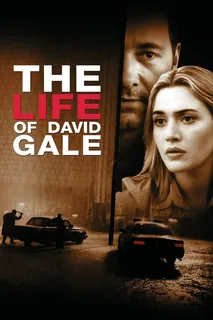
The Life of David Gale 2003

The revelation is forceful; the argument it is meant to prove is less secure.

Crime, Drama, Thriller · 130 min

C 67

The journalist's limited time gives every interview a clear pressure. An account must be obtained before an outcome that appears impossible to undo. The film has an efficient thriller's ability to make information feel immediately consequential.

The difficulty is what the final arrangement asks that information to establish. A meticulously manufactured case can demonstrate that a particular scheme worked. It is a less straightforward way to make an argument about the ordinary uncertainty and fallibility of a system.

That tension does not make opposition to the death penalty depend on disliking the movie, nor does finding the thriller effective imply agreement with every part of its reasoning. Those are separate judgements the plot's urgency can encourage us to combine too quickly.

Kate Winslet's reporter supplies the wish to make the explanation complete. The central figure's ability to direct that wish becomes part of the trap. A person presenting himself as the subject of an investigation may also be arranging its future audience.

I find the film's final mechanical satisfaction more persuasive than its use as a definitive moral demonstration. The reveal changes what earlier scenes meant, but it also makes other people's lives and attention instruments in an especially controlled statement.

The final recording gives the surprise a second, less comfortable audience. Bitsey has not merely failed to obtain an answer in time; her effort to discover the truth has been anticipated as part of the statement being made. Winslet's reaction has to absorb that loss of authorship. The mechanism is effective as a thriller because it revises the work we watched her do. It is ethically less secure as a demonstration: people have been arranged into evidence by someone claiming the right to control what their eventual understanding will mean.

Approval gap computed
62 points

Critics 19%, audiences 81%.

RT critic approval computed
19/100

From 155 reviews.

Recorded RT audience approval computed
81/100

From 50,000+ audience ratings.

4

Step Up 2006

A predictable story can still need the bodies that perform it.

Crime, Drama, Music · 104 min

C 63

The outline is easy to recognise. An outsider enters an institution with different rules, meets someone whose opportunity depends on a performance, and has to discover whether discipline can make a skill useful to another person.

The rehearsals are what the outline cannot supply. A body must respond to somebody else's timing. Confidence that looked sufficient in one setting becomes inadequate when a partner needs it to become dependable. Channing Tatum's physical ease is most useful when the situation makes that ease answer another person's work.

The class distinction is simplified. The film can make a style appear as a ready-made account of a life, and some emotional turns arrive because the familiar structure needs them rather than because the characters have discovered something particular.

Tyler's usefulness begins with a specific vacancy: Nora needs a rehearsal partner after an injury disrupts her preparation. His physical ease gets him into the work, but it cannot by itself make the work succeed. The camera has to let us see timing become shared, including the adjustments through which one person's movement makes another's possible. That is where the predictable structure acquires a life. A routine is a sequence of decisions, and the actors can make those decisions more particular than the dialogue announcing their differences.

My defence of the film rests on that practical pleasure. My reservation is that the writing sometimes expects the pleasure to excuse relationships it has not built with comparable care.

Neither response requires assigning a uniform motive to millions of viewers. Someone can enjoy the dancing while noticing the dramatic thinness. Someone can find the thinness prevents the dancing from acquiring the intended emotional scale. The gap between the percentages does not tell us how each person weighted those two experiences.

Approval gap computed
62 points

Critics 21%, audiences 83%.

RT critic approval computed
21/100

From 107 reviews.

Recorded RT audience approval computed
83/100

From 250,000+ audience ratings.

3

The 355 2022

The cast offers different kinds of competence; the mechanism does not always use them well.

Action, Adventure, Thriller · 122 min

D 51

The premise's attraction is not exhausted by putting recognisable women into familiar spy positions. A CIA operative, a rival agent, a technology specialist and a psychologist can give a mission genuinely different forms of knowledge.

Penélope Cruz's Graciela is useful because alarm does not mean she has nothing to contribute. The group cannot become convincing merely by making everyone equally practised at the same violent task. A person with another profession and a private life can expose what the experienced agents have learned to treat as ordinary.

The film is less distinctive when the stolen-device mechanism takes over. Changing locations, betrayals and the threat of unlimited technical access can make the task move without giving each relationship a comparably particular development.

There is a worthwhile pleasure in watching capable performers negotiate the uneasy cooperation. It does not require the story to invent espionage again. It does require enough clarity that a person's decision feels like more than the next switch needed to keep the group unstable.

I find the performances more persuasive than the continuing escalation. A viewer who enjoys the working alliance can reasonably find a familiar assignment worth the time. A reviewer who wants the alliance developed more fully has identified a real shortfall, not refused the premise.

Graciela's wish to get home gives the alliance a cost the professional agents cannot simply talk her out of. Cruz makes reluctance useful: the audience can see what an emergency asks of someone who did not arrange a life around the possibility of the next operation. The screenplay is stronger when her perspective changes the group's conduct than when her alarm only gives the practised women a competence to demonstrate. Different professions are a good premise. The drama has to let the difference survive the moment the chase begins.

Approval gap computed
62 points

Critics 24%, audiences 86%.

RT critic approval computed
24/100

From 229 reviews.

Recorded RT audience approval computed
86/100

From 1,000+ audience ratings.

2

Where the Crawdads Sing 2022

The landscape's beauty does not by itself make isolation convincing.

Drama, Mystery, Romance · 125 min

C 68

Kya's distance from the town gives the marsh two dramatic jobs. It is a place where she has learned to notice and survive, and a space other people can use to imagine a strange person whose life they do not need to understand.

The film's visual beauty makes the first relation immediately attractive. The difficulty is whether the attractive image carries enough of the material and social cost of being abandoned. A beautiful landscape can make solitude desirable before the story has made dependence and deprivation adequately present.

The courtroom gives that tension a public form. An account of a life is received through an existing reputation. The audience is invited to recognise how much the town's judgement has substituted an available story for knowledge of a person.

The romantic and mystery elements can work efficiently while still feeling too ready to arrange a life into a complete emotional explanation. That is my principal reservation. The late revelation further complicates the satisfaction of the formal outcome: vindication and knowing what happened have not been identical achievements.

The drawings give the film a more exact source of sympathy than the beautiful long shots. Kya has acquired knowledge through sustained attention, and a page can carry that work into a world prepared to dismiss her. Daisy Edgar-Jones is strongest when the possibility of being taken seriously unsettles the defensive manner. The romance can then offer recognition, but recognition is not the same thing as a complete understanding of the person receiving it. The film's late turn is more interesting if we do not let sympathy stand in for knowing every part of her life.

The film's stronger pleasure is the wish that a disregarded person might possess a world of attention more substantial than the town's description of her. The weaker passages rely on that wish when they need more specific behaviour. A high audience percentage does not remove the distinction; it makes it worth examining rather than dismissing the whole response.

Approval gap computed
62 points

Critics 34%, audiences 96%.

RT critic approval computed
34/100

From 220 reviews.

Recorded RT audience approval computed
96/100

From 5,000+ audience ratings.

1

Grandma's Boy 2006

The retreat into an older household becomes the comedy's alternative social world.

Comedy · 95 min

C 60

Moving in with a grandmother could be the premise of a film determined to humiliate its adult protagonist into growing up. Grandma's Boy is less interested in that corrective route. The household becomes another place to find company, appetite and a less anxious measure of competence.

The contrast with the game-testing workplace is useful. Work is full of performance, status and people trying to make an identity convincing to one another. The apparently embarrassing home can turn out to contain more relaxed company than the space in which the character is meant to demonstrate adulthood.

The jokes are broad, and the film often behaves like a collection of sketches waiting for a familiar performer to take another turn. Sexual and drug humour does not acquire subtlety merely because it is being enjoyed in an affectionate setting. A viewer can reasonably find the social invitation too self-congratulatory.

But the invitation is a real part of the experience. The older women are not only obstacles to a young man's return to fun. The comedy allows the pleasures he thought belonged elsewhere to appear inside the supposedly unsuitable household.

Alex's attempt to keep the move quiet is funnier when the film lets the women answer the embarrassment by being good company. The joke can reverse who is entitled to feel awkward without turning the household into an educational punishment. Linda Cardellini's Samantha supplies another useful distinction at work: a person can be capable without adopting the most conspicuous performance of importance. The broader comedy does not always trust those contrasts. It sometimes keeps pushing a gag after the social reversal has already supplied the pleasure.

I find the looseness easier to accept when the performers make the group feel like company rather than a set of comic types waiting to be quoted. Its appeal and limitation are close together: it offers an undemanding place to belong and does not always ask enough of the jokes maintaining it.

Approval gap computed
70 points

Critics 15%, audiences 85%.

RT critic approval computed
15/100

From 60 reviews.

Recorded RT audience approval computed
85/100

From 100,000+ audience ratings.

Where this comes from: Universal: The 355, characters and synopsis · Amazon MGM: Red One, premise and character details · Netflix: Hillbilly Elegy production context · Rotten Tomatoes: approval definitions

The strongest defence of a broadly disliked film does not have to pretend its weaknesses are absent. It can identify the pleasure more accurately. The rehearsals in Step Up are work the synopsis cannot reproduce. The group in Grandma's Boy may be enjoyable company even where a joke is crude. The letters in P.S. I Love You can make an ongoing relationship visible while leaving a difficult question about who directs the survivor's future.

The reverse matters too. A positive audience percentage does not establish that the portrayal of a place is fair, a political argument follows or a fantasy world is sufficiently built. Those objections still require answers.

Read the split as an invitation to make the choice specific. What does this film offer, what does it ask you to overlook, and is that a bargain you want? Neither group's label can make the decision complete.

← All lists