
27 August 2026

11 films with much higher critic than audience approval

The score gaps are clear. The films, and the reasons to choose or resist them, are more complicated.

11 entries

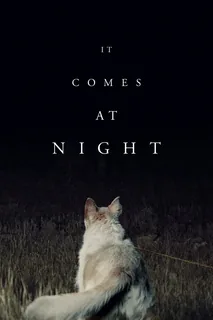
It Comes at Night is frightening because trust has become difficult to distinguish from a dangerous concession. Uncut Gems is punishing because its protagonist keeps seeing another chance where everyone else sees an obligation he has not met. The Lost Daughter makes an apparently small act carry desires a socially acceptable explanation cannot contain.

These are reasons a film can be compelling. They can also be reasons a viewer does not want the experience. The distinction is more useful than calling critics snobs or audiences unable to appreciate difficult work.

The eleven films below have substantially higher stored Rotten Tomatoes critic approval than audience approval. In the local catalogue checked on 30 October 2026, each had at least 40 recorded critic reviews and 1,000 audience ratings. That is the date of this check, not a claim that all source ratings were collected together. This is a curated set of conspicuous gaps, not a random sample or an exhaustive ranking of every disagreement.

The order follows the size of the gap. The two percentages describe approval among the included records, not average marks for excellence. Older and newer audience tallies can also reflect different voting conditions; the comparison essay explains the limits.

What follows is criticism of the films, not a claim to have recovered every voter's motive. Where a reaction is attributed, it is an example from a named discussion. Elsewhere the judgement is ours.

Spoilers are discussed. Several of these films depend on uncertainty or a late change in perspective.

How this is judged

Approval gap computed
The absolute difference between the two stored percentages. These selected films have higher critic approval; the largest gap ranks first.
RT critic approval computed
The share of included critic reviews classified as positive.
Recorded RT audience approval computed
The share counted positive in the recorded audience measure. This is not a poll of all viewers.

Computed scores come straight from the ratings, so you can check them. Editorial ones are our opinion, and every one comes with the reason for it.

11

The Green Knight 2021

Wanting the story of a great life is different from accepting its bargain.

Adventure, Drama, Fantasy · 130 min

C 64

Gawain begins with a desire for an achievement worth telling. The knight's offer appears to provide an efficient way to obtain one: a spectacular action now, with its full cost deferred.

The returning obligation makes that structure dangerous. A promise that sounded like the beginning of a reputation has become a claim on a body. Dev Patel gives the journey an uncertainty that a fully formed heroic adventurer would remove.

The encounter with Saint Winifred makes that test small enough to be embarrassing. Gawain meets a need and starts to ask what helping will bring him. The exchange punctures the image of courtesy he wants the journey to establish. Patel's uncertainty is useful because it does not make him a hidden villain waiting to be exposed; he is a young man discovering how readily the wish to be honourable becomes a request for a reward. The later bargain has more force because the film has shown the habit in this modest form.

The imagined future gives avoidance its own duration. A life may be prolonged while the original evasion keeps reorganising every later attempt to inhabit it honourably. The sequence makes the cost of not paying visible without reducing it to a quick punishment.

The slowness and symbols can remain frustrating. There are moments when the film appears more certain that an image deserves contemplation than about what a particular duration adds. Admiration for the mythic register should not make that objection inadmissible.

The ending's force lies in a decision about the bargain, rather than a final display proving the hero was always exceptional. Approach it as a tale about the wish to become someone whose life can be told well. It is less concerned with giving that person a conventionally victorious adventure.

Approval gap computed
38 points

Critics 88%, audiences 50%.

RT critic approval computed
88/100

From 328 reviews.

Recorded RT audience approval computed
50/100

From 1,000+ audience ratings.
10

The Lost Daughter 2021

A stolen object makes an unresolved relation to motherhood present.

Drama · 122 min

C 66

The doll is small enough that taking it can initially seem like an incident the film will explain and finish. Instead, possession makes Leda's attention more difficult to separate from envy, tenderness, memory and a wish she cannot arrange into a respectable account.

Olivia Colman's performance is strongest when a social response arrives slightly out of alignment with the situation. She can be friendly without being easy to approach, ashamed without becoming ready to confess, and moved by another mother without ceasing to resent something in what she sees.

Jessie Buckley's younger Leda prevents the past from acting as one neat diagnostic key. The work, the children and the competing desires have a force beyond the later woman's explanation of them. Loving a child does not abolish every other appetite, and wanting another life does not make the existing attachment unreal.

The search for the doll makes Leda's act answerable to an immediate need. Nina cannot treat it as a symbol, because a child is upset and the holiday's ordinary work keeps becoming harder. Colman has to remain near that distress while protecting something in the possession that she cannot make reasonable. The film's ambiguity has weight because it is attached to conduct, not simply an opaque face. The act can contain complicated feeling and still leave another person with a problem she did not choose.

That resistance can feel protective of ambiguity when an act needs a sharper consequence. The unease is worth keeping inside the praise. A film about a woman who is difficult to know should not acquire automatic depth merely by keeping her difficult.

I find the doll a persuasive object because it carries a child's immediate need and an adult's accumulated contradiction at the same time. Its importance is not that critics can solve what other viewers cannot. It is that no entirely comfortable solution would describe the relationships the film has made visible.

Approval gap computed
38 points

Critics 94%, audiences 56%.

RT critic approval computed
94/100

From 235 reviews.

Recorded RT audience approval computed
56/100

From 1,000+ audience ratings.

9

Uncut Gems 2019

Winning is part of Howard's problem, not necessarily his way out.

Crime, Drama, Thriller · 135 min

B 72

Howard Ratner can give a persuasive explanation of why the next transaction will make the previous one manageable. Adam Sandler lets the explanation retain its energy after the surrounding evidence has made it absurd.

The shop is an ideal pressure chamber. People need objects returned, money supplied or a conversation completed. The glass and doors that should organise access repeatedly turn the work of controlling an encounter into another obstruction.

The overlapping voices do more than make the film loud. Howard keeps trying to move attention towards the promise that currently interests him while other people insist on the claims he has already created. A phone call can seem to open another opportunity when it is also refusing somebody a complete answer.

The locked entrance gives the final bet a practical trap. Howard can watch the game as the event that will justify his confidence while men he has shut behind glass have to endure the same minutes as another humiliation. The cutting lets triumph and threat occupy the same result. Sandler's excitement is not a mistake about whether the bet is winning. It is the failure to understand what winning cannot settle. That is why the ending has force beyond a general punishment for gambling.

The film's sustained anxiety is a real viewing cost. Understanding the design does not require wanting to inhabit it for two hours. Sandler's familiar presence may shape an individual expectation, but we cannot infer from a percentage how many viewers arrived seeking a different version of him.

I find the ending powerful because it does not let a correct prediction become a moral or practical guarantee. Howard's confidence can be briefly rewarded by the world while the people he has treated as obstacles remain there. The pleasure and the threat have been generated by the same habit of attention.

Approval gap computed
39 points

Critics 91%, audiences 52%.

RT critic approval computed
91/100

From 348 reviews.

Recorded RT audience approval computed
52/100

From 10,000+ audience ratings.

8

Da 5 Bloods 2020

The past returns as an argument among people who have not paid the same cost.

Drama, War · 155 min

C 64

The return to Vietnam has an immediate practical objective: recover the remains of a leader and the gold associated with the earlier mission. Those objects give a long history of service, abandonment and grievance something people can try to possess.

The men's relationships make the group more complicated than an agreed statement about a forgotten war. They have carried its consequences differently. Delroy Lindo's Paul can make a grievance intelligible while also making his way of living inside it frightening.

The tonal shifts are deliberate but not automatically successful. Treasure adventure, political address, violence and mourning do not always give one another enough room. A viewer can recognise the ambition and still feel that a turn has announced its purpose more firmly than it has been dramatised.

The older veterans remaining visibly older in the flashbacks is more than an economical refusal of de-ageing. Stormin' Norman stays young while the survivors bring their present bodies back into the scene. Lee gives memory an inequality: the remembered leader can retain a concentrated authority that time has not permitted the other men to preserve. Lindo's direct address then makes grievance seek an audience in the present. The formal excess is strongest where these choices make the men's different relations to the past harder to collapse into one account.

It is possible to prefer a more concentrated film without wanting the history removed. My judgement is that the excess is often part of the force and sometimes part of the weakness. A Netflix release does not tell us who stopped watching, and the audience percentage cannot supply a completion rate.

Approval gap computed
39 points

Critics 92%, audiences 53%.

RT critic approval computed
92/100

From 317 reviews.

Recorded RT audience approval computed
53/100

From 2,500+ audience ratings.

7

Mr. Turner 2014

A gifted eye does not make the person generous to everybody around him.

Drama, History · 150 min

B 70

Timothy Spall gives Turner a body that will not politely translate itself for the viewer. Breath, posture and grunts can occupy a social exchange that a conventional biographical drama might smooth into a revealing speech.

That makes attention to the person difficult in a useful way. The ability to recognise and make something beautiful does not arrive as evidence that the maker is equally sensitive to the people within reach. Mike Leigh leaves acts of tenderness and acts of disregard close enough that neither provides a complete explanation of the other.

The work itself also refuses the familiar inspirational biography in which a single obstacle becomes the key to the art. Painting belongs to movement, looking, labour, status and the material texture of a day. The artist does not spend every scene visibly becoming the reputation the audience already knows.

The duration can feel resistant rather than rewarding. A viewer may admire the performance and still find that the accumulation has not produced enough change in their own relation to him. Calling that response impatience with serious art would leave the actual criticism unanswered.

The contrast between Turner's attachment to his father and his treatment of Hannah gives the problem a specific form. His own dependence can receive warmth, routine and grief, while a woman whose labour helps sustain his life remains exposed to his disregard. Leigh does not resolve that difference by revealing which behaviour represents the 'real' man. Spall has to let both remain available. The film becomes richer when artistic sensitivity ceases to look like a moral credit that can be carried unchanged into every relationship.

The figures identify a substantial difference in recorded approval. They do not identify which viewers came for attractive paintings, which wanted a more dramatic biography or which simply found this particular rhythm unproductive.

Approval gap computed
40 points

Critics 96%, audiences 56%.

RT critic approval computed
96/100

From 189 reviews.

Recorded RT audience approval computed
56/100

From 10,000+ audience ratings.

6

Ad Astra 2019

The journey's distance is also the protagonist's way of avoiding an encounter.

Drama, Sci-Fi · 123 min

C 62

Roy's controlled self-description is almost a professional performance. Brad Pitt makes the calm look practised enough that it can be mistaken for a complete account of the man. The journey gradually asks what the account has kept outside it.

Space gives that emotional arrangement a physical scale. A son can travel an extraordinary distance while remaining attached to the hope that another person's recognition will complete something in him. Reaching the person and receiving the answer are different achievements.

The voice-over is therefore both useful and vulnerable to criticism. It gives the apparent stillness an interior movement. It can also describe a change more fully than the surrounding encounter has allowed us to feel it.

The lunar chase is the most conspicuous interruption. A place sold through the familiar language of travel and commerce becomes a route on which violence is still ordinary. That can deepen the film's disappointment in the promise of escape: distance from Earth has not removed earthly appetites. The sequence also gives the viewer a sharp practical objective in a film whose central movement is inward. I find the contrast interesting, but not every action episode turns its disruption into an equally useful pressure on Roy's relationship.

I admire the attempt to make letting go the real destination and find the explanation less exact than the visual loneliness. The ending has to make a new relation to ordinary life possible without pretending the travelled distance has supplied a universal cure.

The recorded percentages cannot tell us whether a particular viewer objected to the science, the pacing, the dialogue or the emotional result. The broader comparison considers that distinction. Here the useful recommendation is specific: approach a space journey organised around an unresolved relationship, and decide whether its manner makes that relationship present enough.

Approval gap computed
43 points

Critics 83%, audiences 40%.

RT critic approval computed
83/100

From 397 reviews.

Recorded RT audience approval computed
40/100

From 10,000+ audience ratings.

5

I Care a Lot 2020

The polish is part of the predation, but the satire has to keep accounting for its victims.

Comedy, Crime, Drama · 118 min

D 55

Marla's professional surface is reassuring by design. The vocabulary of help, a tidy office and a controlled public manner make other people's loss appear administratively manageable. Rosamund Pike does not need to look secretly ashamed for the performance to reveal the violence of that arrangement.

The early horror concerns a person discovering how little an apparently protective system needs to hear from her. The relevant decision has already been made elsewhere. Being able to explain the injustice does not immediately produce an audience entitled or willing to undo it.

The move into a contest with organised crime changes the pleasure. The film invites admiration for a predator's resilience after making the predation deeply repellent. That can be a productive satirical trap; it can also displace the vulnerable people whose situation first gave the story force.

The viewer discussion linked here shows intense resistance to Marla and the ending. It is an example of stated reactions, not a representative explanation of the whole audience score.

The clean office and formal hearing are more disturbing to me than Marla's later contests of physical endurance. In those early spaces, Pike can make a small professional assurance close another person's access to her own life. The victim does not need to be unable to explain herself; her explanation has already been classified as unreliable. Once the film shifts towards admiring Marla's ingenuity against another predator, that institutional horror loses some of its room. Punishment at the end cannot by itself recover the attention the middle has moved elsewhere.

There is a worthwhile film in the difference between being a persuasive manager and being someone who cares. Whether the full thriller sustains that distinction is the argument, not a test of a viewer's willingness to enjoy a villain.

Approval gap computed
44 points

Critics 79%, audiences 35%.

RT critic approval computed
79/100

From 234 reviews.

Recorded RT audience approval computed
35/100

From 5,000+ audience ratings.

4

Never Rarely Sometimes Always 2020

A few possible answers have to carry what the girl cannot comfortably tell.

Drama · 101 min

B 74

The title's questionnaire gives the film its most concentrated form. Autumn is offered a small vocabulary in which to describe experiences she has barely been able to disclose. Sidney Flanigan lets the difficulty appear in the effort to answer rather than in a speech explaining the pain.

Eliza Hittman's attention to practical tasks prepares that scene. The journey needs money, a place to wait and a way to keep going when ordinary comfort has become unavailable. The film's patience is not an absence of events; it is attention to work an efficient plot could remove.

Skylar's help is awkwardly material. Money and somewhere to rest have to be found while the journey keeps placing the girls in public spaces where other people can ask something in return. Talia Ryder does not make the cousin's solidarity an effortless supply of the correct feeling. She can be tired, guarded and useful without possessing Autumn's full account. The film's gentleness is strongest in that difference: accompaniment does not require a confession that will make the helper comfortable.

It is also a work with a particular perspective on abortion, rather than a debate that offers every conviction equal speaking time. A viewer may find its assumptions difficult while recognising the care of the performances. That disagreement should not be reduced to a claim that the voter failed to appreciate restraint.

Conversely, describing the film as quiet does not tell us what the quiet has achieved. The questionnaire scene has force because the earlier duration has made a young person's guardedness an intelligible way to endure the day.

The high critic approval and lower audience percentage cannot identify the political or artistic reasons for individual responses. The substantive question is whether this close attention opens an experience to the viewer or leaves the viewer outside it. My judgement is that its exactness earns the patience it asks.

Approval gap computed
44 points

Critics 99%, audiences 55%.

RT critic approval computed
99/100

From 242 reviews.

Recorded RT audience approval computed
55/100

From 1,000+ audience ratings.

3

It Comes at Night 2017

The danger is what fear makes a family willing to do.

Drama, Horror, Mystery · 91 min

D 59

The house's rules offer a temporary way to live with an unknown threat. A door, a route and an agreed boundary turn a catastrophe into something that seems manageable. Paul can explain what must happen if everybody is to remain safe.

The second family makes those instructions less secure. Trust now has to be extended to people whose ordinary needs cannot be completely inspected. A child's illness, a missing explanation or an unexpected movement becomes difficult to separate from the possibility of disaster.

Trey Edward Shults makes the limited view part of the experience. The uncertainty is not just a concealed answer waiting for the final shot. It is a condition under which the people must keep making decisions whose consequences will become irreversible before certainty arrives.

The official trailer is worth comparing with the finished film because a door, darkness and an apparent disturbance can invite an expectation of a threat to be revealed. That does not establish what every buyer expected or why each negative rating was cast. It identifies a plausible question about the promise a viewer thought the images made.

I find the film strongest when protection becomes an account through which a person can excuse doing something terrible. The limitation is the severity of its withholding. A viewer may understand the purpose and still find the experience too insistently closed.

The last attempt to keep the households separate makes the opening rules look different. Protection has become a reason to deny another family the chance to act on the same wish to survive. Joel Edgerton's Paul does not have to stop sounding like a father for the decisions to become horrifying. That continuity is the film's strongest accusation: love can remain present while fear turns the loved household into the only lives a person can bear to count. The ending gives that reasoning a cost it cannot keep outside the door.

Approval gap computed
44 points

Critics 88%, audiences 44%.

RT critic approval computed
88/100

From 256 reviews.

Recorded RT audience approval computed
44/100

From 10,000+ audience ratings.

2

Shadow in the Cloud 2020

A contained performance becomes an increasingly impossible action fantasy.

Action, Horror, War · 83 min

F 47

The turret is a productive restriction. Maude can hear people she cannot confront on equal physical terms, while the audience has to watch her assess their words and the danger outside. Chloë Grace Moretz's face becomes a major part of the film's available action.

The crew's contempt also affects what can be reported and believed. Seeing something does not guarantee that a person with less authority can make the information useful. The first movement connects bodily confinement to that social problem.

The later film changes its agreement with the viewer. The movement becomes extravagant, and physical plausibility stops being a stable measure of what may happen next. A device that began by limiting the heroine eventually permits a near-fantastic demonstration of persistence.

That shift can be exhilarating. It can also make the earlier material feel as though it belonged to a more coherent film. A critic or viewer does not have to misunderstand the genre mixture to prefer one half to the other.

I find the initial confinement more persuasive than every subsequent escalation. Its difficulty has a clear shape: a person must act while being restricted and discounted. The larger action is strongest when it intensifies that problem, weaker when it simply announces another impossibility the body will survive.

The eventual explanation of Maude's bundle changes the meaning of her apparent secrecy. What the crew has treated as an inconvenience belongs to a private danger they have been poorly equipped to recognise. Moretz's insistence therefore gains an object beyond proving the men wrong. The film is moving when it makes the concealed need answer the opening contempt; it is less convincing when another physical impossibility is asked to perform the same emotional work. Recognising the intention does not make every escalation equally persuasive.

Approval gap computed
45 points

Critics 77%, audiences 32%.

RT critic approval computed
77/100

From 132 reviews.

Recorded RT audience approval computed
32/100

From 1,000+ audience ratings.

1

Spy Kids 2001

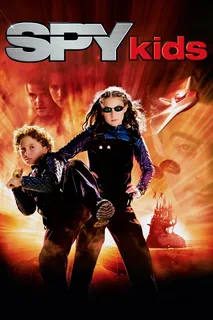
Children discover that adult competence is a role they may have to take over.

Action, Adventure, Comedy · 88 min

C 62

The spy equipment is pleasurable partly because it looks like something a child might want to invent before understanding every practical constraint. The film allows enthusiasm, surprise and an imperfect grasp of danger to organise the adventure.

That distinguishes it from a smaller imitation of an adult thriller. The children have to revise their account of their parents before they can rescue them. Ordinary embarrassment and family irritation sit beside the discovery that the adults possess another life.

The television imagery supplies a useful distortion of familiarity. Something apparently designed for children's entertainment becomes strange, bodily and potentially frightening. The world is not divided into entirely comforting toys and entirely grown-up threats.

The looseness is also a real limit. A visual invention can arrive so eagerly that a scene gives it little consequence beyond the immediate joke. Dialogue can repeat a lesson about family that the action has already made legible. Liking the film does not require calling every rough edge evidence of freedom.

What it does well is let the young characters become capable without making them miniature professionals. Their rivalry, errors and changing trust remain part of how the problem is solved.

The robot children give the family argument a wonderfully unsubtle shape. A child can be reproduced as a competent product while the actual siblings remain argumentative, frightened and dependent on one another. Rodriguez's visual excess has a purpose here. The rescue asks the imperfect pair to use something the manufactured replacements cannot supply as a ready-made specification: a relationship being revised through the work. The messiness is an attraction where it changes a choice, less so where another gadget merely arrives to keep the sequence busy.

Approval gap computed
45 points

Critics 92%, audiences 47%.

RT critic approval computed
92/100

From 130 reviews.

Recorded RT audience approval computed
47/100

From 250,000+ audience ratings.

Where this comes from: A24: It Comes at Night and its official trailer · Eliza Hittman and cast: Never Rarely Sometimes Always Q&A · Netflix: The Lost Daughter · Viewer discussion: objections to I Care a Lot and its ending · Rotten Tomatoes: score definitions

The recurring issue is a bargain about attention. Some films ask us to remain with an unpleasant person, some to accept a restricted view, some to treat duration or instability as the point rather than an obstacle on the way to it.

Those choices do not justify themselves automatically. The withholding in It Comes at Night can become too closed. I Care a Lot can let the predator's success displace its original concern with victims. Ad Astra can explain a feeling more clearly than it dramatises it. A high critic percentage does not make those objections disappear.

Equally, a lower audience percentage cannot show that the attempt was worthless. Read a defence and a thoughtful objection, identify the actual trade-off, and decide whether it is one you want to experience.

The scores find the disagreement. The useful next step is a reason, not an insult.

← All lists