30 October 2026
Denzel Washington is more than an actor: a global Black cultural icon
How global visibility, artistic freedom and a commanding public presence gave his career a meaning that reaches beyond the films.
In 2019, Chadwick Boseman stood in front of Denzel Washington and described a debt larger than admiration for a performance. “There is no Black Panther without Denzel Washington,” he said. The American Film Institute's account of the evening records the statement. Boseman was recognising a predecessor whose work had helped make his own career imaginable.
That is where an account of Washington as merely an excellent actor becomes insufficient.
Denzel Washington is a global Black cultural icon. His significance lies in the public possibilities attached to his presence: intelligence without apology, beauty without comic qualification, professional command, moral complexity and the right to be the person around whom a major film is organised.
At his peak, from Malcolm X through his established standing in prestige drama and commercial thrillers, no other Black screen icon matched his combination of dramatic authority, popular presence and the power to represent Black life on a global stage. That is my judgment of his cultural standing, rather than a claim that he sold more tickets than every other star. The actor trusted with a major Black historical life was also the man a studio could place at the centre of a submarine thriller, a bank robbery or an action vehicle. Those were not separate public identities that an audience had to keep reconciling.
A cultural icon does more than receive attention. He changes the range of things people can imagine a person like him being allowed to do. That is the strongest case for Washington, and it is larger than a list of his finest scenes.
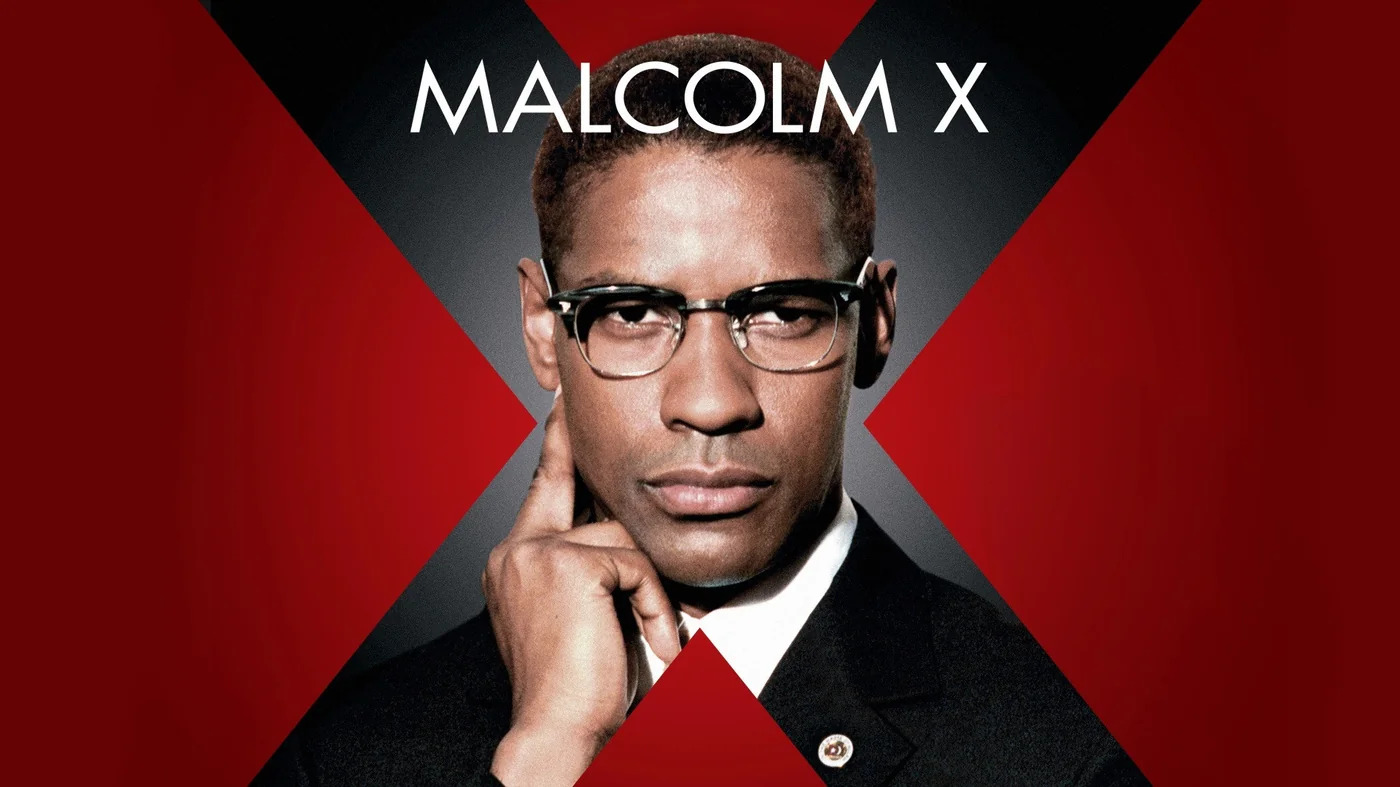
This essay discusses developments in Malcolm X and Training Day.
The difference between appearing and occupying the centre
A film can include a Black character while leaving its basic understanding of importance unchanged. The character helps, explains, supplies humour, demonstrates suffering or gives someone else a reason to improve. Presence alone does not tell us who possesses the story.
A leading man receives a different allocation of attention. The camera returns to his judgement. Other people's decisions acquire significance through their relationship to him. A disagreement becomes something more than an interruption because the film needs to know what he will do.
Washington's career repeatedly secured that position. The cultural importance was not exhausted by the number of films in which he appeared. It was in the kind of attention his presence could command.
Take Crimson Tide. The disagreement between Hunter and Ramsey is the organising conflict, not an educational aside in which a Black officer demonstrates that he is qualified to enter the room. Hunter's judgement has to be engaged because the whole film has made it consequential. Gene Hackman's captain cannot simply absorb him as a reassuring subordinate.
That does not mean race has vanished from the experience. A Black man and an older white commander contesting authority can carry meanings beyond the immediate procedural dispute. The achievement is that Washington does not have to stop the film and apply for permission to be its intellectual and dramatic equal.
There is pleasure in that assurance. It matters that a Black character can be correct, stubborn, difficult or strategically patient without being reduced to a single exemplary function. He can occupy the centre long enough to become a person rather than a point.
The successor who refused the single available place
The easy history would begin with Sidney Poitier and appoint Washington the next holder of the same office. Washington himself resisted that account.
In a 1998 interview preserved by PBS's American Masters archive, he explains why being called the next Poitier could feel restrictive. The comparison appeared to allow only one major Black actor at a time, and only another Black actor as the appropriate measure of his work. He also speaks with affection about Poitier's example and assistance.
Both responses matter. Gratitude for a predecessor can coexist with a refusal to inherit a permanently restricted category.
A tribute that simply crowns Washington the one acceptable Black star would repeat the problem. His stature becomes more significant when understood as pressure against the scarcity itself. The public image said that this degree of authority should be ordinary enough to recur, in different kinds of films and in more than one person's career.
Nor was Poitier merely a polite figure waiting for a later actor to acquire anger. His performances contain force, desire and resistance. Washington's contribution was to work in another historical and industrial situation, with different opportunities to vary the image.
The relationship is better understood as an expansion of possibility than a replacement of an obsolete model. An icon can honour the person who helped open a door while refusing to treat the doorway as the permanent size of the room.
Malcolm X made the scale of the claim visible
Malcolm X gives Washington's cultural standing its most concentrated expression. The importance is not only that he resembles a recognisable public figure or commands the speeches. Spike Lee's film grants a Black political life the scale, duration and centrality of an epic.
The changes within that life matter. An appetite for display, a search for discipline, certainty expressed before a crowd and the capacity to reconsider are all permitted to belong to one person. Black conviction is not presented as one fixed condition from which every action can be predicted.
The change after the pilgrimage is especially important to that freedom. A man who has made conviction persuasive has to reconsider part of its object without becoming a person who no longer believes anything. Washington cannot simply replace force with gentleness. He has to make revision belong to the same intelligence that previously made certainty compelling. The film permits a Black political figure to develop rather than remain the finished symbol other people need.
Washington's presence connects the public force to an individual life. The speaker who can organise a room is also a man with a family, an evolving understanding and a future he cannot command simply by speaking well. The size of the performance does not remove those private conditions.
The film also matters as a collaboration. Lee's direction and insistence on the story's scale are essential to what Washington is able to embody. To attribute the cultural achievement entirely to the star would make the case less accurate.
The ending makes the global argument visible. Lee moves beyond the dramatised life to contemporary children and Nelson Mandela in a South African classroom, a connection described in Carnegie Council's discussion of the film. The film asks Malcolm's legacy to speak across generations and national histories. Washington's embodiment has carried us toward that encounter; he does not replace the historical man whose image and words also return.
That distinction matters. An actor's cultural authority can grow through helping a real life become newly available without claiming ownership of its meaning. Washington gives the film a presence large enough to connect private life, public argument and historical memory. Lee then makes clear that the memory exceeds the star.
A cultural icon also has to be allowed pleasure
An account limited to speeches, historical suffering and exemplary achievement would leave out a large part of what made Washington important.
He was a romantic leading man. He could be desired without the desire having to become a joke, a danger to be removed or an instructional problem the film needed to solve before continuing. That is a cultural fact about screen space as well as an aspect of stardom.
Mo' Better Blues makes music, appetite, pride and intimacy part of a Black social world. The protagonist's flaws do not make the world a warning label. People have tastes, rivalries and attachments that exceed the task of explaining themselves to an imagined outsider.
Mira Nair's Mississippi Masala provides another valuable example. Washington's Demetrius is a working man involved in a romance whose family and racial tensions cross several histories. Criterion's account identifies the connections among India, Uganda and the American South. The romance makes those histories consequential without making either lover a mere diagram of them.
This is a useful complication of the phrase “global Black icon”. Black experience does not become global simply because an American film has travelled. Here, different communities meet with their own memories and prejudices. Washington's appeal belongs inside the encounter; it does not make his character's perspective sufficient to explain everyone else.
Then consider the ease and charm of The Preacher's Wife. Playfulness and romantic presence belong in the same account of cultural importance as the solemn work. A Black man should not have to carry a public burden in every scene to justify receiving the audience's attention.
The freedom to be interesting includes the freedom to be attractive, amused, vain and temporarily wrong. Washington's stature helped make that range feel available.
The ordinary commercial film was part of the achievement
It is tempting to reserve the word “important” for the films explicitly about history or injustice. That misses what happens when a star can carry the ordinary machinery of a commercial movie.
Inside Man places Washington within a negotiation, an investigation and a network of competing interests. Man on Fire organises an action film around his physical and emotional presence. These are different uses of a familiar attraction: the sense that his attention is consequential.
The cultural gain is the availability of centrality outside a narrowly assigned subject. A Black star can sell suspense, competence, romantic feeling or an adventure without every film becoming an entrance examination on racial significance.
Those films still deserve criticism. Man on Fire gives its American protagonist a depth of interior attention that is not equally distributed across its Mexican setting. A Black hero in a globally circulated film does not automatically free the surrounding world from an outsider's simplification.
That objection makes the argument more precise. Washington's visibility opens possibilities; it does not redeem every choice made by a production in which he appears.
The public image survives a distinction between recognising what his presence changes and approving every use to which that presence is put. A serious cultural icon can be examined rather than protected from thought.
Being represented should include the right to be bad
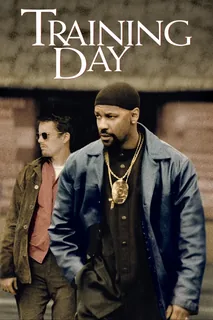
Training Day tests a demand often placed on an important Black performer: if you represent something larger than yourself, must every major role confirm a flattering account of it?
The answer has to be no.
A career restricted to admirable men would still be restricted. The actor would have been granted prestige at the cost of a large part of the art. Criminality, self-deception, cowardice and cruelty are human material. Black performers deserve access to them without each role being treated as a final statement about Black people.
That does not make the industry's pattern of rewards irrelevant. It is reasonable to ask which kinds of Black roles attract institutional recognition, and which kinds are overlooked. The question cannot be settled merely by saying that one particular winning performance was excellent.
The Academy's record of the 2002 ceremony places Washington's Training Day win alongside Halle Berry's win and Poitier's honorary award. Will Smith was a leading-actor nominee for Ali. The night contained several different Black careers and images, rather than one simple story of progress.
Washington's stature gave him unusual room to move among those images. His authority could be used by a villain without making the audience forget the broader career. The cultural achievement is that complexity became part of what the star was trusted to sustain.
Dignity should not mean permanent moral innocence. It should include the artistic freedom to make a person fully accountable for what he does.
Why Denzel's standing was distinctive, even among other giants
Eddie Murphy, Will Smith and Samuel L. Jackson are serious counterexamples to any lazy claim that Washington was alone. Murphy's comedy could reorganise a film around a voice and a social intelligence. Smith built a major model of internationally legible popular stardom. Jackson made force, timing and a highly recognisable presence available across an enormous range of productions.
Their achievements do not need to become lesser in order for Washington's case to be strong.
What distinguishes Washington is the continuity between prestige and popular authority. The leading man in a commercial thriller and the actor carrying Malcolm X feel like parts of a single public standing. A change of genre does not require the star to abandon the expectation that his presence should be taken seriously.
Inside Man provides a compact example. Frazier has to read a staged situation while recognising that officials and influential people may know things they will not tell him. Washington lets confidence coexist with incomplete knowledge. The attraction is watching him think under pressure, including the possibility that his reading is wrong. That kind of command invites an audience to invest in a Black man's judgment rather than merely enjoy his victory.
This is the basis on which I would call him the defining Black male film icon of his peak era. The judgement concerns the combination and the cultural authority it produced. He could carry historical memory, popular excitement and aspiration within the same public standing.
Calling him a global Black icon is a larger claim than calling him a famous American actor. It concerns an image available for identification beyond its place of production: a Black man whose intelligence, desirability and authority can organise a major film without requiring apology. Distribution makes that image available; it does not prove how any whole country received it. African, Caribbean, European and Latin American histories remain distinct. The case needs particular traces of influence as well as a persuasive account of what the image offers.
There are specific traces of that circulation. In a 2015 interview, the British actor David Oyelowo, whose parents are Nigerian, discusses studying Washington in Malcolm X as well as observing Daniel Day-Lewis at work on Lincoln. Washington belongs within the reference points through which another internationally working actor thinks about a major historical role.
That is a more useful example than assuming a whole country or continent felt the same way. A globally important image becomes available for particular uses: study, aspiration, identification and disagreement. Washington offered an unusually substantial one.
Power becomes real when somebody else gets an opportunity
The Boseman tribute is more than a graceful expression of admiration.
In the televised AFI tribute, Boseman describes Washington helping fund a group of Howard University students' participation in an acting programme at Oxford, following Phylicia Rashad's intervention. Boseman was among the students. A famous actor's standing had been converted into someone else's chance to train.
The account is also reproduced with the tuition details in Elle's report of Boseman's tribute. The story is small enough to be concrete. There was an opportunity, a cost and a person who helped meet it. It does not require a vague claim that inspiring people is the same thing as changing their circumstances.
Washington's work on August Wilson adaptations extends the principle through production. Fences, Ma Rainey's Black Bottom and The Piano Lesson bring writing, roles and family histories into another medium. Netflix's overview of the adaptations documents the project. The continuing contribution cannot be measured only by how much screen time Washington receives.
Washington had identified a structural version of the problem much earlier. In a 1990 interview republished by Interview magazine, he connects Black power in filmmaking to ownership and exhibition: producing a film is only part of the difficulty if somebody else controls where it can be seen. The observation locates representation inside an industry, rather than treating a good image as a self-sufficient victory.
This is an important test of the icon argument. Celebrity can preserve its own exceptional position; influence can also help create conditions in which other people cease to need an exception.
Neither gesture makes one man responsible for repairing an industry. The value lies in doing a particular thing with the power available. It gives the public idea of leadership a material form.
Faith gave his account of success another centre
Washington's public Christianity belongs in this picture because he has made it part of how he explains vocation and responsibility. His 2015 Dillard commencement address places God before individual achievement and connects success to what a person does for others.
That conviction should be allowed its actual content. It is more specific than saying he has good values or an inspiring attitude.
It also offers a public language in which the celebrated self is not the final object. Talent is received, work is required and achievement carries an obligation beyond maintaining one's position. Those claims help explain why the image can signify steadiness as well as success.
A public profession of faith is not access to every private fact about a person. Admiration does not require pretending that it is. What matters here is the account he has openly offered and the concrete actions with which that account can be considered.
The relationship between visibility and obligation gives the cultural standing another dimension. The star can be admired for what he has become while pointing toward a standard that does not end at being admired.
What the icon made possible
The greatest significance of Washington's peak is that he could represent Black excellence without making excellence mean a single permissible personality.
The work allowed command, pleasure, error, desire, historical conviction and commercial adventure to occupy a globally visible centre. The later influence helped other people claim space of their own. That is a cultural legacy, not merely an impressive collection of parts.
It also explains why the response to him can exceed the response to an individual film. An audience may be recognising a possibility: a Black person whose intelligence matters, whose dignity does not depend on submissiveness and whose complexity is allowed to remain human.
That is the case for calling Denzel Washington a global Black cultural icon. His stature changed more than the level of admiration available to one actor. It helped expand the scale of what a Black leading man could be expected to carry, and what others might consequently imagine for themselves.
For a closer discussion of the acting within individual films, continue with the twelve-film essay on dignity, authority and power. The cultural claim rests on a career's place in the world as well as the work visible in any one scene.
The films in this piece




Where this comes from: AFI: the 2019 tribute and statements about Washington's influence · PBS American Masters: Washington's 1998 interview about Poitier and opportunity · TNT: Chadwick Boseman's AFI tribute · The Academy: the 2002 awards · Criterion: Mississippi Masala · Netflix: August Wilson's screen adaptations · HBCU Buzz: Washington's Dillard commencement address · Interview: Washington on perspective, ownership and exhibition · La Repubblica: David Oyelowo on his preparation and acting examples · Elle: Boseman's account of the Oxford training support · Carnegie Council: Malcolm X and the film's Mandela ending