29 September 2026

Denzel Washington: twelve films about dignity, authority and power

A route from Cry Freedom to Macbeth, through the performances and directing choices that make his authority worth examining.

12 entries

Denzel Washington can make a sentence sound worth listening to before you have decided whether the man speaking deserves your trust. That is a source of pleasure in his films and, in the strongest of them, a problem the film asks us to examine.

Authority takes different forms across this twelve-film route. Biko has to address a system committed to denying his account. Malcolm develops and revises a public language. Alonzo turns instruction into coercion. Troy has a story about what he has provided for his family, and a family with other things to say about the cost.

The selection runs chronologically from 1987 to 2021. It follows how a familiar star presence can acquire different meanings, including meanings that make its appeal uncomfortable.

There is a wider contribution to consider alongside the acting. Washington's work as a director and producer has created space for other performers and for August Wilson's writing. Netflix's account of the Wilson adaptations documents a continuing project beyond Fences. His public Christian faith also belongs to his account of vocation: his 2015 Dillard commencement address places gratitude to God and responsibility to others at the centre of success.

The broader argument about his place in Black culture belongs to the companion essay on Washington as a cultural icon. Here the question is how the films use the authority he brings with him: who benefits from it, who has to resist it, and when he lets another performer take the room. Major plot developments and endings are discussed below.

How this is judged

The film computed
The combined score from the rating sources held for this title. The films follow a chronological route, not a score ranking.

Computed scores come straight from the ratings, so you can check them. Editorial ones are our opinion, and every one comes with the reason for it.

1

Cry Freedom 1987

A political intelligence exceeds the outsider's account.

Drama · 157 min

B 74

Biko's confidence does not mean the danger is absent. Washington makes humour and directness means of refusing the assumptions built into a question. In the courtroom passages, a reply can expose the terms on which the state would prefer the discussion to proceed.

The performance gives ideas a social life. He is speaking to particular people, judging when to explain and when a joke will reveal more than another careful definition. The magnetism comes from responsiveness, not merely from presenting an admirable historical figure.

The film's structure imposes an important limit: Donald Woods's experience increasingly organises the route through Biko's story. A Black political leader receives extraordinary presence while alive in the film, then a white journalist's predicament occupies much of the later attention.

That is a reason to examine the film, not to disregard the performance. Washington gives Biko enough intellectual and personal force that the restriction becomes more visible. We have encountered a person whose significance cannot be exhausted by what he teaches the outsider.

The film computed
75/100

From 7 ratings.

2

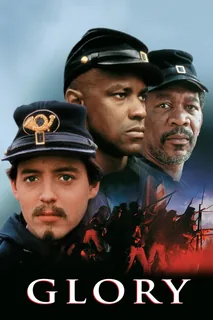
Glory 1989

A held gaze refuses the authority of a degrading explanation.

Drama, History, War · 122 min

A 80

Trip's anger is inconvenient to the orderly account of a regiment learning to work together. Washington does not make it disappear in order to establish that the character deserves the audience's respect.

The flogging scene places two histories on the same body. Trip's exposed back already bears the scars of enslavement; the punishment now comes from the army in which he is serving. Washington looks back at Shaw rather than supplying the grateful acceptance a tidy story of military discipline might want. The tear does not cancel that accusation. It makes the sustained gaze harder to bear, because the officer's authority has an immediate human cost that his account of order cannot explain away.

The exchanges among the Black soldiers matter as much as the scenes with their officers. They have different histories, expectations and ways of responding to the same institution. Trip is not required to represent every one of them.

The film often uses the white commanding officer as its organising perspective. The performance presses against that arrangement by making acceptance into military discipline an insufficient answer to the character's questions. Recognition is not the same thing as safety, equality or a reason to stop being angry.

The film computed
80/100

From 12 ratings.

3

Malcolm X 1992

A changing conviction remains part of one continuous life.

Drama, History · 202 min

A 80

The extraordinary task is to make change continuous. The young man's display, the prisoner's search for a disciplined account of himself, the minister's command and the later revisions of conviction have to belong to one life without feeling preordained.

Washington changes the relationship between speech and audience. A phrase used to impress companions has a different rhythm from an argument intended to organise collective feeling. The quieter exchanges then show what public fluency cannot settle privately.

Spike Lee gives the performance substantial time, which allows the transitions to accumulate rather than arrive as a sequence of impersonations. The film's scale is part of its argument that a Black political life can hold the centre of an epic.

That scale also brings selection and emphasis. A dramatic biography cannot contain every historical disagreement about its subject. The achievement here is a man whose capacity to reconsider does not feel like the script abandoning an earlier character. Conviction changes because the person acquiring it continues to encounter a world larger than his explanation.

The film computed
80/100

From 12 ratings.

4

Philadelphia 1993

Professional willingness and understanding move at different speeds.

Drama · 125 min

B 79

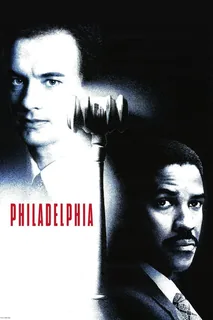
Joe Miller's professional willingness and his prejudice do not change at the same speed. Washington allows both to remain visible. Taking a case does not instantly produce an understanding adequate to the person being represented.

The opera-listening scene gives that difference a form. Joe is present for an experience he cannot simply turn into the familiar language of a legal problem. His attention becomes more important than his ability to supply the right response.

The film offers a careful mainstream route into material it assumes part of its audience may resist. That caution is also a limitation: Andrew's life and desire receive less freedom than a less anxious film might allow.

Washington's work is strongest where Joe's growth remains awkward. A person can act usefully before becoming free of every prejudice, but usefulness does not make the prejudice inconsequential. The performance avoids making either professional competence or eventual sympathy a complete certificate of goodness.

The film computed
79/100

From 12 ratings.

5

Devil in a Blue Dress 1995

A familiar genre acquires different costs in a segregated city.

Crime, Drama, Mystery · 102 min

B 72

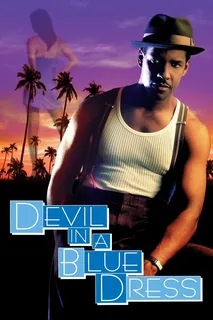
Easy Rawlins needs work and wants to keep his house. That material starting point makes the mystery more than a chance to display a detective's cleverness. The job enters a life already organised around modest, vulnerable forms of independence.

Washington makes movement through 1948 Los Angeles socially specific. Easy has to read the room and recognise whose confidence can become a threat. A familiar private-eye manoeuvre carries a different risk when the man performing it cannot assume that institutions will treat him as a legitimate investigator.

Don Cheadle's Mouse offers another relationship to danger, which stops the friendship from becoming merely reassuring support. Easy's usefulness to other people does not always align with what keeps him safe.

The film is an excellent starting point for Washington beyond the most familiar prestige titles. Its pleasures are generic and particular at once: clues, encounters and reversals, inside a city whose racial boundaries determine what those ordinary thriller actions may cost.

The film computed
72/100

From 9 ratings.

6

The Hurricane 1999

Endurance cannot be reduced to a permanent supply of certainty.

Drama · 146 min

B 77

The prison passages give Washington an unusual dramatic space. A man has to live with himself through time that is not being spent moving toward a clearly visible next event. Anger, discipline and the need for another mind to hear him acquire different weights.

The film's relationship with Lesra makes the effort less solitary. Carter has built routines to keep prison from defining his inner life; accepting the boy's attention and the help that follows means allowing other people to matter to that defence. Washington makes the contact valuable without making trust look easy. The boxer's physical discipline cannot supply everything he needs, and the performance becomes more interesting when self-command has to make room for dependence.

The film dramatises Rubin Carter's story with substantial simplification. Its force as an injustice narrative should not be used as a substitute for investigating the actual case.

What remains compelling on screen is the relation between endurance and being believed. Washington gives sustained resistance an effortful quality; it is not a permanent supply of heroic certainty. The film is strongest when attention to that effort exceeds the machinery of an inspirational resolution.

The film computed
78/100

From 11 ratings.

7

Remember the Titans 2000

A coach's results do not settle every use of his authority.

Drama · 113 min

B 76

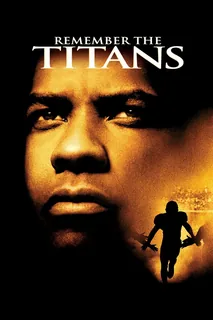
Boone's authority must operate in public. He is coaching boys, negotiating with other adults and working in a setting where failure will be interpreted through more than the scoreboard. Washington makes the demand to be taken seriously part of the practical work.

The film's run to the Gettysburg cemetery gives Boone a carefully prepared audience: exhausted players who must listen to the man who brought them there. Washington uses a lower, more measured delivery than the exercise preceding it might lead us to expect. He makes the place lend weight to the lesson, so the boys' immediate grievances seem small beside the history he invokes. It is persuasive coaching theatre. It also shows how much Boone controls the setting in which his authority is tested; the speech is worth examining as a use of power, rather than taking its effectiveness as the end of the discussion.

The film compresses and reshapes history into an accessible story of integration through a team. That structure can make shared endeavour appear more politically sufficient than it is. Cooperation in a sporting contest does not end the larger conflicts around it.

It remains an effective, direct drama if you want that form. The interesting tension is that Boone's severity can produce results while still being something to question. Winning should not relieve a viewer of judging the means by which authority has been exercised.

The film computed
76/100

From 11 ratings.

8

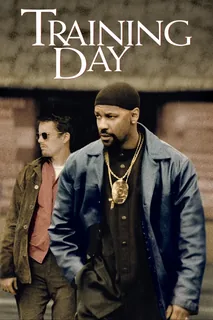
Training Day 2001

Instruction becomes an increasingly dangerous demand for compliance.

Action, Crime, Drama · 122 min

B 78

Alonzo makes the rookie feel that an important education is taking place. Washington's confidence gives each new demand the appearance of a practical lesson available only from someone who knows how the world really works.

Ethan Hawke's responses are essential. A hesitation provides material Alonzo can reinterpret as innocence, weakness or an opportunity to prove commitment. The authority is not a fixed possession; it is continually renewed through the younger man's uncertainty.

The film becomes broader as its thriller mechanisms take over, and its account of police power deserves scrutiny beyond the pleasure of the star performance. The early exchanges are especially unsettling because the charm is doing so much of the coercive work.

The final street confrontation reverses that method. Alonzo has lost the cooperation that made his earlier ease possible, and Washington lets the volume rise as the power drains away. The man who could make a quiet instruction sound like the terms of reality now has to announce his importance to people who will no longer perform their part. The excess has a purpose: it exposes how dependent his commanding presence always was on an audience willing, or frightened enough, to obey.

The film computed
78/100

From 12 ratings.

9

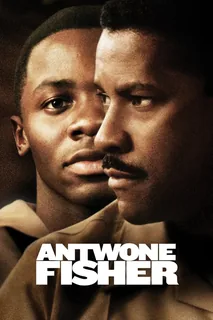
Antwone Fisher 2002

A director gives the younger man the emotional centre.

Drama, History, Romance · 120 min

B 73

As director, Washington gives the younger man's account time and places his own psychiatrist in a supporting position. Derek Luke carries the emotional centre. That allocation of attention is an important choice for a first feature as director.

The sessions give anger a context without treating context as an automatic excuse for every action. Speaking is difficult because a person must risk having the experience simplified, dismissed or used to define him permanently.

The film's healing arc is emphatic and sometimes very neatly arranged. Its value is not that telling a painful history guarantees recovery. It is that a young Black man's need for care can organise a film without having to become a criminal investigation or a demonstration of toughness.

The psychiatrist's restraint also offers a useful contrast with the authority of other Washington characters. Here, being effective can mean declining to occupy the emotional space that another person needs in order to find words.

The film computed
73/100

From 11 ratings.

10

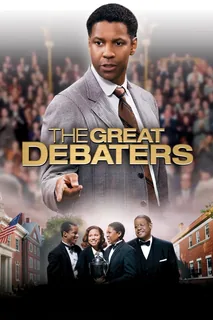
The Great Debaters 2007

Preparation makes an argument something a student can use.

Drama · 126 min

B 75

Debate gives preparation a visible test. The students have to assemble an argument, speak under scrutiny and address a room whose assumptions may already be working against them. Washington's Tolson is important partly because he is preparing other people to take that space.

The teaching scenes connect intellectual work to discipline, but the film also places public speaking beside immediate physical danger. The encounter with a lynching prevents rhetorical success from looking like an adequate description of freedom.

The inspirational structure simplifies historical events and reshapes the climactic opponent. It should be approached as a dramatisation, rather than an exact record of Wiley College's debate history. A clear movie victory can be persuasive without being a complete institutional history.

The film's strongest idea is that language becomes power through practice and collective preparation. The teacher's success is measured in what the students can do, including when their thinking is no longer merely an extension of his command.

The film computed
76/100

From 11 ratings.

11

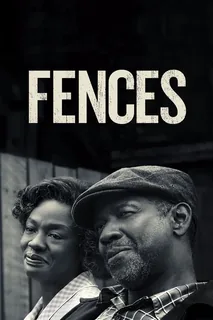
Fences 2016

A powerful account of sacrifice meets the people who paid for it.

Drama · 139 min

B 74

Troy can make a story fill the yard. Washington gives the humour, grievance and self-justification a persuasive rhythm, so that it takes time to recognise how often an account of sacrifice becomes a demand that others surrender their own possibilities.

When Cory asks why his father does not like him, Troy replies with the food, shelter and obligations he has met. Washington makes the answer vigorous enough to sound conclusive, but it is a conclusion to a different question. Cory asked for affection; Troy can account for provision. That ability to seize the terms of an exchange is part of his damage as a father. Viola Davis's Rose gives another, longer account of what living alongside his needs has cost, and the performance has to survive being answered.

The film retains the concentration of a play, which some viewers will find too confined. That concentration also lets a repeated phrase acquire consequences across relationships. A man can be right about an injustice he suffered and wrong about what that history entitles him to do now.

As actor and director, Washington allows his authority to become the object of examination. Troy's capacity to command attention does not establish that he has understood the people who keep listening.

The film computed
74/100

From 12 ratings.

12

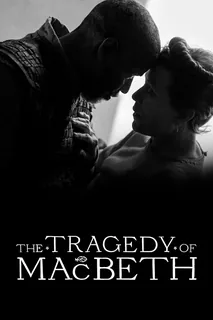
The Tragedy of Macbeth 2021

A commanding presence has to hear control come apart.

Drama · 105 min

B 75

The voice has experience behind it. Washington's Macbeth can sound as though he knows how command is supposed to work, which makes the drift into fearful improvisation especially troubling. Authority has not prepared him to live with the conditions of obtaining more of it.

Joel Coen's stark spaces give a gesture unusual prominence. A figure crossing an empty frame or stopping before another person has little naturalistic clutter in which to disappear. Washington makes the verse an action inside that architecture rather than merely a recitation laid over it.

The age of the central couple changes the pressure of ambition: the prospect of an inheritance and the sense of time remaining are not abstract concerns. Frances McDormand supplies an equally forceful account of what can be made possible through resolve.

The banquet turns that command inside out. Macbeth can address the guests, but he cannot make them see Banquo's ghost or keep his own responses inside the behaviour a king must perform. Washington's speech begins serving incompatible purposes: maintaining the occasion for the room and answering a presence the room cannot acknowledge. McDormand's attempts to manage the damage make his failure public. The familiar commanding voice is frightening here because it cannot secure even a shared account of what is happening.

The film computed
76/100

From 11 ratings.

Where this comes from: Netflix: August Wilson's plays and film adaptations · HBCU Buzz: Washington's 2015 Dillard address

Why these films belong together

The useful comparison is between men who can make themselves heard and the people required to respond. Put Alonzo beside Dr Davenport, or Troy beside Tolson. Their authority is not good or bad merely because the voice carrying it is persuasive. Its value depends on what it permits other people to become.

That question also makes directing and producing part of the argument. Creating a film around Derek Luke's performance or helping Wilson's plays reach the screen changes who is given room to speak. These films make that choice visible: the assurance that can dominate a scene can also help another actor hold its centre.

For a first viewing, choose Devil in a Blue Dress for genre pleasure, Malcolm X for an expansive life story, or Fences for concentrated performance. They reveal three very different uses of the assurance Washington brings to a room.

← All lists