
16 September 2026

Films set in Africa: fourteen films, fourteen ways of looking

Who gets a private life, who gets to make decisions, and what remains outside the frame.

14 entries

A film can give an African landscape extraordinary attention while giving the people in it almost none. You can recognise the pattern in a surprisingly small scene: a foreign visitor receives a name, a private worry and a difficult decision; the local person receives a useful piece of information to deliver.

That imbalance is one question running through this selection. It does not produce a simple rule that a film must have one kind of protagonist. A limited viewpoint can be an honest artistic choice. The question is what the film enables us to understand from that position, and whether people outside it remain capable of acting for reasons of their own.

The selection includes Hollywood, British and other international productions, a television film and work by directors from the places depicted. It is not an English-only list: The Boy Who Harnessed the Wind, for example, uses Chichewa alongside English. The films belong together as widely circulated, contrasting accounts of African lives and places, not as a single production tradition.

The order reflects my preference for films whose characters and social worlds sustain attention beyond the immediate spectacle. It is an argument you can dispute, rather than a numerical score for cultural authenticity. Shooting on location, hiring local performers or having family connections to a country can contribute to a film; none guarantees what the finished work will see.

The notes discuss war, genocide, slavery and other violence. The first choices offer some of the strongest perspectives, rather than necessarily the lightest viewing.

The discussion includes major plot developments, as well as the historical violence named above.

14

Black Hawk Down 2001

Formal immersion in one side's experience cannot make the viewpoint complete.

Action, History, War · 144 min

B 77

The film makes combat difficult to orient yourself within. Radio messages arrive incompletely, routes become dangerous and an apparently contained mission expands into a struggle to retrieve people. Its spatial confusion has a purpose: military capacity does not guarantee control of a city.

The emotional detail is distributed far less evenly. American soldiers receive relationships, professional distinctions and personal fears; Somalis more often appear through the threat they pose or the danger surrounding the Americans. There are exceptions, but they do not produce a comparable account of Somali lives.

The repeated effort to retrieve a stranded or wounded soldier gives the action a powerful immediate obligation. A named man has comrades who know where he should be and will risk themselves to reach him. That structure is not trivial; it makes the fighting humanly readable. It also exposes the asymmetry. Somali bodies rarely receive the same network of names, memories and people waiting for their return. The film can make one act of rescue urgent while leaving the larger field of lives far less available to grief.

That is a consequential limit in a film whose technical force can make its viewpoint feel total. Being immersed in one side's confusion is not the same as understanding the battle or the society in which it occurs.

Choose it for an intense depiction of soldiers' immediate experience, with severe violence. For the history of Somalia or the wider politics of the intervention, you need sources and viewpoints beyond the film. Its formal accomplishment makes that distinction more necessary, rather than less.

Somalia
13

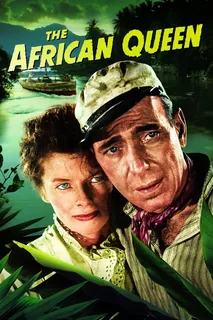
The African Queen 1951

A vivid partnership keeps most of its imaginative attention on the boat.

Adventure, Drama, Romance · 105 min

B 79

The pleasure is the partnership: Katharine Hepburn and Humphrey Bogart negotiate practical tasks, personal habits and the forms of authority each believes they possess. The boat provides a cramped stage on which neither can retain complete control.

The adventure also narrows an immense setting to the needs of a British missionary and a Canadian boat captain. African people have little opportunity to define the journey. Colonial conflict supplies the circumstances, while the central relationship supplies nearly all the interior life.

The leeches give the comic partnership a bodily limit. Charlie can perform the practical work that keeps the journey possible, but the river can subject him to an experience no amount of banter will make easy. Rose's response then has to change from judging his habits to recognising what continuing the task costs him. The actors make that adjustment affecting without requiring a new account of the people whose country surrounds the boat. That is both the concentration of the film's appeal and the boundary of its curiosity.

That imbalance does not prevent the comedy from working. Indeed, the film's endurance has much to do with how effectively a difficult shared task becomes an argument about two particular people. The useful critical distinction is between admiring that achievement and taking the setting as a meaningful introduction to the lives around it.

Choose it for star chemistry and physical adventure. Its river is richly cinematic, but the film's imaginative interest remains overwhelmingly on the boat.

German East Africa

12

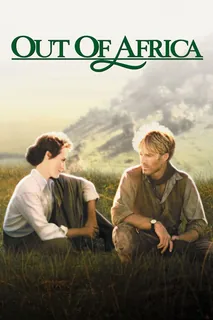
Out of Africa 1985

A beautiful romance asks whose losses deserve the fullest attention.

Drama, History, Romance · 161 min

B 72

The images invite longing: open space, an aeroplane above the landscape, a life apparently freed from ordinary limits. The romantic attraction is real, and it is worth asking how that attraction is constructed before accepting the world it offers.

Karen Blixen's disappointments receive psychological detail. The colonial order that makes her particular life possible receives less equivalent pressure. African characters are present, but presence is not the same thing as having a comparable ability to define the story's needs and meanings.

The flight makes access look like freedom. An immense landscape becomes available to two people as an intimate experience, with music helping to turn the view into something close to a shared possession. The scene's beauty is not a false response the viewer must suppress. It is part of what needs interpreting: this ability to move above the land belongs to lives whose material and political position the romance can make feel merely personal. The viewpoint is expansive in what it shows and selective in who is permitted to enjoy it that way.

Meryl Streep gives the central character strength and limitation; the film's nostalgia is larger than any single performance. You can be moved by the music and the landscape while recognising whose loss the story asks you to mourn.

Choose it for a patient, visually expansive romance if that mood appeals. Pair it with a film whose African characters have purposes independent of European memory. The contrast helps make the limits of this beautiful viewpoint visible.

Kenya

11

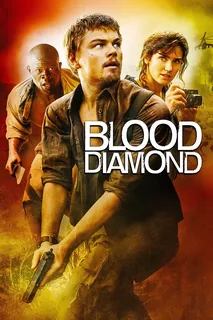
Blood Diamond 2006

A father's purpose competes with the attractions of an outsider adventure.

Action, Drama, Thriller · 143 min

B 77

The partnership among a fisherman, a mercenary and a journalist gives the film several routes through the diamond trade. Djimon Hounsou's Solomon has the clearest immediate purpose: find his family. That purpose keeps resisting the temptation to treat a conflict as an arena for another man's moral rehabilitation.

The action machinery is efficient and sometimes overwhelms the argument. Suffering can become background that establishes the mercenary's toughness or the urgency of the next escape. When the film stays with Solomon's choices, its human stakes become less abstract.

Solomon's encounter with his recruited son makes the competition for the story visible. He needs to reach a child who has been taught to regard familiar love through the authority of an armed group. Hounsou cannot solve that problem by becoming more impressive than the mercenary. He has to recover an address to his son that the military role has tried to make unusable. The scene is stronger than the film's general lesson about the trade because the stolen relationship has its own history and a person who must answer.

The title offers a concrete link between distant consumption and violence, but an action film cannot by itself establish the provenance of a product or explain the full political economy of a war. Its persuasive power is an invitation to investigate, rather than a substitute for that investigation.

Choose it for a large-scale thriller whose strongest performance keeps pulling attention toward a father's responsibility. Notice when the film follows that pull and when it returns to the more familiar attractions of the outsider adventurer.

Sierra Leone

10

The Constant Gardener 2005

An institutional thriller remains organised around a British man's loss.

Drama, Mystery, Thriller · 129 min

B 75

The conspiracy draws attention to people whose suffering can be made administratively distant. Contracts, official language and professional loyalty offer ways of refusing to see a body as the consequence of a decision.

The romance gives that argument emotional urgency, but it also establishes a hierarchy of attention. A British man's grief becomes the organising mystery; Kenyan people harmed by the arrangement often have less room for equivalent private lives. The film can recognise unequal power while still relying on unequal narrative access.

Justin's habit of cultivation gives the title its useful ambiguity. Fiennes can make patience and care attractive while leaving open what the same reserve has allowed him not to pursue. His investigation after Tessa's death demands a different use of attention: he must follow the questions that made her difficult to live beside, rather than preserve only the consoling image of a lost wife. The marriage gives the thriller a real emotional task. It cannot give the Kenyan people around that task equivalent room merely by making his inquiry sincere.

Rachel Weisz's energy and Ralph Fiennes's reserve give the marriage a productive uncertainty. The widower is investigating both an institution and the limits of what he knew about the person beside him. That second inquiry makes the film more than an illustrated political accusation.

Choose it for a melancholy thriller with a serious interest in institutional evasion. Ask which people are permitted to be complicated, and which mainly arrive as evidence that the complicated people have something to learn.

Kenya

9

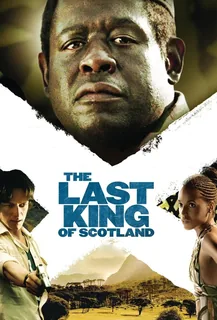
The Last King of Scotland 2006

Seduction by power is seen through a foreigner's awakening.

Drama · 123 min

B 78

Forest Whitaker makes Idi Amin's charm part of the danger. Attention from a powerful man can feel intoxicating before it becomes a demand, and the young Scottish doctor's vanity makes him unusually receptive.

That design explains the outsider protagonist but does not remove its cost. Ugandans living under Amin's power have to share a film in which a foreigner's loss of innocence supplies the main route into terror. The doctor can discover that the ruler is dangerous; the people around him have much less opportunity to treat that knowledge as a personal revelation.

Garrigan mistakes exceptional access for a reliable account of the man granting it. A private summons, an intimate confidence or a joke shared with the ruler can feel like evidence that he knows something the public does not. McAvoy's receptiveness matters because the doctor is not merely deceived by a superb impersonation. He wants the position the attention gives him. Whitaker's abrupt changes in manner then expose a dependence the younger man had preferred to experience as friendship.

The performance remains worth watching for the speed with which intimacy turns possessive. Notice when a joke stops being an invitation to laugh and becomes a test of obedience. Whitaker makes the room's uncertainty tangible.

Choose it with that imbalance in mind. It is a forceful drama about seduction by power, with a narrower account of Ugandan lives than its historical setting might lead a viewer to expect.

Uganda

8

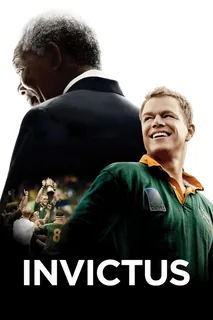
Invictus 2009

Shared feeling is a political resource, with limits.

Drama, History · 134 min

B 74

Rugby gives political symbolism a practical timetable. A team has to train and play while leaders try to change what its colours mean. The film's strength is showing public gestures as work: someone plans an encounter, chooses a phrase and asks other people to participate.

Morgan Freeman's Mandela often has to carry the film's account of reconciliation by himself. Matt Damon's captain offers a more limited, workable task: persuade this group to respond differently. The difference in scale can be productive when the film remembers how provisional those efforts are.

The dispute over the Springbok name and colours is more revealing than the final scoreboard. What some supporters recognise as continuity, others recognise as a sign of exclusion. Freeman's Mandela has to ask people to let a symbol change without pretending that its older meaning was imaginary. The film becomes thinner when the successful public gesture seems to certify that the underlying conflict has been answered. Its better idea is that political leadership involves deciding which recognisable objects a different future might be built through.

The weakness is the temptation to let a tournament victory stand in for a transformation of a country. Shared feeling can matter without dissolving inequalities or making the next political argument unnecessary. The crowd's unity is a moment to interpret, rather than a completed settlement.

Choose this for a measured sports drama about the uses of a symbol. Its most interesting scenes concern the preparation that allows an apparently spontaneous public feeling to occur.

South Africa

7

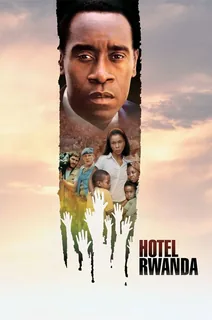
Hotel Rwanda 2004

A clear dramatic refuge offers one concentrated route into a catastrophe.

Drama, History, War · 121 min

A 82

The hotel creates a clear dramatic space: a boundary to defend, rooms to allocate, calls to make and people whose safety can change with a decision outside the gates. Don Cheadle makes the central performance depend on courtesy under pressure. The useful words and contacts of an ordinary professional life must suddenly carry impossible weight.

That concentration makes the film accessible. It can also narrow the catastrophe to the suspense of whether one resourceful man can keep a refuge functioning. The people sheltering there risk becoming a collective whose fear establishes the importance of his decisions.

Paul's professional manner is strongest when a contact fails to be the guarantee he needs. A name, a gift or a carefully chosen phrase can purchase time without creating an institution committed to the people inside the hotel. Cheadle has to let calculation and alarm coexist: dropping the courtesy might lose the small advantage it still provides. The performance keeps the refuge from becoming a simple tribute to connections. It is about using the remaining tools of a profession after the world that gave them reliable value has collapsed.

The film should therefore be approached as a dramatised account with a strong protagonist, rather than a sufficient account of the genocide or a final judgement on every real person represented. Sometimes in April offers a valuable companion because its structure gives more space to family division and aftermath.

Watch for the difference between a gesture that temporarily secures safety and a promise of protection that institutions are actually willing to honour.

Rwanda

6

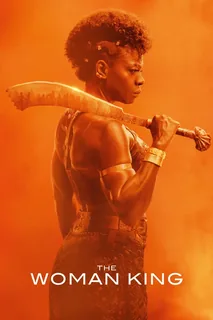
The Woman King 2022

Accomplished action needs to be separated from a simplified historical alignment.

Action, Drama, History · 135 min

B 73

The training sequences make a group legible through labour. Women learn to move together, absorb pain, compete and depend on one another. Viola Davis gives Nanisca command without making authority costless, while Lashana Lynch supplies a more playful confidence through which a newcomer might want to belong.

The film's historical argument needs firmer limits than its action does. Dahomey's involvement in the Atlantic slave trade was substantial; the kingdom cannot be treated as an uncomplicated abolitionist alternative to external enslavers. Smithsonian's historical account explains where the film's moral alignment departs from the record.

Izogie gives the training a social attraction that Nanisca's command alone could not supply. Lynch can tease, compete and offer recognition, making the group somewhere Nawi might actively want to belong. That pleasure is a real part of the film's achievement. It also helps explain the historical problem: attachment to these particular women can become an invitation to accept the state they serve on similarly affectionate terms. The performances have earned the attachment more convincingly than the screenplay has earned that transfer.

That qualification does not make the physical performances or relationships less effective. It does change what their appeal can establish. A convincing heroine and a satisfying conflict do not authenticate the political history around them.

Choose it for an accomplished action drama that places Black women at the centre of military spectacle. Then keep the pleasure of that achievement separate from the work required to understand the state whose army the film depicts.

Benin · Kingdom of Dahomey

5

District 9 2009

Procedure disguises coercion, though the allegory has its own blind spots.

Sci-Fi · 112 min

A 80

The eviction paperwork matters as much as the alien technology. Wikus begins as a functionary who can make cruelty sound like procedure. Sharlto Copley's nervous friendliness gives bureaucratic coercion a recognisable social manner before the body-horror plot changes his interests.

The science-fiction premise makes segregation and forced removal available as visible systems of classification. It also exposes a limit of identification: Wikus begins to understand the arrangement differently when he can no longer rely on belonging to its protected category. Empathy arrives through personal threat, rather than a sudden improvement in principle.

The signatures turn removal into a grotesque little social visit. Wikus can approach a home with a form and behave as though securing the mark will turn the intrusion into agreement. Copley's eagerness makes the manner more recognisable than a performance of cold villainy would be. The later change in his body does not reveal a kindness that was always directing him; it takes away the category that had made his helpful professional voice possible. The institution can then speak about him with the same cheerful distance.

There is a serious weakness in the film's grotesque portrayal of Nigerian gang members. An allegory about dehumanisation can reproduce a demeaning stereotype inside its own action machinery. That objection belongs beside admiration for the film's invention.

Choose it for abrasive, energetic science fiction with a concrete understanding of paperwork and force. Do not mistake the existence of an anti-prejudice allegory for proof that every group within it receives equal imaginative care.

South Africa

4

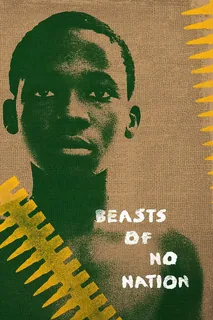
Beasts of No Nation 2015

A child tries to understand the adults manufacturing his obedience.

Drama, War · 137 min

A 80

Agu's voice keeps the child's attempt to understand events beside the armed adults' effort to rename them. The commandant turns fear, bereavement and the desire to belong into instruments of obedience. Abraham Attah and Idris Elba make that relationship the film's centre of gravity.

The unnamed country is a deliberate fictional setting. It allows a concentrated story, but it also creates a risk: viewers can absorb the violence as a general image of West Africa without learning the politics of a particular conflict. The visual force sometimes intensifies that problem by making atrocity the most memorable geography.

The commandant's recruitment works through the person he appears willing to let Agu become. Elba offers attention and a place in an armed group, then makes the promised belonging depend on obedience to acts the child could not have imagined as his own. Attah's voice does not always keep pace with what his body is being made to do. That separation gives the performance its force. The film can show a child participating in violence without granting the commandant the final authority to explain what participation has done to him.

The most revealing scenes concern the manufacture of a soldier, including the promises and manipulations that make violence seem like a way back into a human group. Agu is not merely evidence of adult wickedness. His attempts to explain himself continue after the commandant's explanations have failed him.

This is very difficult viewing, including child abuse and sexual violence. Its attention to a child's changing understanding is its strongest reason to watch.

West Africa

3

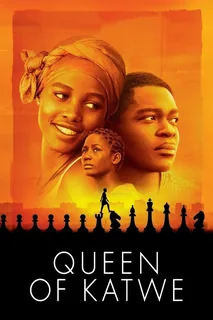
Queen of Katwe 2016

Talent changes a life without removing a family's competing needs.

Drama · 124 min

B 77

Chess offers a system in which Phiona can make a good decision and see it recognised. Life outside the board is less consistent. A family's need for income, a mother's protective fear and the disorientation of entering unfamiliar social spaces all complicate the familiar sports-film promise that talent provides an exit.

Madina Nalwanga's Phiona is allowed uncertainty and impatience. Lupita Nyong'o gives Harriet's resistance weight: an opportunity for a child can also be a risk borne by a parent who has little room to absorb failure. David Oyelowo's coach contributes commitment and access, but the family has an emotional life beyond appreciating his help.

The first encounters with more privileged competitors make the class difference awkward before a match can settle anything. The children must enter an unfamiliar institution, eat there and let themselves be seen in a setting that does not naturally accommodate them. Nair finds humour in the new pleasures without letting a plate of food stand in for a whole explanation of poverty. Nalwanga can make Phiona proud of what she knows on the board and uncertain of her place around it. A result cannot instantly remove that second kind of difficulty.

Uganda

2

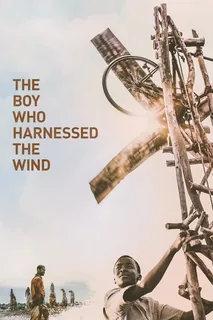
The Boy Who Harnessed the Wind 2019

An invention depends on knowledge, materials and other people's trust.

Drama, History · 113 min

A 80

William's windmill is the image that sells the story. The school fees, damaged crops and household arguments make the image meaningful. Innovation requires materials, time and some authority to use them, all of which become harder to obtain when a family is hungry.

Chiwetel Ejiofor gives the father more than the role of an obstacle awaiting correction by an exceptional son. He has practical reasons to fear another risky demand on scarce resources. Their conflict becomes moving because both are trying to secure the household's future through different understandings of what is possible.

The father's bicycle is the clearest version of that bargain. To William it contains parts an invention needs; to Trywell it is a functioning possession in a household that can scarcely afford another loss. Ejiofor lets refusal have a material basis before the breakthrough can make it look foolish in retrospect. The request asks him to risk something that works on behalf of an explanation he cannot yet test. Trust has a cost here, which makes it more substantial than a speech about believing in a child.

The film still uses the shape of an inspirational breakthrough, which can draw attention away from people for whom ingenuity will not resolve structural hardship. Its better passages resist the idea that an individual mind invents independently of a community. William observes, borrows knowledge, negotiates and asks others to trust him.

Choose it for a family drama about the difficulty of recognising useful knowledge when it arrives from someone with little status.

Malawi

1

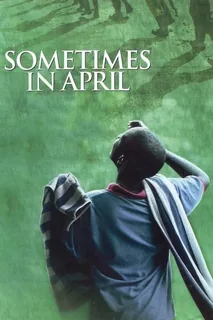
Sometimes in April 2005

A family and an aftermath extend beyond the moment of witness.

Drama, History, War · 140 min

A 82

Raoul Peck's film makes the 1994 genocide against the Tutsi in Rwanda a rupture within families, institutions and everyday relationships. Its movement between the violence and its aftermath prevents survival from looking like a completed narrative. Someone can remain alive while the conditions of ordinary life have become almost impossible to recover.

The relationship between the brothers gives the political catastrophe a domestic proximity without reducing it to a private dispute. Words circulating through radio and official authority have consequences in homes and streets. The film asks how people participate in organised violence, including through forms of permission that can look less dramatic than killing.

The brother who has used radio to organise hatred can also be the brother from whom Augustin needs an answer about his family. That overlap is harder than a clean division between a private life and public culpability. The later trial cannot make the familial questions identical to the charges it must consider. Peck's movement between the periods keeps one kind of explanation from consuming the other. Responsibility must be named, but naming it does not give a survivor back the relationships through which ordinary time once made sense.

It is long, distressing viewing, and no dramatic film can supply a complete historical account. The strength here is the allocation of attention. Rwandan characters have memories, compromised loyalties and questions that persist after an outsider's moment of witness would usually end. The aftermath matters as much as the escape.

Rwanda

Where this comes from: New York International Children’s Film Festival: The Boy Who Harnessed the Wind, languages and premise · Disney: Queen of Katwe · Smithsonian: Dahomey and the history behind The Woman King

A useful double bill

Watch Queen of Katwe beside Out of Africa and consider something smaller than whether either film “gets Africa right”. Whose ordinary concerns are allowed to organise a scene? Who has a household whose arguments matter even when the main plot pauses? Those questions reveal more than counting attractive location shots.

For a different comparison, put District 9 beside Black Hawk Down. Both organise action through restricted access and uncertainty. Their formal skill is substantial; the distribution of sympathy within each film still deserves examination.

Then follow a different route entirely: our guide to eighteen African filmmakers begins with individual films and the ways their makers work. A continent becomes easier to see when it is no longer required to function as a single setting.

← All lists