
16 September 2026

Ten Indian films worth making time for

A starting route through Hindi, Bengali, Kannada, Malayalam and Tamil films, with reasons to choose each one.

10 entries

The most useful first question about an unfamiliar film is often quite small: what will keep me watching? A child whose drawings make more sense than his schoolwork. A pianist who has seen something he must pretend not to have seen. A family whose safety depends on remembering an invented day.

Those are three of the invitations here. These ten films offer distinct pleasures, though several share a preoccupation: institutions decide what a person is worth, and the person has to find a way to live with or resist that decision. The school, examination, police station, family and criminal organisation all appear as places where approval carries a price.

This is a starting selection, with a clear imbalance toward Hindi films. It cannot stand for Indian cinema as a whole. The Bengali, Kannada, Malayalam and Tamil entries matter in their own right; they are also invitations to follow a language, filmmaker or performer beyond the titles most easily encountered in English-language recommendations. The roles beneath each title identify the original version discussed. In particular, Drishyam here means Jeethu Joseph's 2013 Malayalam film.

The order is editorial. The site scores are additional context. Some films are unabashedly sentimental, some ask awkward questions about admired people, and one makes it difficult to trust almost anything you see. The notes explain those differences without giving away the major endings.

How this is judged

Score here computed
Its mean score across the platforms we track. Shown for interest; the order is ours.

Computed scores come straight from the ratings, so you can check them. Editorial ones are our opinion, and every one comes with the reason for it.

10

Andhadhun 2018

Seeing something is only the beginning of knowing what happened.

Comedy, Crime, Mystery · 139 min

B 76

A pianist pretends to be blind and then encounters a situation in which seeing is dangerous. That premise makes performance a survival problem. He has to control his face and body while other people decide what he can possibly know.

Sriram Raghavan makes the audience do related work. A detail appears to secure our understanding, then a new angle changes its value. Ayushmann Khurrana's apparent composure is part of the mechanism; Tabu brings a practical intelligence that makes even an outrageous turn feel connected to somebody's immediate needs.

The piano visit is the film's method at its most exact. Akash has entered expecting to provide music; Tabu's Simi must keep the occasion recognisable while something in the room has made ordinary behaviour grotesquely difficult. Khurrana's task is to show the audience a man seeing and calculating without letting the other characters see the calculation. Raghavan can put suspense inside a look that must not quite happen. Later reversals have force because this first problem is so concrete: knowledge has become something a body must conceal.

The film is funny because its people keep trying to manage a catastrophe as an inconvenience. Its darker pleasure is recognising how quickly self-preservation becomes an explanation for almost anything. Innocence and knowledge do not stay comfortably aligned.

Do not read a full synopsis or an ending discussion beforehand. Choose this when you want suspense that is playful without becoming harmless. Afterward, ask which claims you accepted because you saw supporting evidence, and which you accepted because the storyteller made them convenient. The final uncertainty is more rewarding if you resist turning the entire film into a single-answer puzzle.

Hindi

Score here computed
77/100

From 8 ratings.

9

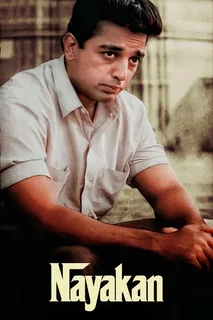
Nayakan 1987

Protection, loyalty and violence grow into the same inheritance.

Crime, Drama · 156 min

B 78

Velu's authority grows through protection. People need someone who will answer a threat, resolve a grievance and act where official institutions have failed them. Mani Ratnam understands why that arrangement can inspire loyalty. He also gives it time to become a claim that the protector is entitled to decide for everyone.

Kamal Haasan's performance makes tenderness and violence parts of the same man's habits. Domestic affection does not erase the coercion through which his position is sustained. As the years accumulate, the gangster story becomes a family story about what children inherit from a father's public reputation.

The daughter's resistance is a necessary counterweight to the public petitions. The people seeking Velu's protection can make his authority appear indispensable; a child who has lived inside its consequences can ask why that necessity should determine her account too. Haasan's age and tenderness do not settle the disagreement. The film gains depth when the father cannot turn a private objection into another grievance his public position gives him the means to resolve.

The film's emotional force can pull you toward admiration faster than its moral questions can catch up. That tension is worth keeping alive. Being necessary to some people does not make every exercise of power necessary, and a failure of public institutions does not grant permanent innocence to the man who replaces them.

Choose it if you want an expansive crime drama with the weight of time behind it. Watch the reactions of people who cannot address Velu as an equal. They reveal costs that a story centred on his charisma might otherwise let pass.

Tamil

Score here computed
79/100

From 5 ratings.

8

PK 2014

An outsider asks who benefits when belief becomes a transaction.

Comedy, Drama, Sci-Fi · 153 min

B 78

An outsider takes familiar religious transactions literally and discovers how often an authoritative answer depends on nobody asking the obvious follow-up question. The device is comic, but it works best when a transaction has a visible human cost: money, fear, shame or a promise made to somebody who is desperate.

Aamir Khan's physical awkwardness keeps PK's misunderstandings active rather than merely verbal. The film repeatedly asks who benefits from controlling the terms of a person's contact with the divine. Its target is especially sharp where institutional confidence substitutes for evidence or care.

The search for a god who will respond begins with a practical need and produces incompatible instructions. Khan makes the bodily work comic: PK copies a gesture, tries an offering and waits for the promised result. The repetitions matter because the institutions can disagree while each speaks with confidence. The strongest satire concerns the person trying to follow them all. It is less persuasive when exposing one fraudulent claim seems to settle the larger argument more easily than the film's own accumulation of different practices has warranted.

The satire can become broad, and the outsider's innocence sometimes makes difficult arguments look easier than they are. A fraud exposed in a story does not settle every question about faith. The film is more interesting when it distinguishes an individual's devotion from the people who claim exclusive authority over it.

Choose it for accessible, often affectionate provocation. The romance and songs make it a mainstream entertainment, while the central comic habit is worth carrying away: ask what a claim requires you to surrender, and whether the person making it is willing to be questioned.

Hindi

Score here computed
79/100

From 11 ratings.

7

Drishyam 2013

A family thriller built from the difference between a story and proof.

Crime, Drama, Thriller · 164 min

A 82

Georgekutty's knowledge of films has taught him to think in sequences: what people expect to see next, how an ordinary detail can acquire significance, and how a story becomes credible through repetition. Jeethu Joseph turns that habit into the engine of a family thriller.

The first stretch spends time on domestic routines that may seem dispensable if you are waiting for the crime. They are essential. An extraordinary plan becomes believable because it is built from the habits of recognisable people. Mohanlal's restraint lets calculation coexist with the effort to appear unremarkable.

The rehearsed family outing makes the central idea practical without needing elaborate technology. A visit, a meal and the accounts of people encountered along the way can be made to support a shared sequence of events. Mohanlal has to make the effort of preparation look like the very ordinariness the plan depends on. The family members face a different task: remembering the account while living with fear. The suspense works because a story that sounds coherent at home must survive being demanded by someone with power over the people telling it.

The premise places women and a girl in danger, and that danger should not become mere justification for celebrating a clever male protector. Watch how fear and responsibility are distributed within the family. Also notice how the police inquiry changes when institutional power has a private interest in the answer.

This is the Malayalam original from 2013. Go in with as little plot information as possible. The pleasure is following how evidence, memory and authority compete, then asking whether your admiration for ingenuity has outrun your consideration of what the ingenuity is protecting.

Malayalam

Score here computed
82/100

From 5 ratings.

6

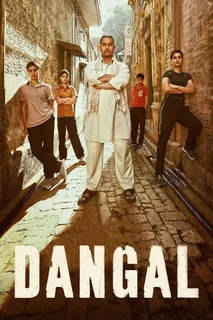
Dangal 2016

The daughters' achievement raises questions about the father's authority.

Comedy, Drama, Family · 161 min

A 83

Wrestling gives the film something concrete that a motivational slogan cannot provide. A body has to learn balance, leverage, endurance and the ability to respond to another body. Training changes how Geeta and Babita move through the world, including a world that has already decided what daughters should do.

Aamir Khan's father figure supplies the plan and much of the authority. That is also the film's central tension. His resistance to a gendered limit opens possibilities for his daughters, but his own frustrated ambition determines their lives before they can meaningfully consent. The haircut, discipline and family conflict deserve attention alongside the victories.

The contrast between Geeta's training at home and at the academy makes the authority question difficult. A different coach offers another account of how she should wrestle, and disagreement with her father is not automatically a rejection of the sport he helped make available. The film tends to settle the dispute in favour of his methods. The performances are more interesting if we still notice what the conflict costs her: acquiring skill has not yet secured the right to decide which knowledge she can use.

The film often invites you to accept his severity because the results are spectacular. You can admire the wrestlers while questioning that justification. The scenes in which Geeta has to act for herself are especially important: her agency cannot remain only a father's achievement.

Choose it for a forceful sports drama with clear physical stakes. The match sequences make progress readable even if you do not know wrestling. Its strongest emotional payoff comes when competence belongs to the person competing, rather than remaining evidence that the authority figure was right about everything.

Hindi

Score here computed
83/100

From 10 ratings.

5

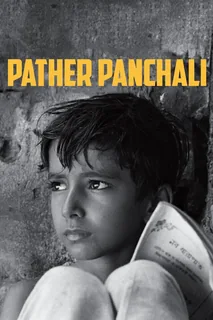
Pather Panchali 1955

A family's everyday needs become a whole world.

Drama, History · 125 min

A 85

Before this is a celebrated landmark, it is a film about a household with competing claims on a small amount of money, space and patience. Durga wants things she cannot have. Her mother must enforce limits she did not choose. An elderly relative's presence can be loving, burdensome and precarious within the same scene.

Satyajit Ray lets children discover a world that the adults are struggling to maintain. The sight and sound of a train offer a promise of elsewhere, but the domestic passages are just as important: looks, interruptions, stolen pleasures and irritations build an understanding of how these people live together. Curiosity and deprivation occupy the same landscape.

The sweet-seller sequence gives deprivation a lighter, more exact form than a speech could. The children can follow an attraction they cannot simply purchase, while the movement through the landscape becomes a pleasure in itself. Ray permits desire to remain lively and a little ridiculous. Sarbajaya's need to enforce the household's limits belongs to the same world, but the children do not have to experience those limits in the adult language of accounts and sacrifice. The film is rich because neither view cancels the other.

It would be easy to recommend the film as beautiful poverty. That misses the unequal pressures inside the family and the dignity of needs that remain inconvenient to others. Nor is its value dependent on solemnity. The children's mischief and the shifts in household mood make room for pleasure.

Choose it when you can settle into a rhythm less concerned with announcing the next plot point. A good restored edition helps you see the textures and expressions. Let the family become particular before asking what the film represents.

Bengali

Score here computed
86/100

From 7 ratings.

4

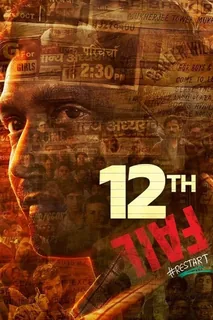
12th Fail 2023

Persistence has a cost in money, fatigue and dependence on others.

Drama · 147 min

A 87

Preparation for an examination can look inert on screen. 12th Fail gives it physical conditions: finding somewhere to sleep, earning money, travelling, studying when exhausted and deciding whether another attempt is possible. Ambition consumes time that a poor candidate cannot simply set aside.

Vikrant Massey's performance depends on small adjustments in confidence. Manoj does not move steadily from doubt to mastery. He learns how to occupy unfamiliar rooms, accept correction and live with the shame attached to needing help. The friends, teachers and partner around him matter because effort becomes sustainable through other people's support.

There is a real limitation in building an institutional story around the person who gets through. Success can make a punishing system appear fairer than it is, while equally deserving people remain outside the frame. The film is most persuasive when its attention to dependence complicates the individual triumph.

The flour-mill passages keep persistence from remaining an attractive word. Study has to fit around the noise, fatigue and need for wages that a conventional exam montage can cut away. Massey makes progress look intermittent: a little more confidence in one encounter does not remove the material conditions of the next day. That is why the help matters. The strongest version of this story is about effort made possible by other people, not an exceptional man proving that support was unnecessary.

Hindi

Score here computed
87/100

From 5 ratings.

3

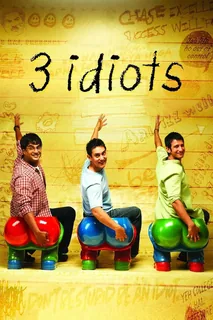
3 Idiots 2009

A college comedy about what achievement can do to curiosity.

Comedy, Drama · 170 min

A 82

The college comedy makes learning a social contest. Students must demonstrate intelligence in the form an institution recognises, parents invest their hopes in a profession, and friends absorb the embarrassment of admitting that their desires lie elsewhere.

Rancho's refusal to play along produces the jokes. The stronger scenes belong to the others who cannot afford to treat refusal so lightly. Farhan's conversation with his father gives the argument a human scale: a career choice is also a negotiation with someone whose sacrifices have made the choice possible. Raju's fear has similarly material foundations. Poverty is something the character carries into the classroom.

The definition-of-a-machine exchange captures the appeal and the weakness of Rancho's role. He supplies an answer meant to make the idea usable; the teacher asks for the form in which knowledge is expected to be returned. The joke exposes a difference between comprehension and recitation. It also makes the opposition unusually easy for Rancho to win. The more affecting scenes with Farhan and Raju let somebody need institutional approval even after the institution's absurdities have become obvious. Their fears keep the satire from being sufficient as a solution.

The film simplifies its opponents and sometimes lets extraordinary ingenuity solve difficulties that require institutional change. Its treatment of suicide also needs care; distress is substantial here despite the comic packaging. Rancho's confidence can become its own fantasy of the exceptional man who sees through everybody else.

Still, the friendships keep the educational argument from becoming a speech. Choose it for the combination of irreverence, affection and anxiety. Its most useful question is not whether examinations are bad. It is what happens to curiosity when every mistake threatens to become a verdict on an entire life.

Hindi

Score here computed
82/100

From 11 ratings.

2

777 Charlie 2022

Companionship becomes a daily responsibility, with grief close behind.

Adventure, Comedy, Drama · 164 min

A 85

A dog enters the ordered, joyless life of a man who has made solitude look like self-sufficiency. That is a familiar premise. The appeal of 777 Charlie lies in the patient conversion of routine: food, walks, irritation and practical care become things through which Dharma participates in another creature's day.

Rakshit Shetty lets the early abrasiveness matter. The dog does not simply reveal a charming man who was there all along; responsibility asks him to change his habits. The journey that follows gives the film room for comedy and broad emotional appeals, sometimes more room than the material needs.

The early quarrels over the dog's presence make the later care more persuasive. Dharma's routines are an arrangement for avoiding interruption, and Charlie keeps introducing needs that will not wait until he feels sociable. Shetty has to make irritation gradually change its object: the creature who disrupts the day becomes the creature whose day he is trying to protect. The film's strongest route to feeling is that transfer of attention. The more emphatic travel encounters sometimes repeat what those domestic adjustments have already made clear.

Be prepared for a story involving serious animal illness and the prospect of loss. That is central to the viewing experience, especially if you are choosing this for children or after losing a pet. It is no favour to a reader to advertise it solely as cheerful companionship.

The film can press hard for tears, and some encounters on the road are arranged to underline the lesson. Its better argument is practical: love becomes legible in what a person repeatedly does for someone who cannot repay them in the usual currencies. Choose it when that emotional directness is welcome.

Kannada

Score here computed
86/100

From 6 ratings.

1

Like Stars on Earth 2007

A child's apparent failure exposes the adults' failure to understand him.

Drama · 162 min

A 83

Ishaan's trouble is visible long before the adults find a useful name for it. Letters will not settle into meaning, instructions become traps, and a child who can notice extraordinary things is repeatedly told that he has failed to notice the obvious. The film gives his imaginative life colour and movement before showing the humiliation of having that life treated as a disciplinary problem.

Darsheel Safary makes Ishaan's withdrawal more painful than the confrontations. You can see a child learning that explaining himself will not help. When the sympathetic teacher arrives, the relief has a foundation: someone finally observes the same behaviour and asks a different question.

The teacher's prominence and the emphatic music can make the second half feel too neatly organised around rescue. Even so, the film's best insight survives that simplification. Kindness is inadequate if adults keep using the wrong explanation for a child's difficulty. Watch it for the attention paid to Ishaan before his talent can make him impressive to the school.

The boarding-school separation gives that difference a bodily cost. Ishaan loses not only familiar people but the small freedoms through which his drawing and looking had given him somewhere to go. The teacher's eventual attention matters because it begins before the art competition can turn him into an admired exception. The film is moving when recognition means changing the way a day is lived; it becomes more conventional when a public success has to certify that the recognition was deserved. Punishment and separation make this difficult viewing in places, despite the family-film setting.

Hindi · Taare Zameen Par

Score here computed
83/100

From 9 ratings.

Where this comes from: Criterion: Pather Panchali, credits, language and restored editions

Where to go after these ten

Follow the thing that interested you rather than trying to finish a national canon. Pather Panchali continues into Aparajito and The World of Apu. If Drishyam draws you in, look for more Malayalam thrillers and compare how they organise ordinary domestic space. If Nayakan stays with you, follow Mani Ratnam's work and its changing relationships between private desire and public power.

These ten leave out whole industries, regions, eras and kinds of filmmaking. That is a reason to keep looking. It would be a mistake to turn the success of this particular selection into a definition of what Indian cinema ought to be.

Check the year, original language and subtitles when choosing an edition. A remake can be interesting in its own right, but it is a different film. The first viewing deserves the version you actually meant to see.

← All lists