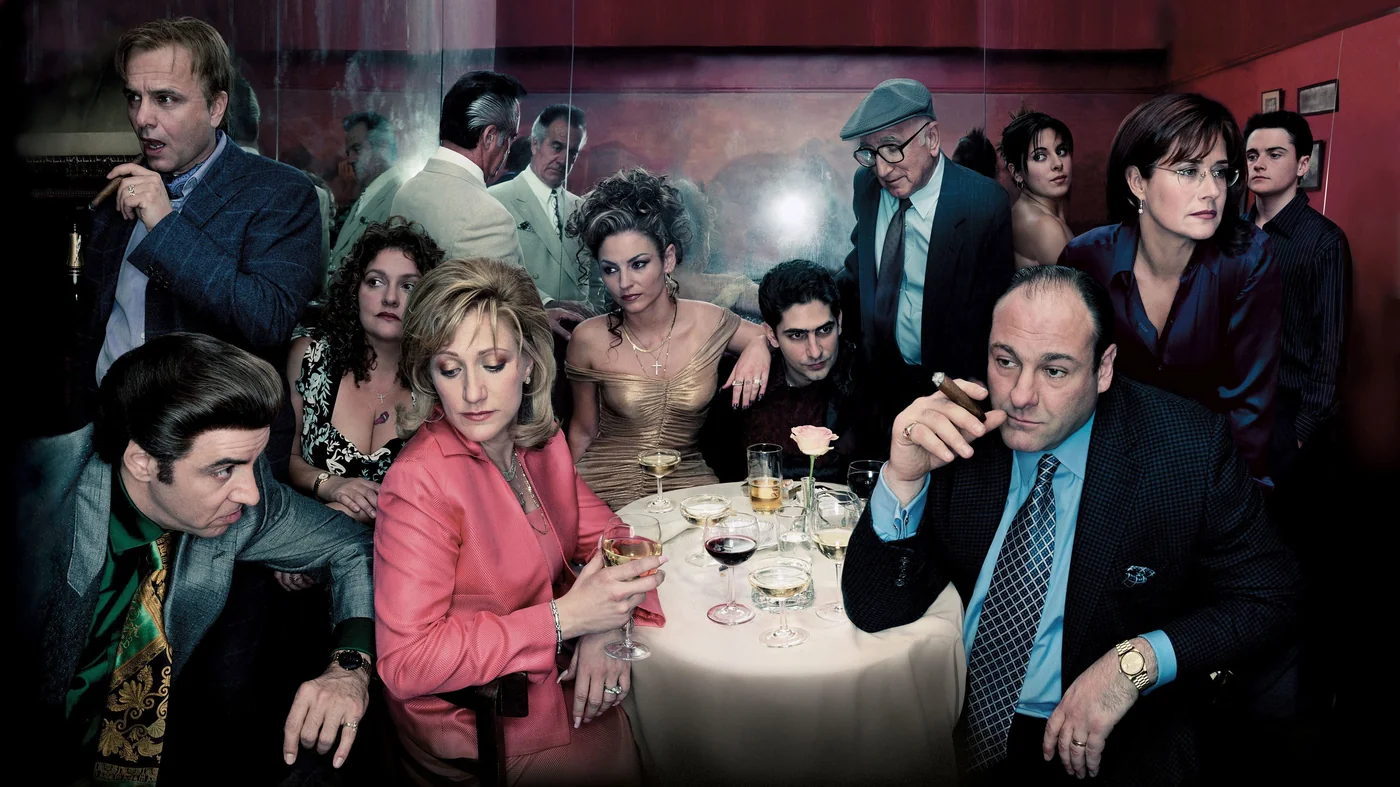
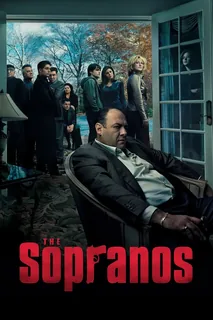
The Sopranos 1999–2007
The strongest use of songs to complicate a character's self-description rather than endorse it.
Crime, Drama · 55 min episodes
Nostalgia can be comforting and incriminating
The second season opens with Frank Sinatra's “It Was a Very Good Year” over a montage of the show's world. The recording lends age, memory and a sense of established ritual to lives that include violence, compromise and dissatisfaction.
The effect is richer than irony alone. These people genuinely live inside family memories and inherited cultural images. The song allows that attachment to feel warm while the images prevent warmth from becoming an acquittal. A criminal is still capable of nostalgia. Nostalgia does not make him harmless.
At the end of “Cold Cuts,” Tony keeps bringing up Janice's absent son until her effort at self-control breaks. He then walks away to the Kinks' “I'm Not Like Everybody Else.” Heard alone, the recording could promise an exhilarating refusal to conform. After that dinner, it accompanies a man who has made another person miserable to protect his own idea of how people are allowed to change. The swagger remains enjoyable, which is what makes the placement sting.
This is the show's great advantage. It lets us enjoy the force of a recording without assuming the person it accompanies deserves the feeling. Tony's confidence and our pleasure in the sequence become uncomfortable neighbours.
The final diner scene makes listening itself suspenseful. Journey's “Don't Stop Believin'” begins as Tony's jukebox choice, part of an ordinary meal. The editing turns arrivals, glances and the door into possible signals. A familiar song promises continuation; the abrupt cut refuses the release we expect.
I do not think the musical choice independently proves one definitive account of Tony's fate. Its stronger achievement is to make the expectation of another moment palpable and then remove it. The unfinished listening experience becomes part of the ending.
A criticism of the show's reputation for music is that discussion can gravitate towards decoding every selection as a secret message. Sometimes a track establishes a mood or belongs to a character's taste. That can be enough. The best choices support several relationships at once—between the scene and Tony, between Tony and his self-image, and between the audience and its appetite for more of him.