
30 October 2026
Why Meryl Streep is the greatest actress of all time
The case rests on comedy, emotional precision, versatility and sustained achievement, tested against the strongest rival claims.
Meryl Streep is the greatest actress of all time. The strongest case for her is also more demanding than the reputation that usually accompanies her name.
An accent can be learned. A famous person's manner can be imitated. A large speech can be delivered with enough force to make an audience recognise that an important performance is taking place. None of those things, by itself, settles the question.
Streep's distinction is the breadth of human behaviour she can make specific: a comic vanity, a pleasure that becomes embarrassing, a professional manner maintained under humiliation, a mother's need to remain the centre of her daughter's life. Across radically different kinds of film, she repeatedly finds how the person is trying to function in this immediate situation.
The claim has to survive comparison. Bette Davis can make a line expose an entire private war. Katharine Hepburn can turn physical and verbal assurance into a comic world. Isabelle Huppert can withhold the reassurance that a person's inner life has become available to us. Setsuko Hara can make a socially appropriate smile contain a feeling the scene cannot comfortably name.
There are performances by those women I would choose over particular Streep performances. Calling her the greatest does not require an inferior version of every rival. It requires a persuasive account of why her total achievement is the strongest: variety with depth, comedy with dramatic consequence, technical command with responsiveness, sustained across an unusually substantial body of work.
That is the argument here. Some discussion reveals situations and developments within the films, though the major final turns are kept to a minimum.
The award record explains the reputation, not the verdict
The awards make the claim familiar. The Academy's 2018 fact sheet identifies The Post as Streep's twenty-first nomination. The sequence reaches back to The Deer Hunter, with very different work recognised across the intervening decades.
That is evidence of sustained institutional attention. Twenty-one nominations are not twenty-one independent tests of who is the greatest. The Academy recognises performances within particular years and categories; it does not conduct a comparison of every actress's total achievement.
The institution has its own opportunities, languages, fashions and omissions. An actor cannot receive a nomination for a role an industry never financed or a performance the voters did not see. Awards are useful history; they are a poor substitute for looking.
Nor can a film's aggregate rating isolate an actor's contribution. An excellent performance can inhabit a thin film. A magnificent film can give its central actor less demanding material than a weaker work gives somebody else.
The case for Streep therefore has to leave the comfort of the record. It must explain what changes from one performance to another, what remains reliable and why that combination matters more than the visibility of preparation.
Versatility means changing the source of a person's behaviour
It is easy to mistake variation in costume and voice for range. The more consequential difference is what makes a character act.
Consider Madeline in Death Becomes Her beside Suzanne in Postcards from the Edge. Both live in relation to performance, appearance and other people's attention. Streep does not solve them with a single theatrical personality adjusted to a different level of distress.
Madeline treats another person's gaze as a resource she needs to control. A response is judged for what it does to her standing. The physical comedy can become extravagantly grotesque because the desire for an invulnerable appearance is already grotesque.
Suzanne's awareness is more divided. She can recognise the absurdity of an exchange and still be unable to stop participating in it. Wit can protect her briefly while also allowing the difficult question to remain unanswered. The person who notices the performance has not necessarily learned how to step outside it.
The contrast is more substantial than one woman being funny and another being sad. They organise attention differently. Madeline wants the world to confirm an image; Suzanne wants enough room to exist without every encounter turning into an evaluation she has already begun conducting herself.
A technically brilliant actor can demonstrate an interesting set of choices. Streep's better work makes the choices answer something in the room. That is why the transformations do not have to depend on disguise. An unchanged face can acquire a different set of expectations about what another person owes it.
Comedy is central to the claim
A case built only on tragic intensity would make Streep easier to challenge. Her comedy supplies a large part of the difference.
Death Becomes Her requires scale. A smaller, more discreet performance would not automatically be a finer one. The body, effects, delivery and timing have to belong to the same extravagant argument about beauty and power.
Streep understands the pleasure of a character who thinks she has finally solved the problem of being vulnerable. The certainty is funny before the physical consequences expose its absurdity. She is not standing above the material, quietly assuring the audience that she is too accomplished to take a genre comedy seriously.
That willingness matters. Prestige can become a protective manner. A celebrated actor may appear inside a broad film while still preserving the distance of someone visiting from a more important art. Streep's commitment lets the ridiculous behaviour occupy the scene fully.
Florence Foster Jenkins asks for a different calibration. The singing must fail audibly while the singer's belief in it retains a particular emotional reality. Streep cannot simply perform a bad song and wait for the audience to laugh. She has to perform a woman whose relation to the sound is different from ours.
The rehearsals with pianist Cosmé McMoon give the problem another person. Streep can pursue a phrase with undamaged conviction while Simon Helberg has to manage the response it produces. If she signalled that Florence secretly knew exactly how bad she sounded, the scene would become a shared joke at the character's expense. Her sincerity obliges the pianist, and us, to negotiate pleasure, embarrassment and kindness at once. The skill is in controlling failure without making failure the entire person.
Then there is the enjoyment of work in Julie & Julia. A comic voice could become an exhibit repeated until the running time is over. Instead, the pleasure changes as a task resists, becomes possible or exceeds an expectation. The impersonation has actions to perform.
These are distinct comic responsibilities. Streep can be physically excessive, painfully self-aware or openly delighted without treating one as the basic personality from which all other comedy is borrowed.
That makes the claim larger than her reputation for dramatic seriousness. The ability to make joy and foolishness particular is an artistic achievement equal to the ability to make grief convincing.
The most revealing work often concerns a person performing herself
In Postcards from the Edge, Suzanne has professional reasons to know how a scene is supposed to work. That knowledge does not make the rest of her life manageable.
Her relationship with her mother, played by Shirley MacLaine, gives attention a history. The women can hear a familiar implication before a sentence has finished. A remark that might seem mild to a stranger arrives carrying earlier competitions over care, credit and whose experience will organise the conversation.
The welcome-home party makes that history concrete. An occasion ostensibly about Suzanne becomes a stage on which her mother can display the very assurance the daughter finds difficult. Streep's reserve has to remain active while MacLaine takes up more of the room. Suzanne is managing gratitude, resentment and the knowledge that objecting may make her appear ungracious. A joke offers a moment's shelter without changing who controls the occasion.
That is a demanding form of acting because the audience must see two levels without being given a mechanical signal for each. Suzanne may be saying something she partly believes while also testing whether it will help her get through the exchange.
The pattern recurs across the career without becoming the same performance. Streep is especially interested in women who know that their appearance, competence or emotional manner has consequences. They are trying to be legible on terms they can survive.
This can also produce her weakness. A carefully chosen hesitation may explain too much. A gesture can seem to arrive with its interpretation already attached, leaving the viewer less freedom than the scene needs.
The answer is not to deny the technique. It is to ask whether the technique remains responsive. In the strongest work, the other actor can change what the gesture means. A person begins with an intention, receives a response and has to adjust. The behaviour remains alive because the scene has not been completely decided in advance.
Musical performance tests a different kind of exposure
Singing makes some of an actor's protective resources less available. Breath, duration and the commitment to a phrase are exposed. A small vocal hesitation has to coexist with the song's continuing structure.
In Mamma Mia!, Streep's Donna needs the broad, social energy of a musical and the particular pain of a private history. The performance of “The Winner Takes It All” is effective because the public form cannot entirely absorb the person trying to use it.
Donna sings to Sam, so the song has an addressee capable of altering what it costs to continue. Streep's emphases need to carry remembered intimacy and the wish not to surrender control of the encounter. The interest is not whether her voice defeats every professional singer. It is whether a familiar ABBA song can become something this woman needs to say to this man, with a response she cannot entirely govern.
Ricki and the Flash provides a less polished social world. Sony's account of the film identifies the live musical performances and the character's attempt to return to a family she has hurt. Onstage assurance and domestic failure belong to the same woman, but the assurance cannot simply solve the failure.
Streep gives Ricki a body accustomed to performing with musicians. Then the family scenes place that competence somewhere it does not guarantee recognition. The life she has chosen has costs other people are entitled to describe.
The film's reconciliation can feel too accommodating. The performance remains interesting where the character has no useful stage on which to make herself persuasive. A good song is a contribution; it is not an account paid in full.
The difference between the two musicals strengthens the range argument. One requires emotional exposure within a highly arranged romantic spectacle. The other puts a performer's habitual resources beside a family that has reasons not to be won over by them.
Ordinary physical credibility deserves attention too
The River Wild rarely appears at the centre of an argument about the greatest actress. It is useful precisely because it asks for a kind of work prestige discussions can neglect.
Gail has practical knowledge. The thriller needs an audience to believe that she can read a situation, recognise a danger and work through a task while other people have claims on her attention.
The finished physical performance belongs to a collaboration among the actor, stunt performers, camera and editing. Crediting Streep does not require assigning every movement to her personally. It requires noticing whether the character remains continuous across the construction.
She does. The competence is not only a line the screenplay gives her. It is an organising quality in how the person looks, anticipates and responds.
The film is not the peak of her dramatic material. It adds something to the overall case because it shows a serious actor meeting the needs of a genre without demanding that the genre turn into an awards showcase.
Comprehensive greatness includes doing the apparently smaller job well. An actor's range should be tested against comedy, music and physical narrative as well as against the grand speech.
Bette Davis and Katharine Hepburn are real rival claims
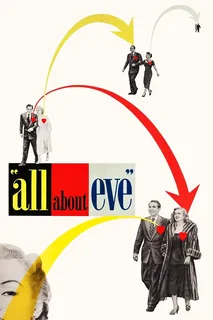
Bette Davis in All About Eve offers a severe test. Margo's intelligence does not protect her from the fear that she is becoming replaceable. A line can attack another person while revealing exactly where the speaker can be wounded.
Davis's recognisable force is not a limitation that needs to be excused. It is a dramatic instrument with extraordinary sensitivity. The persona can make a scene dangerous before the character has admitted what she wants.
Streep's Madeline in Death Becomes Her occupies a related anxiety through a different form. The comedy makes the defence spectacularly physical. Davis can make a sentence carry a comparable exposure with far less visible machinery.
If the test were command within a single line or the force of a sustained star personality, Davis could win. Streep's advantage is the breadth with which she can relocate that force: from grotesque display to uneasy self-monitoring to a quieter domestic adjustment, without requiring the same public identity to organise every role.
Katharine Hepburn makes another challenge. In Bringing Up Baby, authority is comic movement. A person who seems to know where everything should go keeps helping make the world less manageable. The timing is physical and social at once.
It would be a mistake to call Hepburn merely herself in order to give Streep the advantage. A distinctive screen personality can contain considerable variation.
I still choose Streep because her total work changes more of the underlying emotional grammar while retaining a similarly high capacity to make an encounter active. The claim is not that recognisability is inferior to transformation. It is that she combines transformation with more of the virtues usually claimed for the great recognisable personalities than the familiar argument allows.
Huppert and Hara challenge the standard itself
Isabelle Huppert makes the comparison harder because she can refuse the accessibility Streep often provides.
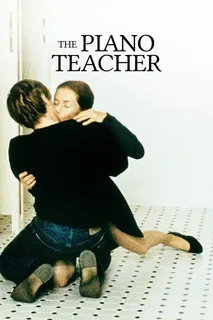
In The Piano Teacher, Erika's professional control and private needs do not become a transparent explanation of one another. Huppert can make an expression seem exact without making its meaning comfortably available. The withheld reassurance is part of the film's force.
A Streep defence should take that achievement seriously. Emotional legibility can become over-interpretation. An actor who seems to let us understand everything may be reducing the strangeness the person ought to retain.
My preference for Streep concerns how often she can be legible in one respect and unresolved in another. We can understand the immediate social task without exhausting the person performing it. Her weaker scenes sometimes close that gap too neatly; her stronger work keeps it productive.
Setsuko Hara offers a different challenge in Tokyo Story. Noriko's courtesy is emotionally substantial, not an empty surface awaiting a revelation. The smile can do the work of maintaining a relation while allowing the viewer to sense a pressure the situation does not permit her to express directly.
Criterion's film record identifies Hara within Ozu's ensemble. The importance of the collaboration is especially clear here: framing, duration and performance make the smallest adjustment matter.
No change of accent could automatically be a greater achievement than that smile. A criterion of range that only counts visible transformations would already have arranged the result unfairly.
A useful Streep comparison is Kay Graham's publication decision in The Post. The phone calls put legal risk, business judgment and editorial conviction into competing voices. Her position carries final authority, but the men advising her are more practised in occupying the discussion. Streep does not solve that imbalance by instantly acquiring an imposing voice. Graham has to stop waiting for someone else's assurance to remove the risk. The decision becomes audible through a manner formed by years of giving that assurance considerable weight.
Hara's courtesy and Streep's hesitancy are doing different jobs. Both make a socially learned manner visible without making the manner the whole person. One preserves a relationship while containing a private pressure; the other has to carry an action whose consequences the character will own. The adjustment matters because the immediate social form is so precise.
Streep's claim survives because the range is accompanied by comparable attention to the immediate relation. She does not reach that level in every film. Across the whole body of work, she reaches it under more kinds of pressure, in more kinds of performance, than the alternative cases I would finally choose.
Other readers may put a greater value on Huppert's opacity or Hara's concentration. That is a serious disagreement about acting, rather than an objection a Streep admirer should dismiss as resistance to a famous name.
The strongest objection is that you can sometimes see the work
The most persuasive case against Streep is not that she has been praised too often. Praise is an event in the world; it is not a quality inside the performance.
The objection is that precision can look like demonstration. A distinctive vocal placement, an accent or a carefully selected physical habit may advertise the character's construction more strongly than the immediate need.
August: Osage County is a useful place to test it. The dinner-table aggression gives Streep tremendous verbal material, and Violet's need to control can make the performance's force appropriate. There are also moments when the accumulation of emphasis leaves little room for the scene to discover another temperature.
A viewer can reasonably find that exhausting rather than revelatory.
The broad judgement should therefore include unevenness. She is not always discreet, and discretion would not always be the correct choice. The question is whether a performance has found the scale the particular film needs.
The award-winning roles are open to the same criticism. The Iron Lady can be admired as an elaborate construction while its political and dramatic framing remains insufficient. An Oscar does not make that objection unintelligent.
The defence is the rest of the evidence. Postcards from the Edge, Death Becomes Her, Florence Foster Jenkins, the musical work and the more restrained dramatic performances do not all display the same strengths or fail in the same way. The technique is capable of very different relations with a scene.
An occasional conspicuous choice is not enough to reduce an entire career to a performer showing us her research. The case has to account for the comic timing, the listening, the adaptation to another actor and the physical work as well.
Duration adds weight without making quantity the verdict
A long career can repeat its achievement. It can also keep submitting the familiar instrument to another kind of demand.
Streep's later work contains central women with desires and faults of their own, rather than only roles defined by what a younger protagonist needs from them. A rock musician returning to a family, a singer sustained by an impossible belief, a mother inside a musical world: these are different ways of continuing to organise a film around an older woman's experience.
That opportunity is collaborative. Writers, directors, producers, co-stars and the star's public standing all contribute to making the roles possible. A career is not a private achievement performed in an industrial vacuum.
Nor should an actress be penalised because her industry offered fewer roles, because fewer films survived, or because an international distribution system gave her work less visibility. Those limits matter to any claim about all-time greatness.
The response is to make the judgement about the work available, then remain willing to encounter more. Streep has an unusually broad body of evidence, and the evidence repeatedly shows the same high capacity under changed conditions.
The duration matters because the question keeps changing. A youthful transformation, a mature comic performance and an older woman's difficult attempt at repair ask for different kinds of understanding. She has continued to find them.
Why the final choice is Streep
The greatest actress should not have to be the single greatest at every component of acting. The title asks whose total achievement makes the most convincing claim.
For me, that is Streep. The technical reach is enormous, but the decisive quality is what she does with it: she makes different people want, protect, misunderstand and reveal themselves in ways particular to the scene.
Her comedy prevents seriousness from becoming the only respectable form of depth. Her musical work makes emotional intention survive an exposed performance. Her dramatic range can make authority and insecurity exchange places without turning a person into a diagram. The less celebrated genre work shows that the craft does not depend on being announced as an event.
Davis, Hepburn, Huppert and Hara make the decision more demanding and therefore more worthwhile. They show what a greatest-actress argument must be capable of recognising before it deserves to choose.
Streep remains my choice because the breadth and the precision keep meeting. The role changes, the form changes, the scale changes, and a particular person still has something urgent to do with the person in front of her.
For the work considered as a ranked selection, see fourteen of Streep's best performances. The argument for the greatest actress rests on the larger achievement: the repeated ability to make a new human presence out of a different set of demands.
The films in this piece









Where this comes from: The Academy: The Post as Streep's twenty-first nomination · Sony Pictures: Ricki and the Flash and its live musical performances · 20th Century Studios: All About Eve and its cast · Criterion Channel: The Piano Teacher · Criterion: Tokyo Story and Setsuko Hara · Sony Pictures Museum: Postcards from the Edge and its mother-daughter premise