
9 October 2026

The best British and Irish sitcoms: twenty-five shows, ranked

Village life, government offices, shared flats and ghosts: different kinds of comedy, with useful places to begin.

25 entries

Put Detectorists beside Bottom and a neat theory of British comedy begins to fail. Both concern two men with limited means and established habits. One gives a field enough time to become an object of affection; the other makes a shared room an arena for spectacular violence. The national label tells you much less than the form.

The twenty-five programmes here include English, Scottish, Welsh, Northern Irish and Irish settings and voices within a selection made for UK television. The Irish identity of Father Ted is part of what makes it particular, not something its Channel 4 commission erases. RTÉ's archive account identifies its Irish writers, fictional island setting and original broadcast.

The ranking follows saved MEANRANK scores from the rating sources held for each programme. The selection uses a minimum of 5,000 recorded ratings and reviews across those sources, not 5,000 unique viewers or a minimum on every platform. It is a catalogue selection, not a complete history of British or Irish television comedy. Coverage and the audiences choosing to rate differ. A missing classic has not been found artistically inferior, and a high average cannot make a smaller recorded sample equivalent to a larger one.

What the list can offer is a route through pleasures. Yes Minister makes an explanation into an instrument of control. Keeping Up Appearances makes hospitality a test of status. Ghosts turns a house's history into an argument over who gets to occupy the present. The notes explain how those premises work in scenes.

Begin with tone

For patience and affection, start with Detectorists. For fast ensemble energy, choose Derry Girls. For verbal bargaining, try Yes Minister. For abrasive embarrassment, I'm Alan Partridge or Peep Show is a more accurate invitation than a promise of cosy company.

Several entries use cruel, dated or discriminatory jokes. Others have warmth without being suitable for every age. The descriptions make those distinctions where they materially affect the recommendation, rather than assuming that a familiar title guarantees an undemanding watch.

Episode examples contain spoilers. The start years identify the versions discussed; later revivals and remakes do not automatically share the same strengths.

How this is judged

MEANRANK computed
Combined score from the rating sources held for this programme. The saved scores set the order; the notes explain the viewing choices.

Computed scores come straight from the ratings, so you can check them. Editorial ones are our opinion, and every one comes with the reason for it.

25

The IT Crowd 2006–2010

Useful knowledge struggles to secure recognised authority.

Comedy · 25 min episodes

A 82

A technical department becomes a small comedy of translation. Roy and Moss know things their colleagues require; Jen is responsible for presenting a competence she cannot always explain.

“The Work Outing” separates the three colleagues into incompatible attempts to survive the same evening. Jen wants a date; Roy and Moss have acquired situations they cannot gracefully explain. When the paths meet again, her reaction has to carry knowledge the audience has watched accumulate separately. The laugh depends on where each person is standing and how little of the others' route they can see.

The farce is often highly accomplished, but some episodes use discriminatory premises, including a transphobic storyline. That is part of the recommendation a new viewer deserves to hear.

Choose it for the studio ensemble and the escalation of practical misunderstandings. The strongest scenes do not require you to care about the current state of technology. They concern people trying to preserve authority in a room where another person may ask the one question they cannot answer.

MEANRANK computed
83/100

From 9 ratings.

24

Extras 2005–2006

The pursuit of recognition changes what a person will accept.

Comedy, Drama · 30 min episodes

A 83

Andy wants a speaking part because being present without being recognised has become intolerable. The celebrity encounters turn that desire into a test of what he is prepared to accept from someone who can open a door.

The new sitcom gives Andy something he thought he wanted: recognition. It also gives strangers a simplified version of him to request on demand. A catchphrase can make the performer visible while making other kinds of work harder to obtain. The change turns success into a more demanding problem than the early lack of access, especially when public opportunity competes with an existing friendship.

The show's handling of marginalised characters sometimes makes discomfort do more work than a fully considered joke. Its criticism of fame should therefore be examined alongside the choices through which the criticism is delivered.

Choose it for a performer trying to turn visibility into a life he can respect. Maggie's presence matters because the question is not only whether Andy can become known, but what the attempt makes him willing to neglect.

MEANRANK computed
83/100

From 8 ratings.

23

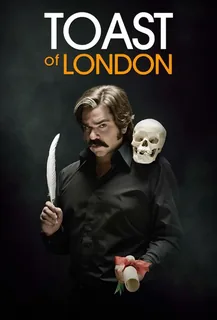
Toast of London 2012–2015

A magnificent voice cannot control the recording booth.

Comedy · 30 min episodes

A 83

The voice-over booth gives Toast a humiliating kind of work. His principal instrument is magnificent, yet the people directing him can repeatedly reduce it to another take of an apparently simple instruction.

The repeated direction from Clem Fandango makes a recording session into a contest over the smallest unit of recognition. Toast is being heard technically while feeling unheard professionally. Berry's grand instrument is forced through routine equipment and an instruction he finds beneath him. The disproportion is the joke: a magnificent voice can still be just another component someone else is paid to adjust.

The show is aggressively strange, so a viewer wanting a realistic backstage comedy may be frustrated. The names, performances and encounters belong to a world organised around disproportion.

Choose it for the conflict between theatrical self-belief and casual professional disregard. The recording sessions are more than detachable sketches: they make a man who wants to be heard submit to a system that can keep telling him he has not yet said the word correctly.

MEANRANK computed
84/100

From 3 ratings.

22

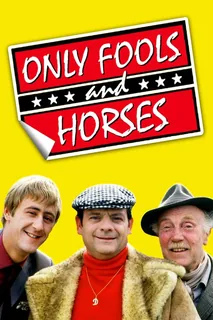
Only Fools and Horses 1981–1991

A shared dream has unequal practical costs.

Comedy · 95 min episodes

A 83

The Trotters' home gives commercial fantasy an emotional foundation. A scheme is supposed to improve a shared life, even when the brothers disagree about what improvement would mean.

Rodney's attempts to distinguish himself from Del are awkward because independence is expensive. A new opportunity may promise a different identity while the shared home and familiar business keep exerting claims. Lyndhurst can make a correction sound both justified and adolescent. The family history means that being right in the present does not automatically give him a clean route out.

The later family developments and specials alter the balance between farce and sentiment. There is no single short run that can stand in for the programme's entire history.

Choose it for a long relationship in which a public dream keeps meeting private obligation. The famous physical jokes are effective, but the enduring pressure is the gap between what one brother promises and what the other has learned to expect.

MEANRANK computed
84/100

From 6 ratings.

21

Absolutely Fabulous 1992–2012

A professional vocabulary dignifies an appetite.

Comedy · 45 min episodes

A 83

Edina and Patsy use the language of style to make appetite sound like professional necessity. Buying, consuming and being seen are organised into an account of remaining important.

A fashion emergency can let Edina treat consumption as work that other people must facilitate. Saffy's practical objection then sounds, within her mother's preferred vocabulary, like hostility to a creative vocation. Jennifer Saunders makes the self-description elastic enough to absorb almost any appetite. The comedy sharpens when Joanna Lumley's Patsy confirms it for reasons that are equally self-serving.

The comedy can reproduce some of the bodily humiliation it ostensibly exposes, which deserves judgement rather than automatic protection under the label of satire.

Choose it for expansive performances and a friendship that amplifies irresponsibility. The series is at its sharpest when the grand explanation briefly fails and a very ordinary fear becomes visible: age, exclusion or the possibility that nobody needs the image being so expensively maintained.

MEANRANK computed
84/100

From 6 ratings.

20

Gavin & Stacey 2007–2010

A family gathering contains several private stories.

Comedy, Drama, Romance · 29 min episodes

A 84

The romance brings two social worlds into contact, but the incidental conversations often carry the greatest pleasure. A remark at a table opens an unexplained history, or a host's routine reveals what a visitor is expected to understand without being told.

The disputed fishing trip gives the programme a small shared history it pointedly refuses to explain. People react to what they know, and visitors must navigate a significance they cannot obtain directly. The pleasure is similar to joining an established family conversation: the omission has a social shape. Explaining every detail would make the world less particular rather than more complete.

The programme can lean on catchphrases and a reassuring sense that established affection will absorb a difficulty. That is a limitation and part of its appeal.

Choose it for relationships that become legible through accumulated social detail. Smithy and Nessa have force, but the ensemble matters: a family gathering is a scene in which several people are privately attending to different stories.

MEANRANK computed
84/100

From 6 ratings.

19

Miranda 2009–2013

An audience shares the gap between intention and movement.

Comedy · 30 min episodes

A 84

The direct address makes the audience an accomplice in embarrassment. Miranda can explain what she wishes had happened while her body and the room supply a less manageable result.

The shop is a particularly useful stage because an adult proprietor is expected to possess an ordinary public manner. Miranda can privately describe a confident exchange and then find that the next customer, object or physical movement refuses the script. Addressing the viewer keeps that failure from being wholly isolating. She can share the joke without granting the room's definition of acceptable femininity final authority.

That manner will be too emphatic for some viewers. The romantic and maternal pressures can also make awkwardness feel like an identity the programme is reluctant to let change.

Choose it when you want broad physical play and an audience-facing performer. Its better moments make embarrassment shareable without requiring the woman experiencing it to become smaller in order to deserve affection.

MEANRANK computed
84/100

From 4 ratings.

18

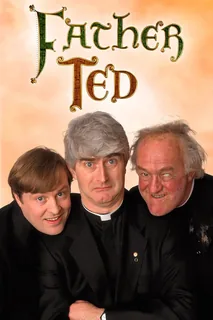
Father Ted 1995–1998

Institutional dignity meets an unmanageable household.

Comedy · 25 min episodes

A 84

Ted needs the appearance of professional authority without the household supplying conditions in which it can remain plausible. Dougal's questions, Jack's appetites and Mrs Doyle's insistence give him different kinds of resistance.

“Speed 3” borrows the mechanism of a thriller and attaches it to a milk float. The gap between the genre's urgency and the vehicle's ordinary work produces an immediate joke, but the household's different capacities keep supplying new ones. Ted needs a workable intervention; Dougal can make a literal instruction more dangerous. The parody stays legible because the relationships do not change to accommodate it.

Some jokes are broad or dated, and affection for the cast should not turn every premise into an untouchable classic. The surreal departures work because the household relationships remain so clearly differentiated.

Choose it for fast farce and an Irish comic world whose language matters. It is a comedy about people within a religious institution, not a complete account of faith or the lives of the people that institution serves.

MEANRANK computed
85/100

From 5 ratings.

17

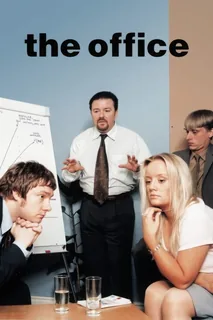
The Office 2001–2002

A manager can compel an audience without obtaining affection.

Comedy · 30 min episodes

A 85

The documentary promises Brent a platform and records the evidence against his understanding of it. He can call an exchange friendly while the face opposite him reveals the pressure of receiving it from a manager.

The redundancy threat changes what an ordinary day asks of the staff. Brent wants to present himself as the man protecting them, but he also wants whatever decision preserves his own importance. A reassuring statement can serve both ambitions until events force a choice. That is why the programme needs colleagues with plans beyond responding to their manager's performance.

The bleakness can be overstated: the series does have affection and a wish for lives to become less confined. Its force comes from the difficulty of making a move before circumstances make it for you.

Choose the 2001 version for a short, concentrated workplace story. The ordinary setting keeps an enormous need for recognition from becoming abstract. Brent wants an audience to validate him; the people providing it would often prefer to finish the day.

MEANRANK computed
85/100

From 8 ratings.

16

Mr. Bean 1990–1995

An obvious task becomes an intricate physical mistake.

Comedy, Family · 25 min episodes

A 85

Bean's attempts at secrecy give the audience a useful advantage. We can see the person or obstacle he has failed to notice while he invests enormous ingenuity in solving the wrong version of the problem.

The church sequence gives Bean a shared ritual whose timing he cannot simply replace with his own. Trying to stay awake, manage a sweet or join a hymn becomes a sequence of negotiations with the person beside him. Silence is a condition imposed by the room, so a tiny sound can acquire enormous consequence. The setting does part of the performance's work.

The lack of much dialogue helps an unfamiliar viewer follow the action, but social convention still gives the joke its meaning. The character is not always harmless; somebody else often pays for his clever solution.

Choose it for concentrated physical invention rather than an extended ensemble relationship. It demonstrates how much a sitcom can do with an object, a restricted space and a person who cannot accept the obvious course of action.

MEANRANK computed
86/100

From 7 ratings.

15

Ghosts 2019–2023

History is a houseful of people still demanding attention.

Comedy, Fantasy, Sci-Fi · 30 min episodes

A 85

The house contains people whose claims to authority were formed in incompatible periods. Death has ended some practical powers without ending the habits through which each person expects deference.

A household discussion has an unequal rule: the ghosts can all address Alison, while Mike cannot hear the demands she is answering. What looks like an interruption to her may look like an unexplained change of attention to him. The premise turns a supernatural gift into an allocation of work. Keeping the living relationship functional is part of dealing with the dead.

The fantasy is warm, but the warmth is most convincing when the ghosts can be selfish and attention remains a limited resource. A tragic backstory should deepen a character rather than permanently excuse the way he treats the present.

Choose the 2019 British series identified here if you want this particular ensemble; the American adaptation is a different programme. The best comedy comes from making history a set of people who still want a turn in the conversation.

MEANRANK computed
86/100

From 6 ratings.

14

Derry Girls 2018–2022

Ordinary desires retain their scale inside political danger.

Comedy, Drama · 30 min episodes

A 85

The group can turn an immediate desire into a plan before anybody has checked whether the plan is coherent. A crush, a trip or a public performance gives the ensemble different reasons to misread the same situation.

The cross-community residential trip gives the teenagers an official language of reconciliation and private motives that do not obediently follow it. A crush can matter more immediately than the adults' programme, while an apparently harmless distinction acquires sectarian significance. The episode avoids making political understanding a reward for being the most sensible child. The group remains eager, confused and interested in one another.

The Troubles remain consequential, but the series does not make every joke translate into a lesson about them. Its emotional strength comes from allowing ordinary desires to persist alongside danger.

Choose it for quick dialogue, conspicuous performances and a particular community with enough texture to survive explanation. New viewers may find subtitles useful for the pace and local vocabulary. The rhythm is part of the pleasure, not an obstacle to be corrected.

MEANRANK computed
86/100

From 6 ratings.

13

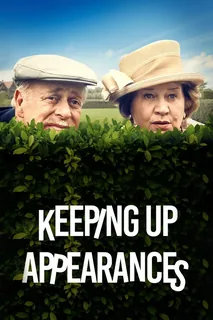
Keeping Up Appearances 1990–1995

Hospitality becomes an exhausting performance of rank.

Comedy · 60 min episodes

A 86

Hyacinth's hospitality is a system of classification. An invitation, a cup or the pronunciation of a name must establish the level at which she expects to be recognised.

Hyacinth's insistence on the socially elevated pronunciation of Bucket is a miniature version of the whole programme. Another person has to participate in sustaining the identity she announces. The ringing telephone is therefore dangerous: a caller can bring an association she cannot fully control into the domestic performance. Routledge makes correcting the record both an assertion and evidence of insecurity.

The repetition is deliberate and sometimes a limitation. The programme asks how many variations a single social ambition can sustain, with Richard and Elizabeth providing different kinds of exhausted accommodation.

Choose it for performance-driven farce about status. The joke is not that wanting respect is absurd. It is that Hyacinth keeps organising other people's lives around an appearance whose maintenance makes ordinary companionship almost impossible.

MEANRANK computed
86/100

From 3 ratings.

12

The Young Ones 1982–1984

The familiar room cannot restore a stable reality.

Comedy · 35 min episodes

A 86

The student house cannot contain a single stable reality. A quarrel can be interrupted by an object, a puppet, a band or a violent rupture in the scene's apparent rules.

The trip to University Challenge makes the students' self-images collide with another institution's public performance of merit. Their rival team turns privilege into grotesque display, while their own solidarity is hardly a model of enlightened cooperation. A conventional quiz becomes material the programme can physically disrupt. Satire is in the arrangement of bodies, status and broadcast ritual as well as the insults.

The satire and shocks are uneven, and some jokes reveal the period's prejudices rather than escaping them. It would be too simple to describe the show as the moment all earlier comedy was swept away.

Choose it for an aggressive experiment in what a sitcom can admit. The best moments turn a character's self-important position into a physical absurdity before he has time to complete the explanation. The form is as argumentative as the dialogue.

MEANRANK computed
86/100

From 3 ratings.

11

Spaced 1999–2001

Cinematic fantasy organises a precarious adult life.

Comedy · 25 min episodes

A 86

Tim and Daisy's film and television references are ways of experiencing daily life. A trip, argument or disappointment can briefly acquire the scale of a genre they know better than they understand their own circumstances.

The rave sequence lets a shared night briefly change the scale of Tim's and Daisy's lives. Music, cutting and repeated movement make an experience communal without requiring everyone to explain why it matters. The return to the flat gives that exhilaration a limit: temporary release has not completed the work of finding a job, making a relationship or deciding what to do next.

The household gives the style somewhere to return. Jessica Hynes and Simon Pegg make the initial practical deception develop into a more complicated need for company and stability.

Some references will be less immediate to a new audience, but the basic predicament travels: two people trying to make temporary arrangements feel like a plausible adult life. Choose it for affectionate restlessness and visual play, with a real shared space beneath the cinematic fantasy.

MEANRANK computed
87/100

From 7 ratings.

10

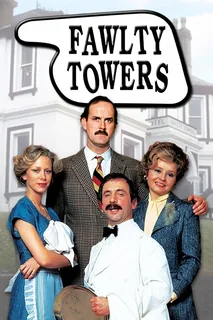
Fawlty Towers 1975–1979

A small institution must sustain an impossible self-image.

Comedy · 30 min episodes

A 86

Basil recognises rank before he recognises a need. The quality of service depends on whether a guest can confirm the image he wants the hotel to project.

In “The Hotel Inspectors,” Basil's idea that a guest may possess hidden institutional power changes every ordinary encounter. A request becomes a test, and an irritating customer becomes someone he must impress. The audience can watch attention being redistributed according to a suspicion. The uncertainty exposes a host who has never intended to give each guest the same service.

Some stereotypes are not rescued by the precision of the plotting. The programme deserves both admiration for its construction and criticism of particular targets.

Try a full episode rather than a compilation of eruptions. The pleasure lies in the accumulation of obligations that makes an eruption seem both absurd and mechanically prepared. Basil is most exposed when an ordinary service would solve the problem, but his pride requires a performance instead.

MEANRANK computed
87/100

From 5 ratings.

9

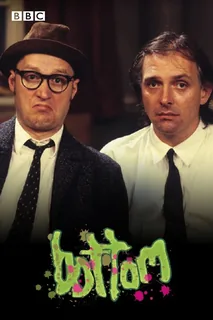
Bottom 1991–1995

Intimate knowledge produces spectacularly ungenerous clowning.

Comedy · 30 min episodes

A 86

Richie and Eddie are bound by need and mutual contempt. Neither has enough money, status or social ease to make the other's departure an uncomplicated liberation.

The attempted gas inspection makes the flat's dependence on an outside system impossible to ignore. Richie and Eddie want its benefits while evading the terms, so the arrival of somebody entitled to inspect the arrangement turns concealment into physical improvisation. The visitor's ordinary task supplies resistance to a private world whose rules otherwise allow almost any escalation.

The sexual desperation and disgust are deliberately unpleasant. This is a poor choice if “classic British comedy” means gentle nostalgia to you.

The more interesting idea beneath the noise is that knowing someone intimately does not necessarily produce generosity. The men know exactly where to hurt each other and still need the relationship to continue. The slapstick gives that contradiction an extravagant physical form.

MEANRANK computed
87/100

From 3 ratings.

8

Peep Show 2003–2015

A private excuse collides with its public consequence.

Comedy · 25 min episodes

A 86

A shared flat keeps two incompatible accounts of adulthood in contact. Mark wants the protection of being the reasonable man; Jeremy wants the freedom of being the person who refuses dull conventions. Each description conveniently excuses a different failure.

Mark's office gives him a place to call caution professionalism, then become personally wounded when that caution fails to secure affection or promotion. Jeremy can recognise the misery of the arrangement and still need its rent-paying stability. The shared flat keeps an employment decision from belonging only to the employee. Each man's theory of the other's failure has a practical interest attached.

The cruelty is part of the attraction and a possible reason to avoid it. Some scenes continue until embarrassment becomes almost physically oppressive.

Choose it for a comedy of self-explanation. The friendship is not a refuge from the characters' faults; it is one of the arrangements that lets them continue practising those faults while claiming somebody else has caused the difficulty.

MEANRANK computed
87/100

From 7 ratings.

7

Yes, Prime Minister 1986–1988

A higher title does not remove dependence.

Comedy, War · 30 min episodes

A 87

Promotion changes the scale without removing dependence. Hacker possesses the title that appears to settle authority, while Humphrey has means of controlling what reaches that authority and in what form.

“The Grand Design” lets Hacker discover that an apparently settled defence policy depends on assumptions he has not examined. The appeal of a grand alternative is then partly political: one rearrangement might answer several problems and make him the author of the answer. The scene gives questioning an orthodoxy real pleasure while leaving ambition inside the questioning.

The polished exchanges remain pleasurable, but their neatness can encourage too complete an account of institutions as a closed game among clever men. Enjoying the mechanism does not make it a sufficient political theory.

Watch Yes Minister first if you want the full development of the relationships. The comic continuity is that reaching the top has not removed the need to negotiate with people who can make a decision possible, difficult or apparently unnecessary.

MEANRANK computed
88/100

From 3 ratings.

6

I'm Alan Partridge 1997–2002

A lost position is continually presented as a temporary delay.

Comedy · 30 min episodes

A 88

Alan's hotel room is a temporary arrangement that has become an identity he cannot bear to acknowledge. He keeps presenting a return to prominence as imminent, so every conversation risks becoming a pitch.

Alan's lunch with a television executive turns an ordinary conversation into an increasingly desperate display of formats he could supposedly front. A rejection does not end the pitch because he cannot accept what accepting it would make him. Coogan gives the next idea the tiny confidence of a possible rescue. We watch a man continue spending dignity on an opportunity that has already closed.

The radio work matters because he has a real professional manner. This is not a man without ability; it is a man who believes a particular kind of attention remains his due.

Choose it if you can tolerate sustained embarrassment. The performance is most revealing when status anxiety changes how Alan treats someone who cannot advance his career. A joke directed downward can expose more than the grand failure he is trying to conceal.

MEANRANK computed
88/100

From 3 ratings.

5

The Thick of It 2005–2012

A crisis becomes a contest over who must describe it.

Comedy · 30 min episodes

A 88

A crisis begins as a problem and rapidly becomes a problem about how the problem will be described. The shifting account creates practical work: calls, briefings, corrections and the effort to identify who can safely be blamed.

The leadership manoeuvring in “Spinners and Losers” keeps changing the value of a phone call. Someone who sounded useful a moment ago may now be a liability, while a rumour can alter conduct before anybody knows whether it is true. The overnight setting makes exhaustion part of the process. These people are producing the conditions to which they then claim merely to be responding.

The handheld style makes uncertainty feel local and contagious. Someone enters a room with information that alters a decision already being defended elsewhere.

The density of political vocabulary and relentless abuse can be tiring. Its sharpest argument is that remaining in control of appearances can consume the capacity that might have been used to do something. Choose it for institutional panic rather than a reliable guide to the moral character of everyone who works in politics.

MEANRANK computed
88/100

From 5 ratings.

4

This Country 2017–2020

Restricted prospects give a local slight room to grow.

Comedy · 21 min episodes

A 89

The documentary frame promises significance to people whose options are restricted. Kerry and Kurtan respond by presenting their complaints, feuds and local distinctions as matters an outside audience urgently needs to understand.

The scarecrow festival gives Kurtan a stage on which success is measurable and recognition appears possible. Calling the contest minor does not explain its importance to someone who has few comparable occasions. His investment is disproportionate to an outsider's view of the prize and intelligible inside his world. The camera records both scales without having to award him a noble motive.

The programme can be abrasive, and affection does not prevent the cousins from being selfish or destructive. It is stronger because it refuses to convert limited prospects into automatic moral purity.

Choose it when you want a rural comedy that does not rely on picturesque reassurance. The surrounding countryside may be attractive, while the people living there still need work, privacy and a route into a future they can imagine.

MEANRANK computed
89/100

From 4 ratings.

3

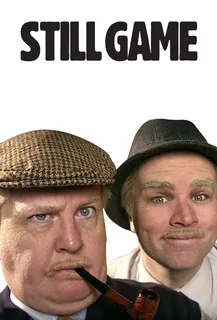
Still Game 2002–2019

Pride and the need for company remain active in old age.

Comedy · 29 min episodes

A 89

Jack and Victor's age does not free them from competition over money, pride, desire or the right to tell a story properly. The comedy allows the men to remain socially active people rather than treating old age as a single state of gentle wisdom.

“Cauld” makes warmth an immediate material question. A harsh winter is not picturesque atmosphere for men who must think about the cost of heating and their neighbours' vulnerability. Pride can make accepting help awkward, while a practical scheme can look more attractive than admitting need. The comedy permits resourcefulness and foolishness without pretending that shortage is merely a charming local trait.

The Glasgow speech is part of the timing, so subtitles can help an unfamiliar viewer without reducing the dialogue to information. Insults often carry a history of permitted intimacy, though that does not make every joke kind.

Choose it for a broad ensemble with an unsentimental affection for people trying to retain independence. The strongest moments let the need for company coexist with the wish not to admit how much company matters.

MEANRANK computed
89/100

From 3 ratings.

2

Yes Minister 1980–1982

An explanation changes the action that appears possible.

Comedy, War · 30 min episodes

A+ 90

Sir Humphrey's long sentences do something. They delay a decision, redefine a risk or make the minister's preferred action appear incompatible with a principle he has just claimed to support.

“The Economy Drive” brings Hacker's desire to cut waste into contact with the services that make his own office comfortable and efficient. A general principle becomes less attractive when he must personally inhabit its consequences. Humphrey does not need to disprove economy. He can arrange for the minister to discover the version of it he least wants to practise.

The satire is a model built for comedy, not a documentary proof of how every government decision occurs. Its elegance sometimes gives institutional obstruction an irresistible polish.

Begin with the original 1980 series. The pleasure is hearing an argument change its object while the speaker maintains the manner of someone merely explaining a difficulty. A refusal can arrive disguised as help.

MEANRANK computed
90/100

From 4 ratings.

1

Detectorists 2014–2017

The waiting already has value before a find arrives.

Comedy · 30 min episodes

A+ 91

Andy and Lance walk across fields expecting an important signal, and the programme lets the waiting have value. A conversation about little can carry a concealed disappointment, a piece of local knowledge or the pleasure of not needing to impress a friend.

The rival detectorists are funny because a small field of expertise can sustain a complete social hierarchy. Equipment, a suspected permission and the possibility of another pair finding something first all acquire importance. Andy and Lance's exchanges with them prevent the countryside from becoming a place beyond vanity. Friendship has value here without making the friends superior to ordinary competitiveness.

Toby Jones and Mackenzie Crook keep rivalry and vanity inside the tenderness. The men can misunderstand the people near them and mistake a hobby's knowledge for a wider competence.

Choose it for a measured rhythm in which a pause need not become embarrassment. Calling it a show where nothing happens misses the gradual work: people alter their account of what would count as a life going well.

MEANRANK computed
91/100

From 4 ratings.

Where this comes from: RTÉ Archives: Father Ted's writers, setting and first broadcast · ScreenUK: Detectorists · Apple TV: The Economy Drive episode premise · Apple TV: The Work Outing episode premise · Apple TV: Still Game and Cauld episode premise

Three useful comparisons

Compare Detectorists and This Country for two very different experiences of rural life. Compare Yes Minister and The Thick of It for persuasion, control and the changing pace of institutional panic. Put Fawlty Towers beside Keeping Up Appearances to see status anxiety expressed through paid service and private hospitality.

The point is not that every national tradition has a fixed temperament. Warmth, cruelty, verbal elegance and physical chaos coexist within this list, sometimes within one programme.

For the broader selection, continue with thirty great live-action sitcoms. For a different scoring lens that also admits animation, use the IMDb sitcom archive. Identify the start year where a remake or revival shares a title. A familiar name can refer to a different comic world.

← All lists