
9 October 2026

The greatest sitcoms, ranked: thirty shows worth understanding

What makes the comedy work, what may put you off, and how to choose a series beyond its score.

30 entries

The most promising sitcom premise is often a condition that cannot be easily escaped. You need the job. The family shares the house. The person who irritates you is also the person who makes an ordinary evening bearable. A good episode finds another way to make that arrangement unstable without making the people interchangeable.

These thirty live-action series offer different pleasures inside that repeating form. Peep Show lets private justifications contradict public behaviour. Frasier makes a polished explanation collapse under an ordinary appetite. The Golden Girls gives friendship enough duration to include irritation, dependence and competing desires.

The ranking follows saved MEANRANK scores, combining the rating sources held for each programme. This edition takes thirty titles from an eligible live-action field with at least 100,000 recorded ratings and reviews across the stored sources; the total is an activity count, not a count of unique viewers. It is not a poll of all television viewers, and an average cannot distinguish a perfectly constructed farce from a loose ensemble you enjoy spending time with. The notes make that distinction in words.

The selection is concentrated in English-language television and excludes animation, which has its own guide. It is a selection, not a claim that these countries or this format exhaust comedy. Borderline cases are unavoidable: The Good Place has a serial fantasy story, while Scrubs makes room for grief. They are included because recurring comic relationships do sustained work within the larger form.

Choose by the kind of company you want

For social embarrassment, try Peep Show or the British Office. For warmth that still allows people to be difficult, start with The Golden Girls, Parks and Recreation or Schitt's Creek. For intricately connected jokes, Seinfeld and Arrested Development reward close attention. For broad physical comedy, Mr. Bean and Malcolm in the Middle are stronger invitations than a generic promise of a “comfort watch”.

A whole-series rating also conceals changes. A programme may find its rhythm late, lose a performer or become more sentimental over time. The entry notes identify some of those conditions with episode examples and some story spoilers, while avoiding the major series endings. A rank is the beginning of a choice, not a promise that every episode will suit you.

How this is judged

MEANRANK computed
Combined score from the rating sources held for this programme. Source coverage varies; the order reflects saved scores.

Computed scores come straight from the ratings, so you can check them. Editorial ones are our opinion, and every one comes with the reason for it.

30

M*A*S*H 1972–1983

Competence saves lives without resolving the condition that harms them.

Comedy, Drama, War · 25 min episodes

A 80

The operating room requires competence whether or not the people working there can make an adequate emotional account of the day. Humour becomes a way to continue, but the series is strongest when continuing does not look like a complete recovery.

“Sometimes You Hear the Bullet” makes Hawkeye's professional skill inadequate to a personal wish. He cannot convert caring about someone into the power to save him. Alan Alda's change of register matters because we already know how this man uses a joke to move through the room. The comedy has established a resource whose limit the episode can then expose.

Across its changing cast and long run, the programme gives repetition another meaning: familiar work can save lives while the institution continues supplying more damaged bodies. A successful day does not resolve the condition that made the day necessary.

Choose it when you want comedy willing to let a consequence remain. Its influence is substantial, but the practical reason to watch is the conflict between the skill required to do the job and the emotional resources needed to keep returning to it.

MEANRANK computed
81/100

From 7 ratings.

29

30 Rock 2006–2013

Entertainment is continuous bargaining under a deadline.

Comedy · 22 min episodes

A 80

The joke often arrives through the speed of an institution explaining itself. Jack can convert an appetite into management language; Liz can turn an immediate compromise into evidence that she is the only person keeping anything workable.

“Rosemary's Baby” tests Liz's admiration for an earlier television rebel against the experience of actually working with her. A public example of independence becomes a colleague with disruptive demands. Liz must decide which compromises she regards as sensible and which she would condemn in someone else. The institution does not merely suppress a pure artist; it gives her attractive reasons to cooperate.

The satire has blind spots, including racial jokes whose targets and effects do not always align. Fast construction is not a defence against examining what a particular joke asks the audience to accept.

The strongest episodes let Liz's self-image encounter evidence she would rather assign to another person's incompetence. Choose it for a comedy that makes producing entertainment look like continuous bargaining among labour, ego, money and the need to have something ready on time.

MEANRANK computed
81/100

From 9 ratings.

28

Trailer Park Boys 2001–2018

A private logic gives foolish schemes emotional stakes.

Comedy, Crime · 30 min episodes

A 80

The camera gives a small scheme the dignity of an operation worth documenting. Ricky and Julian can explain a plan with complete assurance while the visible surroundings offer a less flattering account of its prospects.

Bubbles's work on shopping carts gives his position a practical basis. He is not simply the nice man brought in to soften the others. Repairs, cats and a fragile working routine supply things a scheme can disrupt. When he objects, the objection can concern a life the viewer has seen him maintain. Friendship asks more than being available for somebody else's latest operation.

The repetition of crime, collapse and return is part of the pleasure, but it can become a limitation over a long run. The humour is coarse, with frequent substance use and abuse.

Choose it for a social world whose private logic becomes increasingly legible. Its warmth is strongest where the programme permits a foolish person something specific to protect, rather than treating him as a joke that resets each week.

MEANRANK computed
81/100

From 4 ratings.

27

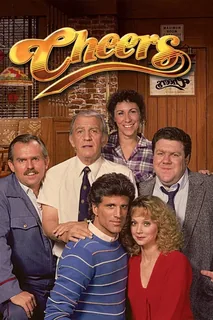
Cheers 1982–1993

A refuge can also preserve a habit.

Comedy, Drama · 22 min episodes

A 80

The bar provides recognition on arrival, which is a powerful promise. It also preserves habits people may be using to avoid a less manageable life outside it.

Diane's waitressing makes her preferred identity encounter an immediate practical task. Intellectual assurance does not carry a drink, recognise a regular's expectation or settle how Sam runs the room. Their attraction is interesting because the argument has work beneath it. Each can puncture the other's account of sophistication while needing something the other knows how to supply.

The changing ensemble gives the long run more than one rhythm. A familiar seat or greeting can support a new interaction because the audience already understands what the room usually supplies.

The sexual politics and some jokes have aged unevenly. The strongest scenes keep the refuge from becoming purely innocent. Belonging is pleasurable, but a place that reliably recognises you may also make it easier to remain the person you already know how to perform.

MEANRANK computed
81/100

From 8 ratings.

26

The Golden Girls 1985–1992

Affection gives irritation somewhere to go.

Comedy, Drama · 30 min episodes

A 81

The kitchen conversations work because the women want different things from the same moment. One needs reassurance, another has a story, and a third cannot resist correcting the way it is being told.

When Rose begins another St. Olaf story, the laugh can arrive in Dorothy's anticipation before the story has reached its destination. Bea Arthur lets the listener's patience become a visible quantity. The familiar routine remains alive because a response can be affectionate, exhausted or strategically interrupted, and Rose is not always as easy to dismiss as the room assumes.

Some social assumptions and topical jokes date the programme. Its more durable achievement is allowing older women desire, vanity, anger and comic authority without making every episode an argument for why they deserve those capacities.

Choose it for ensemble acting in which a held response can be as funny as a line. Friendship is not the absence of irritation. It is a continuing arrangement that gives irritation somewhere to go without requiring the relationship to end.

MEANRANK computed
81/100

From 7 ratings.

25

Scrubs 2001–2010

Imagination meets consequences that a joke cannot reset.

Comedy, Drama · 30 min episodes

A 81

J.D.'s fantasies can make an emotion visible before he has found a useful way to admit it. The abrupt switch from ordinary work to an imagined scene also lets the comedy expose the self-flattering version of a situation he would prefer.

“My Old Lady” puts the trainees' expectations beside patients who cannot all provide a reassuring professional milestone. J.D. wants medicine to confirm that he is becoming useful; a patient's own understanding of a life may resist the story he hopes to tell about saving it. The episode lets a joke and a disappointment belong to the same working day without making either cancel the other.

The shifts are sometimes overemphatic, especially when narration explains a lesson the performance has already supplied. The ensemble is strongest when people have incompatible ways of responding to a difficult task.

The original run changes substantially in its final season, and any later continuation should be judged separately. Start with the early Sacred Heart ensemble if you want that particular mixture of play, professional insecurity and grief. It is a comedy with serious material, not a promise of undemanding hospital comfort.

MEANRANK computed
81/100

From 9 ratings.

24

Arrested Development 2003–2019

Everything connects because nobody accepts responsibility.

Comedy · 22 min episodes

A 82

A joke can begin as a passing object and return several episodes later as evidence that the family has understood almost nothing. The density rewards attention, but the recurring blindness gives the construction a subject.

The frozen banana stand is both a family business and a repository of meanings the family does not communicate reliably. Advice can sound proverbial while referring to a fact somebody urgently needs to know. When the meaning changes, an earlier line becomes evidence of how confidently Michael acted on an incomplete account. A callback can therefore expose character rather than merely congratulate memory.

The early seasons are the strongest starting point. The later revival changes the organisation of the ensemble and has different strengths and weaknesses; a whole-series number cannot preserve that distinction.

The show can be too pleased with its own callbacks, and some jokes trade on dated stereotypes. At its best, the formal neatness makes the family's practical incoherence more visible. Everything connects because nobody will accept responsibility for the connection.

MEANRANK computed
82/100

From 9 ratings.

23

Schitt's Creek 2015–2020

Other people become particular as entitlement loosens.

Comedy · 22 min episodes

A 82

The Roses initially treat the town as an error that should be corrected by restoring their old lives. The comic change is gradual: other people acquire particularity, and the family's needs stop being the only meaningful account of the place.

David's work with Patrick gives the change a practical setting. A business cannot run solely on David's capacity to announce what offends his taste. Another person has useful knowledge, preferences and a claim on decisions. The emerging affection is tied to learning how to collaborate; accepting someone else requires more than discovering that they admire him.

The warmth is earned through repeated adjustments, though the later generosity can make some conflicts feel unusually accommodating. The programme is most persuasive when accepting care also requires a character to alter a habit, rather than merely receive approval.

Choose it when you want affection to develop from abrasive beginnings. The early entitlement is part of the route, not necessarily the tone in which the whole series will remain.

MEANRANK computed
83/100

From 9 ratings.

22

Brooklyn Nine-Nine 2013–2021

Competence and vanity have to share a workplace.

Comedy, Crime · 22 min episodes

A 82

Holt's composure gives Jake something to misread. A flat delivery can be a correction, a joke or a sign of an emotion the younger detective has not earned access to. Andre Braugher makes small changes unusually valuable.

“The Box” strips away much of the ensemble bustle and lets Jake and Holt work an interrogation together. Their methods and egos remain different, but each has to watch how the other reads the suspect. A change of tactic becomes a change in the relationship. The concentrated setting reveals how much the series can do with attention and timing before a running gag arrives.

The institutional frame is a real limitation. A warm account of individual officers can offer reassurance about policing that the series does not always interrogate adequately. Later efforts to address that tension do not make it disappear.

The comedy works best as a relationship between capable people whose vanity keeps interfering with teamwork. Choose it for performance and group rhythm, while judging the comforting image of the workplace separately.

MEANRANK computed
83/100

From 9 ratings.

21

The IT Crowd 2006–2010

Useful knowledge struggles to secure recognised authority.

Comedy · 25 min episodes

A 82

The basement creates a hierarchy in physical form. Roy and Moss possess knowledge the company needs, but the setting marks that knowledge as something management would prefer not to think about.

The box presented to Jen as “the Internet” makes authority visible in an object. Roy and Moss know the claim is absurd; Jen's managerial confidence and the audience at her presentation give it room to operate. The sequence becomes more than a joke about ignorance. The experts discover that a hierarchy can accept the appearance of knowledge so completely that correcting it becomes difficult.

The studio farces can be wonderfully exact, especially when a small lie has to survive a larger public occasion. Some jokes, including the treatment of a trans character, deserve direct criticism; laughter and brisk construction do not neutralise the premise of a joke.

Choose it for broad escalation and a sharply contrasted trio. The technology dates more readily than the comic situation: useful people are still required to translate their work into terms a hierarchy will recognise.

MEANRANK computed
83/100

From 9 ratings.

20

The Office 2005–2013

A workplace gradually becomes an extended social life.

Comedy · 22 min episodes

A 82

The American series gradually gives Michael's need for approval a larger social world. Steve Carell can make a demand excruciating while letting the viewer glimpse the fear underneath it, without making the demand harmless.

“Dinner Party” concentrates the method. Colleagues are trapped inside a manager's domestic performance, and each attempt to remain polite supplies another opportunity for the hosts to expose themselves.

Over a long run, the ensemble moves toward familiarity and affection. That growth produces real pleasures, but can also make a formerly sharp behaviour feel like an eccentricity everyone has agreed to forgive.

Start with the knowledge that the short first season is not the final form of the show. Choose it for a workplace that becomes an extended social life, while keeping room to question the moments in which being loved by the audience becomes a character's defence against consequences.

MEANRANK computed
83/100

From 9 ratings.

19

Modern Family 2009–2020

Good intentions receive an inconvenient practical test.

Comedy, Drama, Romance · 22 min episodes

A 82

The documentary interviews give each household a public account that the scene can immediately contradict. A parent explains a principle, then behaves according to an appetite or fear that the principle has conveniently left out.

Phil's attempt to deal with a broken stair is a useful running object joke. His wish to appear as the capable father and his tendency to defer an unwelcome task can coexist in the same confident manner. When another person encounters the stair, a private postponement becomes a family event. The house stores evidence against the account he gives of himself.

The repeated move toward reassurance can become predictable. The series often makes a joke out of an injury, then asks an affectionate conclusion to repair it before the episode ends.

The ensemble's timing is the strongest reason to watch. Ty Burrell's Phil makes enthusiasm both generous and embarrassing, while the other households give the same desire for recognition different social forms. Choose it for brisk family farce rather than an expectation that every conflict will remain unsettled.

MEANRANK computed
83/100

From 9 ratings.

18

Frasier 1993–2004

Elegant language cannot indefinitely conceal an ordinary appetite.

Comedy, Family · 22 min episodes

A 83

The brothers' taste is never only taste. An opera, a restaurant or a piece of furniture can become a way to secure status and avoid an admission about desire.

“The Matchmaker” gives Frasier and his guest incompatible understandings of an invitation. Their politeness allows each to treat the other's conduct as confirmation, while the audience can see the mistake gaining strength. The farce does not require stupid people. It requires people with enough desire and confidence to interpret uncertain evidence in their own favour.

Martin gives the household another account of what matters without being merely the uneducated man who corrects two pretentious sons. His needs and pride also complicate the arrangement.

The tone can become mannered, and the long romantic arcs have uneven stretches. Begin with the original 1993 series identified here. Its best episodes let verbal elegance make a lie larger until a simple fact becomes impossible to evade.

MEANRANK computed
83/100

From 5 ratings.

17

Friends 1994–2004

Available company becomes a durable comic arrangement.

Comedy, Romance · 22 min episodes

A 83

The apartments make availability visible. Somebody can walk into the room and find a listener, a meal or an argument already underway. That fantasy of proximity is a substantial part of the show's appeal.

When the group tries to move Ross's sofa up the stairs, a simple instruction becomes a struggle over who is entitled to direct the work. His insistence grows as the available space makes the plan less plausible. The actors do not need a new personality for the sequence: Ross's assurance, Rachel's involvement and Chandler's resistance become physical relations with a stubborn object.

The world is selective, and some jokes about sexuality, gender and bodies have aged badly. Familiarity can also make repeated romantic machinery feel easier than it is interesting.

Choose it for an expansive group whose routines become part of the pleasure. Its popularity is real, but the useful recommendation is specific: if the comfort of available company appeals to you, the scene construction gives that comfort a durable form.

MEANRANK computed
83/100

From 10 ratings.

16

Veep 2012–2019

Managing appearances consumes the capacity to govern.

Comedy, War · 30 min episodes

A 83

A public statement is rarely just a statement. It is also an attempt to survive a news cycle, avoid responsibility or improve a position within a room whose hierarchy may change by lunchtime.

An ordinary meet-and-greet can require Selina to appear fascinated by a person she is already trying to leave. Louis-Dreyfus makes the public smile coexist with attention directed toward the next useful encounter. When the mask breaks, the staff must translate a personal appetite into a defensible public account. Their skill is real; the use to which it is put is the satire.

The speed and cruelty are the appeal and the obstacle. People can feel interchangeable if the next humiliation matters more than a distinct need. The stronger passages give a minor verbal mistake an institutional consequence.

Choose it for satire in which fluent management of appearances is largely disconnected from any settled account of public good. The vulgarity is part of the method, rather than a small addition to an otherwise gentle workplace comedy.

MEANRANK computed
83/100

From 8 ratings.

15

Parks and Recreation 2009–2015

Optimism becomes credible through work.

Comedy · 22 min episodes

A 83

Leslie's enthusiasm is work. Meetings, preparation and personal attention give her ideals a practical form, which stops optimism from being only a reassuring tone.

The ice-rink campaign appearance tests optimism against an environment that will not cooperate. A plan intended to project competence becomes an awkward journey across a surface everyone should have accounted for. Leslie's colleagues have to continue helping while the spectacle of help becomes the embarrassment. Affection is credible because the others remain involved after confidence has stopped being persuasive.

The warmth has limits. Later successes can make the community feel unusually willing to reward the people the audience loves, smoothing conflicts that earlier episodes handled more awkwardly.

For a first viewing, give the series time to find its fuller rhythm after the short opening season. Choose it when you want competence and kindness to produce jokes without requiring everyone to stop being vain, territorial or ridiculous.

MEANRANK computed
83/100

From 9 ratings.

14

Malcolm in the Middle 2000–2006

Narrow household margins make a small mishap enormous.

Comedy, Family · 22 min episodes

A 83

Malcolm's intelligence gives him a language for complaining about the family. It does not make him an impartial observer of it. The direct address can recruit the audience into a grievance the next scene makes much harder to defend.

The opening scene in which Hal attempts a small household repair supplies a miniature statement of the form. One obstructing task reveals another, and the original errand disappears beneath work that now seems necessary. The escalation is physical, but its logic is domestic: there is no separate team arriving to repair the conditions of family life. Somebody already short of time has to start.

Jane Kaczmarek and Bryan Cranston supply different physical energies, neither reducible to a sensible adult managing foolish children. The adults have appetites and humiliations of their own.

The relentless escalation can be exhausting. At its best, the programme recognises how an apparently minor mishap becomes enormous when a household has little spare money, time or patience. The comedy is broad because the practical margins are narrow.

MEANRANK computed
83/100

From 8 ratings.

13

Community 2009–2015

A borrowed genre gives a familiar relationship new pressure.

Comedy · 22 min episodes

A 83

Greendale gives people a temporary identity that can become more important than the institution deserves. A study group starts as a practical arrangement, then becomes a place where each member negotiates the right to be taken seriously.

The paintball episodes work because a prize makes the group's existing hierarchy newly negotiable. Jeff's usual advantages in talk cannot settle every encounter; alliances need practical acts of trust. A familiar corridor becomes tactical space. Genre changes the conditions under which these people can pursue recognition, so the parody has a relationship to organise rather than merely a film to imitate.

The series is uneven across its changing cast and creative circumstances. Cleverness can also become self-protective, explaining an emotion through a joke about how television would handle it.

Start in order and allow the ensemble to become particular. The formal experiments matter more once a shift of genre changes what a person can say to somebody the viewer already knows.

MEANRANK computed
84/100

From 9 ratings.

12

Only Fools and Horses 1981–1991

A shared dream has unequal practical costs.

Comedy · 95 min episodes

A 83

Del's next deal offers more than money. It promises a change in how he and Rodney will be seen, which makes every grand presentation a small act of social self-invention.

The chandelier sequence is a perfect small model of their working life. A supposedly manageable job depends on everyone understanding which part of the arrangement the others are handling. Del's confidence supplies speed before it supplies verification. The object is funny because its position is clear to us and the family's coordination is not. You need the preparation, not just the famous impact.

The longer run and specials are a useful counterexample to the idea that British sitcoms are always tiny, perfectly contained objects. The series changes with age and family circumstance, sometimes leaning hard into sentiment.

Its strongest emotional work comes from the fact that the dream is shared unequally. One brother keeps announcing a route out; the other has to decide how often belief and loyalty require him to come along.

MEANRANK computed
84/100

From 6 ratings.

11

What We Do in the Shadows 2019–2024

Extraordinary power does not remove domestic dependence.

Comedy, Fantasy, Horror · 30 min episodes

A 84

Immortality has not made the housemates good at sharing a house. The comedy puts extravagant supernatural powers beside administration, chores, status anxiety and the need for another person to listen.

An energy vampire makes an office conversation literally draining, but Colin Robinson is funniest when the supernatural explanation changes very little about the behaviour. He monopolises attention through dullness and procedural insistence. The audience recognises the encounter before the fantasy names its mechanism. Beside the other vampires' theatrical grandeur, his petty form of power is an exact comic contrast.

The mockumentary form lets an ancient creature perform importance for an unimpressed camera. Matt Berry, Natasia Demetriou and Kayvan Novak make different kinds of vanity recognisable inside the fantastical setting.

The sex and violence are broad and frequent, and the repetition will not suit everyone. The premise is richer than a single joke because power does not remove dependence. It merely gives the characters more elaborate means of refusing to acknowledge it.

MEANRANK computed
84/100

From 8 ratings.

10

The Good Place 2016–2020

Changing conduct requires more than understanding the principle.

Comedy, Drama, Fantasy · 22 min episodes

A 84

Eleanor's attempt to pass as deserving makes ethics a practical problem before it becomes a subject of conversation. She needs to change how she acts while retaining the habits through which she has avoided other people's claims on her.

Chidi's lessons put Eleanor in an awkward double role: she needs an ethical vocabulary partly to conceal the reason she needs it. The temptation is to learn how a good person sounds. Kristen Bell makes the defensive joke arrive quickly enough that the viewer can see how it interrupts an obligation. The series improves when a principle changes what she owes a particular person, rather than merely giving her a better explanation.

Some passages explain an idea more explicitly than a comic scene needs. The series works best when a principle becomes difficult because a relationship gives it a cost. Ted Danson's apparent ease and Kristen Bell's defensive quickness make a useful contrast in how authority and self-interest can present themselves.

Choose it if you want a sustained story as well as recurring jokes. Improvement is not just an uplifting outcome; it is something people must keep practising together.

MEANRANK computed
84/100

From 9 ratings.

9

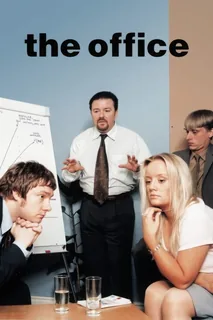
The Office 2001–2002

A manager can compel an audience without obtaining affection.

Comedy · 30 min episodes

A 85

David Brent's problem is that authority gives him an audience without guaranteeing its affection. He can require attendance at a training session, but he cannot make a joke become funny by keeping the room in place.

Brent's training-day performance is an excellent introduction. He has a room obliged to listen and material he would like to be received as proof of talent. Every pause gives colleagues another chance to withhold the response. The camera can then find Tim or Dawn doing the small work of surviving the occasion. Management has made compulsory attendance available to an amateur entertainer.

The embarrassment is concentrated, and the cruelty can make the early episodes difficult company. The quieter relationships give the form an emotional stake beyond exposing a bad manager.

Choose the 2001 British series when you want a short, tightly controlled study of performing for approval. It is distinct from the longer American version listed below, whose ensemble gradually develops a different kind of warmth.

MEANRANK computed
85/100

From 8 ratings.

8

It's Always Sunny in Philadelphia 2005

The group gives an excuse a continuing social life.

Comedy · 22 min episodes

A 85

The Gang begins with a grievance and develops an account in which satisfying it will somehow benefit everyone. Their schemes expose the distance between a public claim and the appetite underneath it.

In “The Gang Solves the Gas Crisis,” the group turns a plan to sell petrol into a fantasy of entrepreneurial importance. Each person needs a role in the operation, and a bad role can matter more than whether the operation makes sense. Their borrowed business logic gives selfishness the sound of initiative. The eventual disorder has been prepared through the way they distribute authority.

The material is deliberately abrasive, with slurs, sexual humiliation and other forms of cruelty used within the satire. Recognising a satirical target does not mean every joke lands responsibly. Nor does a refusal to make the characters nicer guarantee that the formula cannot become repetitive.

Start here if you want a comedy about people making one another less accountable. The strongest episodes give their rationalisations a precise practical consequence, rather than relying only on escalating offensiveness.

MEANRANK computed
85/100

From 9 ratings.

7

Mr. Bean 1990–1995

An obvious task becomes an intricate physical mistake.

Comedy, Family · 25 min episodes

A 85

Bean approaches an ordinary task as though the shared rules were merely suggestions. A sandwich, an examination or a trip to a swimming pool becomes a practical puzzle whose solution creates a new problem for someone nearby.

The examination sequence makes this especially clear. Bean's preparation is directed toward supplies, advantage and the person beside him, while the paper itself resists the account he has made of the task. A glance becomes an attempted theft of knowledge; the movement needed to conceal it creates another risk. Atkinson lets us follow calculation without giving the character a speech to defend it.

The sparse dialogue helps the comedy travel, but context is never entirely absent; manners and institutions are part of the joke. Bean can also be selfish and unpleasant rather than simply innocent.

Choose it for short, concentrated physical sequences. Its achievement is making a very small ambition occupy a whole scene through timing, concealment and the audience's growing knowledge of what the character has failed to notice.

MEANRANK computed
86/100

From 7 ratings.

6

Derry Girls 2018–2022

Ordinary desires retain their scale inside political danger.

Comedy, Drama · 30 min episodes

A 85

The teenagers' concerns are not made trivial by the political danger around them. A friendship dispute or an embarrassing public appearance is genuinely enormous at that age, even when adults are watching for threats the children cannot control.

The trip to see Take That lets teenage desire create its own emergency. Parents, travel and unreliable plans become obstacles to an event the friends regard as essential. Their certainty about the destination does not give them a coherent route. The episode can enjoy their foolishness without requiring a political crisis to certify that their lives deserve attention.

The affectionate energy should not be mistaken for a soft account of the Troubles. The series can change the meaning of a room through the adults' attention to news, without cancelling the young people's ordinary joy. It is strongest when both scales remain present. Lisa McGee gives a particular social world room to be funny on its own terms, rather than making every episode a history lesson.

MEANRANK computed
86/100

From 6 ratings.

5

Silicon Valley 2014–2019

A technical achievement attracts competing claims of ownership.

Comedy · 30 min episodes

A 85

Richard's technical competence does not make him competent at maintaining the organisation needed to use it. Investors, executives and colleagues can all translate the same product into an account that serves a different purpose.

The early struggle to name Pied Piper shows the problem at a small scale. Richard has built something whose value he can explain technically, yet securing a usable company identity requires negotiation with a person who has no obligation to share that excitement. The joke is sharper than a general dismissal of business jargon. Having the cleverest answer to one question does not let him choose which question the room will ask.

The plotting sometimes restores a crisis just as the previous one has been resolved, which can make progress feel artificially reversible. The ensemble gives that machinery more texture through pride, rivalry and dependence among people who still need one another's skills.

Choose it for institutional satire with actual tasks beneath the vocabulary. A technical breakthrough is not the end of the story; it is the thing that gives more people a reason to interfere.

MEANRANK computed
86/100

From 9 ratings.

4

Seinfeld 1989–1998

An inconvenience becomes an elaborate theory of entitlement.

Comedy · 22 min episodes

A 86

An inconvenience becomes a theory, then a theory becomes a reason to behave badly. George is especially good at making immediate appetite sound like a matter of principle.

“The Chinese Restaurant” and “The Parking Garage” show how little external event the writing needs. Waiting and searching acquire stakes through the group's different tolerances and assumptions. Elsewhere, separate stories meet through an object, phrase or misunderstanding whose earlier appearance seemed minor.

The emotional coolness is deliberate, but it will not be a pleasure for everyone. Some jokes and social assumptions have aged poorly. Its strongest achievement is structural: people who believe they are pursuing unrelated concerns keep revealing that their small decisions belong to the same social environment. The collisions feel both absurd and prepared.

MEANRANK computed
86/100

From 9 ratings.

3

Curb Your Enthusiasm 2000–2024

A narrow point of principle creates a much larger problem.

Comedy · 30 min episodes

A 86

Larry treats an unspoken convention as an argument waiting to be exposed. Sometimes he has identified a real absurdity. The comedy begins when being locally right becomes his justification for imposing a much larger inconvenience on everyone else.

The rival coffee shop gives a grievance a payroll, premises and customers. Larry can convert irritation into an enterprise because he has the money to make other people inhabit it. That enlarges the satire: a consumer's reasonable objection becomes a proprietor's power, with fresh opportunities to impose the very kinds of rules he dislikes receiving.

The confrontations can feel exhausting if you dislike watching a reasonable point become socially destructive. That is also the design. The loose conversational surface is supported by consequences that reconnect earlier incidents. Watch the difference between discovering an unfair rule and deciding that your discovery makes every subsequent action reasonable.

MEANRANK computed
86/100

From 9 ratings.

2

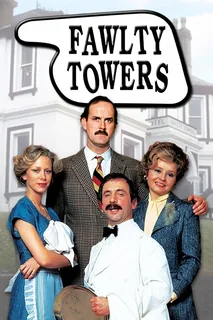
Fawlty Towers 1975–1979

A small institution must sustain an impossible self-image.

Comedy · 30 min episodes

A 86

Basil is trying to run a hotel and maintain a fantasy about the kind of person who ought to run it. A guest's perceived status determines the quality of attention he receives, which makes service an unstable form of self-display.

“Gourmet Night” is a useful example of the construction. A public occasion has been promised; practical failures accumulate behind it; each attempt to conceal the gap creates another task. Cleese's physical escalation works because the lie has a timetable.

The writing is extraordinarily economical, but some racial and national caricatures are part of the experience and deserve criticism. The farce remains strongest where the target is Basil's need to make a small institution certify his own importance. The pressure comes from work he regards as beneath the image he wants it to sustain.

MEANRANK computed
87/100

From 5 ratings.

1

Peep Show 2003–2015

A private excuse collides with its public consequence.

Comedy · 25 min episodes

A 86

The point-of-view camera gives a social encounter two incompatible accounts. Mark and Jeremy can be explaining themselves reasonably to the world while the voice-over reveals panic, vanity or a convenient excuse. The viewer is placed uncomfortably close to a defence being assembled.

Mark's wedding makes the device almost unbearable. A public occasion requires him to perform happiness while the private account keeps looking for an exit. Hiding does not stop the ceremony from belonging to him; it transfers the immediate work of maintaining appearances to someone else. The joke is not merely that he has an ugly thought. It is watching a thought become conduct that another person must endure.

It is a severe form of comedy. The embarrassment often continues beyond the moment at which another series would offer rescue, and some behaviour is vicious. Start here if you enjoy seeing a person's explanation fail under pressure. Avoid it when you want companionship that leaves everyone feeling better.

MEANRANK computed
87/100

From 7 ratings.

Use the list as a set of routes

Compare The Office in its British and American versions if you want to see how a similar workplace can support different degrees of embarrassment and affection. Pair Frasier with Fawlty Towers for farce built through status anxiety, or Scrubs with MASH* for the difficult coexistence of jokes and care.

For a different set of live-action choices, the British and Irish guide includes smaller-scale programmes outside this selection. The IMDb list uses one source's stored rating and includes animation. Its order answers a different question.

Availability changes by country and platform, so identify the title and start year before choosing a version. You do not need to complete a ranking to discover your own preference. A few well-chosen episodes can tell you whether a programme's recurring predicament is company you want to keep.

← All lists