16 September 2026

The best courtroom movies: sixteen films about judgement

The hearings, performances and private lives that make a legal decision more than a clever final speech.

16 entries

A courtroom gives a story an apparent advantage: somebody must decide. The difficulty is that a life rarely arrives in the room shaped like the account needed to decide it.

Anatomy of a Fall makes a marriage available to strangers through fragments they can interpret. My Cousin Vinny makes a confident account vulnerable to an overlooked practical detail. Paths of Glory shows the outward form of a hearing continuing after the meaningful possibility of defence has been restricted.

Those are different achievements. The best legal films do more than supply a stirring speech or a last-minute fact. They show who is permitted to speak, which account the room finds comfortable and what a formal conclusion will leave the people to live with.

This is an editorial order, with 12 Angry Men first for making the obligation to think inseparable from the pressure to finish. The supporting scores concern dramatic tension, the treatment of human stakes, and the film's handling of law and power. They do not certify procedural accuracy or stand in for a practising lawyer's judgement.

A deliberately unjust hearing can be an excellent portrayal of institutional force. A family case can have enormous stakes without deciding the future of a nation. The ratings of the films remain context and do not determine this order.

Spoilers are discussed. Several works dramatise historical events, sometimes substantially changing them. The particular film is the subject here; an effective scene is not proof that an event happened exactly as depicted.

How this is judged

Dramatic tension editorial
How the hearing, deliberation or legal encounter creates a changing dramatic situation. Out of 10.
Human stakes editorial
How specifically the consequences are made to matter. Intimate stakes are not automatically smaller. Out of 10.
Law and power editorial
How clearly the film examines the authority, limitations or uses of the legal process it depicts. This is not a procedural-accuracy grade. Out of 10.
Film rating: context computed
The recorded MEANRANK score. It does not decide this editorial order.

Computed scores come straight from the ratings, so you can check them. Editorial ones are our opinion, and every one comes with the reason for it.

16

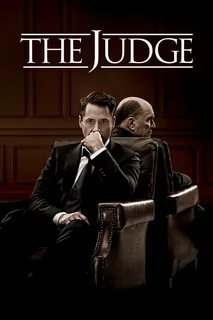
The Judge 2014

The advocate already knows too much about the client to listen easily.

Drama · 141 min

B 71

Hank's professional fluency is designed to make an encounter manageable. Returning home removes that advantage. The client is his father, and a question can carry an old injury before it performs any useful legal task.

Robert Downey Jr. can make control sound attractive, particularly when a quick response protects the character from admitting what the response has avoided. Robert Duvall supplies an authority that is no less defensive because it has been exercised in public for years.

The bodily-care scene is the film's strongest interruption. A man used to interpreting other people's conduct must accept an ordinary vulnerability he cannot settle by judging it. The son has practical work to do that cannot be completed through another polished account of their history.

Hank needs to reconstruct the night of the collision, but the father's gaps in memory do not arrive free of their history. To ask what happened is also to test whether the old judge can still give the decisive account. Duvall can make an admission of uncertainty feel like a threatened loss of office even away from the bench. Downey's quickness then has an edge: is he making room for a difficult answer, or filling the silence before it can unsettle him?

The film's limitation is accumulation. It keeps adding family explanations, reconciliations and opportunities for feeling until some of the most exact moments have too much surrounding instruction. The performances are often stronger than the film's wish to complete every emotional account.

It belongs at the edge of this selection for the useful central problem: knowing a person for years does not make listening easier when the task changes. The advocate has to distinguish the result he wants from the father he wants to have, and the client has to decide what his authority is worth when another person must help him remain in the world.

Dramatic tension editorial
8/10

The refusal to cooperate turns preparation into a conflict between two established identities.

Human stakes editorial
9/10

Care and dependence give the family history a present bodily consequence.

Law and power editorial
8/10

The film's best question concerns whether a defence is protecting a person or a preferred account of him.

Film rating: context computed
72/100

From 10 ratings.
15

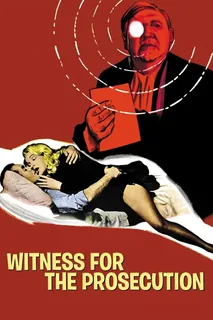
Witness for the Prosecution 1957

A convincing witness is also a person performing for a room.

Crime, Drama, Mystery · 116 min

A 87

Charles Laughton's Sir Wilfrid approaches the case with an appetite that his doctor and nurse would prefer to contain. The argument with care gives the legal appetite a comic bodily context before the central puzzle begins.

The courtroom pleasures depend on directing attention. A witness's manner, a letter and an account of a relationship can acquire authority because they fit a story the listener is already prepared to complete. The film makes receiving evidence a form of participation.

Marlene Dietrich's precision is crucial. Her delivery invites an interpretation that may be as consequential as the explicit information she gives. A room can think it is evaluating sincerity while responding to a performance whose effect has been carefully arranged.

The comedy about Sir Wilfrid's health supplies a smaller version of the same contest. His nurse reads his conduct as something to supervise; he treats her restrictions as obstacles to outwit. Laughton's pleasure in recovering control makes his later confidence in reading a witness more attractive and more dangerous. The film has taught us to enjoy a man getting his own way before asking how reliably that pleasure has equipped him to judge somebody else.

That mechanism is not automatically a lesser achievement than a film with a more explicit social thesis. A person's fate, a professional's confidence and an intimate relationship all depend on what the room has been induced to believe.

The strongest way to watch is to attend to how a judgement forms before the final explanation asks us to revise it. The twist is not the only pleasure. Laughton and Dietrich give the process of acquiring certainty enough character that another viewing still contains an encounter, even when the answer is no longer concealed.

Dramatic tension editorial
10/10

Delivery, timing and the changing meaning of a document make the puzzle a performed contest.

Human stakes editorial
8/10

The stakes remain personal without being reduced to a disposable trick.

Law and power editorial
9/10

The film makes the authority acquired by an apparently credible performance unusually visible.

Film rating: context computed
87/100

From 12 ratings.

14

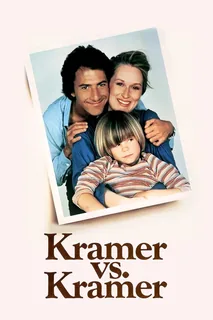
Kramer vs. Kramer 1979

The courtroom can make care speak the language of an attack.

Drama · 105 min

A 81

The first failed breakfast is a small disaster with a large implication. Ted's previous life depended on work he had not learned to notice. Being left with the child does not immediately make him good at caring; it makes the absence of those skills impossible to ignore.

The later routines matter because competence has been acquired in a relationship. Getting somewhere on time and making food are not simply signs that he has become a worthy protagonist. They are actions through which the child can experience a more dependable day.

Joanna's return refuses to leave that recovery as the only available account. Meryl Streep gives the wish to be heard a difficulty the adversarial setting cannot easily accommodate. A history of distress must be expressed before people looking for facts that can establish failure.

The lawyers' work turns ordinary vulnerability into material for a contest. An injury becomes an accusation about parenting. A period of unhappiness becomes a description of character that may outlive the situation it was meant to explain.

The cut Billy receives after falling from the climbing frame is an accident Ted has already had to meet as a frightened parent. In court it becomes an available account of his inadequacy. That change is the film's clearest criticism of the contest: an event with a child, a body and a rush to hospital is reorganised into a weapon against another adult. Ted's disbelief matters, but Joanna is also subjected to a version of the same process when her depression and departure are made to carry the whole meaning of her motherhood.

I would not assign a child's ordinary future a lower stakes score than a public constitutional question. The intimacy is the stakes. The strongest scenes show why a formally usable victory may fail to look like a good account of what everyone actually needs.

Dramatic tension editorial
9/10

Cross-examination makes familiar parental failures newly threatening.

Human stakes editorial
10/10

Daily care and a child's continuing attachments are treated as substantial rather than merely private.

Law and power editorial
9/10

The film shows what happens when a continuing relationship must be translated into competing claims.

Film rating: context computed
82/100

From 12 ratings.

13

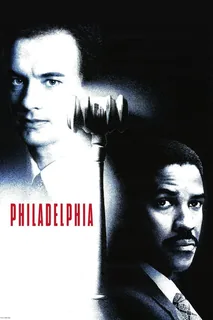
Philadelphia 1993

Representation begins before sympathy has become comfortable.

Drama · 125 min

B 79

Joe Miller's reluctance is essential. Denzel Washington does not begin as an advocate whose acceptance grants the audience a ready-made moral position. He must work with a man whose proximity exposes a prejudice he would prefer not to examine.

Tom Hanks's Beckett is more than the occasion for that education. His professional identity and the threatened body have to remain part of the same life. Being seen as ill should not make the work already done, the relationships maintained or the capacity to speak disappear.

The opera scene gives the relation a different rhythm from the legal preparation. Miller has to remain with another person's intense experience without converting it immediately into an argument he knows how to use. Attention becomes a task outside the courtroom.

The trial then makes the body's visibility double-edged. Showing an illness can answer a question about what others knew, while exposing the person to another room's inspection. The need to be believed carries a cost the evidence itself does not describe.

The film's mainstream caution is also a limit. Its intimacy is more readily available as a lesson in recognition than as a fully developed account of the couple's everyday life. That selectivity deserves to remain inside the praise.

Its place rests on the encounter between advocacy and an incomplete change of feeling. A lawyer can begin useful work before becoming the person the client might wish him to be. The film becomes strongest when that imperfection remains visible rather than being erased by the eventual public argument.

Dramatic tension editorial
8/10

The visibility of the body changes the emotional stakes of apparently factual testimony.

Human stakes editorial
10/10

Beckett's life is kept larger than the lesson Miller needs to learn.

Law and power editorial
9/10

The film connects the right to representation with a society's unequal distribution of recognition.

Film rating: context computed
79/100

From 12 ratings.

12

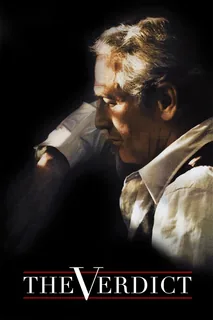
The Verdict 1982

An advocate's recovery is not automatically the client's interest.

Drama · 129 min

A 80

Paul Newman's Galvin has habits that allow the day to continue without requiring much faith in the work. He knows how to find another possible case and another drink. The tremor in the performance makes the eventual decision to contest the case more difficult than a familiar speech about believing again.

Turning down a settlement can appear heroic from inside an advocate's need for redemption. From the family's position, it also risks a result they might have accepted. The film is more interesting if we do not let Galvin's recovery silently acquire ownership of their future.

The opposing resources make the work unequal. Finding a witness or obtaining a usable account is not simply a contest between two clever people with identical means. The atmosphere of the institution itself can make one party's version appear more comfortable to receive.

The admitting nurse's copy of the altered record makes the gap cruelly exact. Her account gives Galvin something that appears to answer the film's central wrong, then the confrontation over the copy prevents that revelation becoming a simple release. Newman's listening has to take in the fact that obtaining a devastating account and securing its place in this contest are different achievements. The film makes the setback hurt through a particular document and witness, rather than through a general declaration that institutions are unfair.

The final address turns towards the people who must decide. Its restraint is valuable, though the film's emotional design can still encourage a wish that sincerity will complete what the legal contest has restricted.

The lasting question concerns who has been served by the struggle. A damaged man may recover a purpose through helping someone else. That does not release him from the obligation to keep that person's actual needs distinct from his own need to matter.

Dramatic tension editorial
9/10

Setbacks accumulate into a closing address whose restraint has a practical history.

Human stakes editorial
10/10

The client's uncertain future remains ethically distinct from the lawyer's recovery.

Law and power editorial
9/10

The film makes uneven resources and the limits of usable testimony part of the conflict.

Film rating: context computed
80/100

From 11 ratings.

11

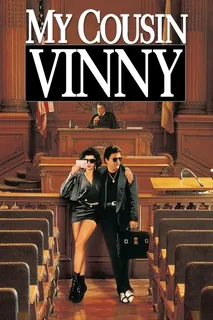
My Cousin Vinny 1992

The joke depends on looking more closely at the evidence.

Comedy, Drama · 120 min

B 77

Vinny's appearance encourages people to misclassify him. The useful development is not a revelation that manners and rules are worthless. He has to learn how to operate in the room while demonstrating that his practical attention can discover something the more confident account missed.

The grits question is the cleanest example. A witness has treated the time required to cook breakfast as a reliable measure of what he could have seen. Vinny asks him to account for the actual cooking, and the confident estimate starts to look less secure. Pesci does not have to turn the exchange into a grand declaration of reasonable doubt. The meal is funny because it is ordinary, and consequential because the witness has used that ordinary thing to support an extraordinary accusation.

Mona Lisa Vito's expertise completes that approach. Marisa Tomei makes knowledge decisive without requiring the character to abandon the manner in which others have underestimated her. The answer does not become correct because it sounds like the expected professional voice.

The American Bar Association uses the expert-qualification exchange as an example. That is a useful, attributable observation. It is much narrower than calling every detail of the film the most accurate procedure ever put on screen.

The relationship supplies more than a running argument between the technical successes. Vinny has to recognise that another person's competence is not an accessory he can use while treating her concern as an inconvenience.

Its comedy deserves the same weight as a solemn film's tension. Two young people's futures are not small stakes because the audience is permitted to laugh. The pleasure lies in a form of justice produced through attention, collaboration and the correction of a confident first impression.

Dramatic tension editorial
9/10

Each cross-examination turns a concrete overlooked detail into both a joke and a change in the case.

Human stakes editorial
9/10

The comedy never makes the defendants' possible loss trivial.

Law and power editorial
9/10

The film's interest in evidence and expertise is specific enough to invite named professional discussion.

Film rating: context computed
78/100

From 12 ratings.

10

A Few Good Men 1992

The witness is most dangerous when he believes his own authority.

Drama · 138 min

B 78

Kaffee's early competence is a way of avoiding the full cost of responsibility. He can negotiate a result without exposing his own judgement to a difficult public contest. Tom Cruise makes that agility attractive enough that the eventual demand to do more is a genuine change.

The case's pressure concerns a chain of obedience. The accused men can understand themselves as performing a duty while a superior understands himself as entitled to decide which duties are necessary. The problem cannot be solved merely by identifying who was physically present.

Jack Nicholson's Jessup is effective because the argument about protection is not an obvious disguise he privately despises. He believes authority over dangerous work gives him a claim on what other people may ask. His confidence makes the witness stand a place to reassert a hierarchy rather than simply answer questions.

The confession depends on Kaffee making Jessup feel diminished. He moves from asking for an account to suggesting that someone else may have been capable of making the important decision. Nicholson's response is not just a temper breaking loose; it is a superior reclaiming authorship of the order and the right to explain its necessity. The trap works because the man wants acknowledgement as much as secrecy. That is a strong dramatic construction, even where the confrontation's precision feels too fortunate.

The more interesting part comes after the immediate triumph. Being acquitted of one charge does not settle the characters' obligations to the person who needed protection from them. Following an order can become an account of what happened without becoming a sufficient moral defence of it.

The film's architecture is emphatic and its verbal pleasures can dominate. I still find the last distinction valuable: the courtroom win does not erase the need to decide what sort of responsibility the formal outcome has left behind.

Dramatic tension editorial
10/10

A carefully prepared encounter gives the climactic provocation more force than a quotation alone.

Human stakes editorial
9/10

The accused men's relation to their victim survives the immediate outcome.

Law and power editorial
9/10

The film makes authority's explanation of necessity available to challenge.

Film rating: context computed
79/100

From 12 ratings.

9

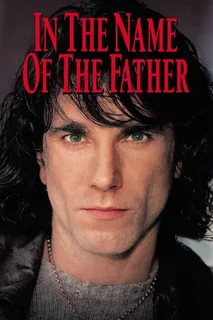
In the Name of the Father 1993

The cost of the case is measured in a relationship.

Drama · 133 min

A 85

Daniel Day-Lewis begins with a young man's ability to turn an encounter into a performance of himself. Gerry can be funny, defiant and infuriating. The film does not need him to be a model citizen in order to make what happens to him wrong.

The prison protest over burning paper makes the disagreement visible. Gerry treats the burning scraps as a way to answer power together; Giuseppe sees the danger in feeding another confrontation. Day-Lewis wants the gesture to matter now, while Postlethwaite's restraint carries the habits of a father accustomed to thinking past the immediate outburst. The film's invented shared confinement intensifies that difference. It is persuasive relationship drama without becoming evidence that the real men occupied a cell together.

Interrogation is central because the demanded account is not merely something the authorities hope to discover. The person is placed under conditions intended to make a particular account obtainable. The violence concerns control over the future record as well as the body in the room.

The film substantially reorganises history, including the father-and-son confinement and the dramatic shape of the final courtroom confrontation. Those choices intensify a relationship, but they should not be silently converted into historical evidence.

The climax is effective partly because it grants the release denied for so long. The risk is that a commanding final exposure makes the system appear easier to answer than the accumulated years suggest.

What keeps the film substantial is the life those years have consumed. A vindication can change the public description of a person without returning the time, the father or the possibility of an ordinary relationship before imprisonment gave every grievance another weight.

Dramatic tension editorial
8/10

Interrogation and the later hearing share the question of who controls the record.

Human stakes editorial
10/10

The family relationship gives lost time a cost that a final verdict cannot repay.

Law and power editorial
9/10

The film dramatises institutional pressure on an account while requiring care about its altered history.

Film rating: context computed
86/100

From 11 ratings.

8

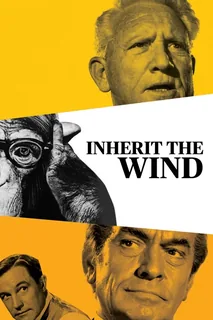
Inherit the Wind 1960

A contest over public certainty becomes a theatrical encounter.

Drama · 128 min

A 81

The two lawyers need more than a victory over a particular witness. Each is being watched by people who want a larger public account of what the encounter means. The courtroom has become a place where belonging and belief are performed before an audience.

The Bible questioning changes the use of Brady's public confidence. Drummond draws him from a position as the defender of an unquestionable text into the awkward work of explaining particular passages under pressure. March makes the danger emotional before the argument is complete: each concession risks becoming something his audience will hear as a failure of faith. Tracy can keep a conversational manner because he is not the man whose authority now depends on refusing the next difficulty.

The film becomes less persuasive when the surrounding town is flattened into a convenient atmosphere of hostility. A drama about the right to think can undermine its own curiosity if it makes one population too readily available as evidence of not thinking.

That matters especially for a viewer whose faith is more complicated than the most exposed character's rigidity. Taking religious belief seriously does not require accepting every claim made for it by a public advocate. Equally, criticising an advocate is not automatically a complete account of the people who share a tradition.

The work is a dramatised argument associated with the Scopes case, not a reliable substitute for its historical proceedings. The differences should not be hidden behind the claim that the central debate is all that matters.

I value the film for the encounter between the performers and remain less convinced by every part of the allegorical arrangement around them. Its best scenes make a confident man discover that defending an identity and answering a question may have become different tasks.

Dramatic tension editorial
9/10

The central examination gives argument a changing rhythm and a vulnerable participant.

Human stakes editorial
8/10

Public belief and the right to think carry personal as well as institutional consequences.

Law and power editorial
8/10

The film makes a trial's public performance visible, although its allegory simplifies some surrounding people.

Film rating: context computed
82/100

From 8 ratings.

7

Just Mercy 2019

Persistence has to become work before it can become inspiration.

Crime, Drama, History · 137 min

B 79

Michael B. Jordan's Stevenson has to do something a conventional courtroom hero often receives permission to skip: return. A persuasive explanation does not automatically cause an institution to admit that its previous action may have been wrong.

The film's value lies partly in the repeated encounters around the hearing. A family needs more than a visitor who can make the situation sound unjust. A prisoner needs information about what another setback permits him to hope. A lawyer must continue while recognising how little the client controls about the time being consumed.

Jamie Foxx makes McMillian's caution an earned response. Trust is not owed simply because the new advocate is sincere. Other confident people have already exercised authority over the shape his life can take.

The film's conventional structure can make its moral positions easier to anticipate than its strongest performances deserve. It sometimes supplies an emotional instruction where a more sustained encounter might have allowed the difficulty to emerge.

The execution sequence is nevertheless devastating because the film has made continued life an immediate bodily condition. A legal account can call the outcome a completed process while the people nearby experience what completion actually removes.

The Equal Justice Initiative's account of McMillian's case provides historical context beyond the dramatisation. The film should not substitute for that record. As cinema, its strongest claim is the patience with which advocacy becomes an obligation to remain present after the first apparently decisive argument has failed.

Dramatic tension editorial
8/10

Repeated setbacks give the eventual hearing a history rather than only a speech to deliver.

Human stakes editorial
10/10

The performances make waiting and uncertain trust consequential.

Law and power editorial
9/10

The institutional resistance is shown through continuing encounters rather than treated as one mistaken official.

Film rating: context computed
79/100

From 11 ratings.

6

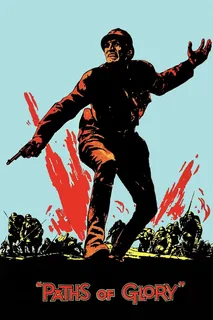
Paths of Glory 1957

A hearing can be a performance of authority instead of a search.

Drama, War · 88 min

A 87

The journey through the trenches and the movement through the commanders' rooms belong to different experiences of space. One is crowded by bodies that must endure orders. The other gives the people issuing them room to discuss consequences as a problem of reputation.

The failed attack does not merely create a military difficulty. It creates a need for an account that will preserve the authority of those who ordered it. The three selected men become available as the material from which that account can be made.

The court martial is frightening because the outward form continues to operate after the possibility of a meaningful defence has been restricted. Kirk Douglas's Dax can recognise the argument's injustice without possessing a speech powerful enough to change the arrangement.

The scale of the court-martial room makes the imbalance physical. Dax has space in which to move but little power to make a useful answer count. Douglas's anger is therefore not simply a prelude to a speech that will release the audience. Each attempt at defence encounters an arrangement built to keep the accusation usable. The formality is frightening because it can absorb an objection without having to alter its destination.

The men awaiting death are not transformed into an interchangeable symbol of innocence. Their fear and different efforts to meet the event keep the institutional decision attached to individual bodies.

The final gathering permits another form of attention through a song and the men's response to it. It does not repair the executions. Its value is that a shared human encounter remains possible inside the machinery that has made those men disposable. The film's anger is powerful because it has specified who pays for the preservation of a commander's dignity.

Dramatic tension editorial
9/10

The short, constrained hearing makes the absence of a genuine contest itself dramatic.

Human stakes editorial
10/10

The chosen men remain particular people rather than examples in an officer's moral education.

Law and power editorial
10/10

The film exposes how a procedural form can preserve a conclusion it is supposedly testing.

Film rating: context computed
88/100

From 12 ratings.

5

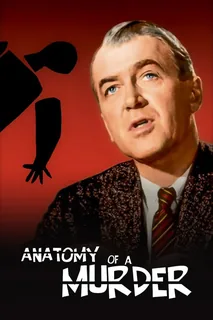
Anatomy of a Murder 1959

The making of a defence becomes the moral subject.

Crime, Drama, Mystery · 161 min

A 85

James Stewart's apparent informality is one of the film's useful traps. Paul Biegler can seem like a relaxed small-town figure while working very carefully on what the client should understand about the kind of story a court might accept.

The interest lies in the border between finding an account and helping produce it. A lawyer does not need to give a client an explicit instruction to lie for the encounter to raise questions about guidance, implication and tactical knowledge.

The courtroom scenes permit that uncertainty to remain active. A phrase can be useful because it has already been heard even if its formal place in the record is disputed. An apparently ordinary question can be directed at the audience receiving the witness as much as at the witness answering it.

The film also makes the treatment of the wife uncomfortable. Her conduct and presentation are repeatedly invited to carry an explanatory burden. That can reveal the room's assumptions without making the spectacle of inspecting her an innocent dramatic device.

Stewart makes tactical knowledge look sociable. Biegler can let a question seem almost leisurely, then use the answer to change what the room is prepared to imagine about the marriage. Ben Gazzara's Manion does not become fully knowable through those successes. That is the pleasure and the discomfort: the advocate can keep improving the account available to the court while the audience's confidence in the person behind it remains unsettled.

The ending leaves a properly awkward residue. Winning a case and knowing exactly whom one has served are not equivalent achievements. The film earns its title by taking the structure of a defence apart without promising that careful dissection will produce a morally clean object.

Dramatic tension editorial
9/10

The questions and rulings remain tactical encounters rather than breaks before a final speech.

Human stakes editorial
9/10

The client's account and the wife's treatment keep victory from becoming uncomplicated vindication.

Law and power editorial
10/10

The distinction between discovering, shaping and presenting a usable narrative is unusually sustained.

Film rating: context computed
85/100

From 11 ratings.

4

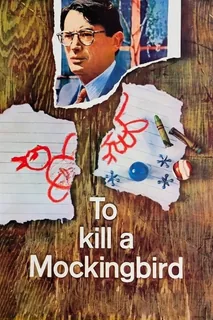
To Kill a Mockingbird 1962

The defence can expose the weakness of a case and still lose.

Drama · 129 min

A 84

Gregory Peck's calm is powerful because Atticus understands a standard that the room is not reliably prepared to apply. The cross-examination is not only an exhibition of intelligence. It makes the evidence's weakness visible inside a social order that has already assigned credibility by race.

The injured arm and the account of the assault give the courtroom something concrete to examine. Yet a clear inconsistency is not the same as an institution willing to let the inconsistency alter its conclusion. The film refuses the familiar promise that a sufficiently good speech must eventually make fairness prevail.

Scout's viewpoint gives the work tenderness and a limit. Atticus's conduct becomes part of a child's education, which makes his restraint legible. It also means the story grants a white family's moral development an emotional centrality that Tom Robinson's own experience cannot equal.

That is a substantial criticism, not an objection the failed verdict automatically defeats. A film can condemn a racist order while still organising its most sustained attention around the person best positioned to object to it safely.

The balcony makes the division visible even after the verdict. Atticus occupies the floor where the formal work has taken place; the Black spectators have watched from above, and Scout is asked to stand as he leaves. It is a moving recognition of his conduct. It also directs the scene's final attention towards the honour of the advocate, while Tom's future has just been taken from him. The admiration and the film's limit occur in the same image.

Its place reflects the force of that refusal and the perspective through which we are permitted to experience it. The film is most useful when the audience can admire Atticus without mistaking admiration for a complete account of the person whose life the court has decided.

Dramatic tension editorial
9/10

Concrete weaknesses in testimony acquire pressure because the room may refuse their consequence.

Human stakes editorial
10/10

The film keeps a man's vulnerability present even while its viewpoint favours the lawyer and his children.

Law and power editorial
9/10

The result exposes the distance between evidentiary persuasion and a prejudiced institution's decision.

Film rating: context computed
84/100

From 12 ratings.

3

Anatomy of a Fall 2023

A marriage is reorganised into accounts strangers can use.

Crime, Mystery, Thriller · 151 min

A 80

A recorded argument seems to offer unusually direct evidence. We can hear what people said instead of relying entirely on memory. The film then reveals the difficulty: an exchange has a life around it that the recording cannot fully contain.

Sandra Hüller's performance keeps the desire to explain distinct from the ability to be understood. A detail can be true and still fit badly into the story the room wants. Language is not a transparent container carrying a private experience to a neutral audience.

The child makes this problem painful rather than merely ingenious. He needs an account of his parents that permits a future, while the adults need information that may help decide a criminal case. Those needs can overlap without becoming identical.

The film's movement between the courtroom and the domestic past prevents either space from retaining complete authority. The argument we see is not simply the hidden key that settles every later interpretation. The people who once occupied it did not possess one uncontested meaning either.

The language shifts make that loss of control audible. Sandra is a German writer speaking in a French court, and English—the language she and Samuel used together—offers her another means of trying to be exact. None is a neutral route back into the marriage. Hüller can sound more fluent without becoming easier for the room to accept. The people judging an account still decide which signs of composure look like clarity and which look like calculation.

I place it high because the uncertainty keeps producing consequences for a relationship. The verdict may complete a public task; it cannot make the child return to a time before the task made the parents newly difficult to know.

Dramatic tension editorial
9/10

A recording and competing reconstructions make apparent access to the past more difficult to trust.

Human stakes editorial
10/10

The child's need for a viable account of his family remains distinct from the court's task.

Law and power editorial
9/10

The film makes the conversion of intimate conduct into usable evidence visible.

Film rating: context computed
81/100

From 12 ratings.

2

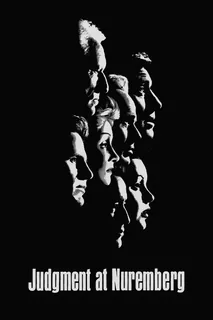
Judgment at Nuremberg 1961

The defence has force, which makes the judgement harder.

Drama, History · 179 min

A 83

The defendants have not simply committed violence outside a legal order. They have exercised professional authority inside one. The film asks whether an institution's permission can make the individual performing its work innocent of what the work did.

Maximilian Schell's defence is important because it is allowed more force than a convenient villain's speech. Compromise, obedience and the possibility that another person would have done worse are arguments the audience can recognise beyond this historical setting. The film has to answer them after letting us feel their usefulness.

Rudolph Petersen is asked to demonstrate abilities before the room as though the judgement once made about his intelligence could be tested without repeating its humiliation. Montgomery Clift's difficulty under questioning makes the orderly exchange unbearable. Irene Hoffmann faces another version of the problem when her relationship with a Jewish man is examined. The defence can press a witness skilfully while the audience sees that skill reproducing some of the pressures the trial is supposed to judge.

Spencer Tracy's listening provides a counterweight to the eloquence. The judge does not need the most brilliant line in every exchange. His obligation is to decide what the brilliance has and has not justified.

The film's length and speeches can become emphatic. Its dramatised trial is not a transcript or a complete historical account of the postwar proceedings. The force lies in the relation it constructs between personal conscience and professional participation.

Second place reflects how sustained that question remains. A judgement can name responsibility without offering the consoling claim that responsibility belongs only to unusually monstrous people. The respectable explanation for continuing to do one's job is part of the danger under examination.

Dramatic tension editorial
9/10

The defence's arguments remain persuasive enough that the verdict must do more than restate a premise.

Human stakes editorial
10/10

Witnesses make the damage of apparently professional conduct particular.

Law and power editorial
10/10

The central problem is the relation between institutional permission and individual responsibility.

Film rating: context computed
84/100

From 11 ratings.

1

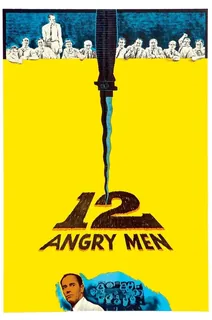
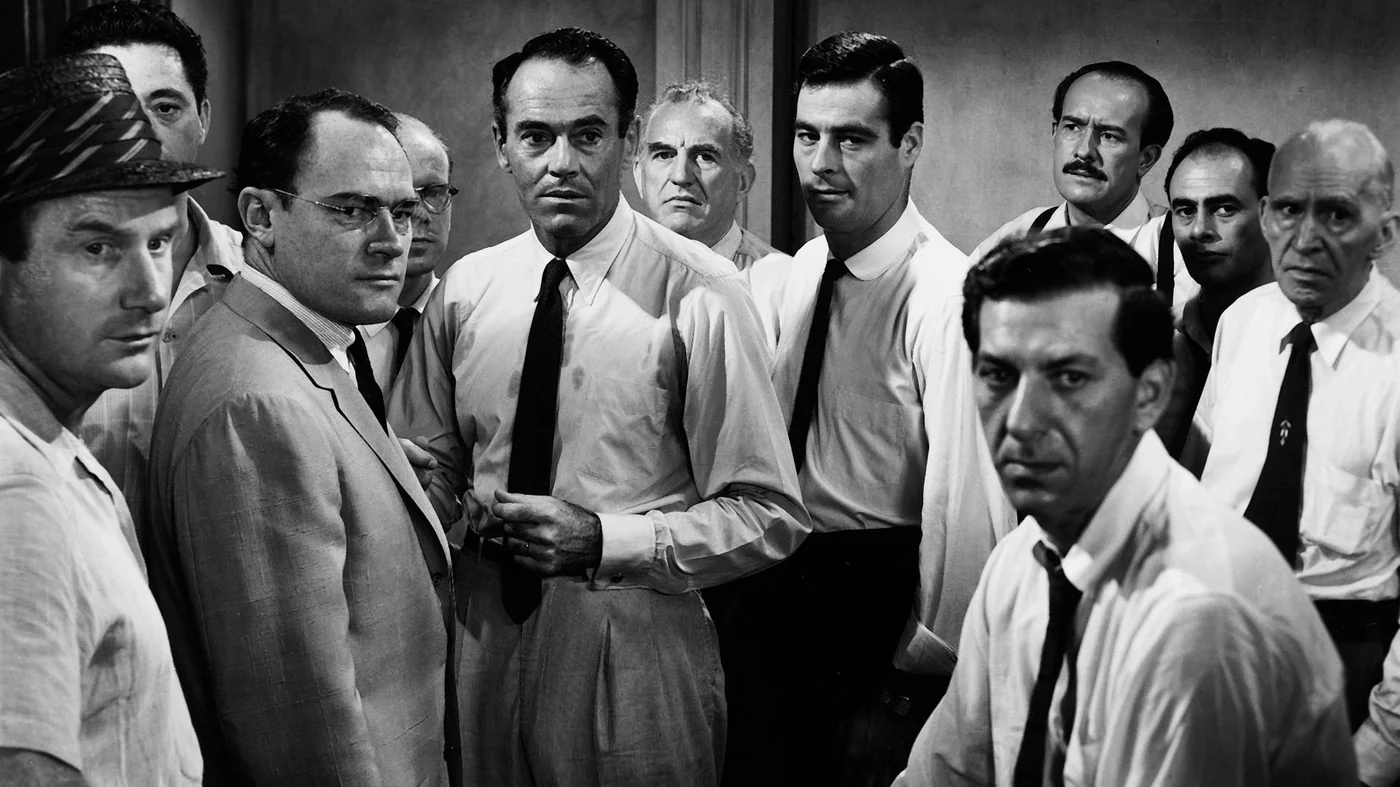
12 Angry Men 1957

The most important action is a refusal to hurry.

Drama · 96 min

A+ 92

Juror Eight begins with a request to spend more time on a decision that will end a life. He does not arrive with a complete alternative account of the killing. That modest difference is the film's foundation: uncertainty can impose an obligation without supplying a replacement certainty.

The room makes the obligation difficult through ordinary things. Heat, fatigue, an appointment elsewhere and the wish not to lose face all affect how an argument is heard. Sidney Lumet does not put twelve identical reasoning machines around a table. Different histories decide which details someone is capable of noticing.

Juror Nine notices what others have scarcely registered: the marks left by eyeglasses on the woman who says she saw the killing. His contribution comes from looking at another juror's face, not from receiving a new item neatly labelled as evidence. Earlier, he has also imagined why an elderly witness might want to be heard. The two observations have different strengths—one physical, one speculative—and the film is interesting when the group must decide how much either can bear.

The film is sometimes too convenient. A new detail can arrive with just the force needed for the next reversal, while Fonda's calm appears less vulnerable than the other men's certainty. Private reconstructions and the knife demonstration also belong to the drama, not a set of instructions for jury conduct.

The ending is strongest if we keep the conclusion narrow. The room has not established every fact or proved a different person's guilt. It has found that its initial confidence cannot survive scrutiny. Then the men leave.

That is why it leads this selection. The film makes a public duty urgent without pretending that performing it once has cured prejudice or repaired the institution. The life at stake is particular; the habit of attention can extend beyond the room.

Dramatic tension editorial
10/10

A vote, a pause and a changed alliance become physical events inside one increasingly pressured room.

Human stakes editorial
10/10

The personal cost of another man's haste is present before the accused has been made a flattering figure.

Law and power editorial
10/10

The film separates a confident social judgement from a conclusion that has survived examination.

Film rating: context computed
92/100

From 12 ratings.

Where this comes from: American Bar Association: My Cousin Vinny's expert-qualification exchange · Justine Triet: Anatomy of a Fall production interview · Equal Justice Initiative: Walter McMillian's case · Roger Ebert: the dramatisation and altered history of In the Name of the Father

The double bill I would choose is My Cousin Vinny followed by Judgment at Nuremberg. One makes closer attention funny; the other makes professional explanation morally dangerous. Neither needs to pretend that a convincing performance is the same thing as an adequate judgement.

For the private cost of a public decision, try Kramer vs. Kramer beside Anatomy of a Fall. For the gap between a legal outcome and the life that continues after it, try The Verdict or In the Name of the Father.

There is no need to make the solemn works inherently more serious than the comedies. What matters is the attention each film gives to the person who must remain after the room is finished. A verdict can end a case while leaving the more difficult human argument open.

← All lists