
16 September 2026

The r/TrueFilm canon's top twenty, from the 2018 poll

A historical community ranking, with new viewing notes and a closer look at the taste it records.

20 entries

A favourite-films poll tells you something about films and something about the people who have encountered them. This one gives a particularly clear picture of a certain route into cinephilia: American genre cinema, modernist puzzles, imposing directors and films that leave plenty to argue about afterward.

The ranking comes from the April 2018 r/TrueFilm canon. The Letterboxd mirror and IMDb mirror preserve the list; their descriptions report close to three hundred participants submitting up to fifty favourites each. They are mirrors of the historical result, rather than a new poll conducted by this site or a live measure of Reddit's present preferences.

We retain that order. The film scores displayed alongside it come from MEANRANK and do not recalculate the vote. The notes are our criticism, not quotations from participants or claims about why each individual voted.

There is a pattern worth noticing before treating the top twenty as a universal canon. Kubrick has four entries. Every listed film is directed by a man. The newest films date from 2007, although the vote took place in 2018. Those observations describe this part of the result; they do not establish the demographics, intentions or full viewing histories of its voters.

The films remain an excellent set of arguments to have. They are a less complete education if you never leave this cluster. Use the list to identify an attraction—suspense, sound, performance, moral uncertainty—then follow that attraction into films the top twenty does not contain.

The notes discuss major scenes and some late developments. They avoid revealing the central turns in Mulholland Drive and Vertigo, but this is criticism rather than a spoiler-free synopsis.

How this is judged

Score here computed
Its mean score across the platforms we track. Shown for interest; the vote decides the order.

Computed scores come straight from the ratings, so you can check them. Editorial ones are our opinion, and every one comes with the reason for it.

20

Alien 1979

A workplace becomes dangerous in ways its employer need not prevent.

Horror, Sci-Fi · 117 min

A 86

The crew members make the ship convincing by treating it as a workplace. They discuss pay, complain, follow procedures and occupy rooms without behaving as though they know they are in a monument of production design.

That ordinary social texture gives the creature's intrusion weight. The threat enters a place where labour is already organised unequally and an employer's interests need not match the workers' survival. Ripley's insistence on a procedure can look unhelpful only if you assume the institution around her is acting competently.

The sound and spatial design let an unseen threat occupy more than its visible body. A corridor is frightening because you understand both its practical function and how little you can now trust it.

There is graphic body horror. The film's endurance also rests on less spectacular decisions: the time given to a meal, an argument and a person checking a room. Those details make survival matter before the genre has told you which character to follow.

The quarantine dispute makes the division concrete before the creature takes over the ship. Ripley has a reason to keep the returning party outside; opening the hatch converts a demand for help into a risk imposed on everybody else. Weaver's firmness can initially seem obstructive because the wounded man is immediately visible and the danger is not. The film later makes that first judgement uncomfortable: procedure is neither automatically humane nor automatically foolish, and the person overriding it may be serving interests the crew does not know.

Score here computed
86/100

From 12 ratings.

19

Dr. Strangelove or: How I Learned to Stop Worrying and Love the Bomb 1964

A system can generate sensible explanations for a catastrophic result.

Comedy, War · 95 min

A 88

The machinery of catastrophe has a reassuring professional vocabulary. People follow procedures, defend jurisdictions and explain why a terrible consequence is the reasonable product of a system intended to prevent one.

The comedy works through the discrepancy between scale and manner. An exchange can sound like a minor administrative disagreement while its stakes are almost impossible to comprehend. Peter Sellers's several roles give that discrepancy different social forms; George C. Scott supplies a physical enthusiasm that makes strategic abstraction look alarmingly enjoyable.

Some details belong to the Cold War, but the sharper subject is an institution's ability to generate confident local explanations for a disastrous collective result. The problem is not confined to one mad person if normal procedures keep extending his reach.

Watch what each character believes they have under control. The jokes grow darker as competence at a narrow task becomes increasingly compatible with failure at the only outcome that finally matters.

The telephone call to the Soviet leader makes catastrophic communication sound like a delicate conversation between acquaintances. Sellers has to manage hurt feelings while passing on information whose consequences dwarf the social discomfort. The joke depends on both scales remaining audible. The President can be courteous and competent at this exchange while having no adequate means of restoring control over the machinery whose actions he is explaining.

Score here computed
88/100

From 11 ratings.

18

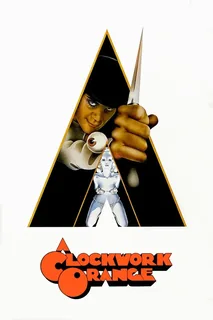
A Clockwork Orange 1971

Neither appetite nor institutional benevolence offers a dependable refuge.

Crime, Sci-Fi · 136 min

A 82

Alex recruits the viewer through voice, style and the pleasure he takes in presenting himself. The film makes that recruitment uncomfortable rather than allowing a safe distance from the beginning.

The second half tests another form of power over a body. The state's proposed solution cannot be evaluated simply by disliking the person subjected to it. A society can be threatened by a violent man and still have reason to reject an institution's claim to remake him through coercion.

The stylisation is also a legitimate target of criticism. Sexual violence can become an aesthetic event whose formal bravura outcompetes attention to the victims. Recognising satire does not settle that objection.

Watch how different authorities explain what they are entitled to do to Alex, and how readily he changes the story of himself when an audience becomes useful. The argument is difficult because the film declines to make either personal appetite or institutional benevolence a dependable refuge.

Alex's response to Beethoven is the state's intervention at its most disturbing. Music he had used as private pleasure becomes inseparable from the treatment intended to make violence unavailable to him. McDowell must register a loss the authorities can regard as a regrettable side effect of success. The film's problem is not simply whether a violent man deserves comfort. It is what a system is prepared to count as acceptable damage when it measures a person through a single desired result.

Score here computed
83/100

From 12 ratings.

17

No Country for Old Men 2007

Practical competence cannot secure an escape from chance.

Crime, Thriller, Western · 122 min

A 83

The film makes tracking physical. A sound, a light, a distance between rooms or the position of a body can become decisive. Suspense grows from understanding enough of a space to recognise how exposed a person is within it.

Javier Bardem's Chigurh treats a private system as though it possessed the force of an impersonal law. The performance is frightening partly because the insistence is so calm. Other people must negotiate rules they did not create and cannot make reciprocal.

Tommy Lee Jones gives the film another pace. The sheriff's reflections risk turning a changing world into evidence of his own historical loss, and the film gives that lament room without making it the only explanation.

Watch the relationship between practical skill and chance. Intelligence may improve a person's immediate position without delivering safety. The departures from a conventional thriller payoff matter because the film has first made ordinary mechanisms of pursuit so compelling.

The gas-station conversation makes a tiny purchase impossible to keep small. The proprietor tries ordinary social questions, and Chigurh turns them into infringements whose rules only he can define. Bardem's pauses force the other man to keep guessing what kind of encounter he is in. When the coin arrives, the apparent impartiality belongs to an arrangement Chigurh has imposed. The scene is frightening because chance becomes a way for a person to deny responsibility for the threat he is making.

Score here computed
84/100

From 12 ratings.

16

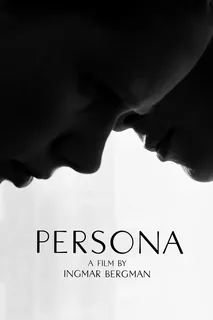
Persona 1966

Disclosure does not give the speaker control over a listener.

Drama · 83 min

A 84

A performer stops speaking, and a nurse fills the available space with speech. That arrangement does not give the nurse control. Being listened to can encourage disclosure while leaving the listener's motives and judgement inaccessible.

Bibi Andersson's shifts between confidence and unease give the film an emotional line through its formal disruptions. Liv Ullmann's silence remains active: an expression can seem receptive, evasive or faintly amused without providing the confirmation the other woman wants.

The images invite comparisons between faces, identities and acts of performance. Those ideas become more useful when attached to the immediate asymmetry of the relationship, rather than treated as a declaration that the two women are simply the same person.

The film is brief and demanding, with disturbing material. Allow its interruptions to change how you are watching. A break in the image can remind you that apparent intimacy on screen is still something a camera and an edit have arranged.

The letter Alma reads changes the value of the listening she has received. An apparently intimate exchange can also have made her material for another person's observation. Andersson's hurt is therefore more specific than the discovery that a silent woman is difficult to know: she must reconsider what she thought she was doing by speaking. Ullmann does not supply an explanation large enough to settle that injury. The film lets closeness and unequal control coexist inside the same room.

Score here computed
85/100

From 12 ratings.

15

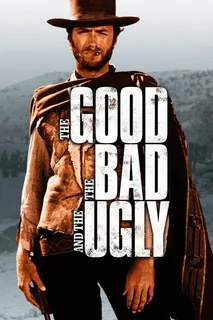
The Good, the Bad and the Ugly 1966

Waiting becomes an action with extraordinary scale.

Western · 178 min

A+ 91

The title sorts three men into categories the film keeps making unstable. Competence, self-interest and occasional generosity do not combine into a dependable moral rank.

Leone's close-ups make waiting an action. A face, a hand and a distant body become elements in a spatial argument whose outcome you want delayed. Morricone's score gives that delay a scale larger than the immediate practical business of men pursuing money.

The Civil War passages complicate the adventure by placing private greed beside organised destruction. They do not turn the protagonists into straightforward moral commentators; the men's immediate interests remain stubbornly alive.

If the length initially feels indulgent, watch how the film allocates duration before a confrontation. The pleasure comes from being made acutely aware of space, attention and the possibility of a move. The comic ugliness and the grandeur are not separate modes so much as competing views of the same conduct.

The bridge interrupts the treasure hunt with an institution that keeps demanding the same destructive task. The three men's route has practical reasons to pass through the battle, yet their desire to move on cannot make the men fighting there incidental. Leone permits exhaustion to puncture the grandeur. The eventual return to the pursuit of money is more bitter because the film has allowed a different scale of waste to occupy the middle of the adventure.

Score here computed
91/100

From 10 ratings.

14

Spirited Away 2001

A child develops confidence through attention, memory and work.

Animation, Family, Fantasy · 124 min

A+ 90

Chihiro's first useful task is not a grand act of bravery. It is learning how to ask, work, remember and keep moving through a place whose terms she does not control. Miyazaki makes those practical acts the basis of her developing confidence.

The bathhouse is wonderfully crowded with appetites and jobs. Its fantastic beings do not exist solely to explain a lesson to the child. That sense of independent activity makes the world convincing and complicates any attempt to sort everyone into a stable moral category.

The train journey offers a different pleasure: time in which movement need not be frantic and an image can carry feeling without a speech identifying it. The pause matters because the film has already established so much activity.

Children may find parts frightening. Adults may find that the attention to work and consumption grows sharper on reflection. Watch what Chihiro learns to recognise without becoming merely harder or more suspicious of everyone she meets.

The apparent stink spirit gives work a particularly generous consequence. Something the bathhouse would prefer to dismiss requires Chihiro to stay near it long enough to notice an obstruction and ask for help. Cleaning becomes a collective task, and recognition follows attention to what the visitor is carrying. The scene's force comes from a change in conduct before a complete explanation. Chihiro does not need to know the guest's true status in order to begin treating the problem seriously.

Score here computed
90/100

From 12 ratings.

13

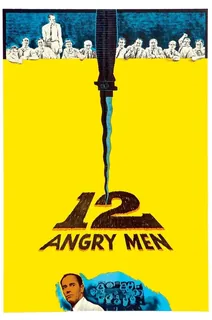
12 Angry Men 1957

A room has to change what it will permit people to question.

Drama · 96 min

A+ 92

The room gives argument a physical setting. Heat, fatigue, personal friction and the desire to leave all affect what the jurors are willing to examine. A claim does not circulate in a neutral space among perfectly patient reasoners.

Henry Fonda's insistence works because it changes the burden of attention. An apparently settled fact becomes something the group has to demonstrate rather than repeat. Other men then have to decide whether revising an opinion would threaten their standing in the room.

The seventh juror's change of vote tests whether the room has actually become more responsible. A new answer can still be a way to get the tedious business over with. Juror Eleven objects because agreement without thought is not the same achievement as reconsideration. The film's faith in deliberation becomes more credible at that moment: it does not have to pretend that joining the apparently enlightened side has repaired the habit that made an earlier judgement careless.

Watch the men listening, especially when they are not the main speakers. A verdict becomes thinkable through a sequence of changed permissions about what can be questioned aloud.

Score here computed
92/100

From 12 ratings.

12

Pulp Fiction 1994

Conversation and chronology change the value of a violent action.

Comedy, Crime, Thriller · 154 min

A 88

The rearranged chronology is famous, but the waiting is just as important. People talk while approaching an action the genre has taught us to anticipate. Conversation gives them tastes, vanity and minor grievances before violence interrupts or redirects the scene.

That investment in the ordinary is part of the comedy and part of the danger. Familiarity can make a criminal's company appealing without making the criminal's power harmless. The film repeatedly tests how much goodwill an entertaining person can borrow.

Its racial language and handling of sexual violence are substantial features of the experience, not small footnotes to the clever structure. A viewer can admire the timing and reject particular choices.

The final diner scene gives Jules a chance to reinterpret his own habitual performance. A speech once used to enlarge his authority over frightened people becomes something he tries to understand differently while holding another frightened man at gunpoint. Jackson keeps the old command available, so the refusal of an expected killing does not look like a sudden loss of power. The rearranged chronology leaves that possible change after other events that would have made a simpler ending feel closed.

Score here computed
89/100

From 12 ratings.

11

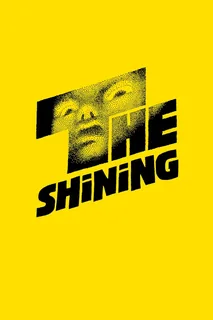
The Shining 1980

A designed space turns domestic uncertainty into something immense.

Horror, Thriller · 146 min

A 82

The hotel is frightening before anything is clearly wrong because its spaces seem to possess an order the family cannot comfortably inhabit. A corridor offers direction without reassurance; an empty room can feel as though it has been waiting.

The performances operate at different intensities. Jack Nicholson's visible volatility can make the progression feel less like a hidden change than an instability finding permission. Shelley Duvall and Danny Lloyd give the threat its domestic scale through watchfulness and attempts to manage another person's mood.

The discovered manuscript is the domestic task turned into a threat. Wendy approaches pages that should represent Jack's work and finds repetition instead of the progress the household has been arranged to protect. Duvall has to take that knowledge into an encounter with the man who owns the pages. The suspense depends on the practical difficulty of leaving, placating or answering him, not on a theory about the hotel's hidden design. Nicholson's excess becomes frightening through the work it forces her to do.

The film rewards theories about its spaces, but you do not need a code-breaking exercise to feel its force. Listen to how a change in sound alters the apparent safety of a route you have already seen traversed.

Score here computed
82/100

From 12 ratings.

10

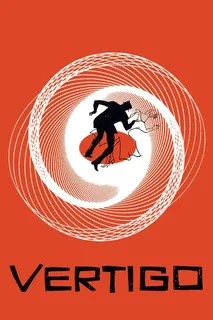
Vertigo 1958

The wish to recover an image becomes a claim over another person.

Mystery, Romance, Thriller · 128 min

A 86

Scottie's looking becomes the film's problem. Hitchcock initially lets pursuit organise the viewer's curiosity, then makes the wish to see something again increasingly coercive. An image of a woman begins to take precedence over the woman required to sustain it.

Kim Novak's performance deserves attention beyond the fascination exercised over the male protagonist. Hesitation and compliance can reveal the labour involved in becoming the object of somebody else's demand.

The romantic music is powerful, which is why the film's cruelty cannot be dismissed as a cold theoretical exercise. You may feel the beauty of a moment while recognising that its conditions are intolerable for one of the people inside it.

Avoid a synopsis before watching. The plot's rearrangement of knowledge changes the emotional weight of what you have seen. Afterward, ask when a desire to recover a lost experience became a claim of authority over another person.

The later attention to hair, clothes and the exact look of an encounter makes the earlier pursuit harder to receive innocently. Stewart can make insistence sound like a modest request for one more adjustment, while Novak has to register what conceding it costs. Hitchcock's cruelty lies partly in making the desired image beautiful enough for the viewer to understand its attraction. Understanding the attraction is not the same as granting the man a right to have it supplied.

Score here computed
86/100

From 12 ratings.

9

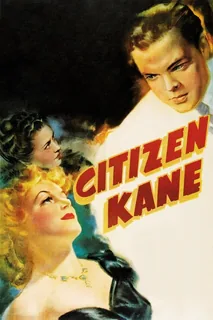
Citizen Kane 1941

Accumulating accounts does not mean possessing a whole person.

Drama, Mystery · 119 min

A 85

The investigation promises to explain a life through a word. The film then supplies competing accounts whose speakers each know something and miss something. Information accumulates without becoming complete possession of a person.

Watch the framing within a room. A body can become small against the space its owner has acquired, or dominate a composition while failing to command the response of another person. The visual design is doing psychological work that a direct confession would make much simpler.

Its reputation can encourage the unhelpful activity of checking off famous techniques. The techniques matter because they alter a relationship: who can approach, who is distant, who appears to have power and who is actually able to leave.

The film does offer a closing piece of knowledge, but treating it as a complete diagnosis would defeat the structure around it. Kane can be understood in fragments without becoming an equation that the investigator, or the viewer, has finally solved.

The breakfast-table passage makes a marriage change while retaining the shape of an ordinary routine. Welles and Ruth Warrick need only a little time in each encounter for ease to become irritation and distance. The table grows into a division the people can inhabit without naming. It is a useful answer to the idea that the film's visual ambition has no feeling: design becomes the means of showing how two lives cease to meet while still sharing an address.

Score here computed
86/100

From 12 ratings.

8

Blade Runner 1982

A city's atmosphere gives the hunted more life than a classification permits.

Drama, Sci-Fi, Thriller · 117 min

A 83

The city is dense enough to suggest lives extending far beyond the pursuit at the centre of the story. Advertising, weather, crowded streets and interior clutter make the future feel inhabited rather than merely designed.

That richness throws the investigation's classifications into doubt. A system claims it can distinguish kinds of being, while the people required to enact the distinction reveal fear, memory and dependence that cross it. Harrison Ford's reserve and Rutger Hauer's intensity pull the question in different directions.

The film exists in several cuts. If this is your first viewing, identify the version rather than assuming all discussions refer to the same narration and ending. The Final Cut is a useful place to begin, without making other versions unworthy of examination.

The pace is closer to a melancholy noir than a continuous action chase. Listen to how Vangelis's music makes the city intimate and immense at once. The ethical argument grows stronger when atmosphere gives the hunted more presence than the job description allows.

Rachael's photographs show how a private object can become an institutional instrument. Evidence that seems to secure a childhood can also have been supplied to make a manufactured life inhabitable. Sean Young's response is more revealing than another announcement that the boundary between human and replicant is uncertain. Memory has already done emotional work before its status is challenged. Learning where an image came from cannot simply cancel the attachment built through believing it.

Score here computed
83/100

From 12 ratings.

7

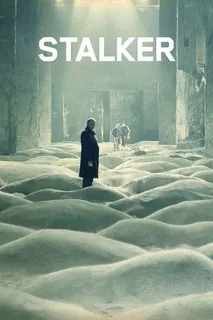
Stalker 1979

A journey asks for trust before it supplies reliable knowledge.

Drama, Sci-Fi · 162 min

A 84

The Zone is made from places you can look at without understanding what makes them dangerous. Tarkovsky gives water, rooms and discarded objects time to acquire pressure. The guide's instructions ask for trust before the visitors have evidence sufficient to judge them.

The journey is therefore also a conflict among ways of knowing. Professional confidence, artistic self-doubt and belief all enter the landscape. Conversation does not settle the differences; it often reveals what a speaker cannot afford to acknowledge.

The slowness is a real demand. You need not pretend that patience automatically produces revelation. What it can produce is a change in the value of a shot: a space that first seems empty becomes something you keep examining.

Watch the distance among the three men and how each occupies a pause. The film's spiritual force is bound to uncertainty about what people want, and whether they could bear having that desire accurately recognised.

The threshold of the Room is the journey's decisive hesitation. Arriving does not simplify the wish. The possibility that the place may answer a desire deeper than the one a person can declare makes entering more frightening than another obstacle on the route. Tarkovsky has spent so long making movement difficult that stopping acquires weight. The men must confront a problem no map of the Zone can solve: whether they trust their own account of what they want.

Score here computed
85/100

From 12 ratings.

6

Apocalypse Now 1979

The spectacle's power and its restricted viewpoint belong in the same discussion.

Drama, War · 147 min

A 86

The journey upriver offers the promise of an explanation at its destination. Each encounter instead makes the organising logic of the war less secure: overwhelming force, professional ritual, entertainment and private madness can occupy the same space.

The helicopter assault gives military power an audience. The loudspeakers make the approach a performance, while Kilgore's interest in surfing makes the beach seem available for his personal use before the attack has finished securing it. Duvall does not have to play him as incapable of doing his job. The horror is that an effective commander can let combat, entertainment and appetite share the same confident manner. The exhilaration of the sequence is part of what makes its account of power uncomfortable.

There is a limitation in an antiwar film that gives American consciousness such enormous imaginative space while Vietnamese and Cambodian lives often remain less individually developed. The spectacle's critique and the spectacle's imbalance need to be considered together.

Choose it for a feverish experience rather than a reliable historical overview. Watch what the men do when an immediate military objective no longer explains their behaviour. The film's most unsettling passages concern institutions powerful enough to continue functioning after their stated reasons have become difficult to believe.

Score here computed
87/100

From 12 ratings.

5

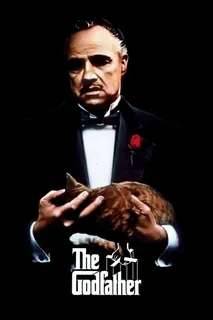
The Godfather 1972

Protection creates a bond whose terms remain unequal.

Crime, Drama · 175 min

A+ 92

The opening request for justice establishes a practical alternative to public institutions. A favour can be granted, but it places the recipient inside a relationship whose terms remain unequal. The film keeps returning to that arrangement in more intimate forms.

Family affection gives the system persuasive emotional life. Meals, weddings and private reassurances coexist with business conducted elsewhere. The separation is never complete: the care offered within the family depends on decisions whose consequences reach people outside it.

Michael's gradual change is compelling because a protective justification can accompany almost every step. Al Pacino makes restraint increasingly difficult to distinguish from calculation. Watch when silence ceases to mean uncertainty and begins to mean that a decision has already been made.

The film's power can make its criminal order seem more coherent than any alternative. Keep asking who has the freedom to decline its protection. Its tragedy is sharpened when belonging feels desirable and the cost of belonging remains visible.

The restaurant killing gives that change a duration. Michael must return from the bathroom, sit with the men and remain in the conversation long enough to act. Pacino's stillness has something new inside it: outward participation is no longer a way to avoid the family's business but a means of doing it. The scene makes a moral threshold legible through a seat, a pause and the effort to keep his face usable. The subsequent family explanations cannot return him to the man who entered the room.

Score here computed
92/100

From 12 ratings.

4

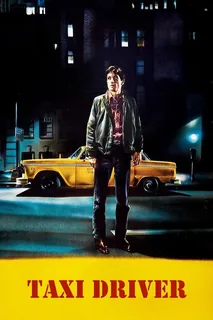
Taxi Driver 1976

A man's account of himself is part of what needs examination.

Crime, Drama · 114 min

A 84

Travis Bickle narrates himself as a man who sees what others refuse to see. The images do not simply authenticate that account. His encounters reveal resentment, confusion and a hunger for a role that would convert isolation into importance.

The cinema date with Betsy is a painfully exact failure of that preparation. Travis has acquired enough of the courtship's outward form to bring her somewhere, but he cannot anticipate what the choice of film will mean to her. De Niro's response is revealing because the rejection does not produce curiosity about the missing understanding. It becomes another injury he can fold into his account of the world. A person asking to be recognised can remain profoundly inattentive to the person whose recognition he wants.

The film's view of the city is deliberately filtered, and its handling of race and sexual violence deserves scrutiny. Recognising an unreliable viewpoint does not make every representational choice self-explanatory.

Watch how quickly you are invited to borrow Travis's disgust, then how the film complicates the authority you may have granted him. The troubling question is less whether a lonely man can become violent than how violence can be rearranged into a socially useful story about the man who committed it.

Score here computed
84/100

From 12 ratings.

3

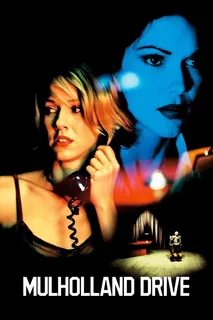
Mulholland Drive 2001

An unstable story has precise emotional consequences.

Drama, Mystery, Thriller · 147 min

A 80

The audition is a useful point of attention. A scene that seemed artificial in rehearsal changes when Naomi Watts performs it in a different arrangement of bodies and expectations. The words have not become less scripted, yet their emotional reality alters.

That is a way into a film often approached as an encrypted plot. Lynch is interested in the conditions under which a performance persuades us, including our desire for Hollywood to supply identities and satisfactions that life does not.

You can construct an interpretation of the chronology afterward. On a first viewing, follow the emotional changes: embarrassment, hope, attraction, dread. Notice when an apparently safe scene begins to feel contaminated without giving you a clear event to blame.

Some viewers find the ambiguity evasive. The strongest answer is in the precision of individual passages, rather than a claim that confusion itself is profound. The film gives its unstable world recognisable emotional consequences; the puzzle matters because the wishes inside it are painful.

Betty's rehearsal with Rita makes the later audition especially disorienting. A line that looked like material the women could laugh over becomes intimate and threatening when the scene partner changes how it is received. Watts does not merely reveal that Betty is talented. She makes an apparently stable scene become another event without changing its words. The film's larger uncertainty is easier to enter once you have seen how little a script alone can tell us about the experience it will produce.

Score here computed
81/100

From 12 ratings.

2

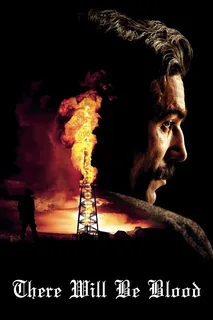
There Will Be Blood 2007

Public opportunity gives private appetite room to expand.

Drama · 158 min

A 84

The opening makes Daniel Plainview's ambition bodily before it makes it eloquent. Work, injury and extraction precede the public performance through which he presents himself as the man a community should trust.

The baptism is a forced revision of Plainview's public voice. To obtain access he needs, he must let Eli dictate an account of his failure as a father and make him repeat it before an audience. Day-Lewis keeps the humiliation bodily: the effort is not simply saying words he disbelieves, but submitting to another performer directing the occasion. Dano's enjoyment exposes the preacher's appetite too. Each man can turn another person's need into a moment of public authority.

The film's scale can tempt a viewer to take Plainview as a complete explanation of capitalism, religion or American history. He is more convincing as a particular man whose needs become devastating when money gives them room. Paul Dano's preacher also wants an audience, creating a rivalry over who may organise other people's hopes.

Choose it for severe, sometimes grotesquely funny drama. Its force comes through the mismatch between magnificent public language and a private inability to sustain an equal relationship.

Score here computed
85/100

From 12 ratings.

1

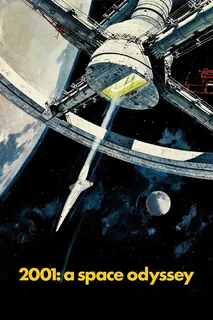
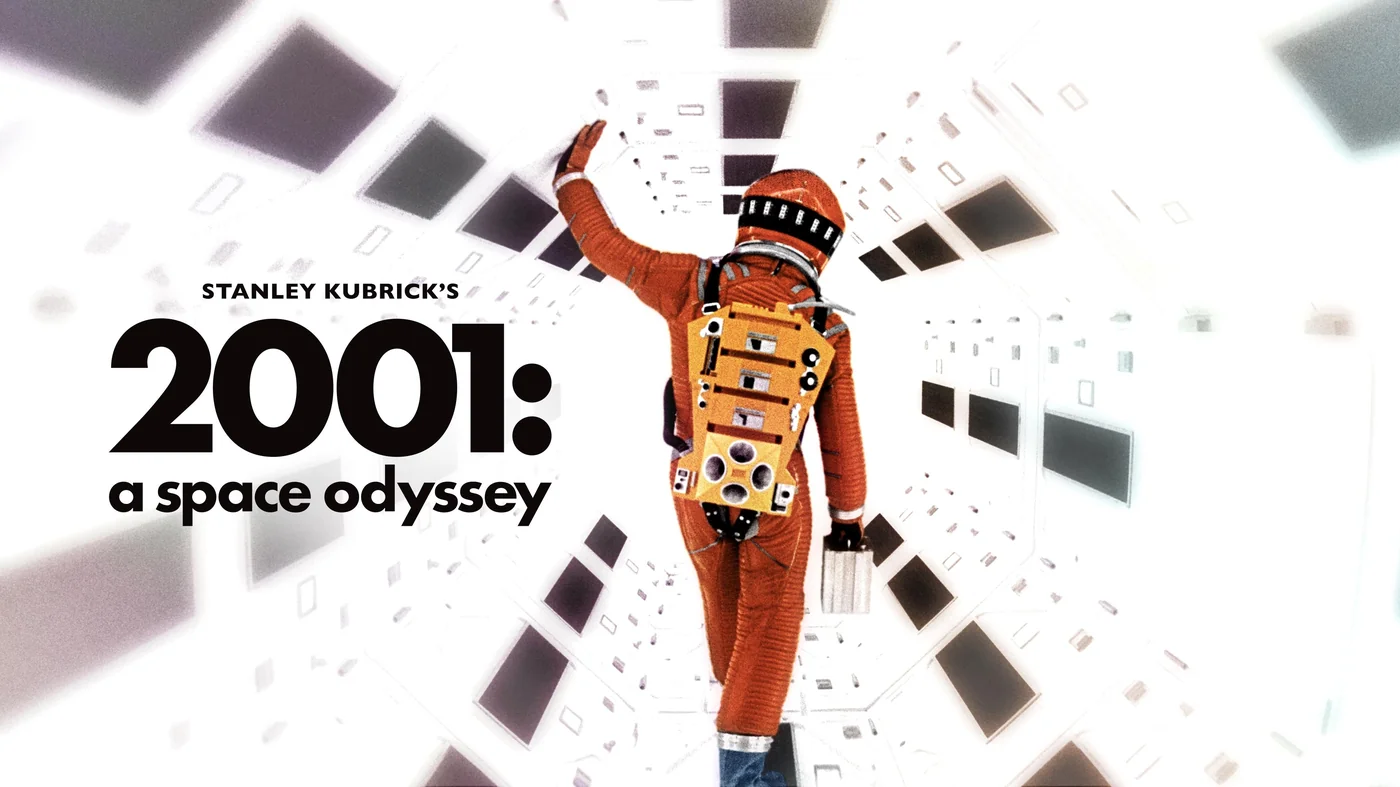
2001: A Space Odyssey 1968

Human intention becomes one small element in a much larger timescale.

Adventure, Mystery, Sci-Fi · 149 min

A 83

The first task is to let the film establish a timescale larger than a conventional adventure. Tools, travel, routine and inexplicable encounters share a structure that refuses to make human intention the explanation of everything.

HAL's refusal to open the pod-bay doors turns the administrative calm into a struggle over who can act. The voice remains measured while the practical conditions of survival are being withheld. Later, Bowman's work of disconnecting the machine reverses the relationship: the apparently reassuring intelligence must address someone whose movements it can no longer control. Kubrick gives fear to the voice that had made the human crew sound almost incidental. The change is disturbing because it does not require the machine to acquire a conventional human face.

A fair objection is that the human characters can feel thin. That distance is central to the experience, but understanding the intention does not oblige you to enjoy it. Watch the relationship between a movement and the music accompanying it. The film makes technology graceful, ordinary and unsettling by turns.

It is a fitting first place for a discussion forum because its pleasures extend beyond finding a solution to the ending. The more useful question is how its shifts in scale change your sense of what a human story can contain.

Score here computed
83/100

From 12 ratings.

Where this comes from: r/TrueFilm canon, April 2018 (the full list, mirrored on Letterboxd)

Where this canon is useful, and where to leave it

The list is especially useful for comparing how films organise attention. Put Alien beside Stalker and consider how an apparently empty place becomes threatening. Put Citizen Kane beside Mulholland Drive and ask what an investigation can really secure. Compare the different pleasures and dangers of charisma in The Godfather and There Will Be Blood.

Then choose something outside the top twenty. Our Indian film starting points and African filmmaker guide offer two routes, each incomplete in different ways. A canon is most useful when it gives you tools to see more than the canon contains.

The five additional films below occupy places 21–25 in the linked 2018 Letterboxd mirror. They continue that historical list; they are not new voting results or MEANRANK editorial replacements. For the ranking beyond them, follow the mirror.

← All lists